Toward New Developments in Paper Recycling Based on a Nationwide Children's Environmental Network
The Waste Paper Recycling Promotion Center has partnered with the nationwide "Children's Eco-Club" to promote the recycling of "miscellaneous papers" often discarded as combustible waste. Through initiatives like the "Find Mr. Zatsugami!" campaign and model projects, they are leveraging children's proactive involvement to foster a bottom-up behavioral change towards a circular economy. This approach effectively merges environmental education with resource circulation, with plans for nationwide expansion.
📋 Article Processing Timeline
- 📰 Published: March 28, 2026 at 16:24
- 🔍 Collected: March 28, 2026 at 21:59 (5h 34m after Published)
- 🤖 AI Analyzed: April 15, 2026 at 07:12 (417h 13m after Collected)
The Waste Paper Recycling Promotion Center (Chuo-ku, Tokyo), as a partner member of the "Children's Eco-Club" (a project of the Japan Environmental Association), a nationwide network for children's environmental activities, is working to reduce combustible waste by unearthing miscellaneous papers and creating a local circular and ecological society centered on paper recycling. The Center began its collaboration with the club in October 2025 and is promoting the implementation of resource circulation by leveraging its nationwide activity base.
The Children's Eco-Club comprises approximately 2,400 clubs and 95,000 children who engage in various environmental learning and activities across Japan based on their interests. (Supported by the Ministry of the Environment)
The Center recently participated as a supporting organization in the "Children's Eco-Club National Festival 2026" and hosted an awareness booth called "Find Mr. Zatsugami!" to showcase the potential for a new resource circulation sparked by children's proactive actions.
Connecting with a "Social Infrastructure" that is a Nationwide Network
The most significant feature of the Children's Eco-Club is that children's proactive environmental actions are continuously practiced in their daily lives. Rather than being one-off events, these actions accumulate across schools, homes, and communities, helping to entrench environmental awareness and practices within society.
The Center views this nationwide network as a "foundation for spreading behavioral change throughout society." By linking the familiar theme of paper recycling to this foundation, it becomes possible to achieve a level of "social implementation" that goes beyond mere collection promotion.
Converting Overlooked "Miscellaneous Papers" into Resources
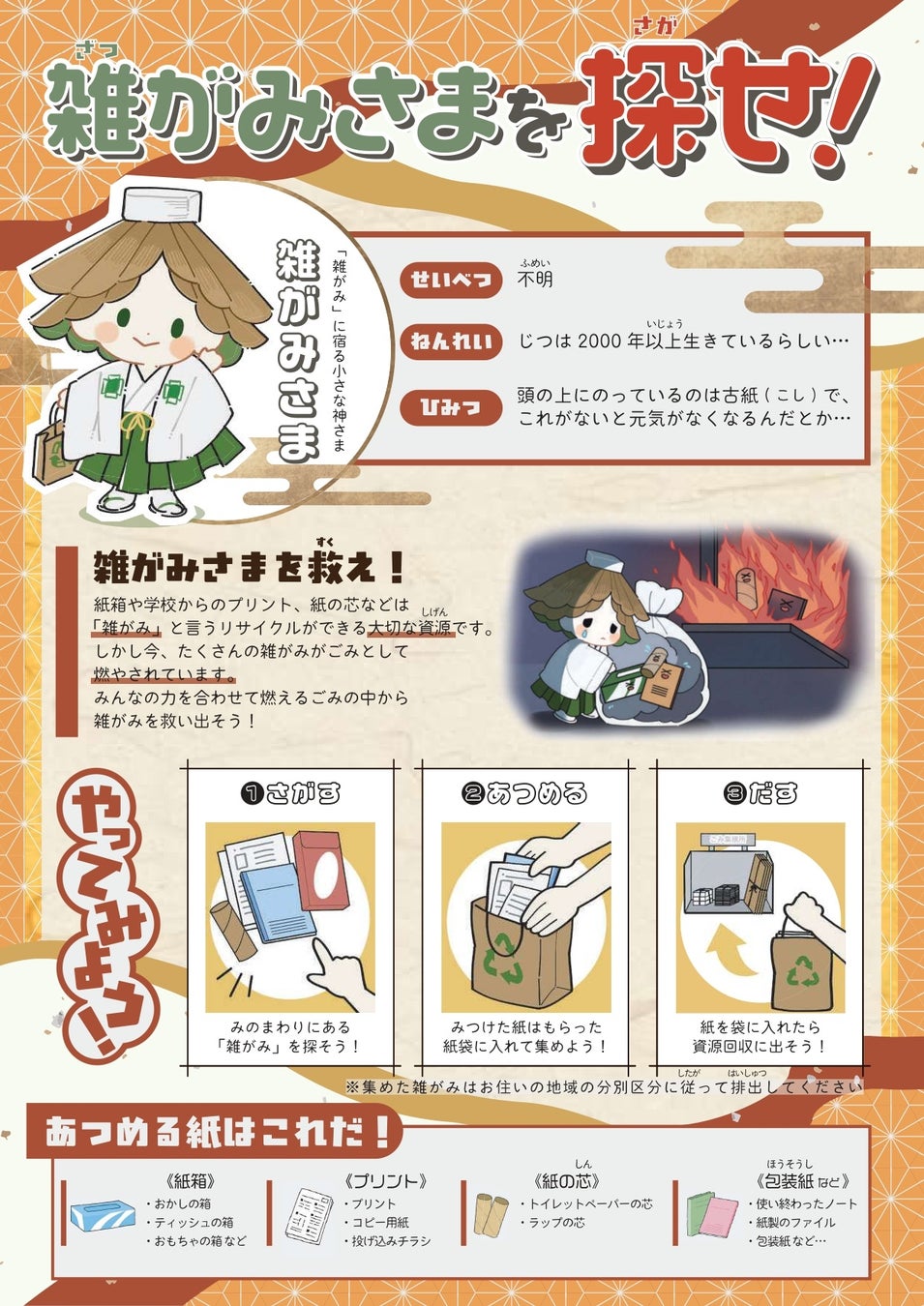
Combustible waste from households contains a significant amount of recyclable paper resources, so-called "miscellaneous papers." These items, which are closely tied to daily life—such as paper boxes, wrapping paper, flyers, and memo pads—are often incinerated due to a lack of awareness about sorting and systemic issues.
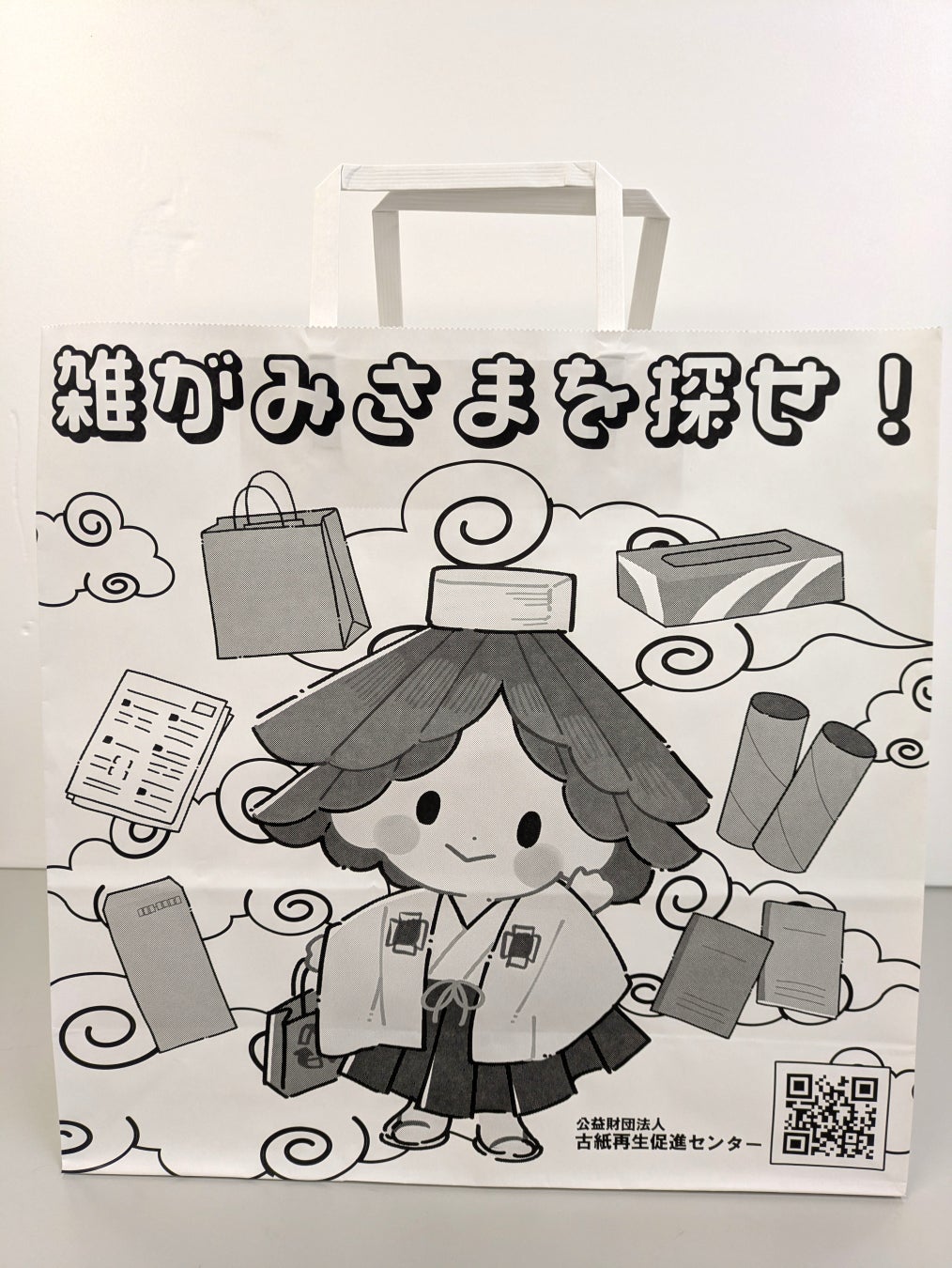
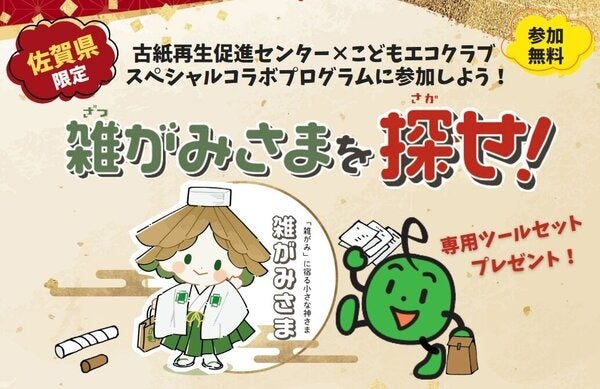
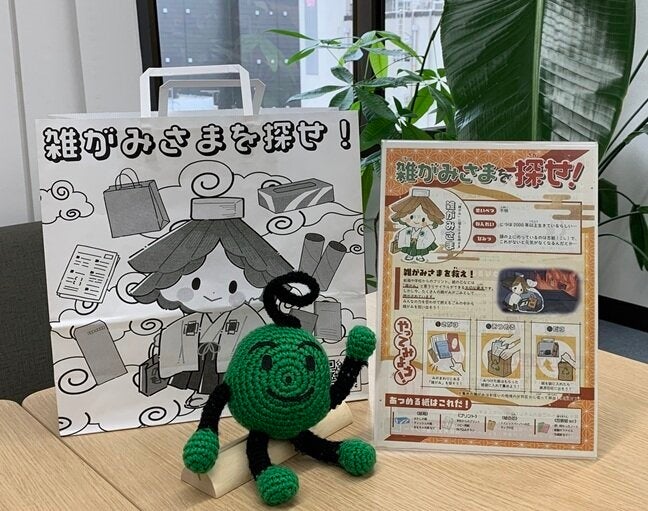
"Find Mr. Zatsugami!" is an initiative to re-recognize these unused resources as "targets to be found." The experience of children proactively discovering paper resources transforms sorting from an obligation into a discovery, enhancing the continuity of their actions.
This "transformation in the quality of action" is the key to making resource circulation effective.
Practice at the Festival: The Starting Point for Behavioral Change
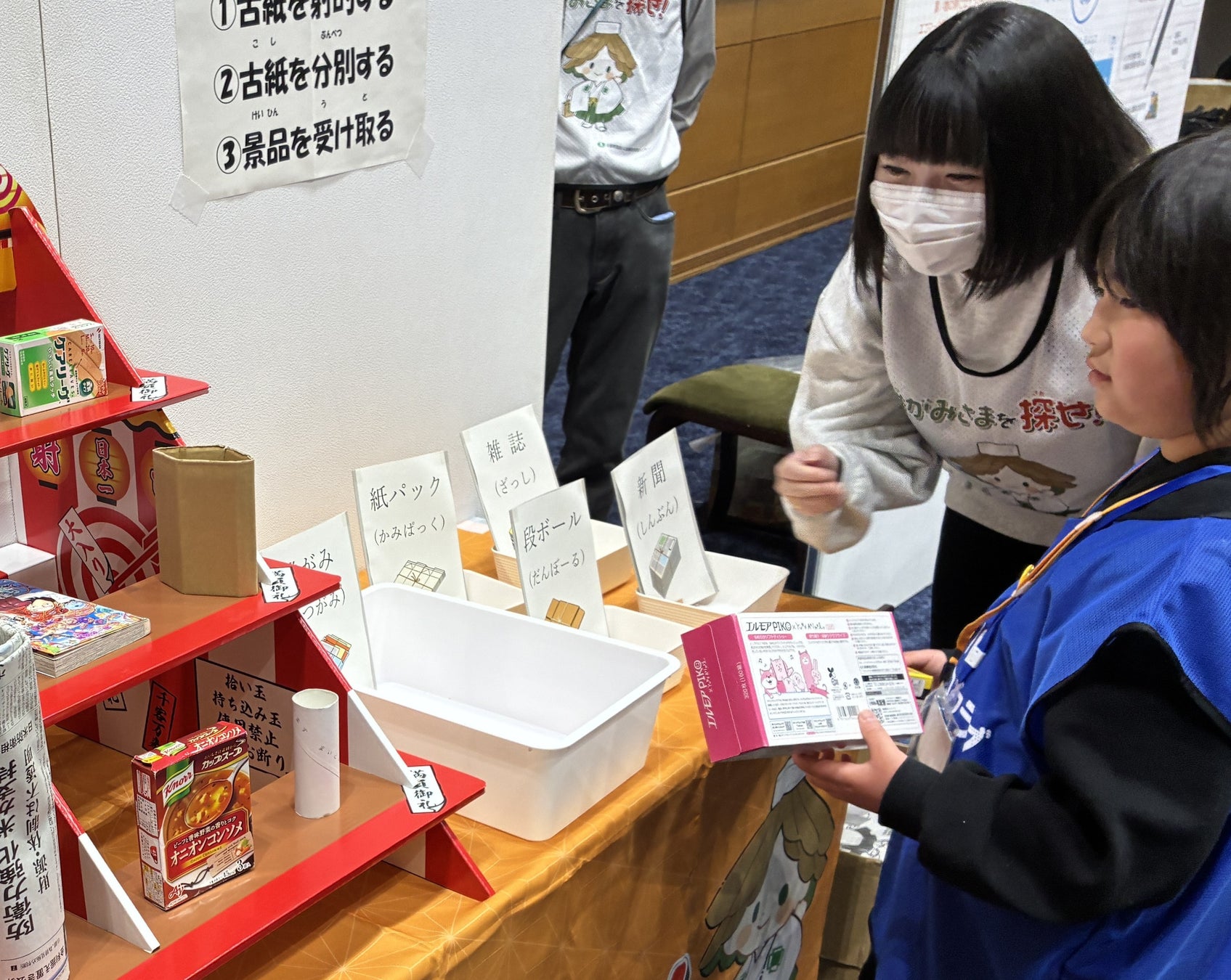
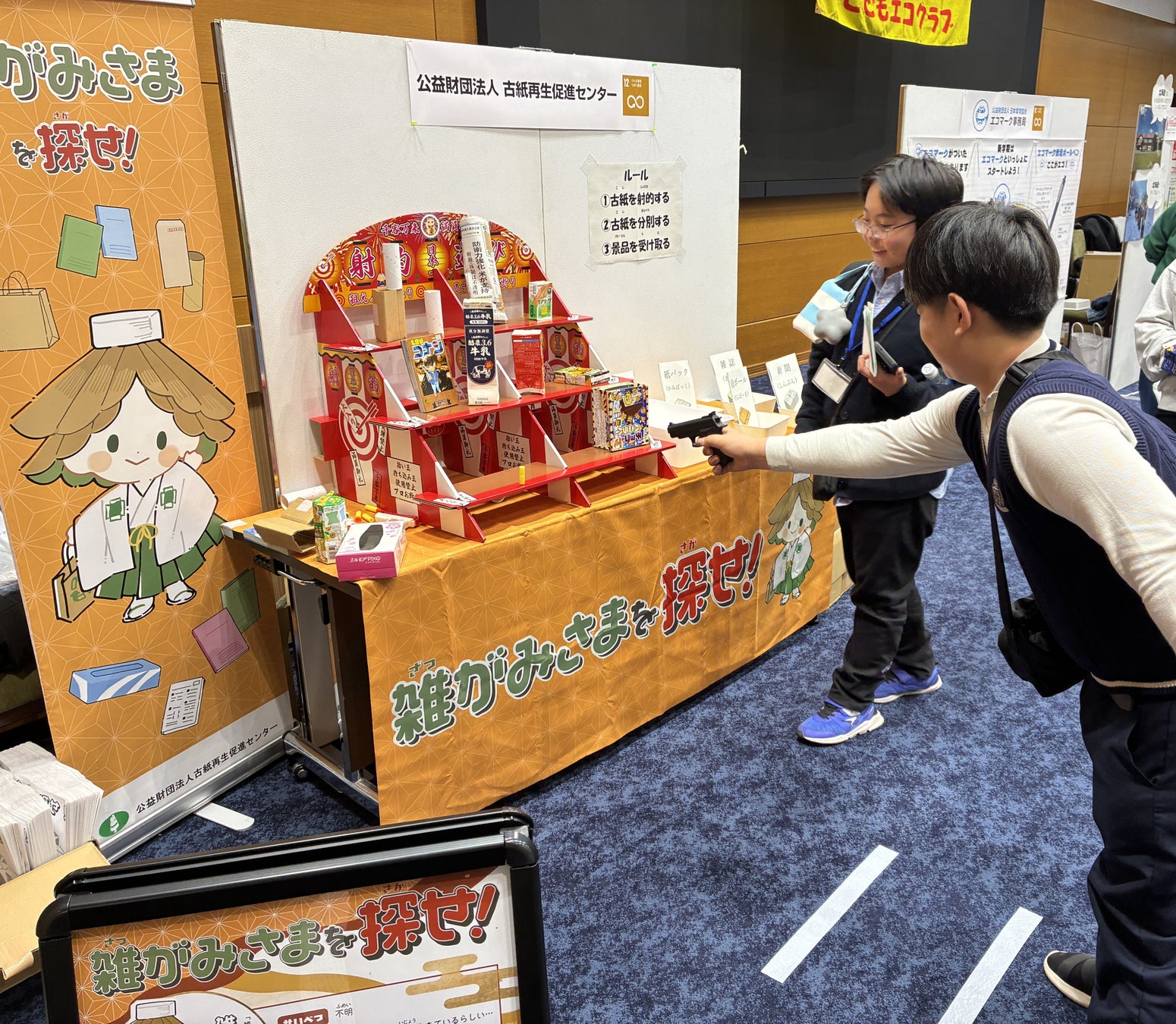
At the National Festival's "Find Mr. Zatsugami!" booth, we conducted hands-on sorting experiences using actual paper products and a target-shooting game. Children were observed enjoying themselves as they learned about different types of paper and how to sort them, thinking and acting on their own.
Crucially, this experience is brought back home. When a child shares what they learned with their family and encourages sorting, behavior within the household changes, and that change spreads to the community. Such bottom-up change produces a sustainable effect that cannot be achieved by regulations alone.
Implementation and Expansion Potential as Seen in the Saga Model
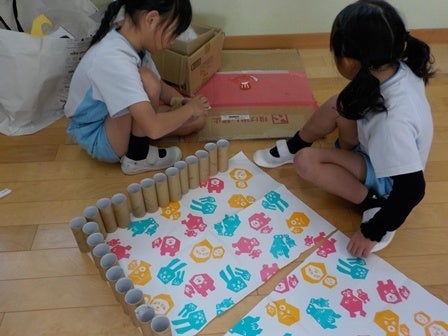
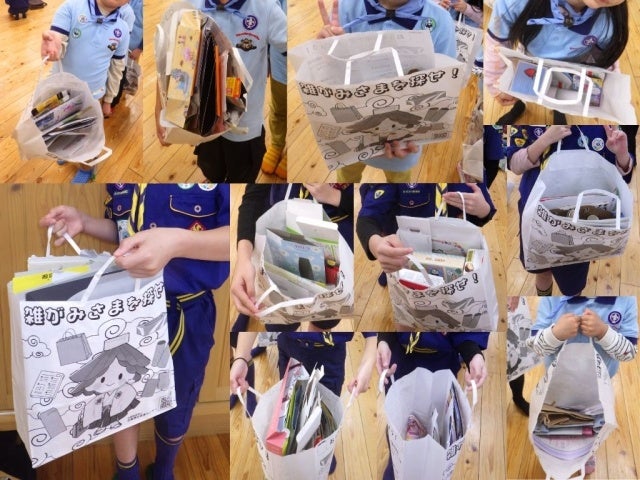
Under its partnership with the Children's Eco-Club, the Center is developing a model project in Saga Prefecture. This project involves working with childcare facilities and local organizations to integrally implement miscellaneous paper sorting, collection, and awareness activities.
Specifically, proactive efforts by children have been confirmed at sites like Nabeshima Nursery School (https://www.j-ecoclub.jp/ecoreport/detail.php?id=15506) and the Boy Scouts of Japan Saga 3rd Group's Beaver and Cub Scout units (https://www.j-ecoclub.jp/ecoreport/detail.php?id=15573).
These serve as a model for resource circulation that begins with children and connects to homes, communities, local governments, and industry, presenting a concrete image of a "local circular and ecological society." Paper recycling, as its medium, has the potential for nationwide expansion.
An Approach Fusing Environmental Education and Resource Circulation
The essence of this initiative is its integrated approach, refusing to separate environmental education and resource circulation. Conventionally, sorting and collection have been system-centric, while environmental education has focused on awareness-raising.
However, by connecting the two through children's proactive participation, a new approach is established that leads from "understanding" to "action," and ultimately to "social change." The nationwide network of the Children's Eco-Club is a crucial foundation that makes this connection possible.
About the Partnership with the Children's Eco-Club
The Children's Eco-Club is a network that supports children's proactive environmental actions across Japan and has a wealth of experience in practices that span schools, homes, and communities. By collaborating with this nationwide activity base, our Center aims to move beyond mere awareness campaigns for paper recycling and connect them to actual behavioral change. While it was a model project limited to Saga Prefecture in fiscal year 2025, we are considering expanding the area of implementation in fiscal year 2026.
Children's Eco-Club Official Website (https://www.j-ecoclub.jp/)
(Comment from Masatomo Kawakami, Executive Director, Waste Paper Recycling Promotion Center)
The partnership with the Children's Eco-Club is an important foundation for connecting children's actions to society. "Find Mr. Zatsugami!" is a symbolic initiative that demonstrates the potential to achieve resource circulation through familiar actions. We will continue to cherish this collaboration, expand our awareness activities throughout the country, and contribute to building a sustainable society.