Japanese Ski Resorts Make "Environmental Consideration" a Competitive Advantage
The Japan Tourism Agency indicates a policy to promote environmental consideration at ski resorts, making sustainability an international competitive advantage.
📋 Article Processing Timeline
- 📰 Published: March 27, 2026 at 23:59
- 🔍 Collected: March 28, 2026 at 21:59 (22h 0m after Published)
- 🤖 AI Analyzed: April 15, 2026 at 01:18 (411h 19m after Collected)
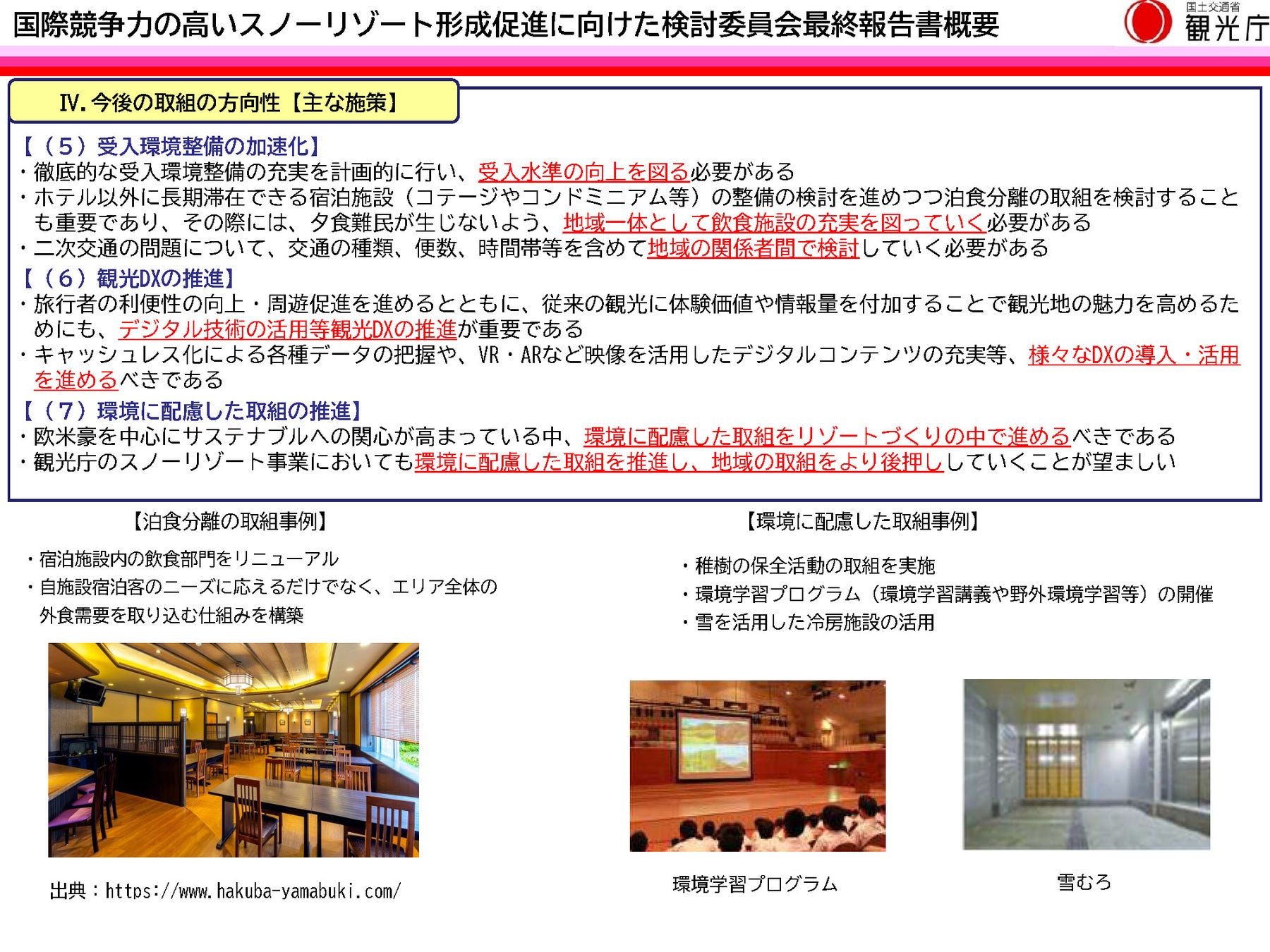
In the "Final Report of the Study Committee for Promoting the Formation of High International Competitiveness Snow Resorts," compiled by the Japan Tourism Agency in March 2026, the "Promotion of Environmentally Conscious Initiatives in Snow Resorts" has been clearly positioned as one of the future directions of effort.
Snow communities, including Protect Our Winters Japan (Location: Omachi City, Nagano Prefecture, Representative Director: Goro Komatsu, hereinafter POW JAPAN), have continuously advocated for climate change countermeasures to be reflected in policy. The clear inclusion of an environmental consideration perspective in this report signifies that the sense of urgency and requests from the field have aligned with national guidelines, marking a sure step towards building sustainable snow resorts.
Reference URL: "Formation of High International Competitiveness Snow Resorts" (Japan Tourism Agency Website)
"Promotion of Environmentally Conscious Initiatives" Clearly Stated in the Final Report
To understand the current situation and challenges for forming high international competitiveness snow resorts and to consider future directions, the Japan Tourism Agency held a total of four meetings from June to December 2025 with the "Study Committee for Promoting the Formation of High International Competitiveness Snow Resorts," composed of seven experts.
In the "Future Directions of Effort" of the final report announced on March 23, 2026, the "Promotion of Environmentally Conscious Initiatives" was newly included. The report clearly states, "Amidst growing interest in sustainability, particularly in Europe, North America, and Australia, efforts should be made within resort development to protect Japan's high-quality snow resources and promote environmentally conscious initiatives."
Specific actions and directions, such as the following examples, were presented:
Initiatives to switch power for gondolas, lifts, etc., to renewable energy.
Installation of small hydropower plants utilizing abundant water resources.
Installation of storage batteries in ski resort parking lots for EV charging.
Installation of bifacial solar panels (introduced as an overseas example).
The report emphasizes the importance of promoting environmentally conscious initiatives in the Japan Tourism Agency's projects and further supporting regional efforts based on these findings. For snow resorts dependent on snow resources, environmental consideration is essential. Furthermore, with the growing interest in sustainability in the inbound market, these initiatives are positioned as a "reason to be chosen" and a source of competitiveness.