Special Training for Sports Clubs and Athletic Organizations to Promote DEI Across the Industry. Fostering Leaders in the Sports Industry Who Support LGBTQ+ - "Ally Sports Leader Training" Conducted -
Pride House Tokyo Conducts "Ally Sports Leader Training" to Promote DEI in the Sports Industry.
📋 Article Processing Timeline
- 📰 Published: March 28, 2026 at 17:07
- 🔍 Collected: March 28, 2026 at 21:59 (4h 51m after Published)
- 🤖 AI Analyzed: April 15, 2026 at 08:40 (418h 40m after Collected)
NPO Pride House Tokyo, aiming to raise awareness and realize an inclusive society, conducted the "Ally Sports Leader Training" over three sessions for individuals involved in sports clubs and athletic organizations, with the goal of promoting DEI.
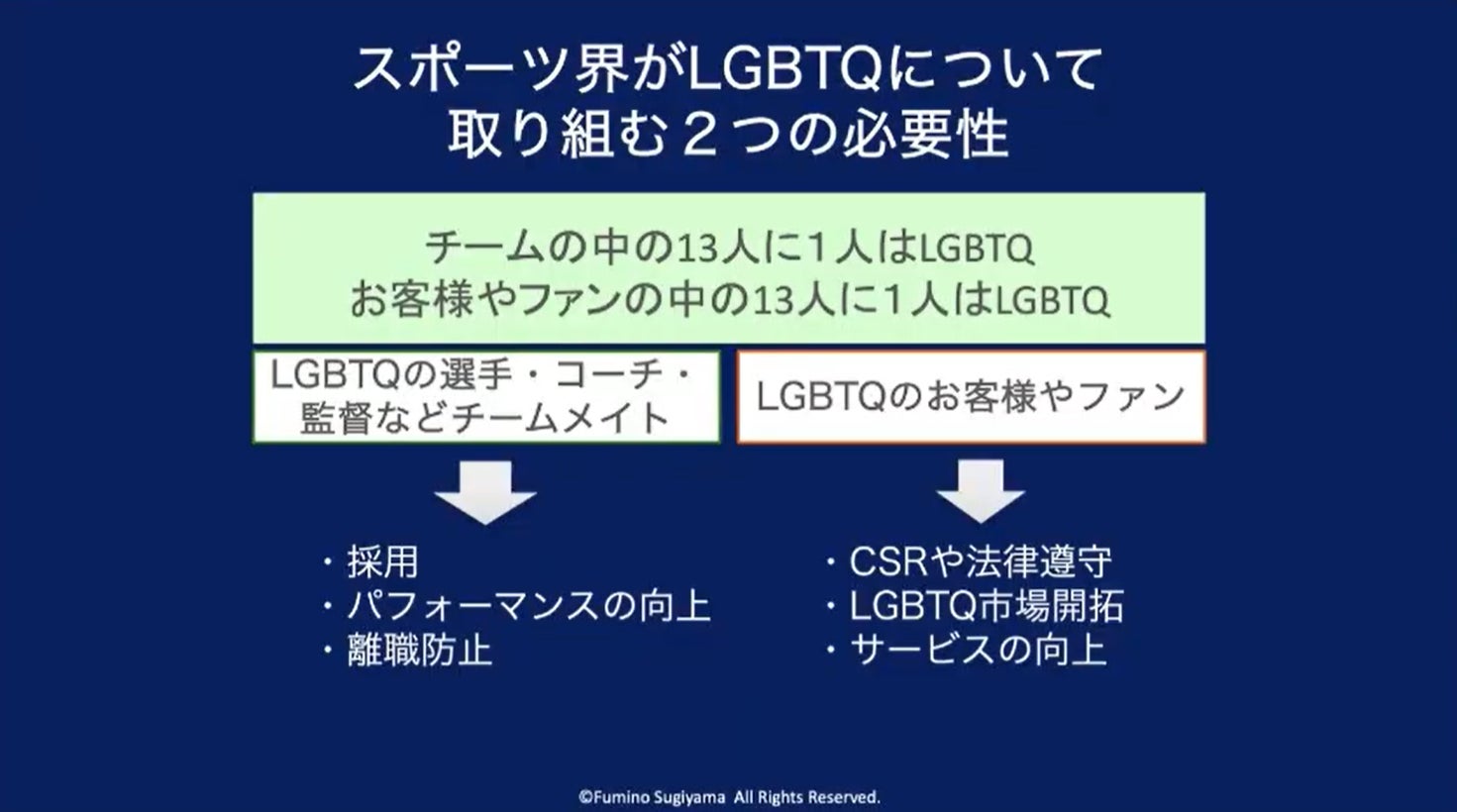
As DEI* becomes more widespread, improving the environment within the sports sector is also crucial. In recent years, the number of LGBTQ+ athletes participating in the Olympics has been increasing annually, with approximately 200 participating in the Paris Games. However, the number of Japanese athletes remains zero, indicating a lag in efforts. If LGBTQ+ individuals, who constitute about 8% of the domestic population, actively participate in sports, it is expected to diversify the fan base, improve relationships between clubs and companies/regions, and increase the number of participants in sports.
This program goes beyond basic knowledge of LGBTQ+ to cover challenges and necessary responses in sports settings, as well as practical actions that organizations can implement. The aim is to foster "Ally Sports Leaders" who deepen their understanding and act together in their respective fields, providing concrete steps for promoting diversity in the sports industry.
◆Details of the Training Program
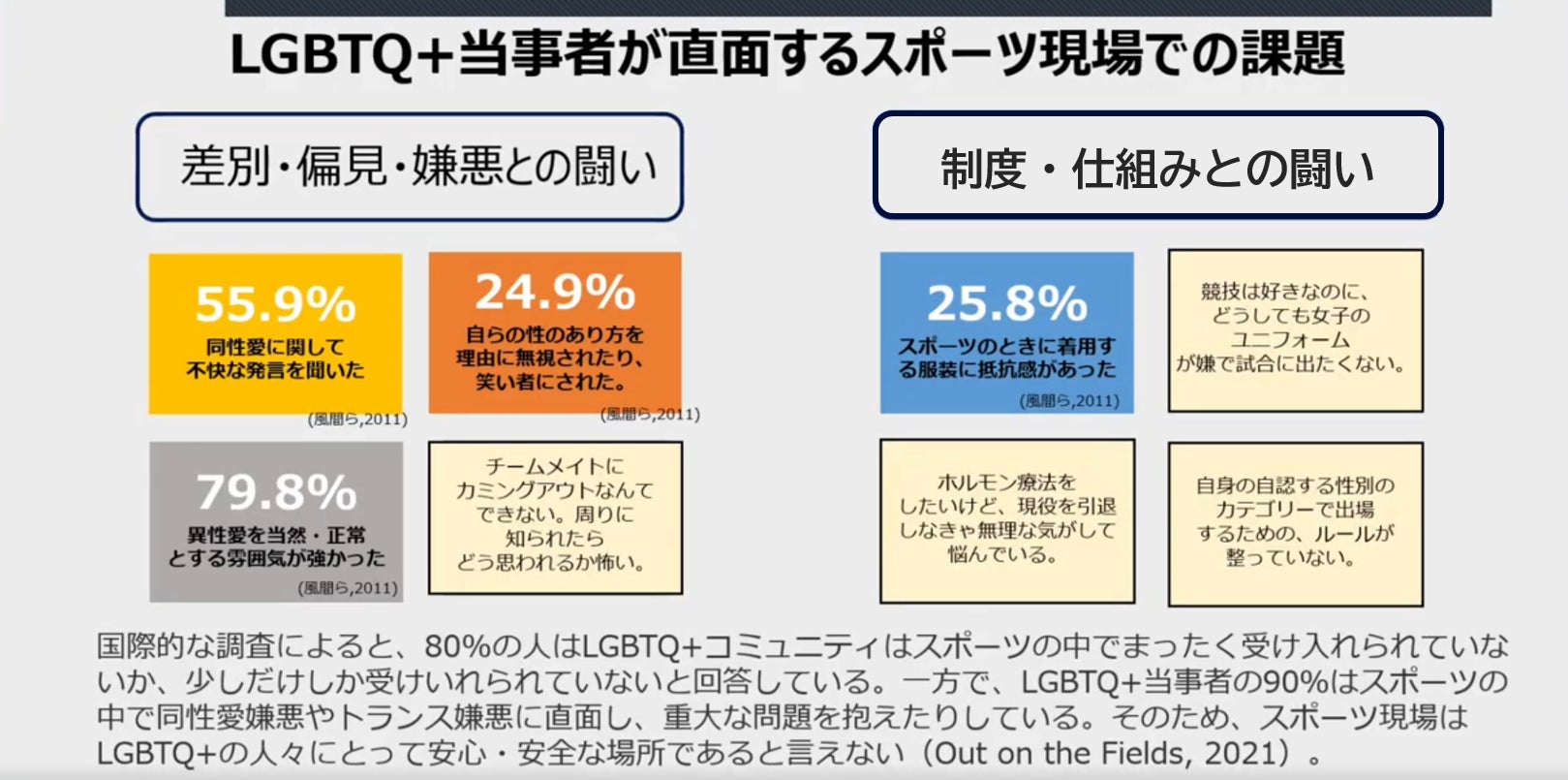
On the first day, Aya Noguchi, an associate professor at Seijo University and deputy director of the International Research Center for Sports and Gender Equality, gave a lecture on "Basic Knowledge of LGBTQ+ and the Current Situation and Challenges in the Sports World." In addition to a fundamental understanding of LGBTQ+, she explained how sports have historically developed under systems and norms that assume "able-bodied, heterosexual cisgender men," and discussed the structural issues arising from this. She also presented discrimination, prejudice, and institutional difficulties faced by LGBTQ+ individuals in sports settings, illustrating on-site challenges with specific data, such as one in four people feeling resistance to the clothing they wear during sports. Regarding transgender athletes, she highlighted that while transgender women often face scrutiny, the inequalities faced by transgender men are less visible, emphasizing the need to re-examine the system design and perspectives within the sports world.