Ueno Nakamichi Shopping Street and Students Develop 20 New Products
NPO Origami collaborates with Ueno Nakamichi Shopping Street to develop 20 new products with students.
📋 Article Processing Timeline
- 📰 Published: March 31, 2026 at 06:56
- 🔍 Collected: March 30, 2026 at 22:56
- 🤖 AI Analyzed: April 15, 2026 at 10:51 (371h 55m after Collected)
NPO Origami (Location: 7-11-10 Tsudanuma, Narashino City, Chiba Prefecture, Representative Director: Norihiko Tsuzuki) has partnered with the Ueno Nakamichi Shopping Street to develop 20 new products annually with the goal of "developing and disseminating Ueno's charm." Currently, they are also producing a special booklet focusing on Ueno's tonkatsu restaurants. Through ongoing collaboration, they aim to further enhance the creation of new regional value and information dissemination.
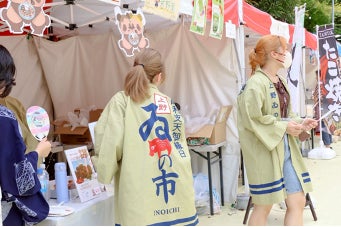
1. "Ueno Quiz Walk" Event Held
To introduce Ueno's attractive shops through a combination of quizzes and a walking tour, the "Ueno Quiz Walk" event was held. Approximately 10 people from Origami, including volunteers, participated on the day.
Proposals were made to stores, quizzes were created tailored to each store, and a booklet for the walk was produced.
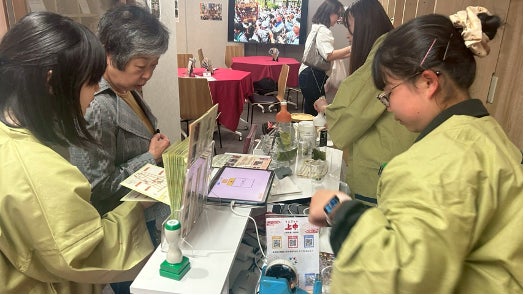
Held over two days, May 5th and 6th, publicity reached 36,850 households through newspaper inserts on the morning of May 5th. On May 5th, 101 people participated, and on May 6th, 81 people participated.
Feedback from the survey included comments such as, "It was an opportunity to visit shops I don't usually go to," and "I found attractive products and decided I want to visit again."
2. Tonkatsu Sandwich (Tonpachi-tei)
As Ueno is the birthplace of tonkatsu, this product was offered with the aim of informing visitors of this fact while encouraging them to try tonkatsu. The proposal was to sell it as a "tonkatsu sandwich" rather than just tonkatsu alone, to balance the buttery flavor of the bread with the saltiness of the tonkatsu.
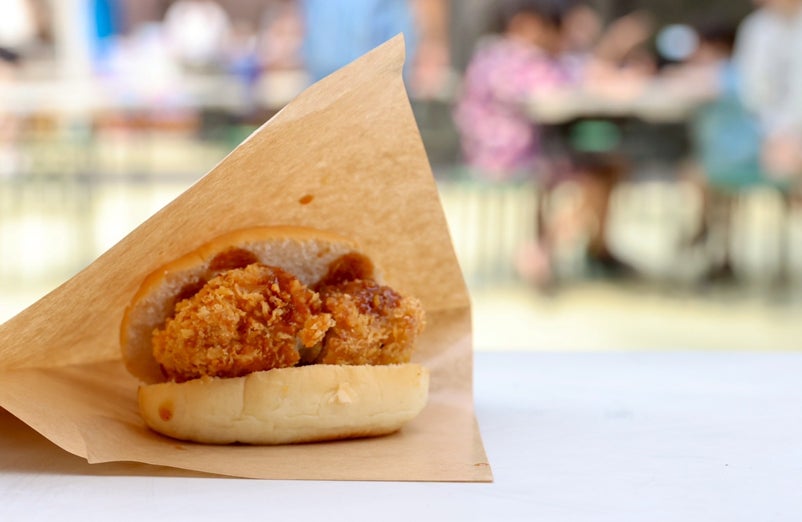
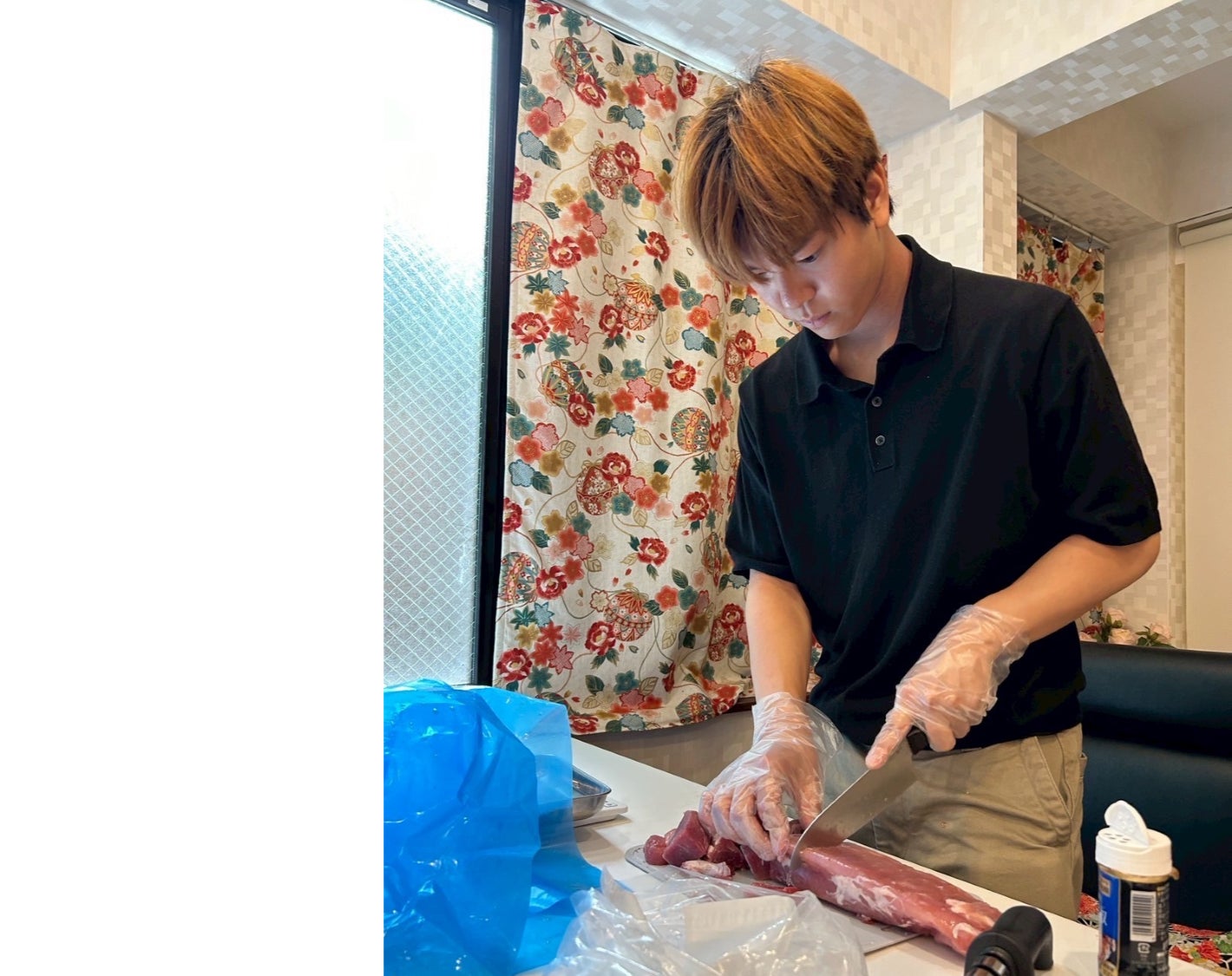
It was sold from August 9th (Saturday) to August 11th (Monday, holiday) for three days at a tent booth in the Hakama-goshi Plaza, Ueno Onshi Park.
Sales figures were: August 9th (Day 1) - 56 units, August 10th (Day 2) - 53 units, August 11th (Day 3) - 101 units, for a total of 210 units.
Visitors commented, "It was authentic and delicious. I want to eat it again," and "It made me want to visit the tonkatsu restaurants in Ueno."
3. Futago no Mogumogu Set (Kameido)
A collaboration was carried out with Ueno Kameido, a long-established store in Ueno, for the second consecutive year. Product development took approximately two months with Kameido's cooperation.
This initiative was realized with two objectives: "to further promote the appeal of Japanese sweets to young people" and "to revitalize the region through collaboration between long-established local stores and young people."
This time, the product "Zoo-tto Issho Futago no Mogumogu Set" was developed. It features animal-shaped cakes baked with butter and seasoned with two flavors: zarame (sugar crystals) and soy sauce, offering both sweet and savory tastes in one product.
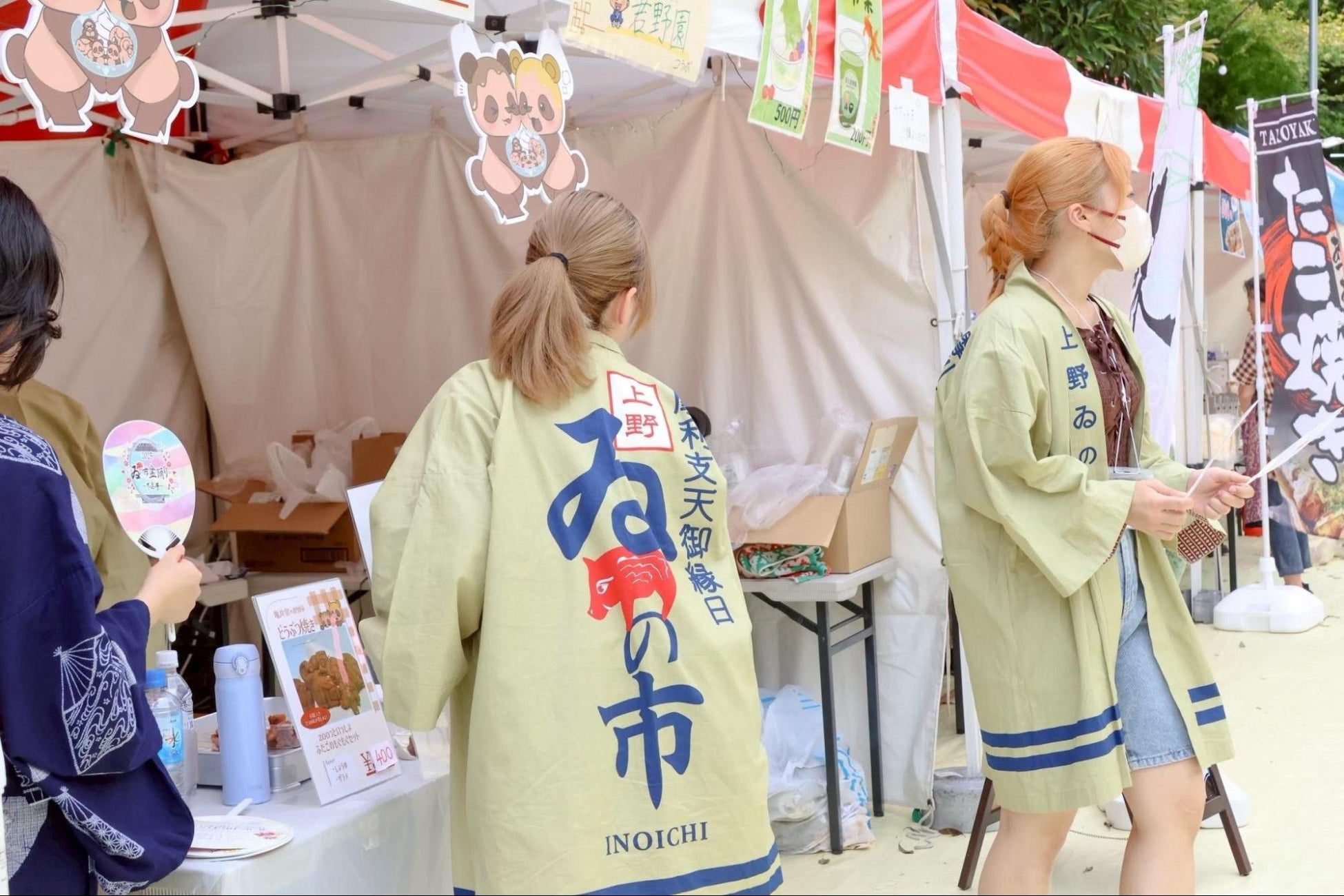
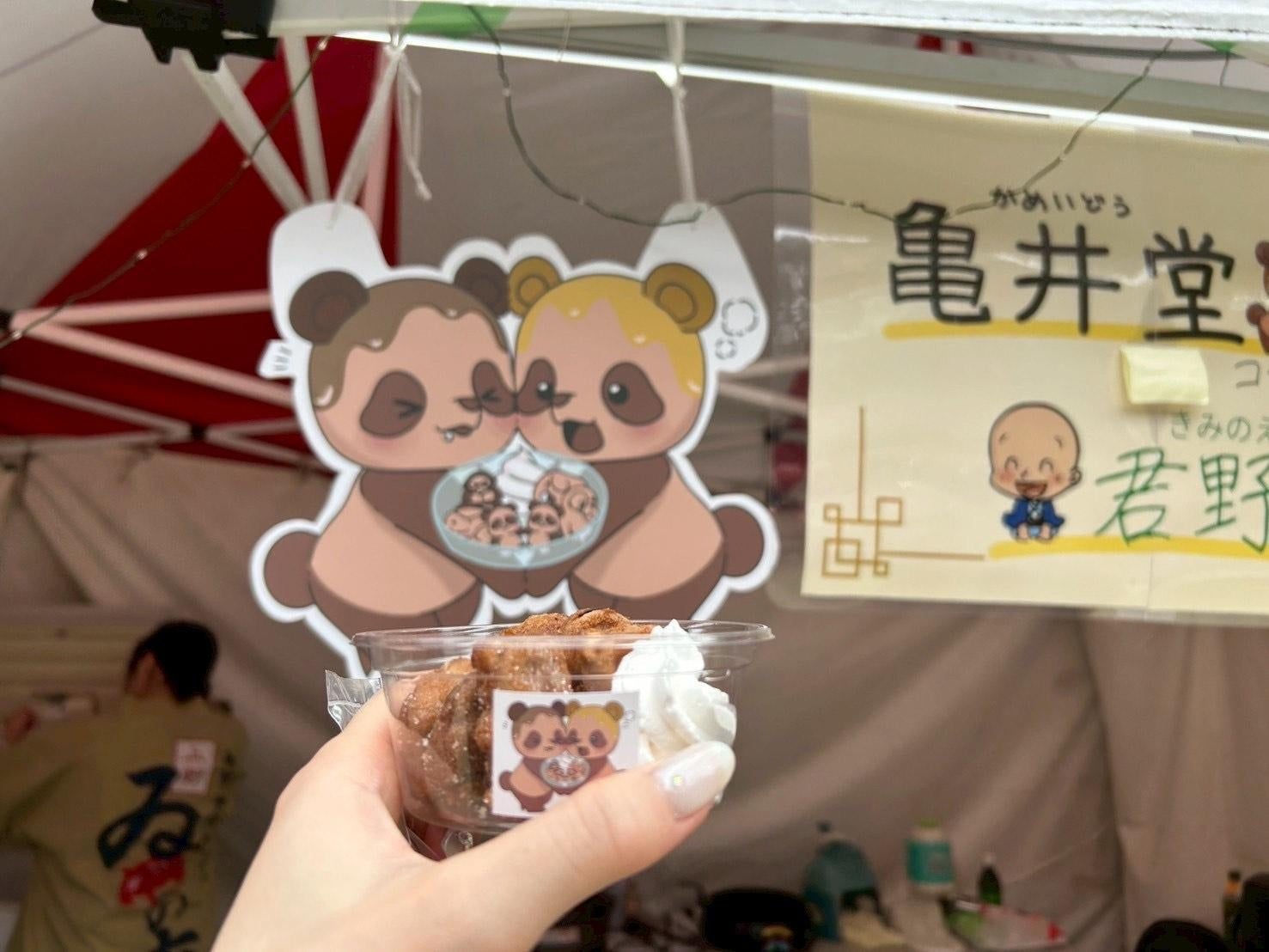
It was sold from August 9th (Saturday) to August 11th (Monday, holiday) for three days at a tent booth in the Hakama-goshi Plaza, Ueno Onshi Park.
The product, consisting of 6 Ningyo-yaki (doll cakes) and whipped cream, was sold for 300 yen.
Sales were: Day 1 - 42 units, Day 2 - 63 units, Day 3 - 74 units.
On the first day, the selling price was initially set at 300 yen but was raised to 400 yen. However, sales did not pick up, and the price was eventually lowered back to 300 yen. The high temperature on this day also affected sales, leading to sluggish performance.
On the second day, despite continuous rain, the temperature dropped, leading to improved sales. The animal-shaped cakes sold out in the evening. On the third day, lessons learned from the previous two days were applied, and promotional efforts were strengthened, resulting in the highest sales volume over the three days.
Customers commented, "The soy sauce seasoning was novel and delicious," "The portion size was just right," "It was great to enjoy both sweet and savory flavors," and "The illustration for the product image was cute."
4. Cold Tea (Kiminoen)
In collaboration with Kiminoen, a long-established tea shop, cold tea was offered.
The Yamecha used for the cold tea was the same tea used in a previous collaboration where packaging was created with "Cha no Kiminoen."
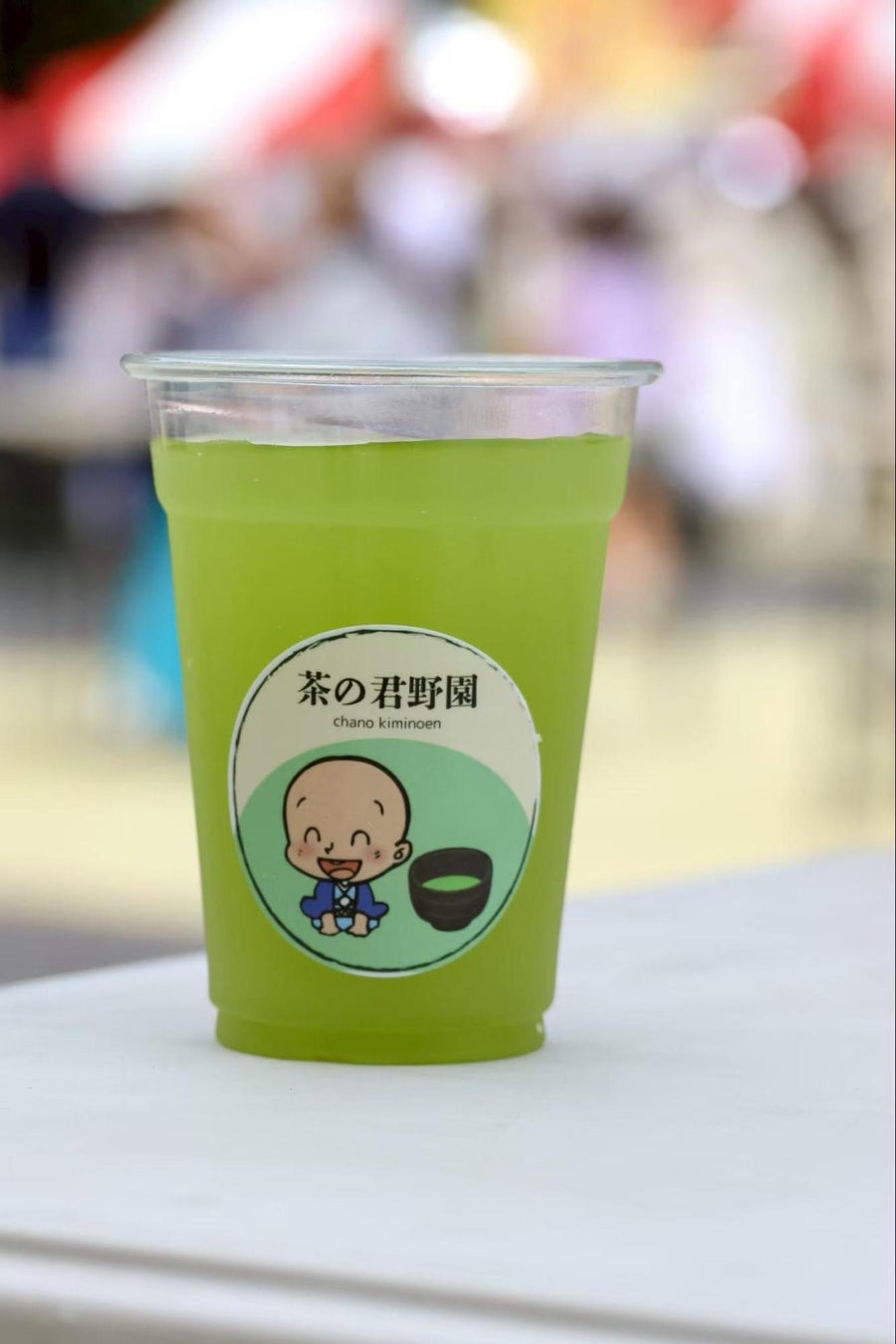
It was sold for 200 yen from August 9th (Saturday) to August 11th (Monday, holiday) for three days at a tent booth in the Hakama-goshi Plaza, Ueno Onshi Park.
Sales figures were: August 9th (Day 1) - 91 units, August 10th (Day 2) - 26 units, August 11th (Day 3) - 80 units.
Customers commented, "I tried Yamecha for the first time, and it had a sweet flavor that was easy to drink."
5. Matcha Shaved Ice (Kiminoen)
Along with cold tea, matcha shaved ice was offered in collaboration with Kiminoen, a long-established tea shop.
To make it easy for children to eat, the matcha shaved ice was carefully balanced in terms of bitterness and sweetness, with additions like condensed milk and biscuits to enhance the sweetness.
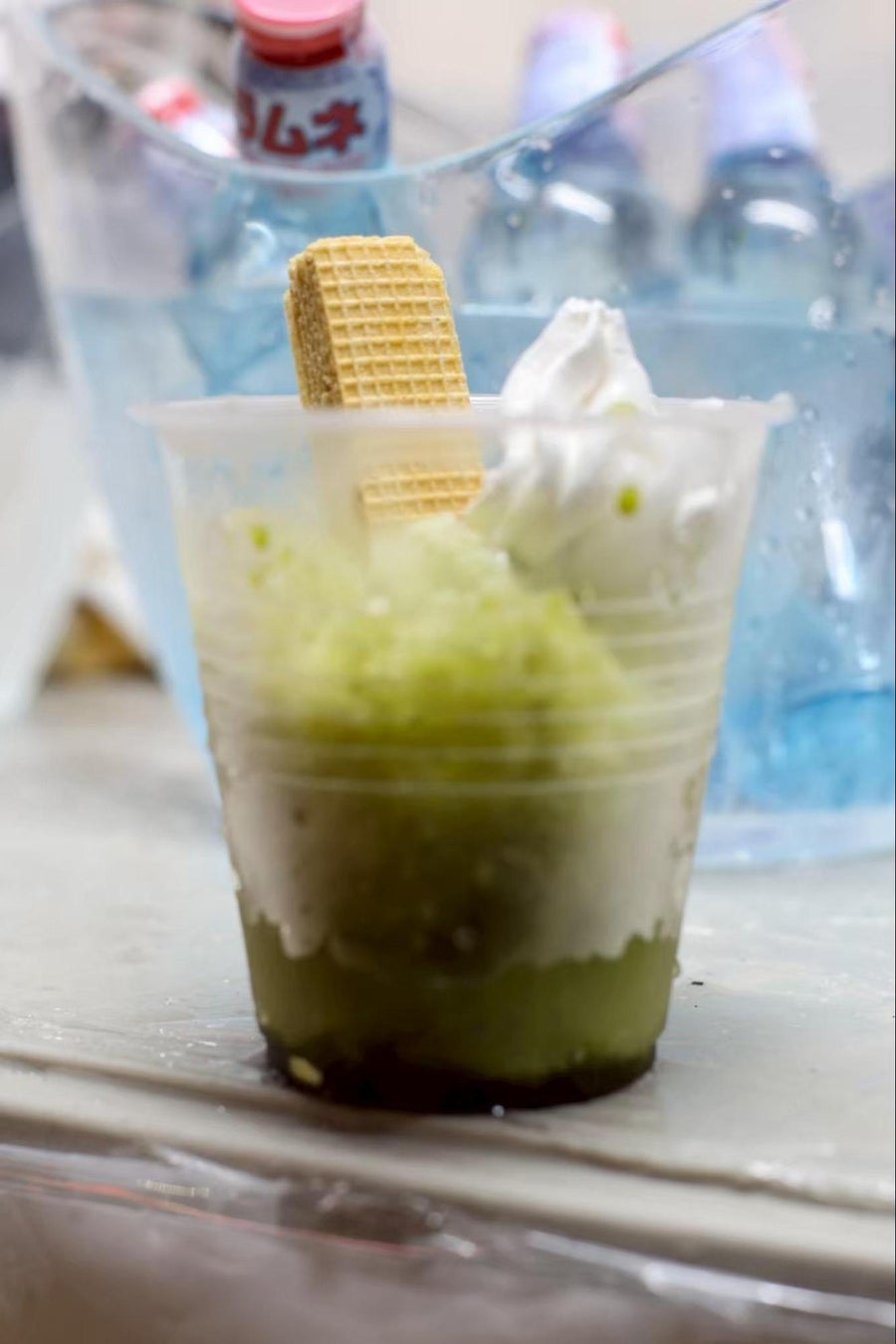
It was sold for 400 yen from August 9th (Saturday) to August 11th (Monday, holiday) for three days at a tent booth in the Hakama-goshi Plaza, Ueno Onshi Park.
Sales figures were: August 9th (Day 1) - 87 units, August 10th (Day 2) - 18 units, August 11th (Day 3) - 85 units.
Customers commented, "Even people who don't usually eat matcha found it easy to eat and delicious because it was mixed with condensed milk."
6. Pinwheel Workshop Project
To foster a sense of unity and liven up the festival, a participatory workshop was proposed where all visitors would contribute to creating a single item. Based on this, a pinwheel workshop was planned.
Visitors created pinwheels, which were then inserted into a wooden frame to create a "path of pinwheels."
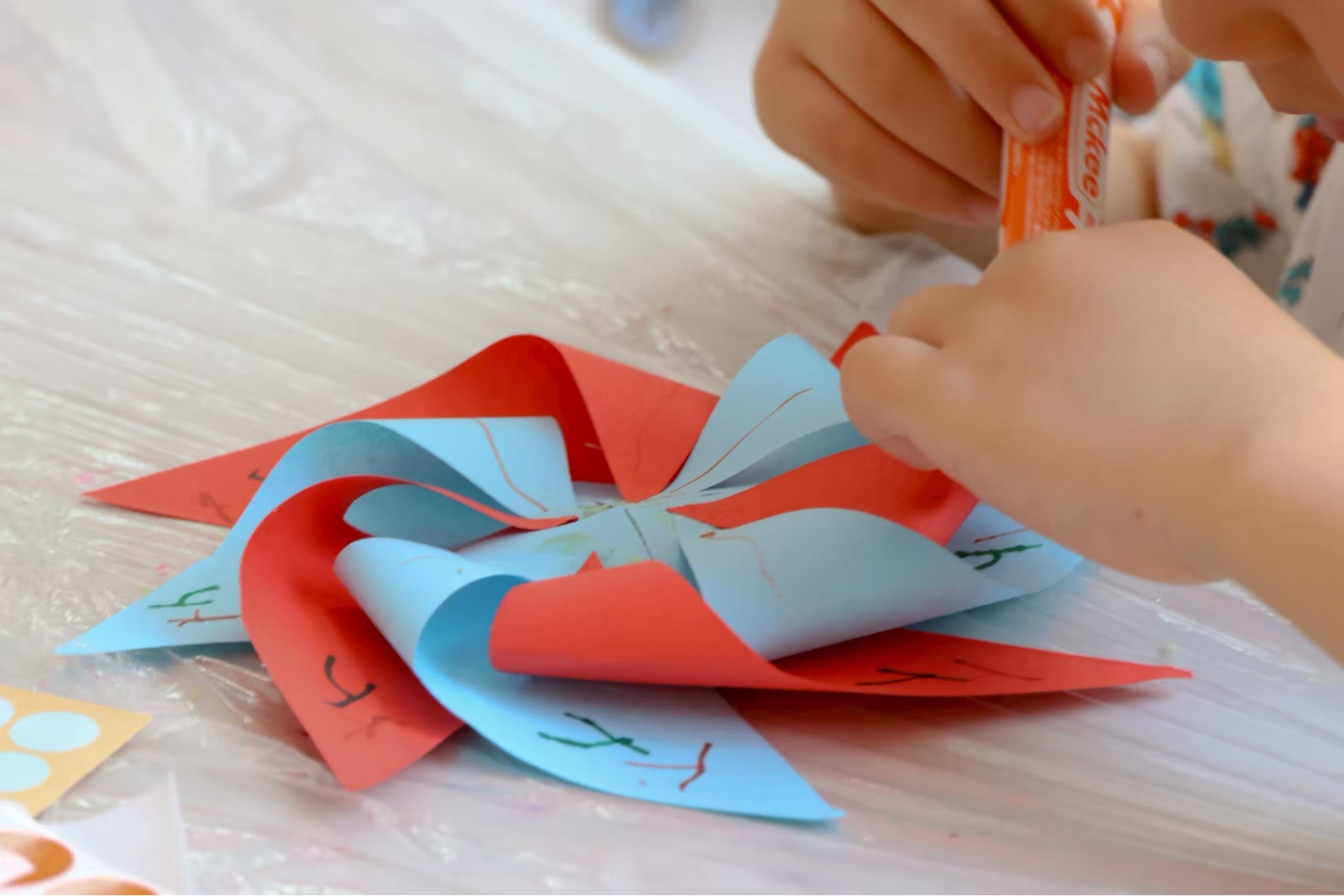
While the target audience was children and families, participants actually came from a wide range of ages, including international visitors, the elderly, and students.
A total of approximately 250 people participated over the three days.
Elderly participants commented, "I never thought I'd have such a wonderful experience at my age. It was a lovely experience." Young people in their 20s asked about the concept, and upon explanation, expressed their admiration, saying, "I was deeply impressed."
The smiles of participants as they blew on their pinwheels and watched them spin were the most rewarding moments.
7. Original Ema (Wishing Plaque) Creation Project
To create a space where visitors' wishes could gather, a participatory content was planned where people could write their dreams and wishes on original ema.
The ema featured an original design using the festival's main visual. By involving not only visitors but also performers, it became a place where many wishes converged.
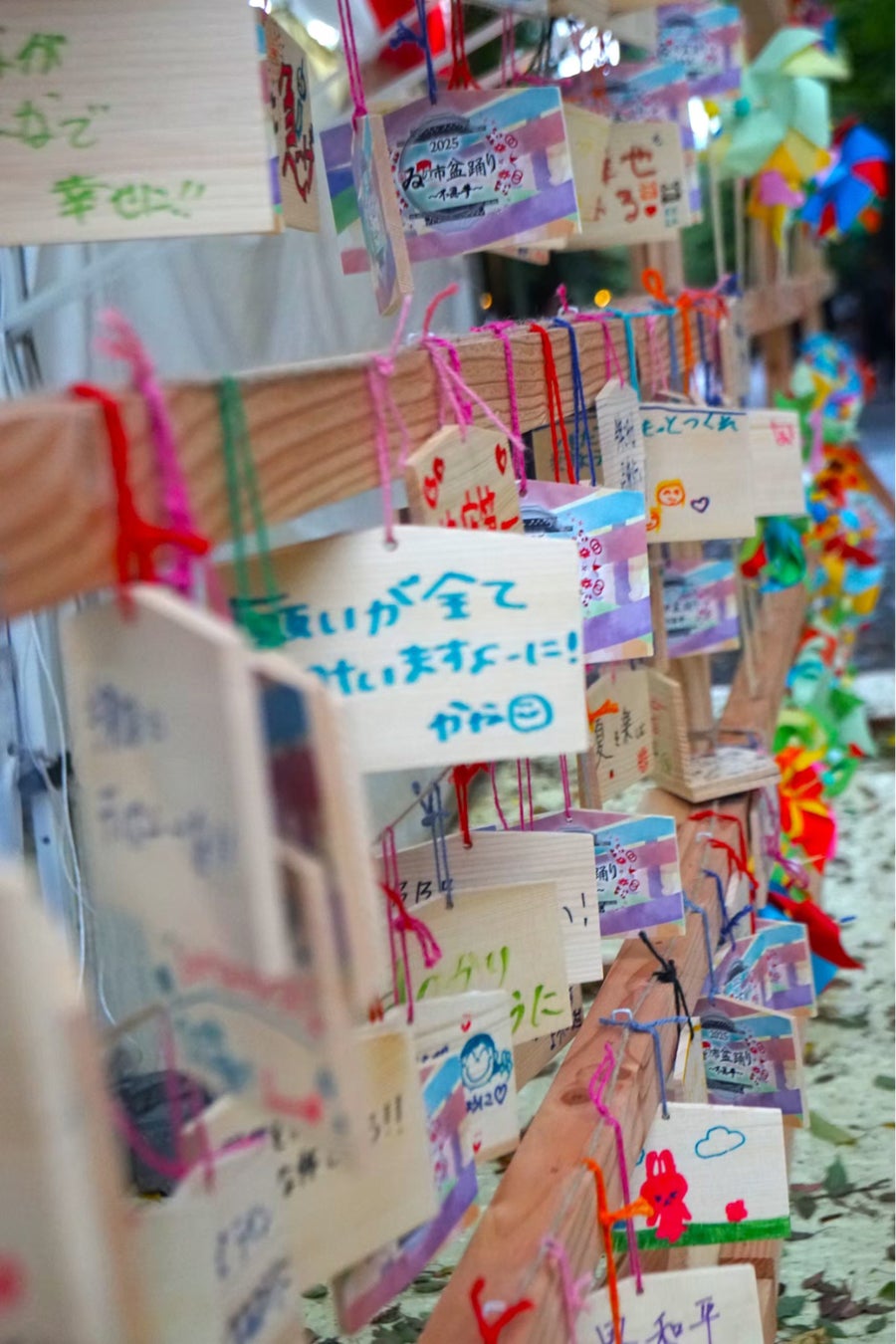
A total of approximately 250 people participated over the three days.
The ema, each containing wishes, were displayed over the three days, creating a space that visualized visitors' sentiments. Children who found writing difficult expressed themselves through drawings, showcasing diverse participation methods.
8. Geidai Student Collaboration Creative Yagura (Tower)
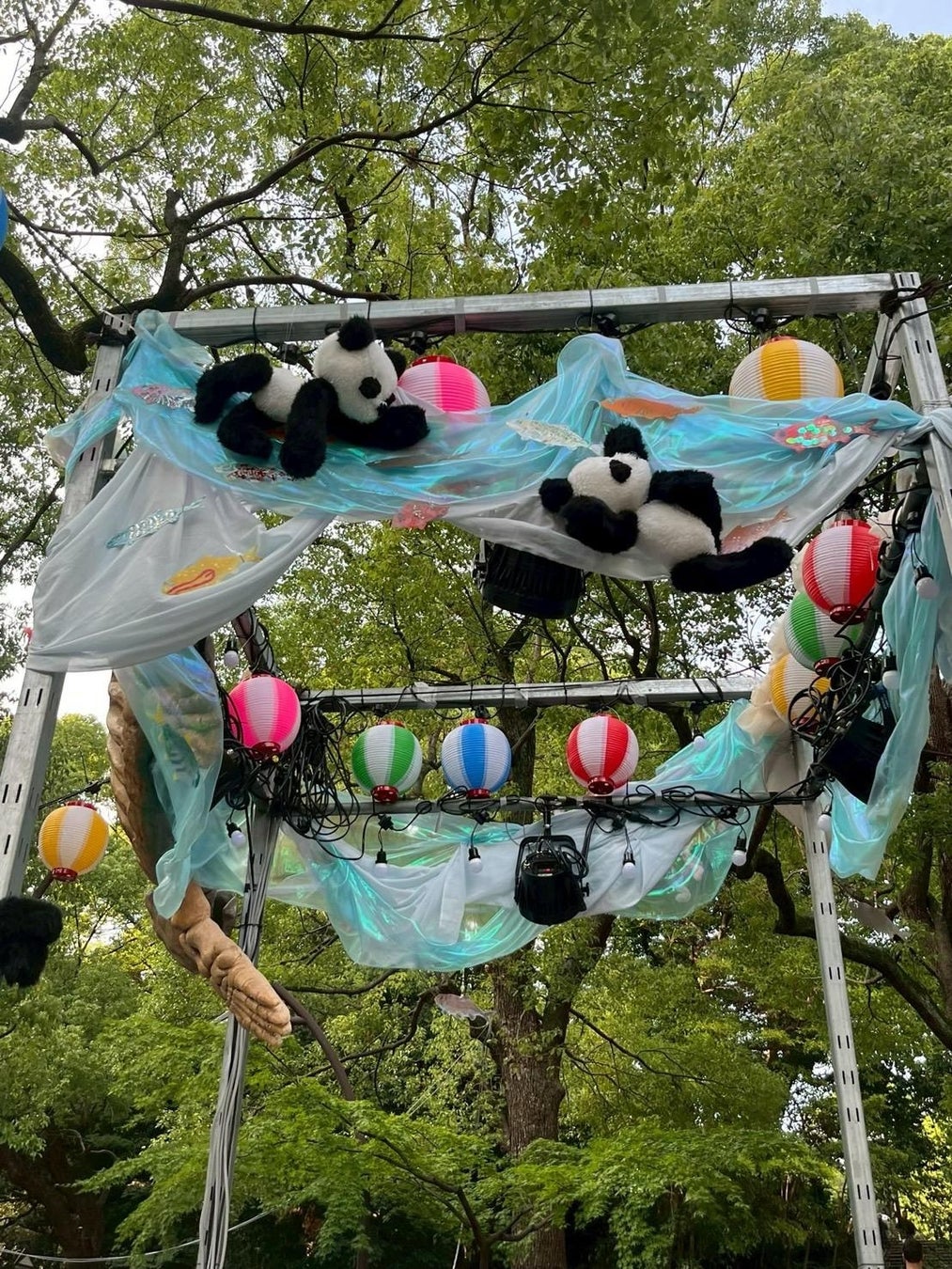
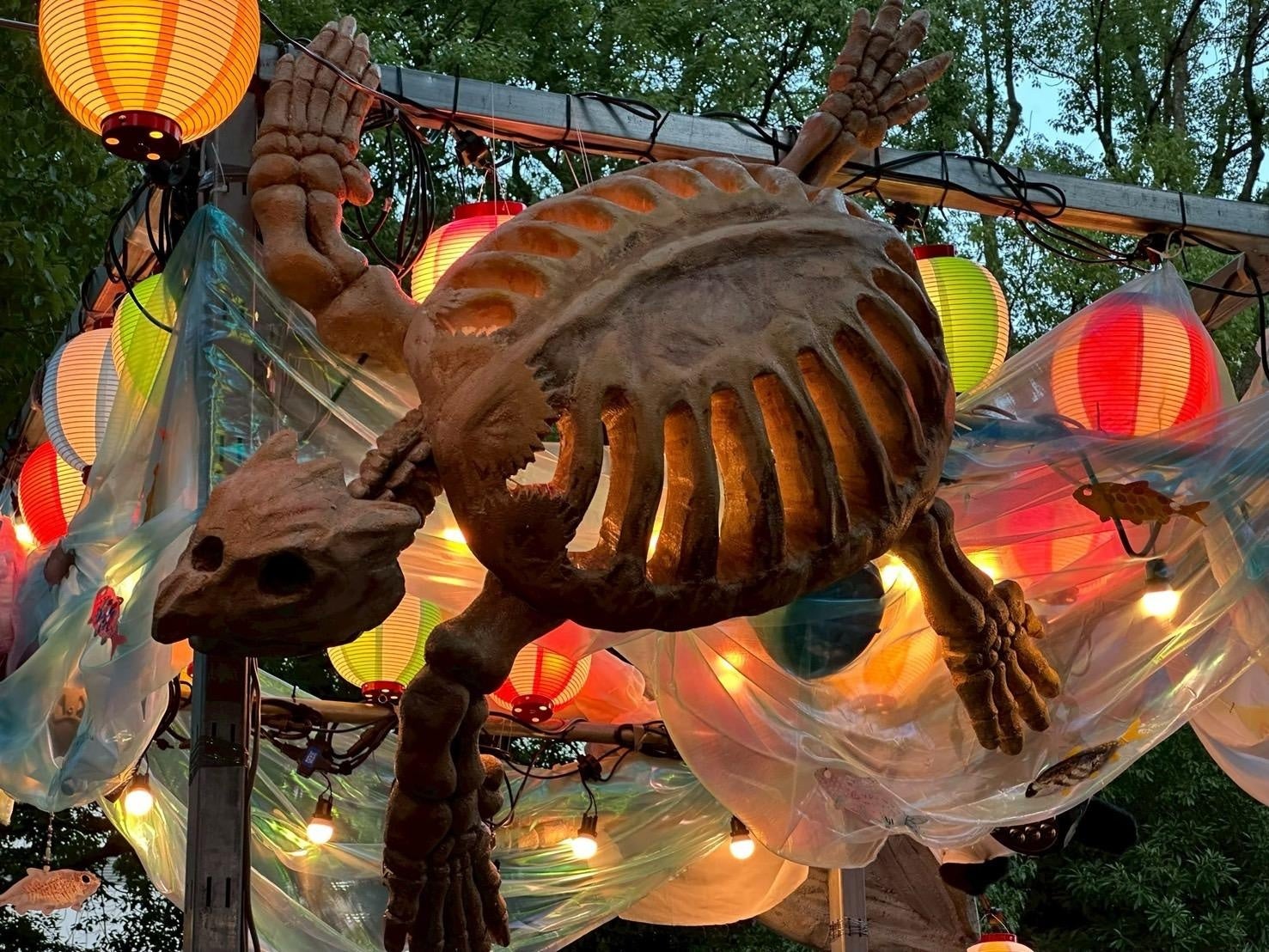
For the "Inoichi Bon Odori" (Boar Festival Bon Dance), there was a desire to collaborate not only with the shopping street on the town side but also with the mountain side, including museums, zoos, and Tokyo University of the Arts. Contact was made with students from Tokyo University of the Arts. After repeated discussions, they were commissioned to create the yagura, which is one of the symbols of this bon dance.
The yagura incorporated elements symbolizing Ueno, such as pandas and Shinobazu Pond, as well as decorations like fish and water to represent the connection between the mountain and the town. It served as a monument and photo spot during the day and as a symbol of the bon dance when illuminated at night, creating a yagura with different charms day and night. Many visitors were seen taking photos of the yagura, making it an impressive symbol of the bon dance.
9. Store PR Triangle POPs
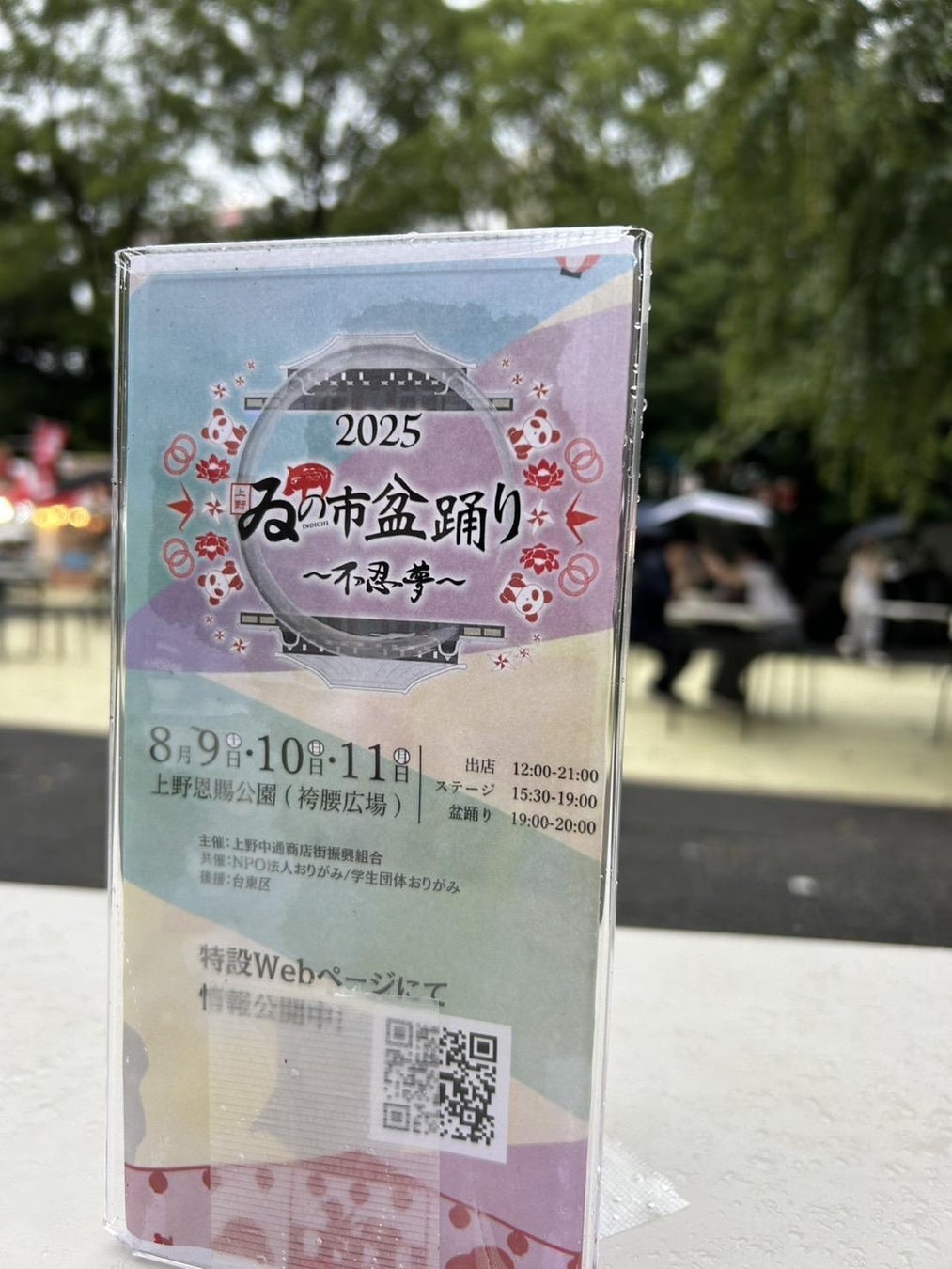
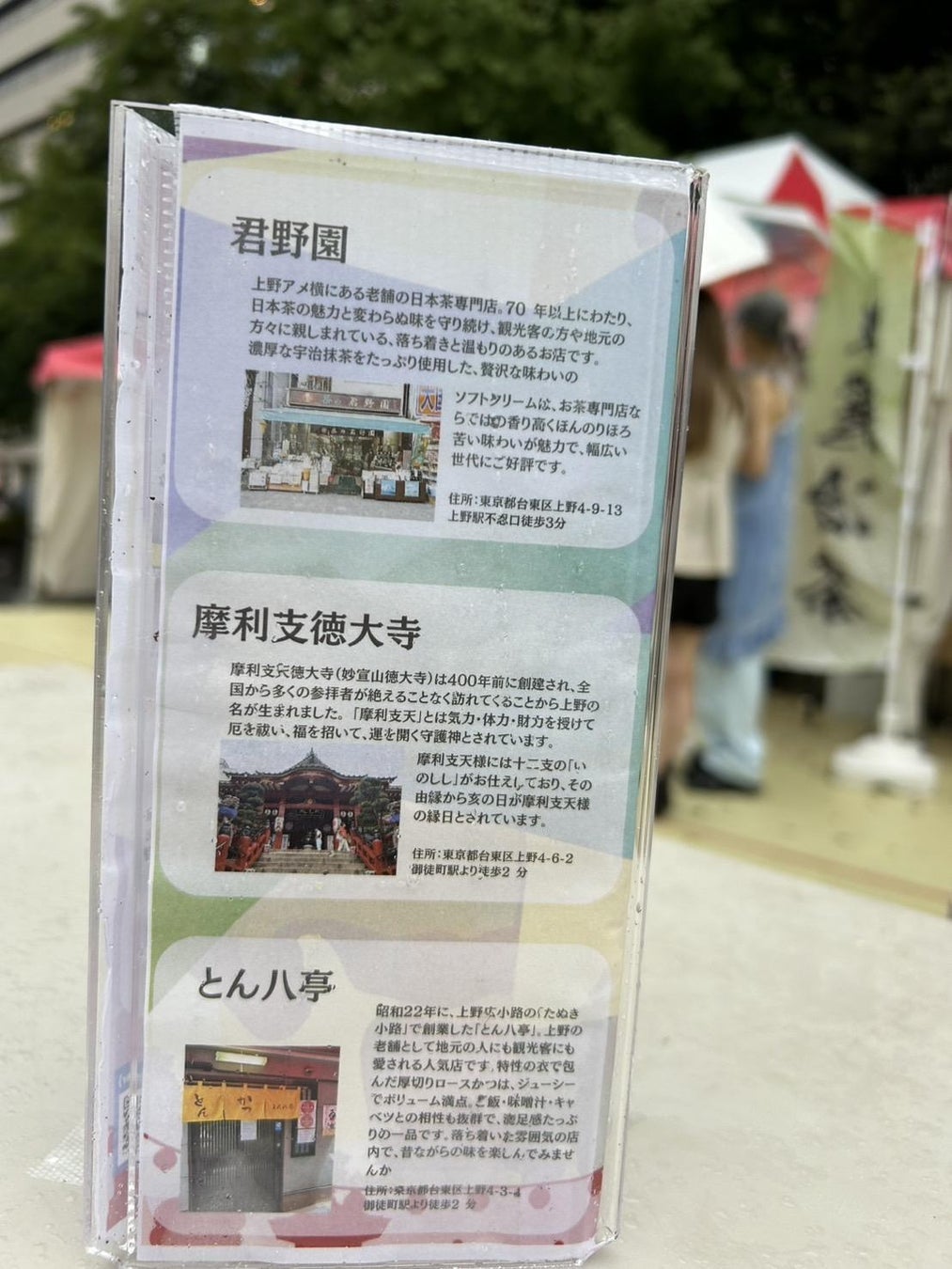
POPs introducing shopping street stores and facilities were created. This time, five locations were featured: Kiminoen, Marishiten Tokudaiji Temple, Tonpachi-tei, Shabu-shabu Hachi no Ki, and Kameido. Along with exterior photos, recommended products and historical information were introduced.
On the day of the event, they were placed on dining tables in a triangular menu format. By featuring Kiminoen and Kameido, who were selling collaboration products at their tents, visitors had the opportunity to learn about these stores while enjoying the collaborative items. However, due to rain, installation was suspended during certain periods. In the future, measures will be taken to address weather conditions, such as using more water-resistant materials.
10. Original Omikuji (Fortune Slips) Created
With the aim of easily introducing shopping street stores to festival visitors, original omikuji featuring spots within the shopping street were created.
Stores such as "Tonpachi-tei," "Cha no Kiminoen," and "Kameido" were introduced in an omikuji format along with their recommended menus.
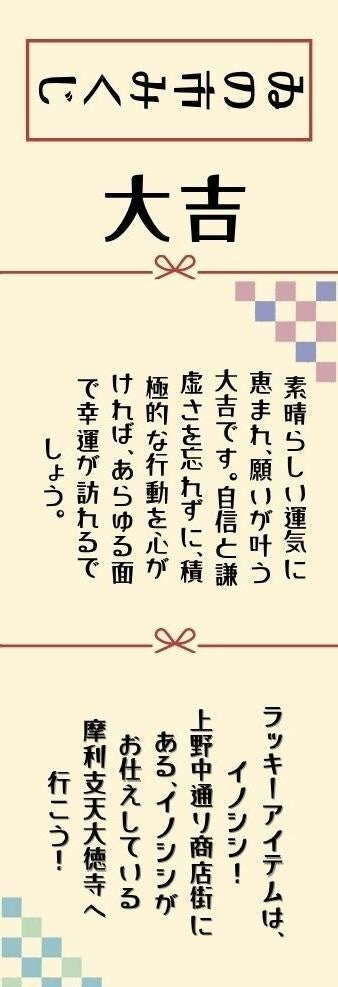
Approximately 450 slips were distributed over the three days along with products sold at the event tents. Visitors commented, "I learned about shops I didn't know before."
11. Ueno no Mori Shindanjo! (Ueno Forest Diagnosis!)
With the concept of "accessible to everyone," participatory content that could be enjoyed even for a short time was planned.
A comment board project was developed, linking "Ueno no Mori Shindanjo!" which introduces recommended Ueno spots in a diagnostic format, with "Hikari Asobi" (Light Play) where comments are written with fluorescent markers.
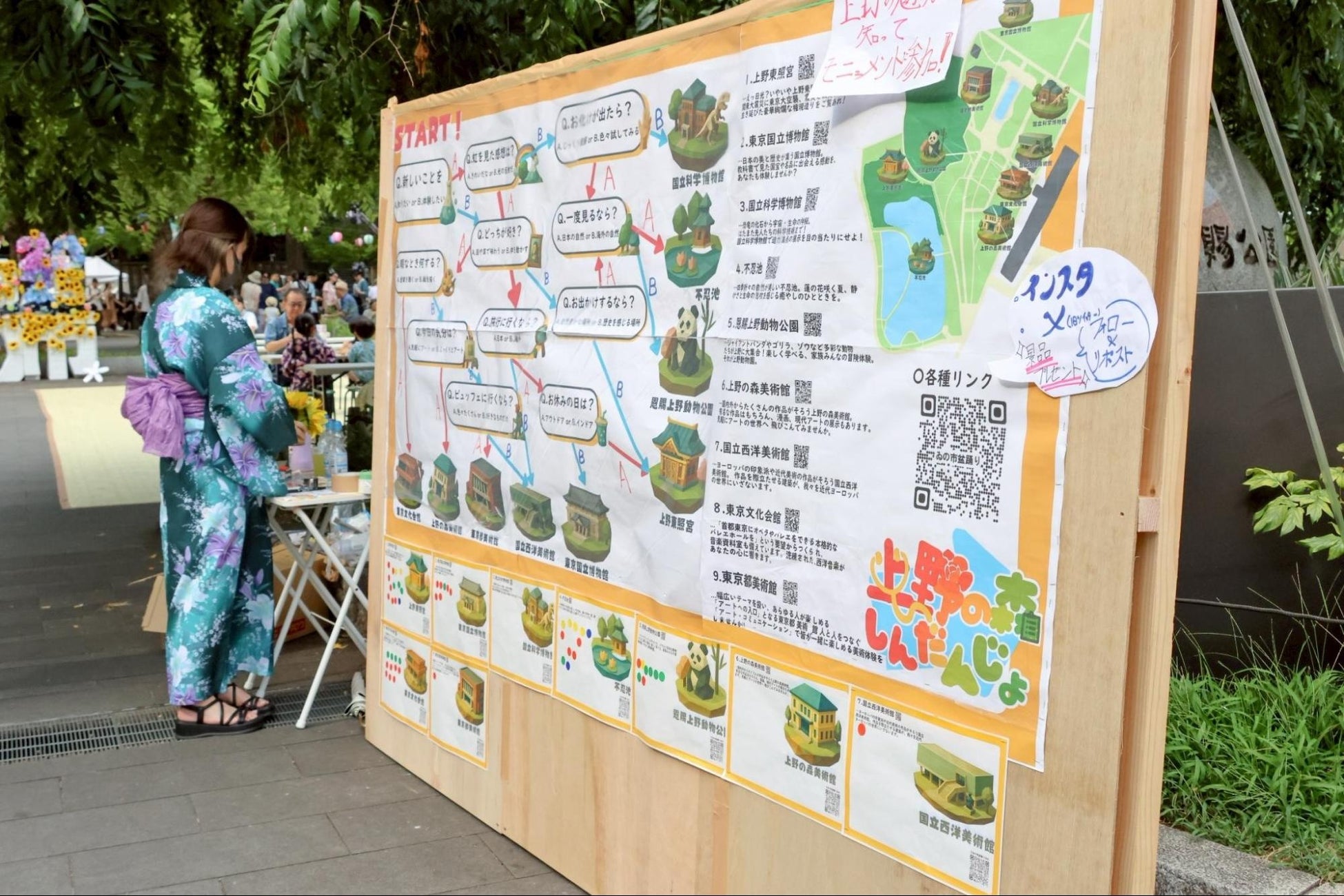
In "Ueno no Mori Shindanjo!," aptitude tests were used to gauge interest in cultural facilities. This project was linked with the co-creation monument, and participants who completed the diagnosis were given "decoration parts" to add to the monument. This created an experience where participation was recorded tangibly, naturally fostering affection and shared memories of Ueno.
Estimated participant numbers were: August 9th (Day 1) - approximately 300 people, August 10th (Day 2) - no operation due to rain, August 11th (Day 3) - approximately 400 people.
12. Hikari Asobi (Light Play)
A comment board project using fluorescent markers was implemented.
Visitors were able to leave comments about their impressions of Ueno and its attractions.
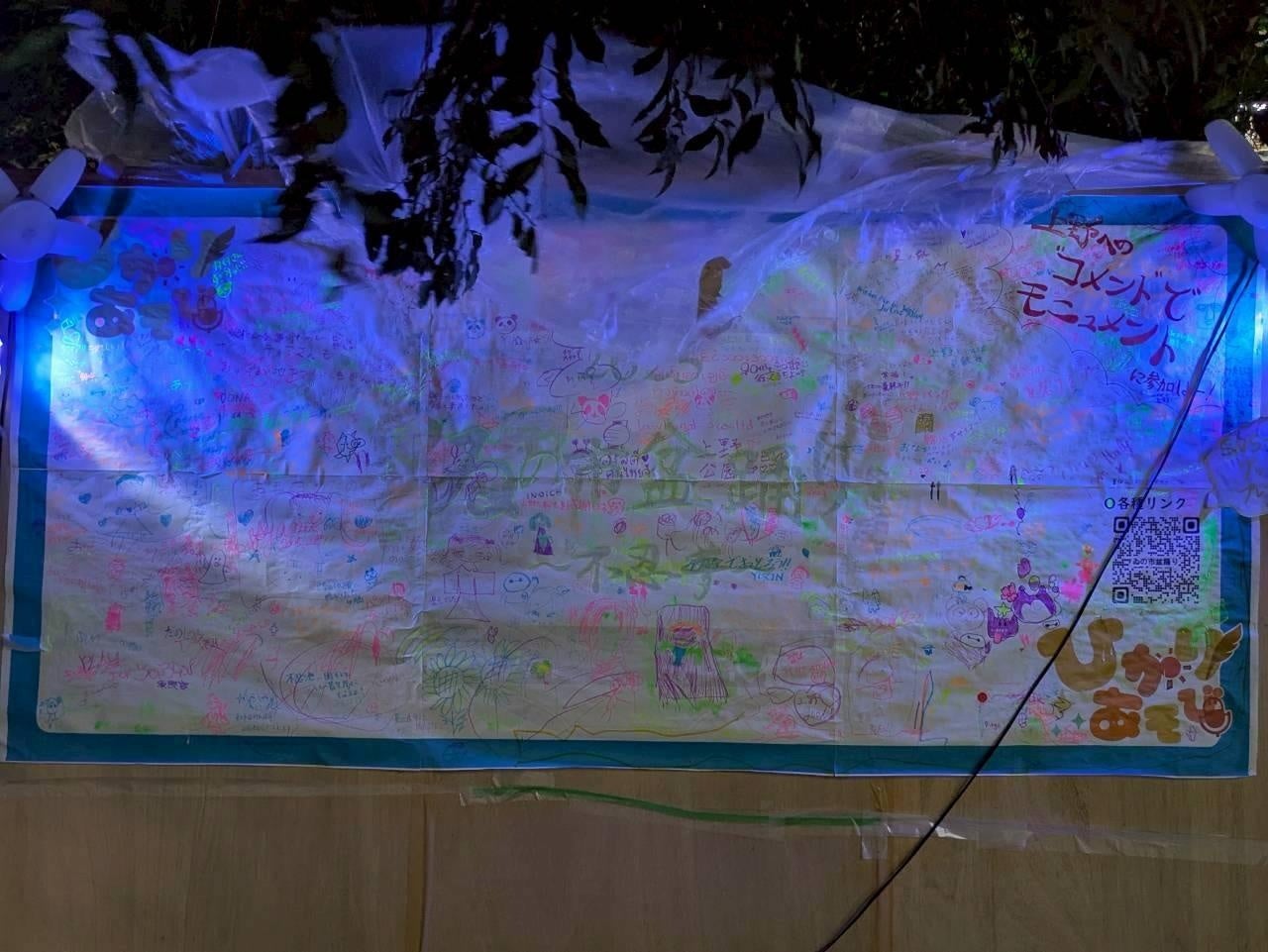
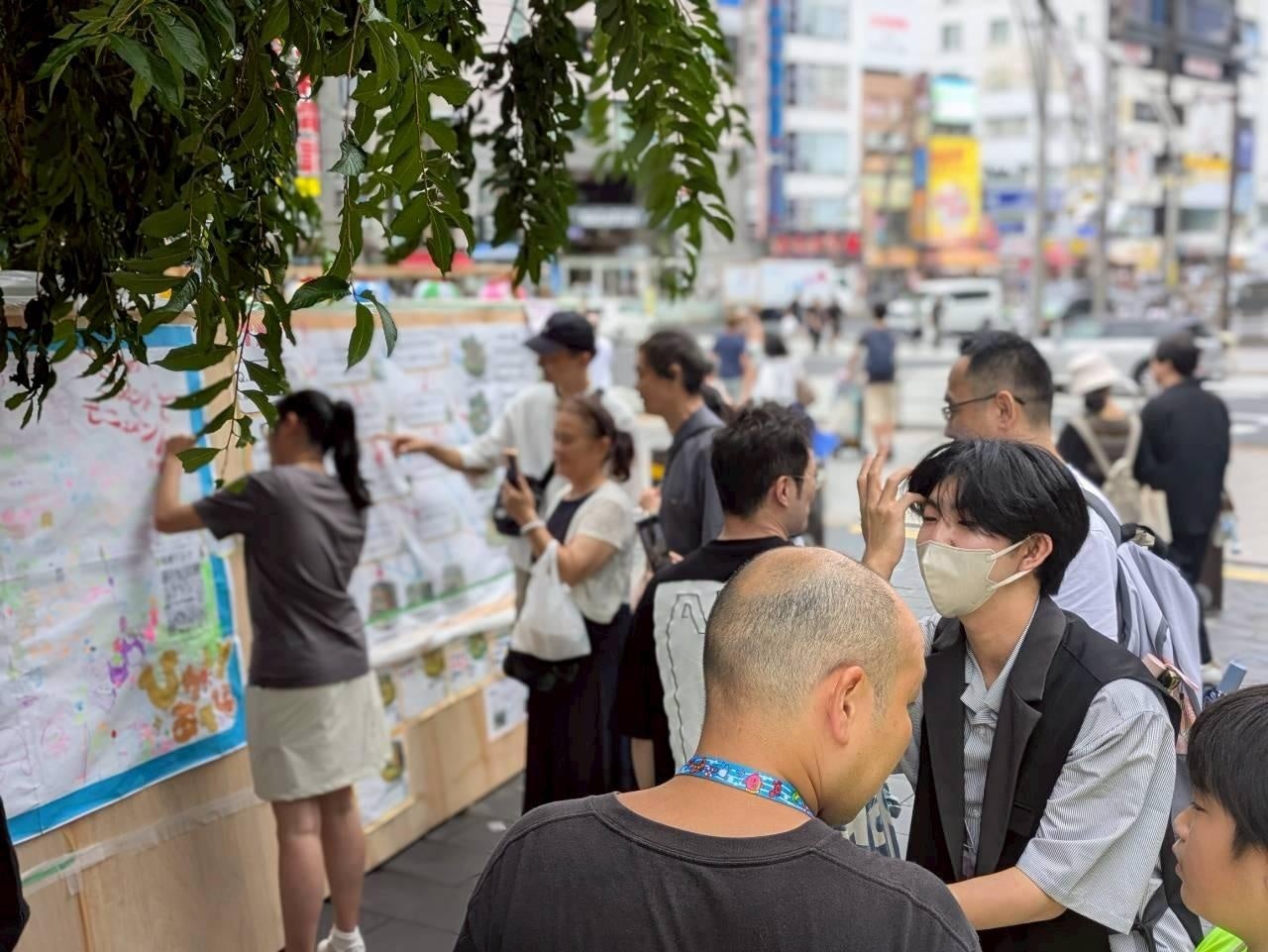
In "Hikari Asobi," content was provided for visitors to freely write about their reasons for visiting Ueno or their discoveries.
Passersby, especially international visitors, actively participated, asking, "Can I write?" Although the board was created only in Japanese this time, future plans include English support to create a more accessible environment for a wider range of visitors.
13. Co-creation Monument Project
To leave a tangible mark of each visitor's participation at Ueno's summer festival, a "Co-creation Monument" was produced.
A monument shaped like the characters "ゐの市" (Inoichi) was installed, and visitors were invited to insert artificial flowers into it.
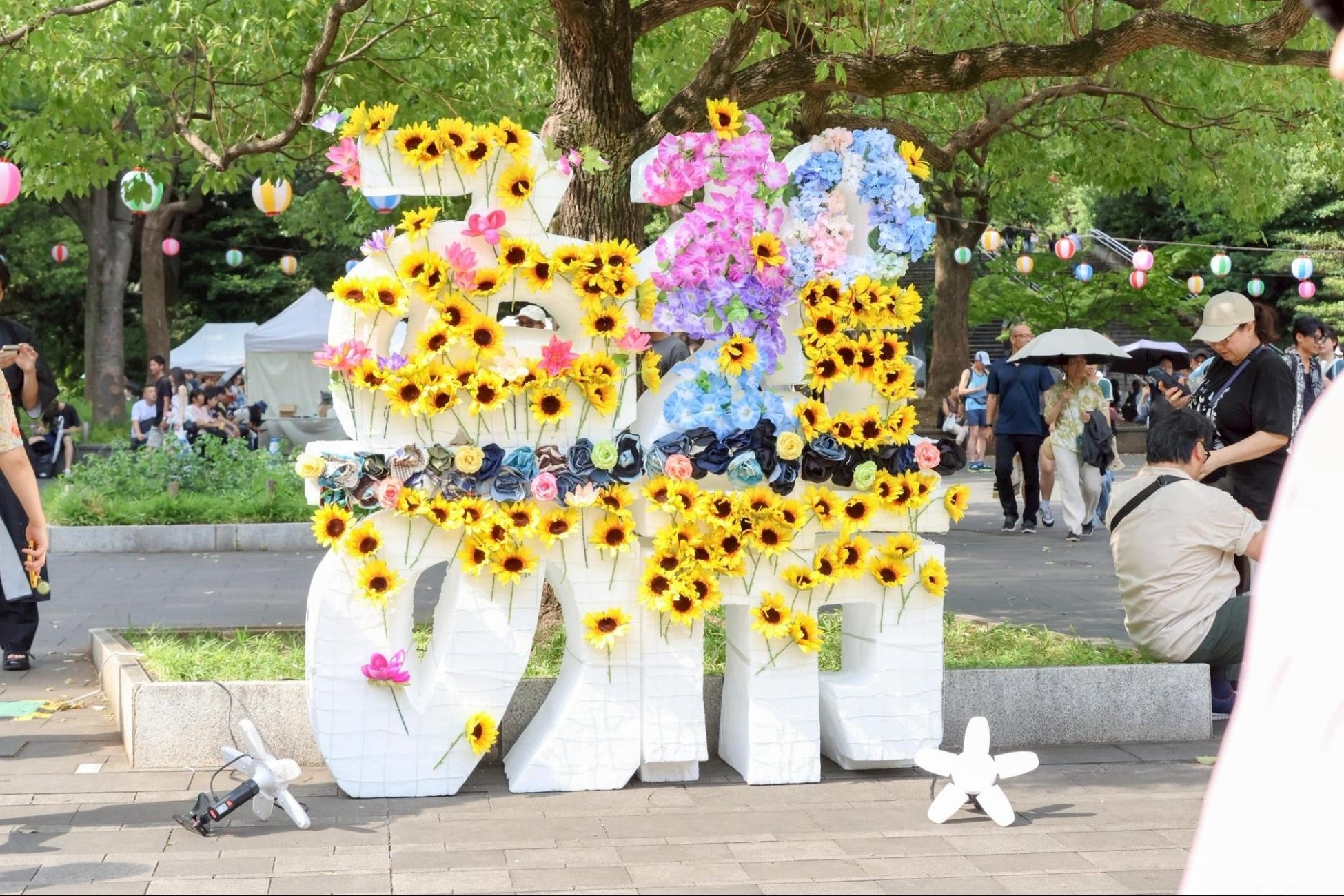
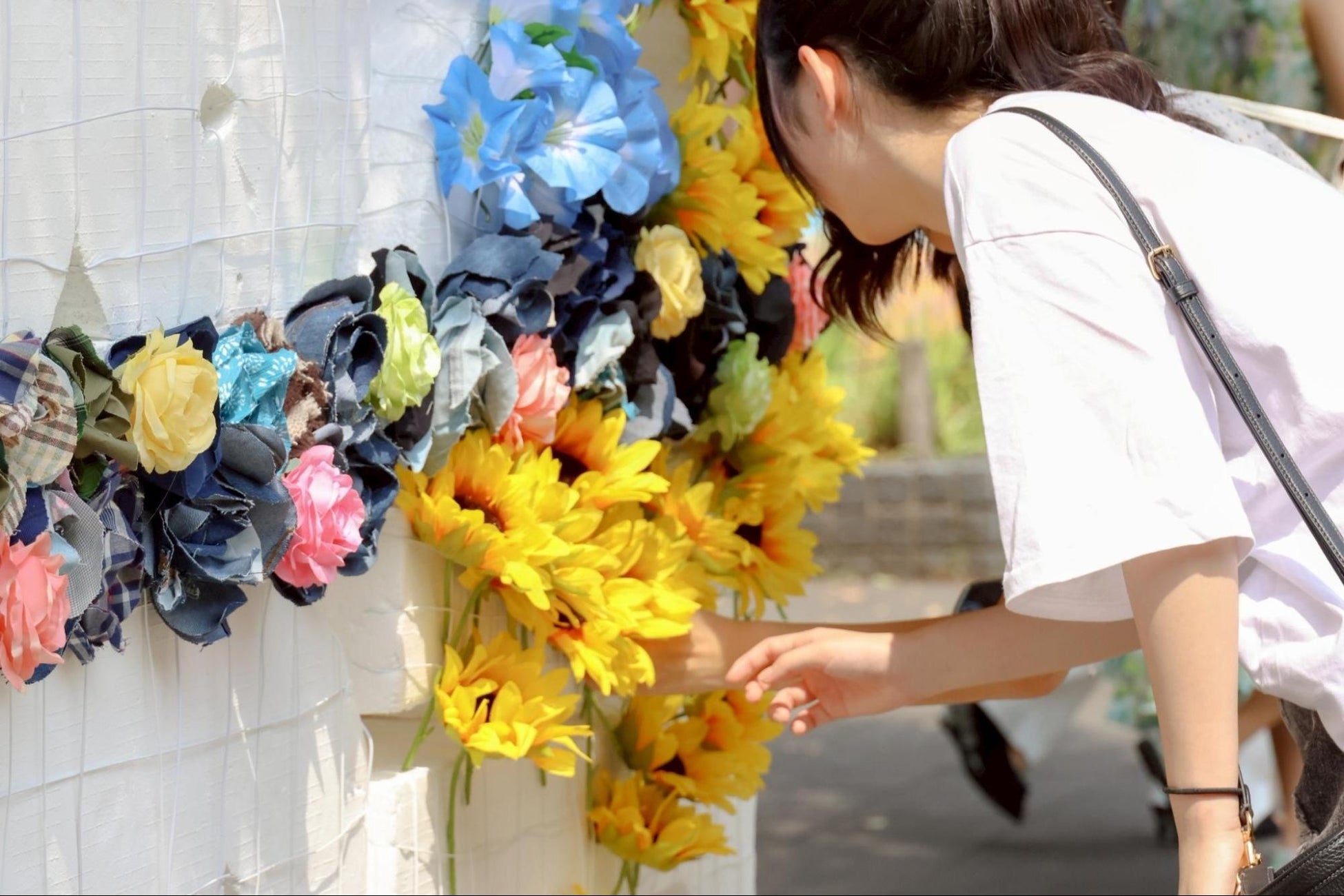
It was held from August 9th (Saturday) to August 11th (Monday, holiday) for three days in the Hakama-goshi Plaza, Ueno Onshi Park.
Over 15 people from Origami, including volunteers, were involved. Preparations, from material procurement and setup to installation and dismantling, were carried out through multiple workshops and work sessions. Promotion was conducted through on-site calls, social media, and coordination with the comment board.
Estimated participant numbers were: August 9th (Day 1) - approximately 300 people, August 10th (Day 2) - approximately 20 people, August 11th (Day 3) - approximately 400 people.
Visitors frequently commented, "It's beautiful," and "May I take a picture?" The "Inoichi" shape also prompted questions about the meaning of the word, serving as an opportunity to spark interest in Ueno.
14. Geidai Student-Designed Ema for Blessings and Wishes
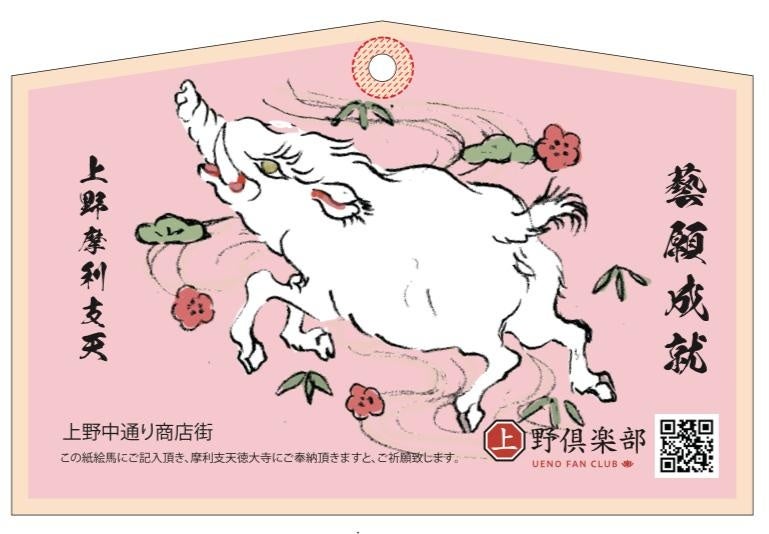
An ema design competition was held for students at Tokyo University of the Arts, and the winning design was selected. The completed ema were prayed over at Marishiten and then offered to visitors as blessed items. By combining the fresh sensibility of Geidai students with traditional prayer rituals, the ema appealed to visitors as unique good luck charms.
15. International Student Ueno Guide Tour Project
A guided tour of Ueno was provided for international students aged approximately 18 to 22.
The tour introduced topics rooted in the local community, such as Ueno's food culture and the history of bon dances.
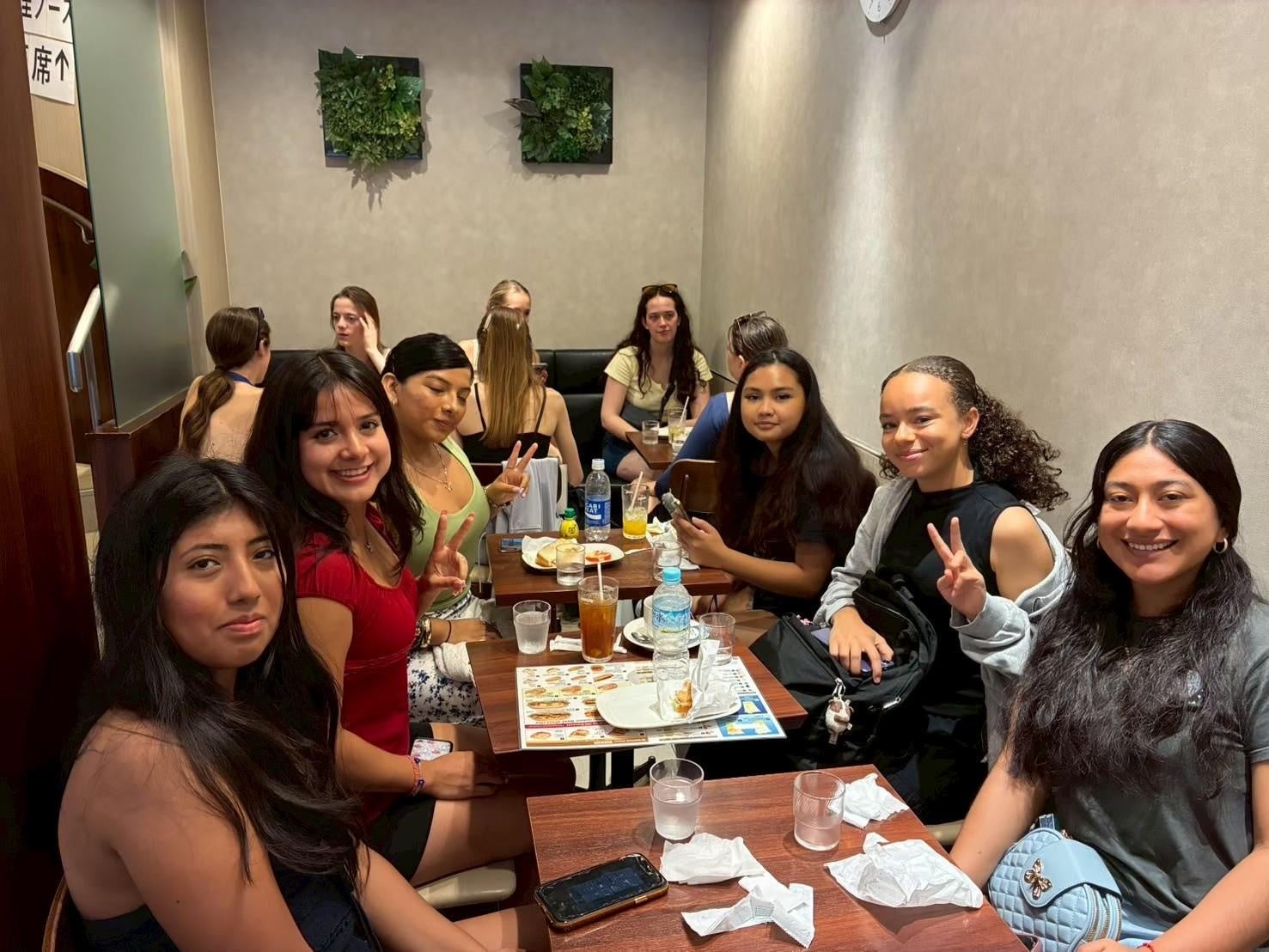
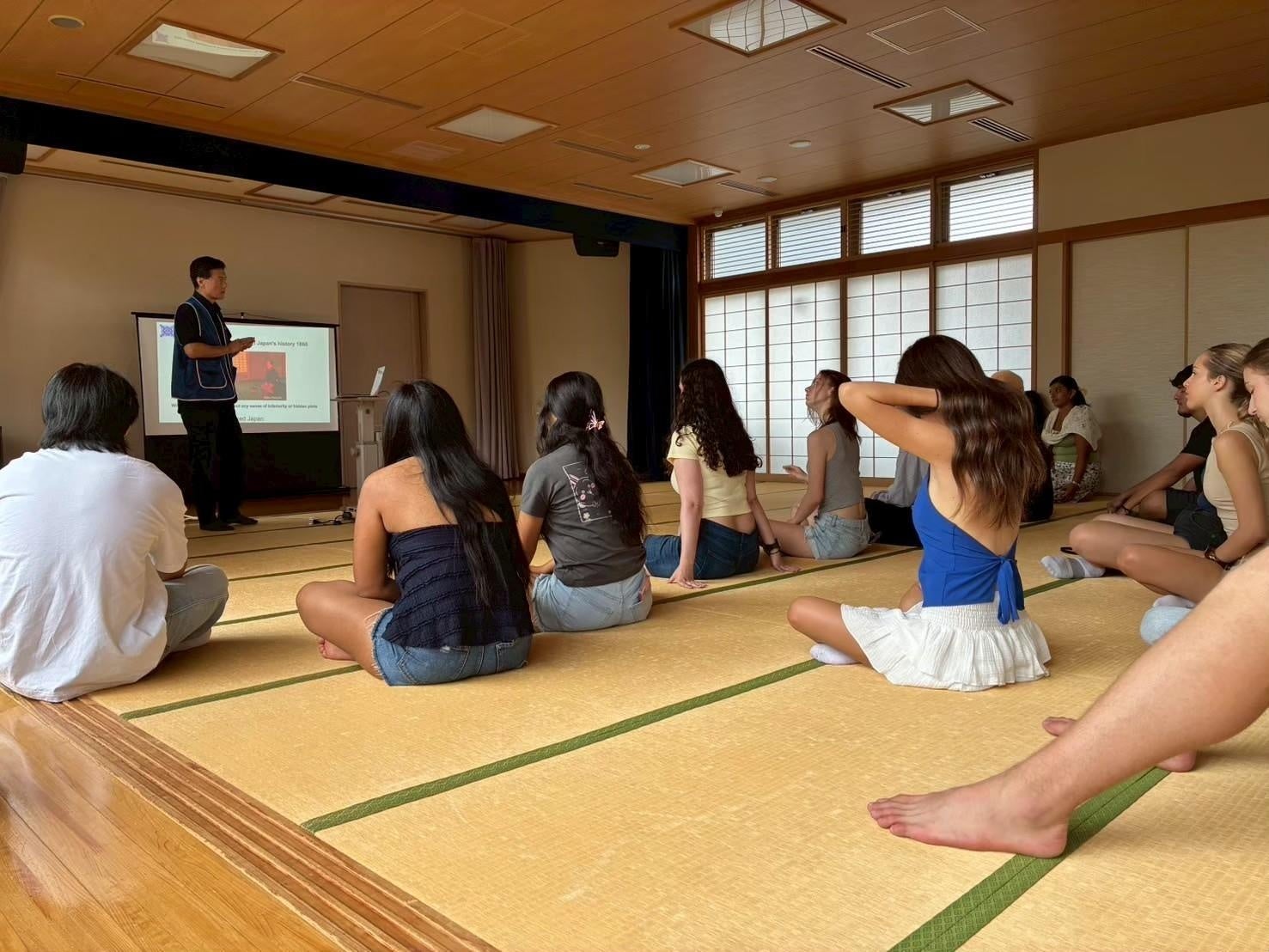
By conveying the background of the area, not just guiding through tourist spots, it provided an opportunity to foster a deeper understanding of Japanese culture. Future plans include considering explanations tailored to individual interests and incorporating more interactive communication.
16. Ueno Quiz Walk Grand Festival
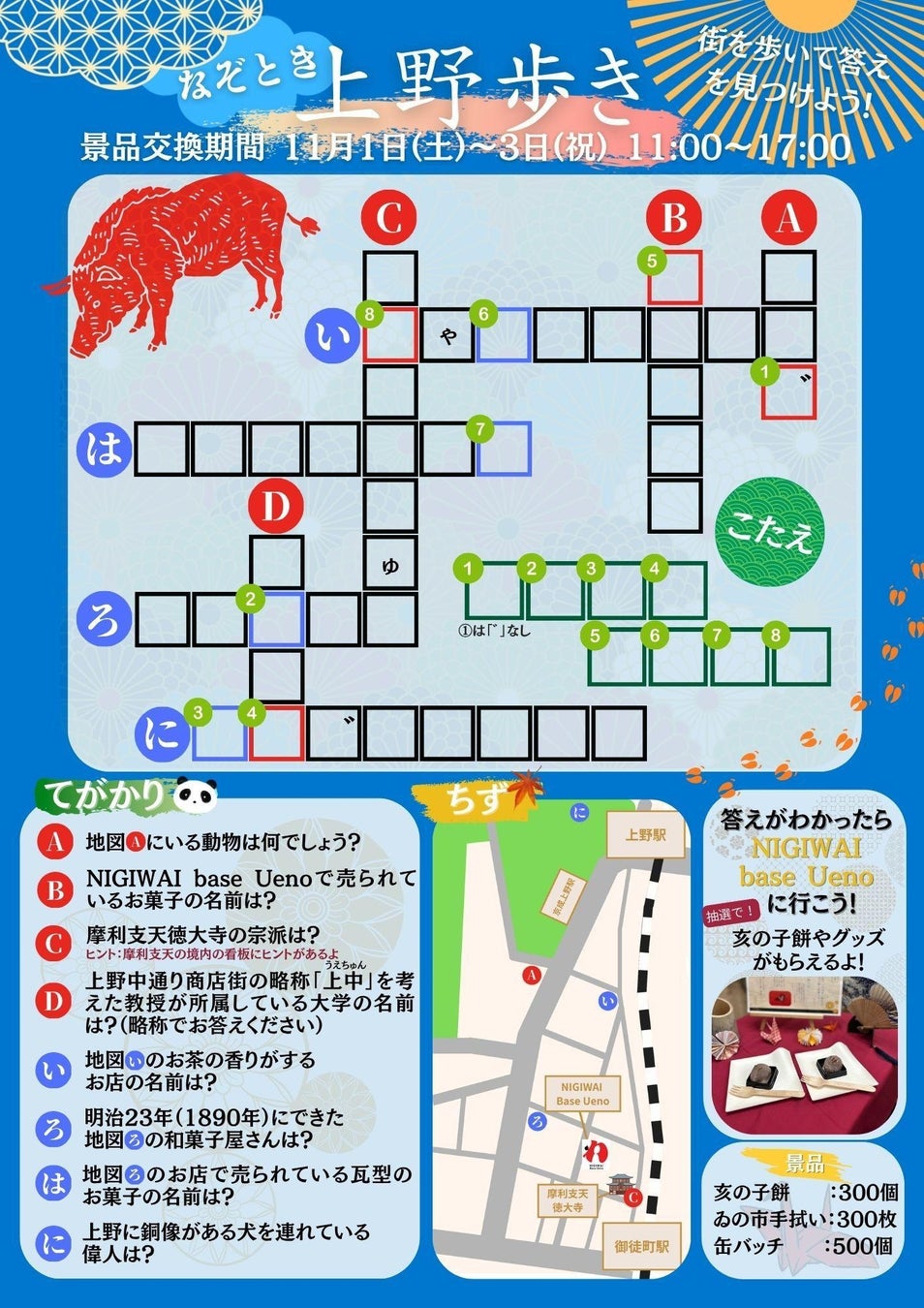
An event was held where participants collected keywords while walking around Ueno to complete a crossword puzzle. Correct answers were entered into a lottery for prizes.
The quiz format encouraged participants to pay attention to the details of the town, rather than just passing through, leading to increased foot traffic. For future events, the difficulty of the questions will be adjusted to appeal to a wider audience and enhance satisfaction.
17. Blue Period Omamori (Amulets)
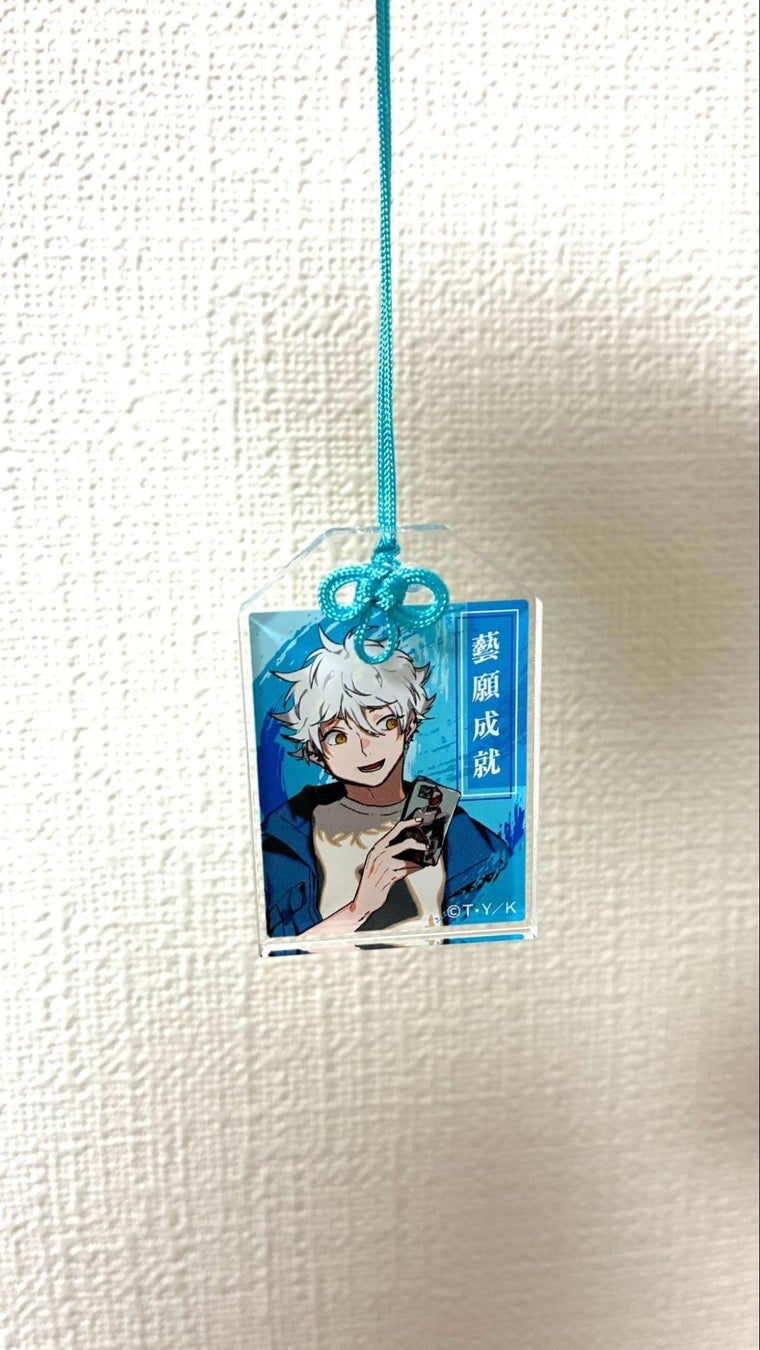
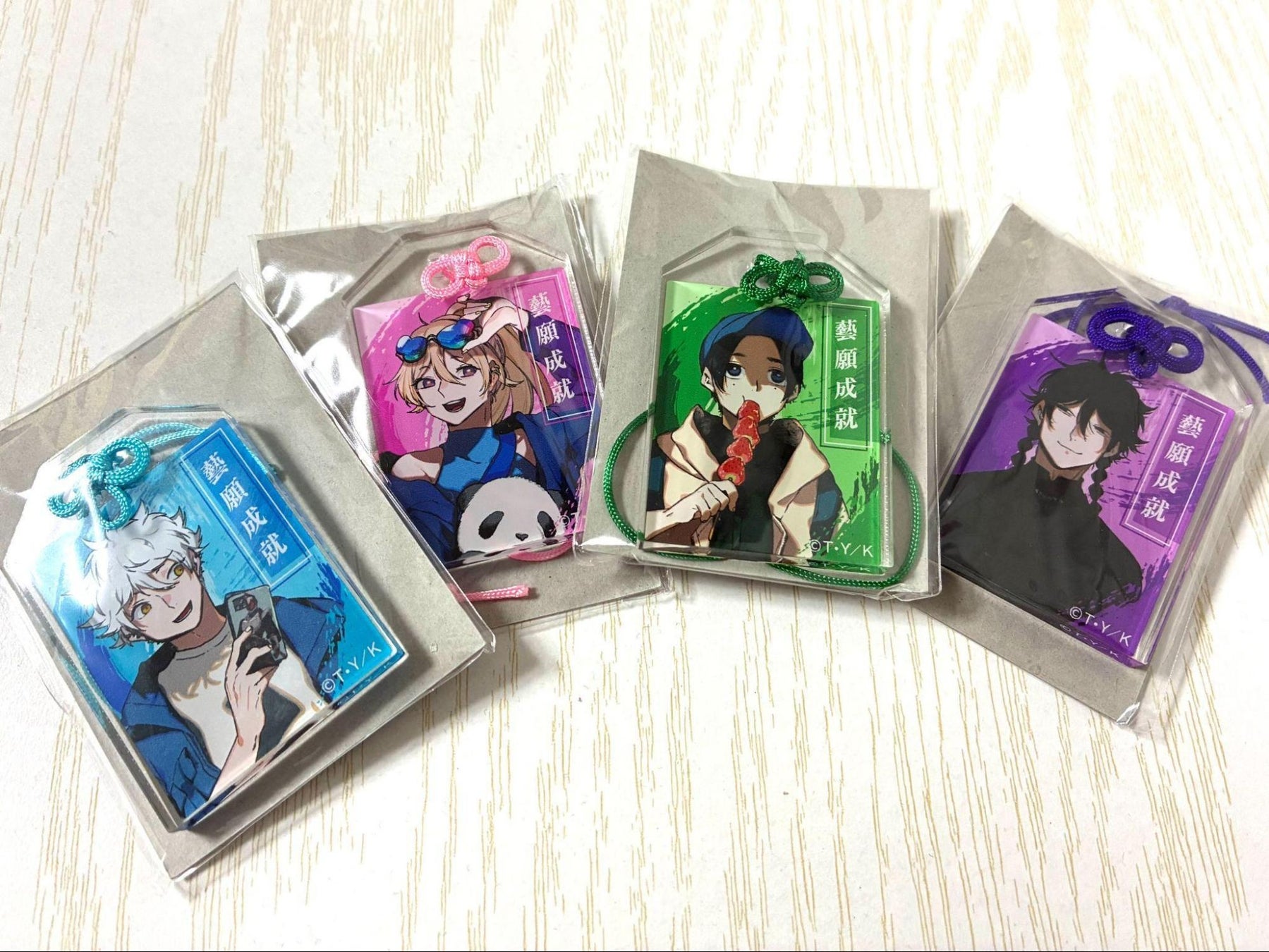
A collaboration was held with "Blue Period," a manga set in Ueno. Limited edition omamori with designs newly drawn for this collaboration were produced and sold for 1,000 yen each. This provided fans of the work with a special item unique to Ueno, the "holy land" of the series.
18. Blue Period Acrylic Stands
A collaboration was held with "Blue Period," a manga set in Ueno. Limited edition acrylic stands with designs newly drawn for this collaboration were produced and distributed by lottery as prizes for the stamp rally participants.
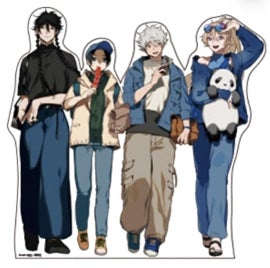
By linking with a system that toured locations related to the work, it contributed to increasing foot traffic within the area.
19. Inoko Mochi (Boar Rice Cake) Search
At the "Inoichi" Grand Festival, a price survey was conducted for "Inoko Mochi," related to Marishiten which enshrines the boar, and the optimal Inoko Mochi was ordered and sold.
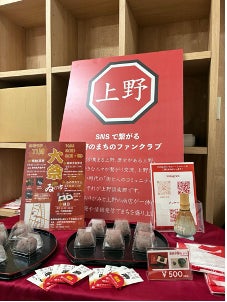
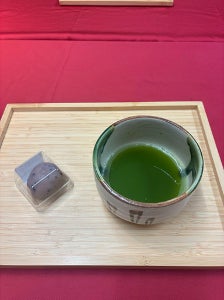
To allow visitors to easily enjoy lucky charms, a survey was conducted of sales locations around the venue to find the place where Inoko Mochi could be purchased at the lowest price. By comparing prices at various locations, valuable information was gathered enabling visitors to choose products according to their budget. In the future, efforts will be made to devise ways of offering Inoko Mochi at affordable prices to more visitors.
20. "Gokaku" Chopsticks (Daikokuya)
In collaboration with Daikokuya, a maker of Edo wooden chopsticks, "Gokaku" (passing exams) chopsticks, which are pentagonal in shape, were produced.
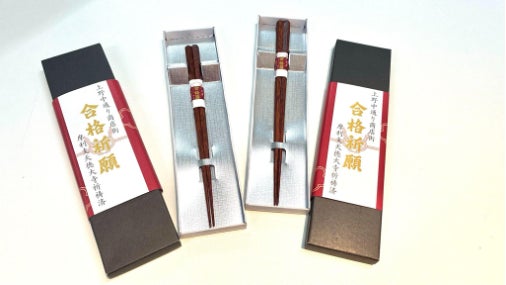
Two types were prepared this time: for adults and children. Students were responsible for the design of the chopsticks themselves and the design of the wrapping paper for the box. The finished products were prayed over at Marishiten before being sold. By combining the skills of artisans with the ideas of students, the chopsticks were developed as products with new value. Future plans include strengthening public relations efforts to further increase recognition.
About the "Creating the Future Shopping Street" Business
The "Creating the Future Shopping Street" Support Project is a shopping street support initiative by the Tokyo Metropolitan Government.
It aims to foster shopping streets that will serve as beacons for the future by providing subsidies for businesses that shopping streets and related organizations undertake based on their Grand Designs. This is done in accordance with the "Guidelines for the Tokyo Metropolitan Government's Creating the Future Shopping Street Support Project" (Reiwa 4, May 25th, No. 4 Sangyo-ro-sho-chi 474). The goal is to promote shopping streets throughout Tokyo and revitalize the regional economy. A "Grand Design" refers to a plan spanning three or more years that defines the desired image of the shopping street, target goals, annual initiatives, and business expenses, after conducting a thorough analysis of the shopping street's environment, organizational status, challenges, strengths, and weaknesses, with the support of a mentoring advisor.
About Ueno Nakamichi Shopping Street Promotion Association
This shopping street is centered around "Ueno Nakamichi," which runs north and south through the bustling commercial district of Ueno, Tokyo. The shopping street features a diverse range of stores, including apparel and sporting goods retailers, as well as restaurants offering Japanese cuisine and izakayas. Their vision for the shopping street is "Creating a town that leverages its history." Currently, the "Ueno Inoichi" event is held every month on the day of the boar by member stores. In recent years, they have been working with students on the operation of "Ueno Club" using social media and ICT sites to strengthen the dissemination of the shopping street's appeal.
About NPO Origami
NPO Origami is an organization that manages volunteer projects. It was established in 2014 as a student group aiming to participate in the 2020 Tokyo Olympics and Paralympics. They are working to continue and develop the legacy of various Tokyo 2020 Games-related projects, while also researching and developing attractive volunteer initiatives. Last year, they held "Ueno Summer Festival ~Shinobazu Yume~," which attracted approximately 33,000 visitors. This event has also been adopted as a co-creation challenge for "TEAM EXPO 2025" at the Osaka-Kansai Expo.
FAQ
What kind of collaboration did NPO Origami and the Ueno Nakamichi Shopping Street undertake?
NPO Origami collaborated with the Ueno Nakamichi Shopping Street to develop 20 new products annually with students. They also engaged in various activities such as holding the "Ueno Quiz Walk," developing collaborative products with local stores, and planning/managing the festival.
What are some of the new products that were developed?
A variety of products were developed, including a special booklet focusing on tonkatsu restaurants, a "tonkatsu sandwich" in collaboration with the tonkatsu restaurant "Tonpachi-tei," the "Futago no Mogumogu Set" with the Japanese confectionery store "Kameido," "cold tea" and "matcha shaved ice" with the tea shop "Kiminoen," "Ema (wishing plaques)" designed by Tokyo University of the Arts students, "omamori (amulets)" and "acrylic stands" in collaboration with the manga "Blue Period," and "Gokaku" (passing exam) chopsticks with the long-established chopstick maker "Daikokuya."
What kind of participatory content was offered as part of the festival planning?
Participatory content for visitors included the "Pinwheel Workshop," "Original Ema Creation," "Co-creation Monument," "Ueno no Mori Shindanjo!" (Ueno Forest Diagnosis!), "Hikari Asobi" (Light Play), and the "Ueno Quiz Walk Grand Festival." These aimed to foster a sense of unity among visitors and deepen their affection for Ueno.
How are students involved?
Students are involved in various aspects of the project, including planning and developing new products, planning and managing the festival, disseminating information using social media and ICT sites, operating "Ueno Club," designing ema through competitions, planning Ueno guide tours for international students, and designing the "Gokaku" chopsticks.
What is the "Creating the Future Shopping Street" project?
This is a shopping street support project by the Tokyo Metropolitan Government. It aims to promote shopping streets throughout Tokyo and revitalize the regional economy by providing subsidies to shopping streets actively engaged in creating new, era-appropriate shopping streets, based on their Grand Designs.