[Okayama University] New Subspecies of Oncomelania Found on Iriomote Island - No Concerns About Schistosomiasis Japonica!
A new subspecies of Oncomelania, with no risk of Schistosomiasis Japonica, has been discovered on Iriomote Island.
📋 Article Processing Timeline
- 📰 Published: March 30, 2026 at 09:31
- 🔍 Collected: March 30, 2026 at 09:00
- 🤖 AI Analyzed: April 15, 2026 at 10:01 (385h 0m after Collected)

This is a joint research press release from Okayama University and Dokkyo Medical University.
March 30, 2026
National University Corporation Okayama University
<Key Points of Announcement>
-
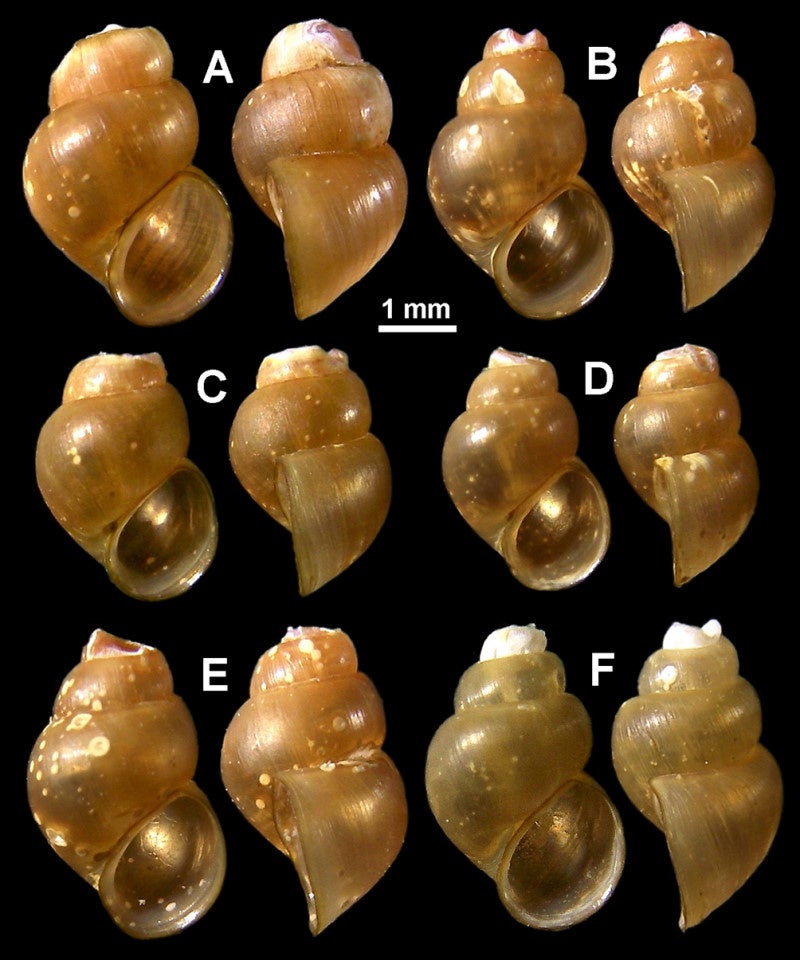
A new subspecies of Oncomelania, widely known as the intermediate host for Schistosomiasis japonica, was discovered at a waterfall in the mountains of Iriomote Island, Okinawa Prefecture, and has been officially described and named as *Oncomelania hupensis iriomotensis*.
-
Infection experiments with Schistosomiasis japonica and environmental DNA analysis of the site yielded no evidence indicating a risk of infection.
-
The distribution of this new subspecies is extremely limited, qualifying it as Critically Endangered IA under the Ministry of the Environment's Red List criteria, necessitating strong conservation measures.
◆Overview
A joint research group comprising Associate Professor Hiroshi Fukuda from the Faculty of Environmental and Life Science (Agriculture), Okayama University (Headquarters: Kita-ku, Okayama City, President: Yasuo Tajima), Project Researcher Naoto Sawada from the Graduate School of Science, The University of Tokyo, and Lecturer Masashi Kirinoki from the Graduate School of Medicine, Dokkyo Medical University, has discovered an unknown species of freshwater snail in a mountain waterfall on Iriomote Island, Okinawa Prefecture. They have identified it as a new subspecies of *Oncomelania* (Katayama snail) and officially described it as *Oncomelania hupensis iriomotensis* Fukuda & Sawada in Sawada, Kirinoki & Fukuda, 2026.
While *Oncomelania hupensis* found in Honshu and Kyushu are intermediate hosts for Schistosomiasis japonica and have caused severe damage to human health, infection experiments with this new subspecies and environmental DNA analysis of its habitat have not yielded data indicating an infection risk. However, further research is necessary to assess potential risks.
Unlike *Oncomelania hupensis*, which is found in lowlands such as around rice paddies, the new subspecies is exclusively found around waterfalls, a significant difference. Due to its extremely limited distribution, it is considered critically endangered and requires conservation measures.
These research findings were published on February 11, 2026, in the American malacological journal "*Malacologia*.".
This information was released by Okayama University on March 23, 2026.
FAQ
What was discovered on Iriomote Island?
A new subspecies of the snail *Oncomelania hupensis* was discovered on Iriomote Island, Okinawa Prefecture.
What is the scientific name of the new subspecies?
The new subspecies has been officially named *Oncomelania hupensis iriomotensis*.
Is there a risk of Schistosomiasis Japonica infection from this new subspecies?
Based on infection experiments and environmental DNA analysis, no evidence indicating a risk of Schistosomiasis Japonica infection from this new subspecies has been found.
What is the conservation status of this new subspecies?
The distribution of the new subspecies is extremely limited, qualifying it as Critically Endangered IA under the Ministry of the Environment's Red List criteria, indicating a high risk of extinction and a strong need for conservation measures.
Where was the new subspecies found?
It was discovered at a waterfall in the mountains of Iriomote Island, Okinawa Prefecture, which is a different habitat from other *Oncomelania* species found in lowlands.
Which institutions were involved in this research?
The research was a collaboration between Okayama University, the University of Tokyo, and Dokkyo Medical University.
Where were the research findings published?
The findings were published in the American malacological journal "*Malacologia*".