NTT Anode Energy Commences Commercial Operation of "Kagawa Kanonji Storage Power Station" and "Fukuoka Moji Storage Power Station"
NTT Anode Energy has begun commercial operation of two new storage power stations in Kagawa and Fukuoka, contributing to renewable energy expansion and grid stability.
📋 Article Processing Timeline
- 📰 Published: April 2, 2026 at 18:09
- 🤖 AI Analyzed: June 2, 2026 at 12:59 (1458h 50m after Published)
NTT Anode Energy Corporation (Headquarters: Minato-ku, Tokyo; President and CEO: Teruyuki Kishimoto; hereinafter, NTT Anode Energy) has constructed the "Kagawa Kanonji Storage Power Station" (Ohnohara, Ohnohara-cho, Kanonji City, Kagawa Prefecture) and the "Fukuoka Moji Storage Power Station" (Moji-ku, Kitakyushu City, Fukuoka Prefecture) and commenced commercial operation in March 2026.
Overview
To address the societal challenge of achieving carbon neutrality, the widespread adoption and effective utilization of renewable energy are indispensable. Simultaneously, stabilizing electricity supply and demand is also a crucial issue. Since the amount of electricity generated by renewable energy sources fluctuates depending on weather conditions, adjustment capabilities are required to maintain constant frequency and voltage in the power grid. Until now, thermal power plants have primarily fulfilled this role, but to accelerate decarbonization, an expansion of battery storage installations for adjustment purposes is expected in the future.
NTT Anode Energy commenced commercial operation of the Kagawa Kanonji and Fukuoka Moji storage power stations in March 2026. With the start of commercial operation at these two locations, NTT Anode Energy now has 10 self-developed and operated storage systems nationwide. Going forward, as an aggregator, the company will conduct optimal transactions in various electricity markets (wholesale electricity market, supply-demand adjustment market, capacity market), charge/discharge control, and centralized maintenance and monitoring of the storage power stations.
NTT Anode Energy will continue to contribute to the further widespread adoption of renewable energy and the realization of a sustainable society through the development, maintenance, and operation of storage power stations.
About "Kagawa Kanonji Storage Power Station"
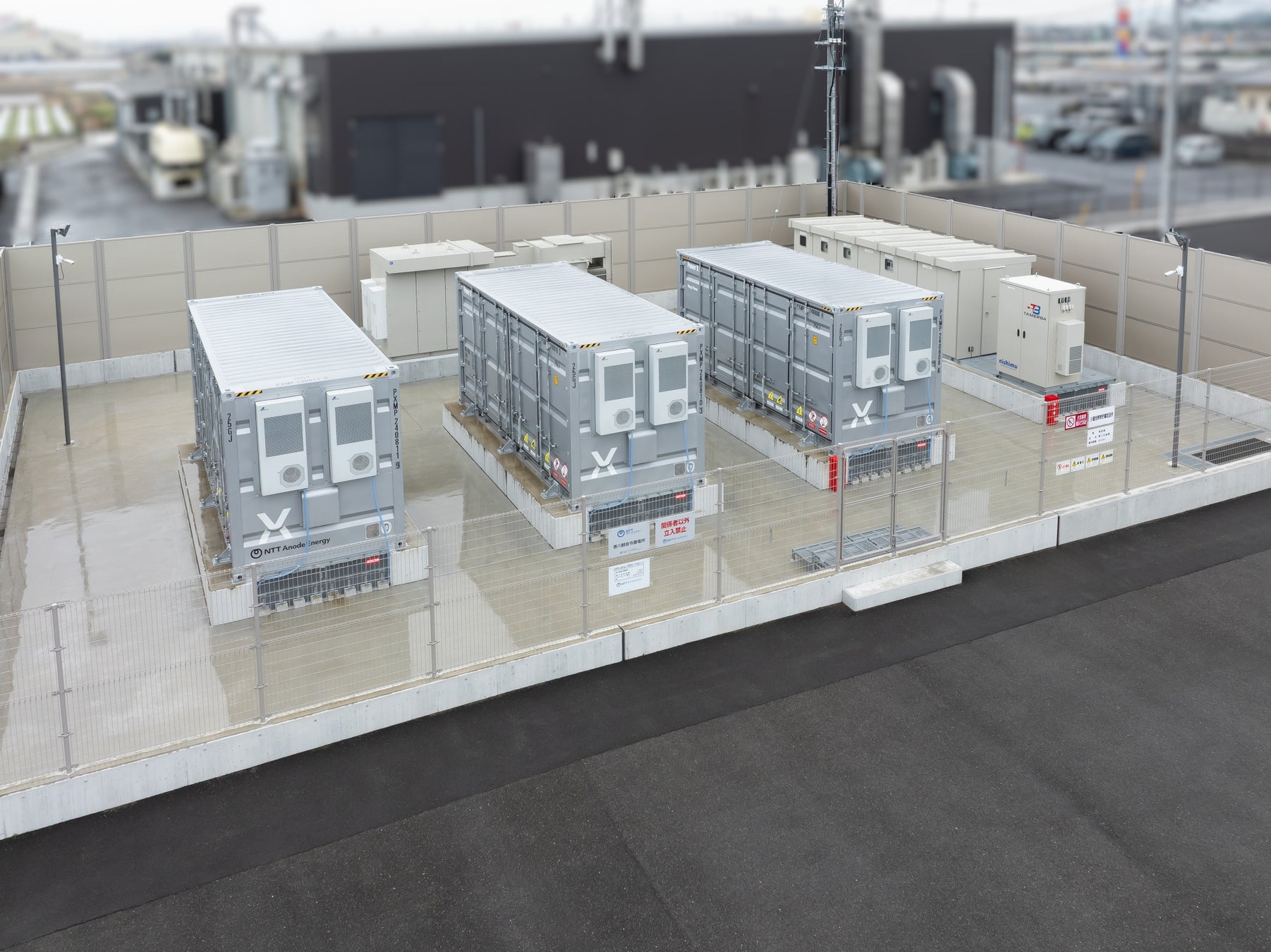
Name: Kagawa Kanonji Storage Power Station
Location: Ohnohara, Ohnohara-cho, Kanonji City, Kagawa Prefecture
Battery Type: Lithium-ion battery
PCS Output: 1,999kW
Nominal Capacity: 8,226kWh (equivalent to the daily electricity consumption of approximately 720 general households)
Start of Operation: March 2026
Operator: NTT Anode Energy Corporation
About "Fukuoka Moji Storage Power Station"
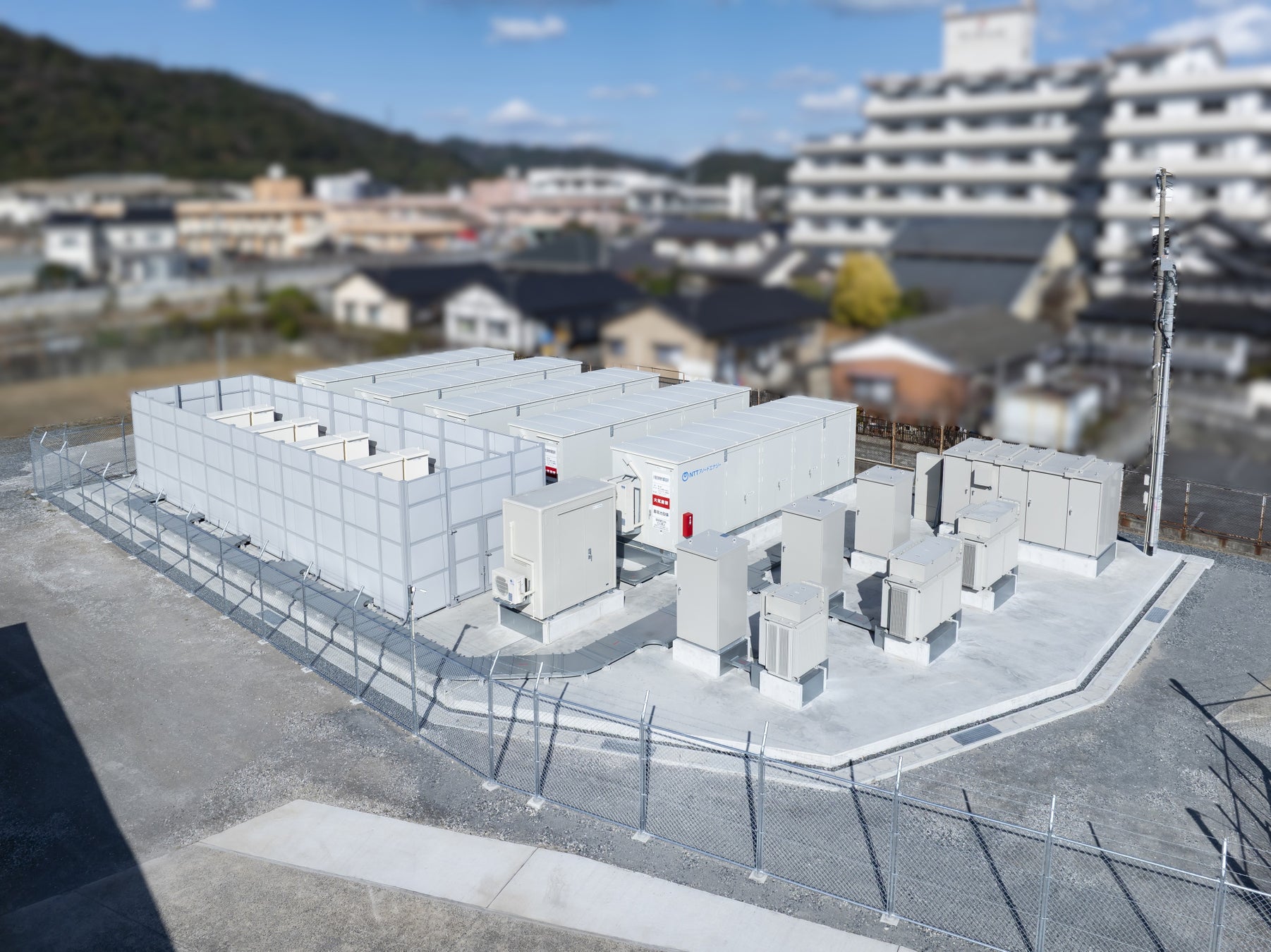
Name: Fukuoka Moji Storage Power Station
Location: Moji-ku, Kitakyushu City, Fukuoka Prefecture
Battery Type: Lithium-ion battery
PCS Output: 1,999kW
Nominal Capacity: 9,992kWh (equivalent to the daily electricity consumption of approximately 870 general households)
Start of Operation: March 2026
Operator: NTT Anode Energy Corporation
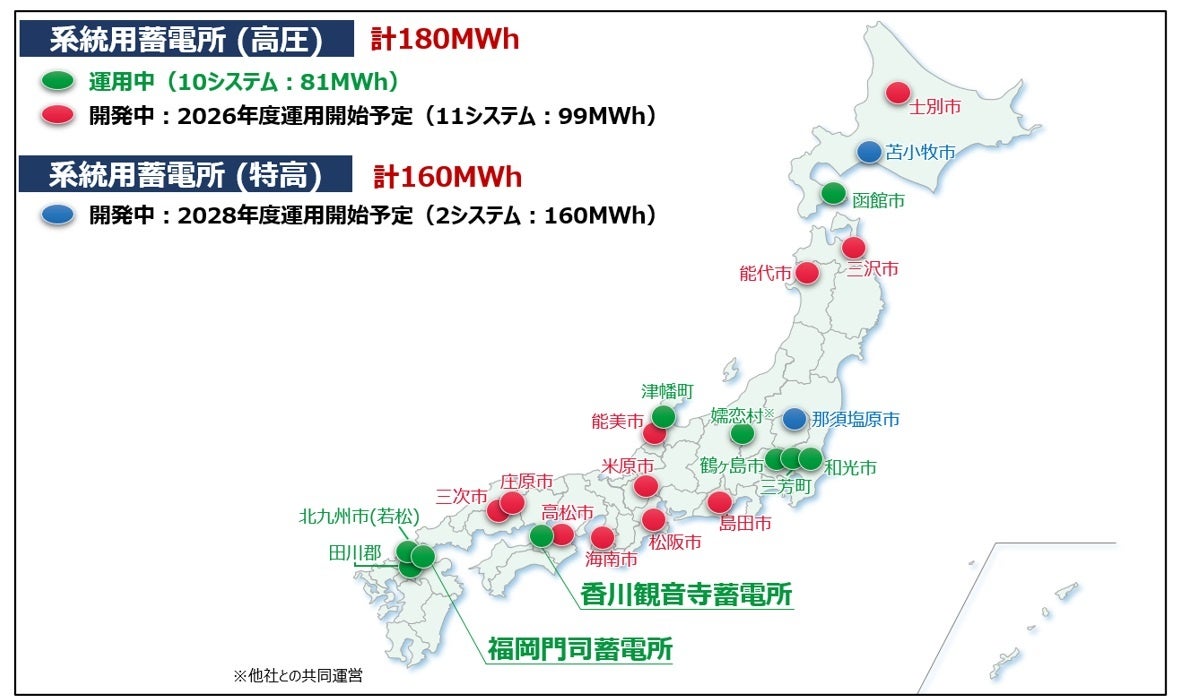
●This release is one of the initiatives of "NTT G×Inno" (NTT Gino), the GX solution brand developed by the NTT Group.

*"NTT G×Inno" is a registered trademark of NTT Corporation.
It is an abbreviation for "NTT GX (Green Transformation) × Innovation," an initiative that aims to bring about innovation in the GX field through providing solutions to society and contribute to the realization of carbon neutrality by 2050.
FAQ
What role will these storage power stations play?
They will absorb fluctuations in renewable energy and act as an adjustment force to maintain constant frequency and voltage in the power grid, contributing to stable electricity supply and demand.
How will NTT Anode Energy operate the storage power stations in the future?
As an aggregator, it will conduct optimal transactions, charge/discharge control, and centralized maintenance monitoring in wholesale electricity markets, supply-demand adjustment markets, and capacity markets.
What is "NTT G×Inno"?
It is NTT Group's GX solution brand, aiming to drive innovation in the GX field through solution provision to society and contribute to achieving carbon neutrality by 2050.