How Does Farmland Consolidation Change Agricultural Management? Tohoku Gakuin University Seeks Municipalities to Participate in a Large-Scale Demonstration Project Using RCT (Randomized Controlled Trial)
The Kengo Kurosaka Laboratory at Tohoku Gakuin University is publicly calling for municipalities to participate in a demonstration project to streamline farmland consolidation. The project uses a web application and an algorithm to consolidate dispersed farmland and will objectively verify the effects using the RCT method.
📋 Article Processing Timeline
- 📰 Published: April 9, 2026 at 16:00
- 🔍 Collected: April 9, 2026 at 07:30
- 🤖 AI Analyzed: April 20, 2026 at 13:02 (269h 32m after Collected)
The Kengo Kurosaka Laboratory at Tohoku Gakuin University is seeking municipalities to implement its farmland consolidation program for the 2026 fiscal year. This program is an initiative that collects farmers' cultivation intentions via a web application and uses a matching algorithm to create efficient farmland consolidation plans. In this project, to more objectively verify the program's effects, we will use an experimental method called a Randomized Controlled Trial (RCT) to compare and analyze changes in land use between program implementation areas and non-implementation areas.
'Affordable Rice' and 'Prosperous Farmers' Can Coexist
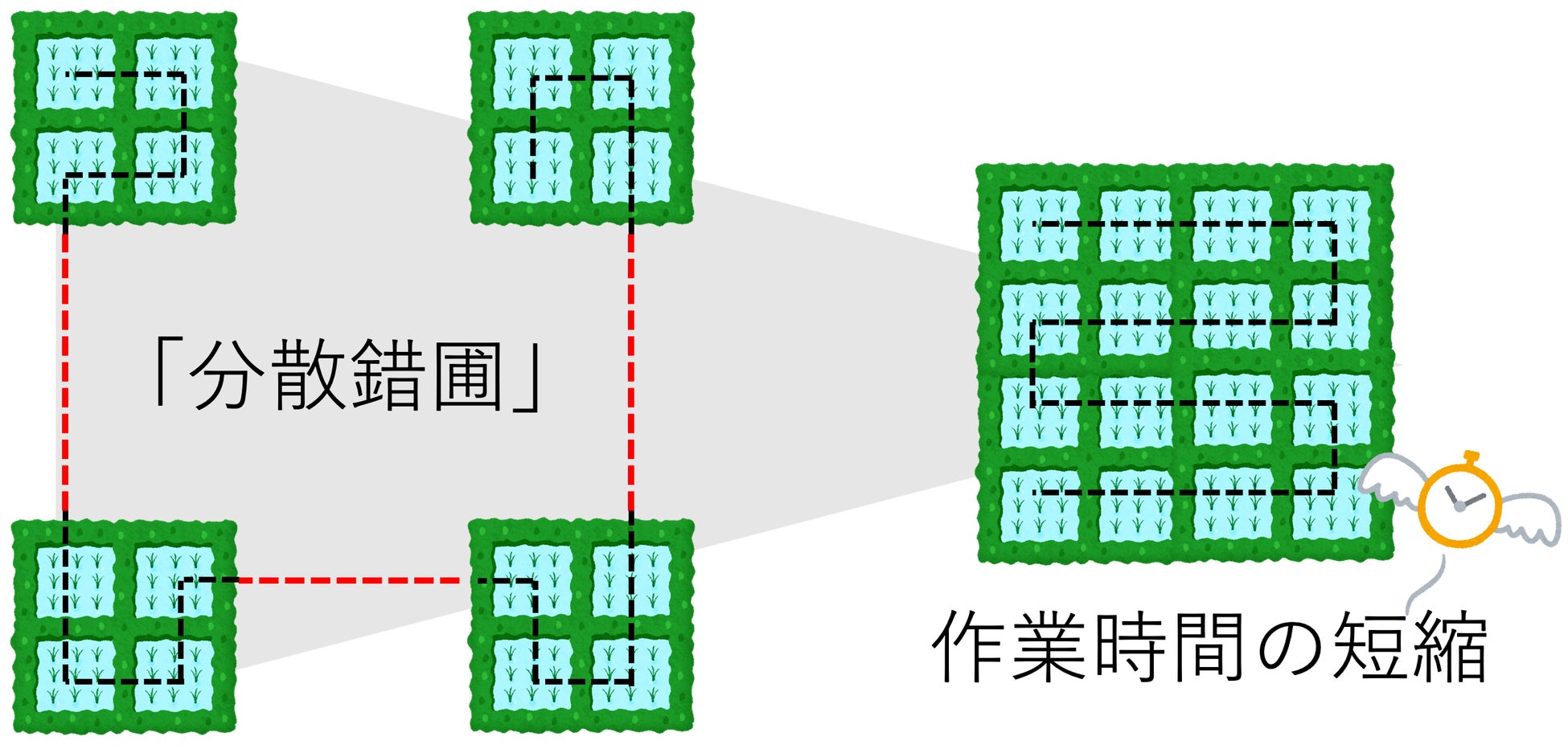
During the 'Reiwa Rice Riots' of 2025, there was a conflict of opinion between those concerned about the soaring retail price of rice and those who argued it was justified to improve farmers' incomes. Our laboratory believes the key to solving this problem lies in 'dispersed fields' (bunsan-sakuho), where work efficiency is reduced due to scattered farmland. Case studies have shown that 10-15% of farm work time is spent on travel between fields. If farmland can be consolidated to shorten travel times, it is possible to lower production costs for the same cultivated area. The desire of consumers for 'affordable rice' and the voice of producers aiming for 'prosperous farmers' can indeed be reconciled through the efficiency of farmland.
The Challenge Shifts from 'Accumulation' to 'Consolidation'
To understand the reality of dispersed fields, our laboratory has continued on-site hearings and statistical analysis. As a result of these efforts, last year we released the 'Rice Farmland Consolidation Analysis Dashboard,' which quantifies and visualizes the state of farmland consolidation for each farmer in 1,529 municipalities nationwide. What became clear was that even in regions where 'accumulation' (the gathering of farmland to large-scale farmers) is progressing, it has not led to 'consolidation' (where an individual farmer's cultivated land is grouped in a specific area or fields are adjacent). We believe this situation, where 'even farmers with large cultivated areas have scattered plots,' is the major barrier to improving productivity.
(Link)
Rice Farmland Consolidation Analysis Dashboard
Overview of the Farmland Consolidation System
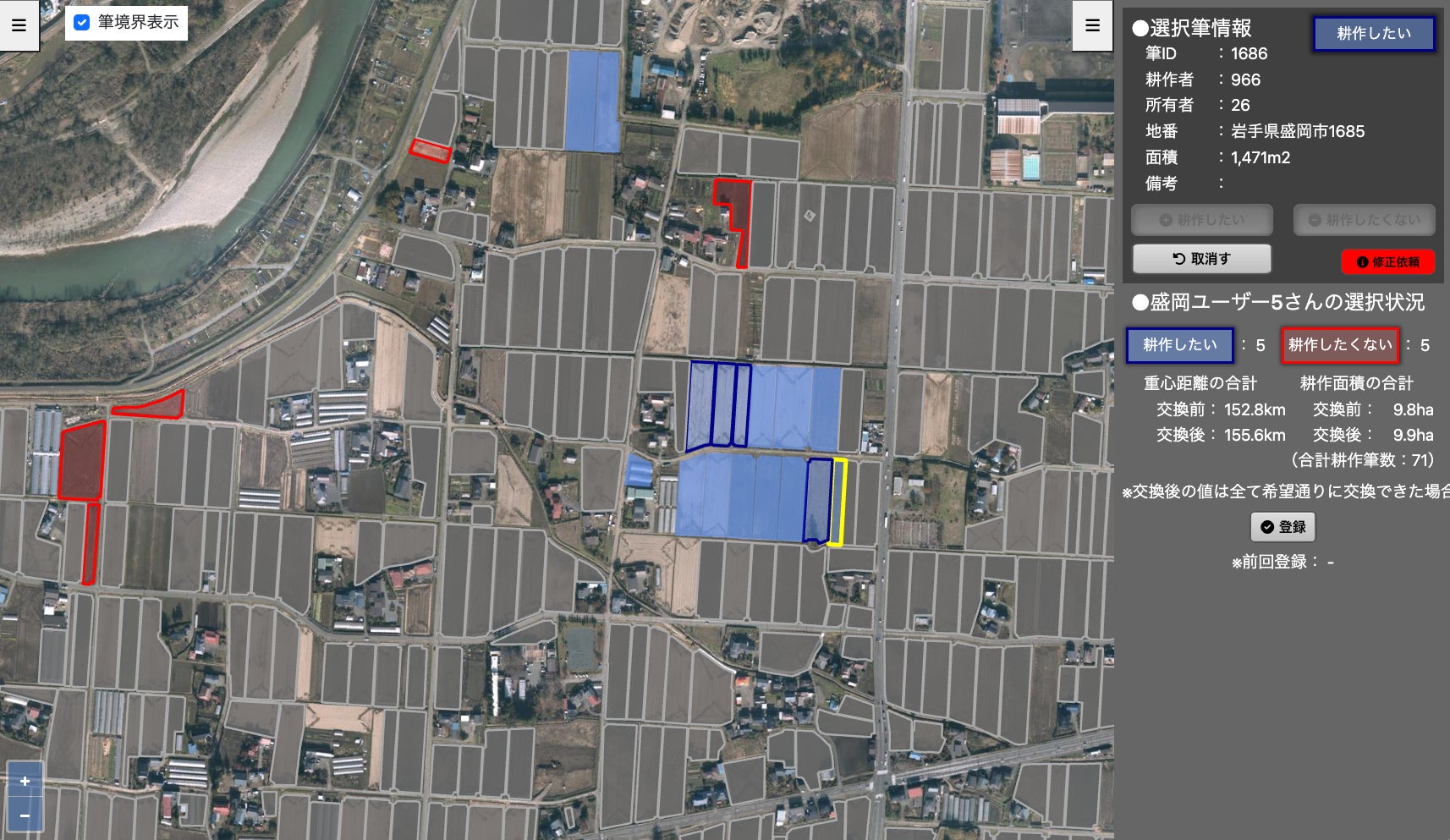
To solve this problem of dispersed cultivation, the Kurosaka Laboratory at Tohoku Gakuin University, in collaboration with the general incorporated association Tannbo, collects information on farmers' cultivation intentions (which farmland they want to cultivate and which they do not) through a dedicated web app. It then matches 'farmland they want to cultivate' with 'farmland they do not want to cultivate'.