Chinese artificial intelligence startup Moonshot AI has unveiled its latest open-weight model, Kimi-K3, which outperforms advanced models from Anthropic and OpenAI in multiple programming tests, reigniting market concerns about the sustainability of America's AI leadership and massive infrastructure investments.
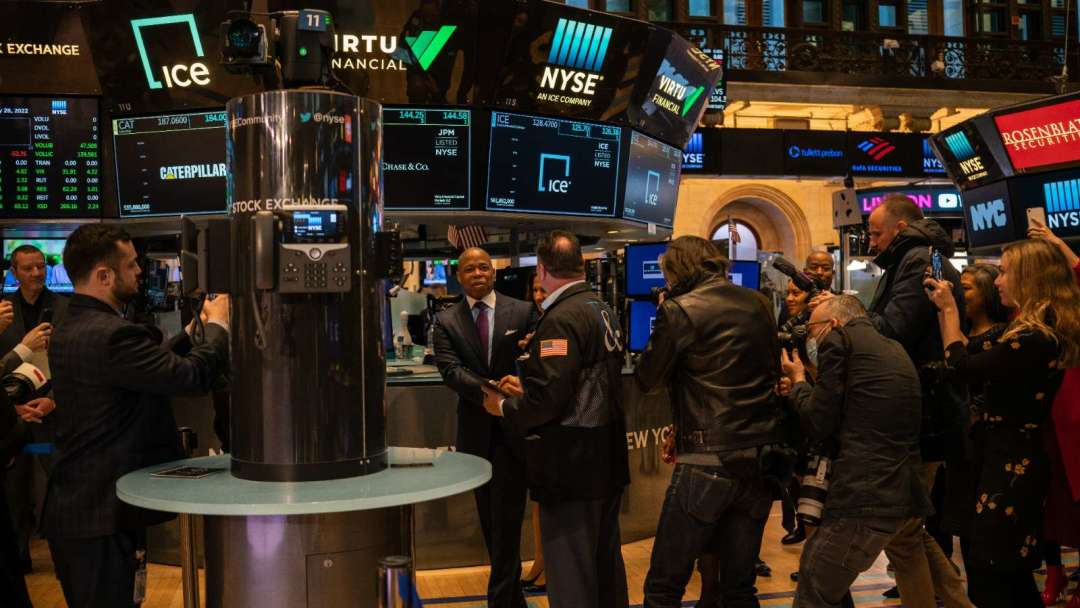
Affected by the news, the iShares Semiconductor ETF (SOXX-US) fell 1.64% on Friday (17th), marking its third consecutive day of decline; the Nasdaq Composite Index also dropped 1.40%. However, compared to the sharp market volatility triggered by DeepSeek's release of its R1 model last year, the tech stock selloff this time has been relatively mild.
Kimi-K3 Outperforms U.S. Models in Programming Performance
Moonshot AI, backed by Alibaba Group, released Kimi-K3 on Thursday. According to results from model evaluation platform Arena AI, Kimi-K3 outperformed advanced models from Anthropic and OpenAI across multiple programming tasks.
Unlike Anthropic's Claude or OpenAI's GPT series, Kimi-K3 adopts an open-weight approach, allowing enterprises to deploy the model on their own servers or private clouds without paying usage fees directly to Moonshot AI. The company plans to release the full model weights on July 27.
In recent years, companies have increasingly used lower-cost open-weight models for simple tasks to save on token usage costs. If Kimi-K3 can deliver comparable performance at a fraction of the cost of advanced U.S. models, the market may reassess whether the current AI investment boom is sustainable in the long term.
Daniel O’Regan, Managing Director at Mizuho Securities, stated that the issue is clear for the market: investors are beginning to question whether the U.S. can maintain the overwhelming AI leadership advantage it has widely been believed to possess over the past 18 months.
Low-Cost AI Challenges Massive Data Center Investments
Harrison Rolfes, a private market analyst at PitchBook, described Kimi-K3 as a spark falling into a room full of gas. If the cost of acquiring advanced AI capabilities declines faster than expected, the rationale for hyperscale cloud providers investing hundreds of billions of dollars in data center construction could be undermined.
This concern extends beyond Anthropic and OpenAI, potentially affecting cloud service providers, data center operators, and chip manufacturers. These companies' growth expectations are heavily based on the assumption that AI models require massive computing resources and that enterprises will continue to expand infrastructure spending.
Chinese President Xi Jinping expressed support on Friday for the continued development of open-source AI models and criticized any single nation monopolizing AI development, further intensifying market attention on U.S.-China AI competition.
Market Reaction Milder Than During DeepSeek Episode
The market has not yet seen a full-blown panic. When DeepSeek launched its R1 model on January 27, 2025, the iShares Semiconductor ETF plunged 7.8% that day, and the Nasdaq Index dropped 3.1%. In contrast, the market decline triggered by Kimi-K3 is significantly smaller.
At the time, DeepSeek demonstrated powerful model capabilities at a relatively low cost, briefly raising market concerns that U.S. tech companies might no longer need to invest heavily in AI development. However, tech stocks quickly recovered, and market estimates for large tech companies' capital expenditures did not decrease but actually increased.
Giuseppe Sette, co-founder of investment analysis platform Reflexivity, said the situation brought by Kimi-K3 resembles when DeepSeek first gained global attention. At that time, the market briefly believed OpenAI's competitive advantage might disappear, but better and cheaper technology could ultimately drive broader AI adoption.
Actual Operating Costs Remain Uncertain
Despite Kimi-K3's seemingly low per-token price, the market is still assessing its actual operating costs. Willy Lee, an analyst at Neostellar Capital, which previously invested in OpenAI, pointed out that Kimi-K3 remains a large-scale model that could place heavy burdens on memory and networking equipment while consuming large amounts of tokens.
Dean W. Ball, Head of Strategy Future at OpenAI, also stated that Kimi-K3 is a strong-performing model, but based on limited usage experience, it appears to consume large amounts of tokens, so it remains unclear whether the actual operating cost is truly that low.
The market will now focus on Kimi-K3's real-world performance and costs after the full model weights are released. If lower-cost AI models promote broader enterprise adoption while U.S. closed models maintain market share, capital could continue flowing into the entire AI supply chain.
However, if low-cost Chinese models weaken U.S. models' pricing power, Kimi-K3 could become another risk factor facing the AI investment boom.
FACT BOX
- Source: PR Times
- Category: New Product
- Organizations: Moonshot AI / Anthropic / OpenAI
- Products / services: Kimi-K3