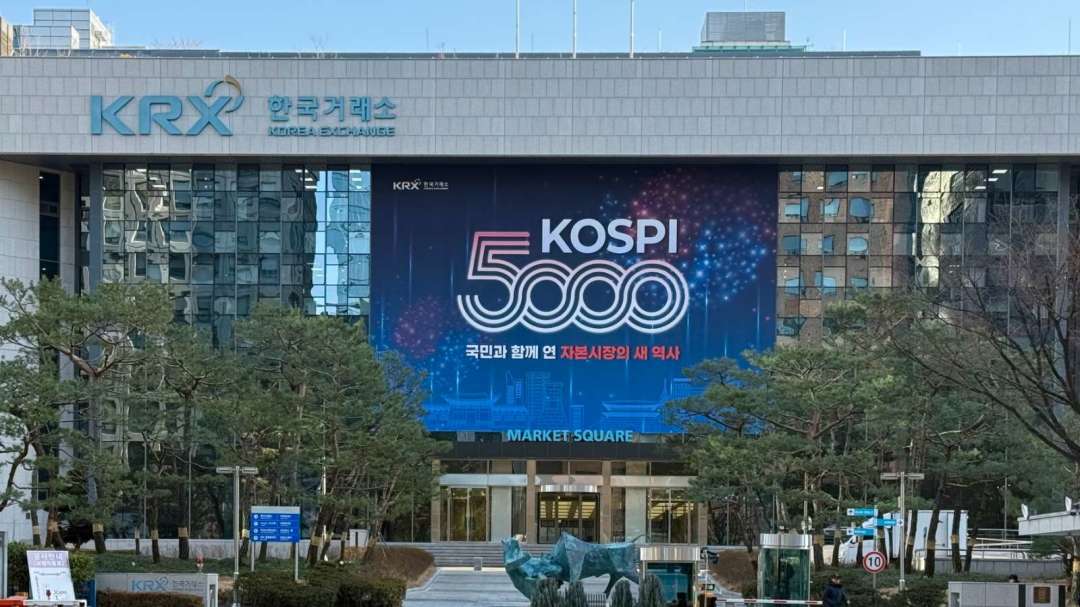
According to a report by Wall Street Journal, South Korea's government has introduced new regulatory measures on single-stock leveraged ETFs, and combined with market-driven deleveraging pressures, is reshaping the short-term volatility pattern of the KOSPI. UBS maintains its KOSPI target of 9,200 points while warning of heightened market volatility risks in the near term and adjusting its portfolio allocation accordingly.
The Financial Services Commission (FSC) of South Korea has announced a series of regulatory measures, including raising the minimum cash margin to 30 million Korean won, suspending new product launches, banning marketing promotions, and requiring investors to extend their education course hours. Meanwhile, the asset under management (AUM) of single-stock leveraged ETFs has already declined from a peak of 2.4 trillion won on June 25 to approximately 1.7 trillion won due to market price pressures, indicating that market-led deleveraging has already begun ahead of regulatory implementation.
Despite supportive fundamentals in corporate earnings—UBS forecasts KOSPI EPS growth of 265% in 2026 and 66% in 2027—uncertainties remain in the earnings outlook for Samsung Electronics and SK Hynix, compounded by concerns over AI demand, which are expected to weigh on market sentiment in the short term. As a result, UBS has adjusted its portfolio strategy to a 'barbell' configuration, adding Shinsegae, Celltrion, and Samsung E&A, while removing four stocks including Coupang.
Regulatory Measures Take Effect
The FSC has tightened oversight of single-stock leveraged ETFs across multiple dimensions. The most market-watched change is the sharp increase in the minimum margin requirement from the current market practice of 3 million won to 30 million won (effective August 5), with the requirement that margins must be paid entirely in cash, not securities (effective August 19), and investors are prohibited from withdrawing margin during holding periods.
Additionally, the minimum trading unit is expected to increase from 1 to 20 units (tentative, starting November), and mandatory education hours will be extended from 2 to 3 hours, with new content on recent market conditions and loss case studies.
UBS believes that the suspension of new product issuance and the 30 million won all-cash margin requirement are the two most impactful policies in this regulatory package.
In terms of margin thresholds, 30 million won is equivalent to about 7% of the total assets and 27% of financial assets for South Korea’s third income quintile households, which will clearly limit retail investor participation. In contrast, the impact of extending education hours and increasing the minimum trading unit (20 units ≈ $190) is relatively limited.
Market Already Deleveraging Ahead of Regulation
Notably, before the formal rollout of these policies, falling market prices have already driven a rapid contraction in the size of single-stock leveraged ETFs.
UBS data shows that the combined AUM of domestically listed Samsung Electronics and SK Hynix single-stock leveraged ETFs has dropped from a peak of about 2.4 trillion won on June 25 to around 1.7 trillion won. Total AUM across all leveraged ETFs has also declined from about 4.8 trillion won on June 22 to 3.3 trillion won, a reduction of approximately 31%.
The main driver behind this deleveraging is investor losses.
Investors who held SK Hynix and Samsung Electronics leveraged ETFs from their listing date on May 27 to present would have incurred losses of about 32% and 30% respectively, while the underlying stocks fell only 7% to 9% over the same period. From the price peak on June 25, leveraged ETFs have declined 44% to 55%, far exceeding the 22% to 29% drop in the underlying stocks, demonstrating how negative compounding effects significantly amplify actual losses in leveraged products. Although retail capital remains net inflows, buying momentum has gradually weakened.
Leveraged ETFs May Continue to Amplify Stock Volatility
UBS points out that the current impact of single-stock leveraged ETFs on the KOSPI has already surpassed the 2023 battery stock boom.
After battery-related leveraged ETFs launched in July 2023, it took the market about 6 to 9 months to absorb the negative price cycle, and at that time, battery stocks accounted for only about 16% of KOSPI's market cap.
As of June 2026, Samsung Electronics and SK Hynix together account for as much as 56% of KOSPI's market cap. Since July, trading volumes of SK Hynix and Samsung Electronics single-stock leveraged ETFs have reached 54% and 24% of their respective underlying stocks’ volumes, collectively accounting for about 25% of total KOSPI trading volume.
Considering the 2x leverage effect, UBS believes that ETF-related fund flows will have an even more pronounced impact on underlying stock prices, and market volatility may persist for some time.
UBS Maintains 9,200-Point Target
UBS reaffirms its 12-month KOSPI target of 9,200 points, corresponding to an estimated P/E ratio of 9x, with downside and upside scenarios at 5,500 and 10,500 points respectively.
The main rationale for this target is UBS’s forecast of 265% and 66% EPS growth for KOSPI in 2026 and 2027, combined with the fact that current valuations remain historically low, maintaining long-term investment appeal.
However, in the short term, uncertainties in AI demand outlook and fluctuations in Samsung Electronics and SK Hynix earnings forecasts will continue to push up market volatility, which in turn may further prompt leveraged ETFs to deleverage.
To address near-term uncertainties, UBS has adjusted its portfolio to a barbell strategy, adding Shinsegae (target price 1 million won), Celltrion (target price 280,000 won), and Samsung E&A (target price 71,000 won) to its preferred list, while removing HDEC, KAI, KSOE, and Coupang.
UBS remains highly positive on SK Hynix (target price 3.2 million won) and Samsung Electronics (target price 550,000 won), estimating potential upside of 74% and 116% respectively.
FACT BOX
- Source: PR Times
- Category: News
- Organizations: Celltrion / Coupang / HDEC