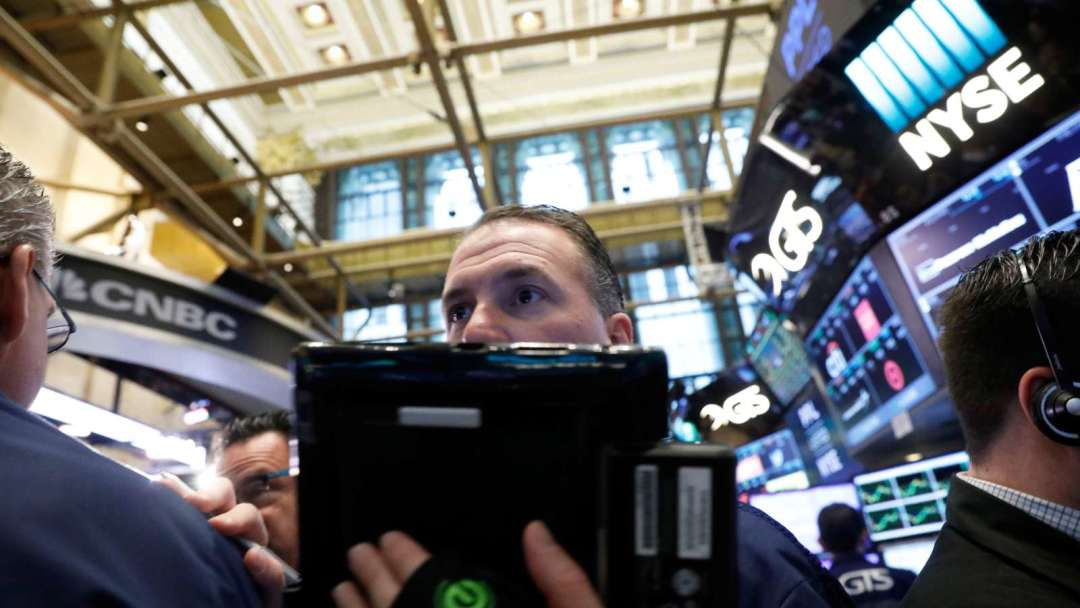
The semiconductor sector faced heavy selling pressure in July, recording its worst single-month performance since the 2008 global financial crisis. However, Bank of America (BofA) semiconductor analyst Vivek Arya believes this correction is merely a 'summer reshuffle' within the AI-driven bull market, not a reversal of fundamental industry trends. With hyperscale cloud providers continuing to expand AI investments, the semiconductor sector still holds significant long-term upside potential.
According to TradingView data, the iShares Semiconductor ETF (SOXX-US), which tracks U.S. semiconductor stocks, has declined 18.6% month-to-date, on track to record its largest monthly drop since November 2008.
Prior to this correction, semiconductor stocks had experienced a historic surge. The Philadelphia Semiconductor Index (SOX), tracked by SOXX, rose 87.8% in the second quarter, an extraordinary gain that elevated market expectations to extremely high levels. As a result, any negative news triggered a sharp pullback.
Recent market concerns have centered on two main factors: rising memory prices increasing supply chain costs, and investor skepticism over whether hyperscalers like Alphabet (GOOGL-US), Microsoft (MSFT-US), Meta Platforms (META-US), and Amazon (AMZN-US) can sustain their AI infrastructure spending growth. Additionally, the rapid rise of Chinese AI models in global performance rankings has intensified concerns about increasing competition.
However, BofA notes that since ChatGPT's launch in November 2022, the Philadelphia Semiconductor Index has undergone nine corrections exceeding 10%, averaging about 14% in decline and lasting 31 days. This current correction of approximately 19%, lasting about 24 days, is deeper but also faster, consistent with historical patterns.
Arya explains that Q3 is traditionally a seasonal lull for the semiconductor industry. Between 2010 and 2025, the semiconductor index underperformed the S&P 500 in 10 out of 15 years during Q3, averaging a 280 basis point lag. Thus, the current weakness appears more like a seasonal adjustment than a cyclical downturn.
Another market focus is whether AI infrastructure investment is beginning to slow. Yet BofA argues the opposite is true.
Ahead of second-quarter earnings reports from Alphabet, Microsoft (MSFT-US), Meta Platforms (META-US), and Amazon (AMZN-US), BofA has raised its global hyperscaler capital expenditure forecast. It now expects global AI data center capex to reach $851 billion in 2026 and further rise to $1.15 trillion in 2027, representing year-on-year growth of 78% and 35%, respectively.
Compared to previous forecasts of 68% and 25% growth after Q1 earnings in May, BofA has clearly upgraded its outlook, signaling that AI investment momentum continues to strengthen.
Moreover, BofA highlights that the四大 hyperscalers' total Remaining Performance Obligations (RPO) have surpassed $2 trillion, indicating rising contracted but unrecognized revenue. Microsoft (MSFT-US) alone accounts for $627 billion in RPO, with only about a quarter expected to be recognized within the next 12 months, reflecting strong long-term revenue visibility.
From an AI usage demand perspective, BofA tracks global AI model token usage, which has continued to grow at an average of about 9% per week since June, indicating that enterprise and developer demand for generative AI remains robust.
On valuation, BofA believes semiconductor stocks have become significantly more attractive after the correction. The Philadelphia Semiconductor Index now trades at an estimated P/E of 17.1x, below the S&P 500's 17.6x, creating a 0.5x discount. In contrast, semiconductor stocks have historically enjoyed an average 0.8x valuation premium since 2024, suggesting market sentiment has turned more conservative.
Memory remains the biggest beneficiary of AI investment. BofA estimates memory currently accounts for 35% to 40% of cloud AI capex, two to three times the historical average. Q3 DRAM contract prices are expected to rise 20% to 30% quarter-on-quarter, while spot prices have already risen for eight consecutive weeks, reflecting strong and sustained demand for AI-driven High Bandwidth Memory (HBM).
Based on these factors, Arya reiterated 'Buy' ratings on several semiconductor leaders, including NVIDIA (NVDA-US), Broadcom (AVGO-US), Micron (MU-US), Marvell Technology (MRVL-US), Credo Technology (CRDO-US), Lam Research (LRCX-US), and KLA (KLAC-US).
BofA maintains its long-term forecast that global AI-related spending will reach $1.7 trillion by 2030, and notes that historically, Q4 and Q1 are typically the strongest quarters for semiconductor stocks.
Arya concludes that the current market correction reflects timing, not a shift in the long-term AI investment thesis. If AI capex continues to expand, this pullback could present a strategic opportunity to position in the semiconductor sector.
FACT BOX
- Source: PR Times
- Category: News
- Organizations: Marvell Technology (MRVL-US) / Credo Technology (CRDO-US) / Alphabet (GOOGL-US)