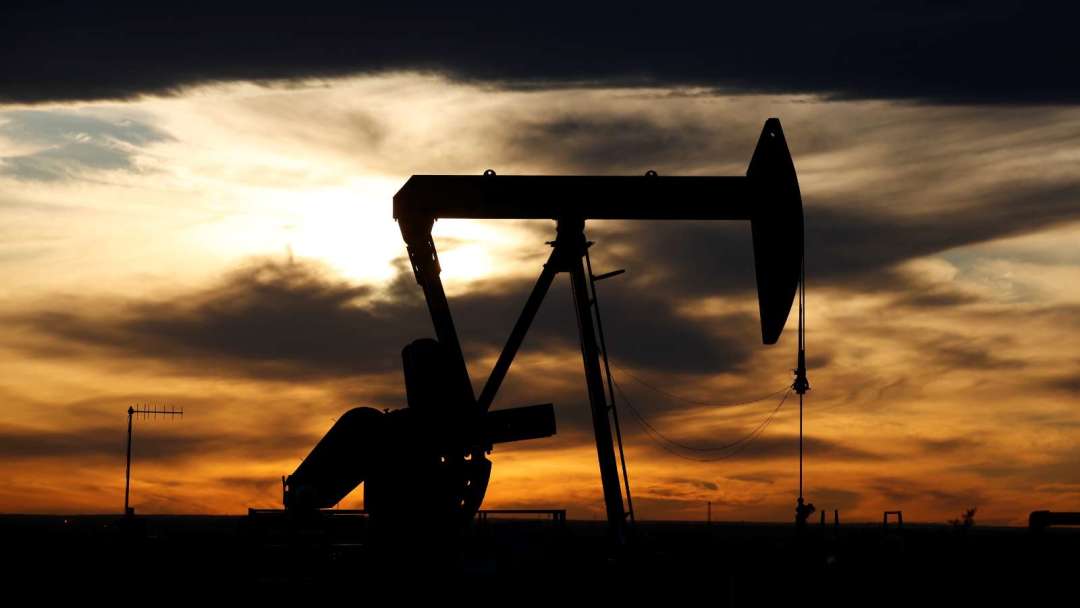
International oil prices surged significantly on Friday (17th), driven by escalating military conflict between the United States and Iran. Market concerns over the potential blockade of the Red Sea shipping route, combined with restricted passage through the Strait of Hormuz, have raised fears that two of the world’s most critical energy transport corridors could be simultaneously disrupted, rapidly escalating supply risks. As a result, both Brent crude and U.S. West Texas Intermediate (WTI) reached their highest closing prices since mid-June.
London-traded Brent crude for September delivery rose $3.87, or 4.59%, to close at $88.10 per barrel. U.S. WTI crude for August delivery gained $3.54, or 4.48%, closing at $82.49 per barrel. Both benchmark crude oils marked their highest levels since mid-June.
On a weekly basis, Brent and WTI both posted cumulative gains of approximately 16%. Brent crude recorded its third consecutive weekly gain, while WTI posted its second straight weekly increase.
The surge in oil prices was primarily driven by the further escalation of the U.S.-Iran conflict. Reports indicate that U.S. forces conducted airstrikes on bridges and airport facilities inside Iran on Friday. In response, Iran attacked a power plant and a desalination facility in Kuwait and announced a new wave of attacks on multiple U.S. military installations across the Middle East, including its first direct strike on U.S. targets in Syria. Prior to this, U.S. forces had already conducted airstrikes on Iranian military sites for six consecutive nights.
Andrew Lipow, president of Lipow Oil Associates, stated that markets are reflecting the risks associated with the ongoing escalation between the U.S. and Iran. He noted that both sides have been attacking infrastructure nearly every day, and if more oil tankers are attacked or damaged, shipowners may refuse to enter the Persian Gulf, leaving room for further oil price increases.
Markets are also closely monitoring the Strait of Hormuz and the Red Sea—two of the world’s most vital energy transport routes. Since the collapse of the U.S.-Iran ceasefire, Iran has continued attacking commercial vessels transiting the Strait of Hormuz, leading to a noticeable decline in crude oil shipments. Before the conflict, approximately 20% of the world’s oil and large volumes of liquefied natural gas (LNG) passed through the Strait of Hormuz.
Meanwhile, reports suggest Iran has asked Yemen’s Houthi movement to prepare to block the Red Sea shipping route if the U.S. attacks Iran’s power infrastructure. Analysts warn that if both the Red Sea and the Strait of Hormuz are disrupted, global energy supplies will face even more severe challenges.
Tamas Varga, analyst at PVM Oil Associates, noted that Saudi Arabia is currently rerouting a significant portion of its exports via the East-West Pipeline to the Red Sea port of Yanbu to avoid risks in the Strait of Hormuz. Therefore, any disruption in the Red Sea route would pose an even greater threat to market supply.
Data shows that since the outbreak of hostilities, Saudi Arabia has shifted over 70% of its crude oil exports to shipments from Yanbu. The port’s average daily export volume in recent weeks has been around 4 million barrels, far exceeding the year-earlier level of approximately 973,000 barrels.
The regional situation continues to deteriorate. Qatar’s Ministry of Defense reported that its military successfully intercepted Iranian missile attacks early Friday morning. The Interior Ministry added that debris from the interception caused injuries to one child.
Additionally, conflict persists in Europe. Ukraine’s military announced on Thursday that it had attacked a refinery in Russia’s Yaroslavl region, highlighting that global energy supplies continue to face multiple geopolitical risks.
Analysts believe the market’s focus has shifted from inventory and demand to the impact of Middle East tensions on crude oil supply. If the U.S.-Iran conflict continues to escalate and transportation through both the Red Sea and the Strait of Hormuz is further disrupted, international oil prices could remain volatile at elevated levels and potentially challenge even higher price points.
FACT BOX
- Source: PR Times
- Category: News
- Organizations: Lipow Oil Associates / PVM Oil Associates