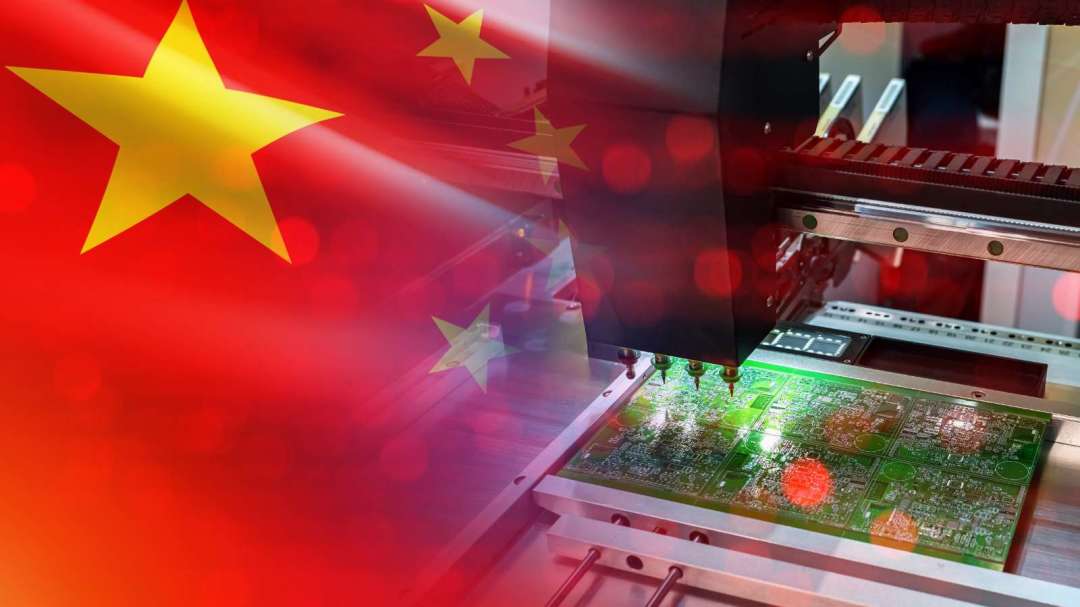
India's international news channel WION reported on Tuesday (14th), citing sources, that China has successfully constructed a fully domestic extreme ultraviolet (EUV) lithography machine prototype within a highly classified facility in Shenzhen. This marks the first time since the 1990s—when ASML began EUV development—that an external force has independently achieved EUV light source generation and full system integration, signaling a permanent shift in the long-standing Western technological monopoly over the global semiconductor industry.
According to the report, the prototype was integrated by Huawei, coordinating domestic research institutions, supply chains, and thousands of researchers. The Shenzhen facility employs strict physical isolation and compartmentalized confidentiality protocols.
The most critical aspect is that the Chinese team did not follow ASML’s decades-long laser-produced plasma (LPP) approach, but instead pursued a differentiated laser-induced discharge plasma (LDP) technology path.
Analysis from the blog Of Zen and Computing indicates that China has completed principle validation for EUV light sources, successfully heating tin droplets to approximately 220,000 degrees Celsius to generate 13.5-nanometer wavelength EUV light. However, the current prototype is still 'crude compared to ASML’s commercial-grade EUV,' having not yet produced a single working chip. It remains years away from overcoming engineering gaps in throughput meaningful for mass production, stable output above 250 watts, and sub-nanometer alignment precision.
EUV light sources are considered the 'holy grail' of the lithography technology chain. Because EUV light cannot penetrate conventional lenses, it relies on atomically precise multilayer molybdenum/silicon Bragg mirrors (currently only Germany’s Zeiss can produce commercial-grade versions), requiring reflectivity stacked to around 70%.
While the U.S. magazine The Diplomat warns against overhyping the prototype’s progress, China’s incremental breakthroughs in building EUV components—from light sources and optical systems to vacuum stages—under near-total external technology isolation have already caused a deep shift in global semiconductor power structures.
Currently, ASML monopolizes the global EUV market, holding about 83% of the overall lithography equipment market. Last year, it shipped dozens of EUV machines, each averaging around $200 million, supporting mass production of 3-nanometer and below nodes at TSMC, Samsung, and Intel.
Analysts suggest that if China eventually achieves domestic EUV supply capability—even initially supporting only 'good enough' processes for AI inference and automotive applications—the world’s most sought-after advanced computing market would no longer be entirely dependent on ASML’s delivery schedules and geopolitical green lights.
Moreover, medium-sized nations and developing countries unable to reliably access ASML equipment would gain a second option, rebalancing the global geographic distribution of wafer capacity. This could trigger a new wave of overcapacity and price wars, casting doubt on the effectiveness of technology blockades as alternative pathways emerge. Export control lists would be forced upstream, increasing transaction costs across the global semiconductor ecosystem.
Rumors also circulate that the prototype absorbed knowledge input from former ASML engineers, with the highly segmented research model resembling talent diffusion from Cold War nuclear projects. In this narrow, system-level specialized field mastered by only a few, the movement of key individuals can often shift technological parity more than sanctions.
This prototype has not yet produced a single chip. Whether it can cross the 'valley of death' into commercial engineering will determine if this breakthrough is a fleeting ripple or a lasting tsunami. Once EUV is no longer an exclusive game for a few giants, the power structure across wafer foundries, EDA, materials, and AI computing will be completely reshuffled.
FACT BOX
- Source: PR Times
- Category: News
- Organizations: ASML