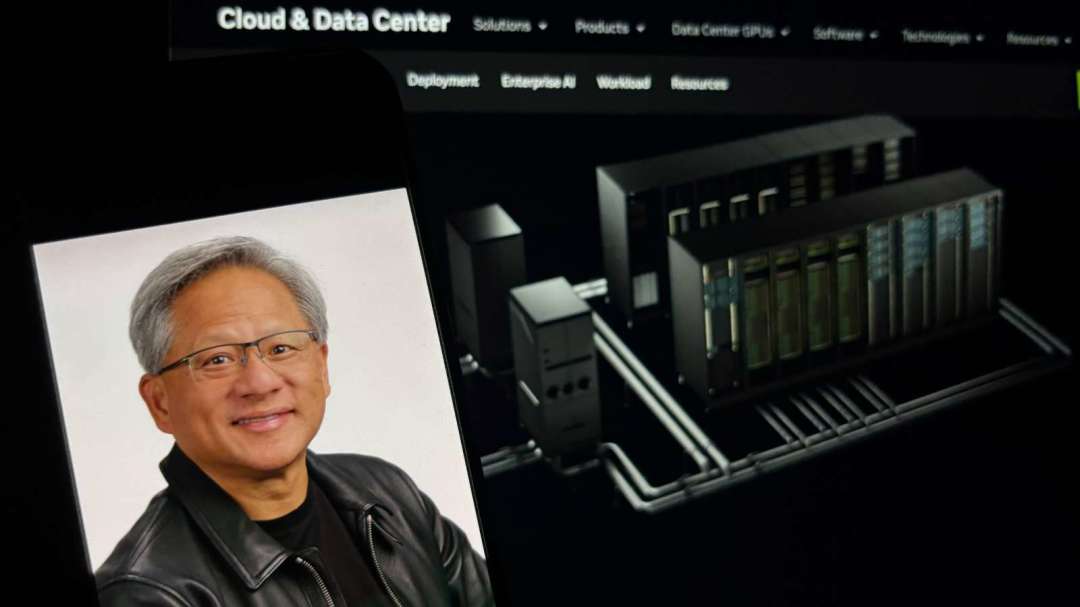
NVIDIA CEO Jensen Huang arrived in Tokyo this week, launching a series of intensive partnership signings and business meetings, with a clear strategic intent to position Japan as a core pillar in the company’s global physical AI ecosystem. Later this week, Huang is expected to announce further collaborations related to Japan’s sovereign AI initiatives.
According to reports from Bloomberg and Kyodo News, NVIDIA announced today (16th) that it has partnered with Japanese robotics giants Fanuc and Yaskawa Electric to jointly advance robotics and AI technology development. The company is also expanding its collaboration with Japan’s largest automaker, Toyota, across multiple domains including autonomous driving, factory simulation, and urban intelligence.
At a media event in Tokyo, Huang stated, "With AI, robots will become intelligent, adaptable, and accessible."
He emphasized that NVIDIA is systematically integrating Japan’s manufacturing foundation and semiconductor supply chain with its full-stack AI technology, while dismissing concerns of an AI investment bubble: "We are far from an AI bubble. Demand is extremely strong, and we need at least ten years of infrastructure buildout."
Beyond business strategy, Huang’s Japan trip carries deep emotional significance, marked by a historic reunion spanning three decades.
Yesterday, Huang reunited with former SEGA President Akira Nyujo at the former site of a SEGA arcade in Akihabara.
Around 1996, NVIDIA faced near-bankruptcy after a failed attempt to develop graphics chips for SEGA’s next-generation console. After Huang openly admitted the failure, Nyujo championed a $5 million investment from SEGA, enabling NVIDIA to restructure and eventually launch the successful RIVA 128.
On Wednesday (15th), Huang reflected, "Without SEGA and everything Akira Nyujo did, NVIDIA would not exist today. NVIDIA’s market cap is now over $5 trillion."
NVIDIA and SEGA also announced that future SEGA titles will support the RTX Spark platform, reviving the partnership that began 30 years ago when the NV1 chip powered "Virtua Fighter."
On Wednesday evening, Huang hosted a low-key dinner at a Tokyo izakaya in Kanda, bringing together key figures from Japan’s AI supply chain. Attendees included CEOs and executives from Kioxia, Shin-Etsu Chemical, Tokyo Electron, Ajinomoto, Sumitomo Electric, TDK, and Panasonic Holdings—effectively mapping out the Japanese hardware supply chain critical to NVIDIA’s next-generation AI systems.
Discussions centered on jointly driving semiconductor industry growth and stock price appreciation. Outside the izakaya, crowds gathered to catch a glimpse of the "leather jacket man."
Huang positioned Japan as a pivotal hub for global physical AI development, praising the country’s excellence in precision and large-scale manufacturing, which can address severe labor shortages through automation and robotics.
Specifically, the partnerships with Fanuc and Yaskawa target intelligent upgrades for industrial robots. Toyota will leverage platforms like DRIVE AGX and Omniverse to develop L2++ vehicles, AI coding assistants, and digital twins for factories.
NVIDIA Vice President Rishi Dhall noted that physical AI will bring intelligence to cars, robots, factories, and even entire cities.
NVIDIA’s collaboration with Japan spans the full technology stack: In healthcare, Eisai, Astellas, Daiichi Sankyo, and Ono Pharmaceutical are using BioNeMo to accelerate drug discovery; Canon and Fujifilm are launching NVIDIA-accelerated CT systems; Kawasaki Heavy Industries is developing surgical robots. In finance, Mizuho Bank is building Japan’s largest local AI factory, while Sumitomo Mitsui JRI and Rakuten Bank are deploying AI factories and agent tools. In quantum computing, RIKEN is already operating two GB200 supercomputers.
Market observers also anticipate Huang may announce a partnership with Noetra—the Japanese "Physical AI Model National Team" comprising 44 companies including SoftBank, NEC, and Honda, backed by 1 trillion yen in government subsidies—further embedding NVIDIA into Japan’s national AI strategy.
From a nostalgic reunion in Akihabara to a supply chain dinner in Kanda, and comprehensive signings across robotics, automotive, healthcare, finance, and quantum computing, Huang’s visit marks a critical step in NVIDIA’s expansion from data centers into the physical world. Japan, with its manufacturing and supply chain strengths, is emerging as an indispensable strategic pillar in NVIDIA’s physical AI empire.
FACT BOX
- Source: PR Times
- Category: Partnership
- Organizations: SEGA / Noetra / NEC
- Products / services: DRIVE AGX / Omniverse