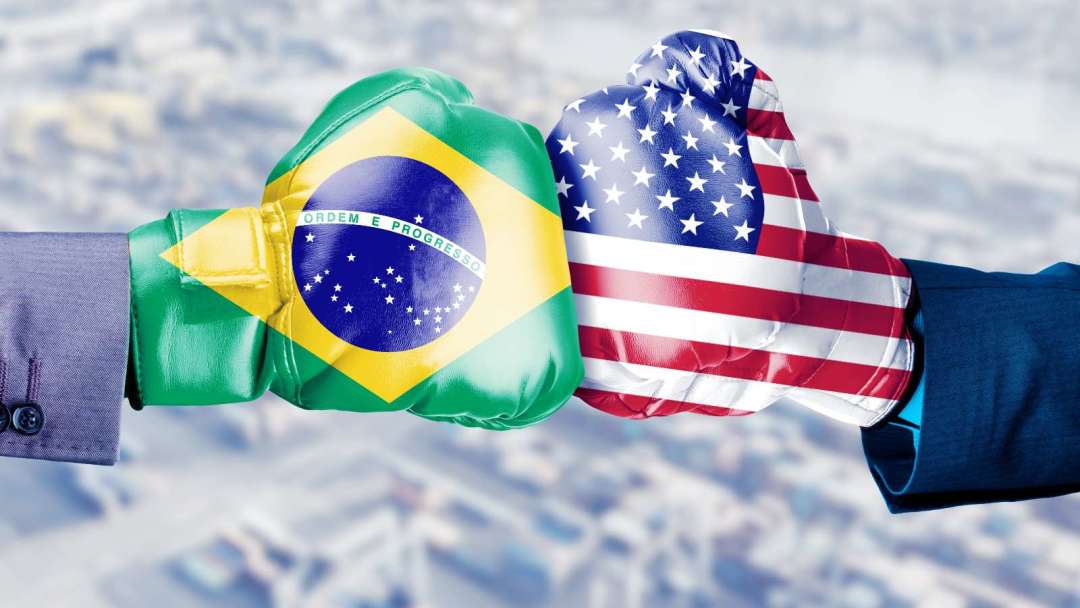
The U.S. government announced on Wednesday (15th) that, under President Trump's directive, the Office of the United States Trade Representative (USTR) has completed its 'Section 301 investigation' into Brazil and decided to impose a 25% tariff on certain Brazilian imported goods. This move aims to respond to Brazil's alleged unreasonable trade practices that burden or restrict U.S. commerce.
According to the investigation findings, the U.S. cited several Brazilian practices harming American economic interests:
Digital Trade and Censorship: Brazilian courts are accused of issuing secret orders forcing U.S. companies like X, Meta, and Google to remove political content and suspend accounts of American residents, while prohibiting the companies from disclosing this to account holders.
Unfairness in Electronic Payments: Brazilian policies are seen as favoring the domestic payment system Pix, placing U.S. service providers at a competitive disadvantage.
Environmental and Agricultural Issues: The U.S. accuses Brazil of inadequate enforcement against illegal deforestation of the Amazon rainforest, allowing Brazilian farmers to gain unfair advantages through land cleared illegally. Additionally, Brazil reinstated tariffs on U.S. ethanol, causing U.S. ethanol exports to plummet by 87% since 2018.
Unequal Tariff Treatment: Brazil grants preferential tariff rates on over a thousand products to India and Mexico, while imposing higher tariffs on U.S. exports.
The tariff adjustment will cover most Brazilian goods, but to minimize domestic impact, exemptions include beef, orange juice, aircraft and parts, energy products, and items already subject to Section 232 tariffs. Currently, non-exempt Brazilian products face tariffs of about 10%. Previously, President Trump had proposed a 50% tariff, which was rejected by the Supreme Court.
U.S. Trade Representative Jamieson Greer emphasized that despite intensive negotiations since April 2025, Brazil failed to adequately address long-standing issues, and this action is intended to protect a 'level playing field' for American workers and businesses. U.S. Secretary of State Marco Rubio criticized President Lula's administration for lacking sincerity in negotiations, stating that its policies are harmful to both U.S. and Brazilian interests.
The Brazilian government expressed strong regret, calling July 15, 2026, a 'sad milestone' in bilateral relations, and accused the U.S. of unilateral measures lacking legal basis. Brazil has announced it will activate its 'Economic Reciprocity Law' as a countermeasure.
FACT BOX
- Source: PR Times
- Category: News
- Organizations: X / Meta / Google