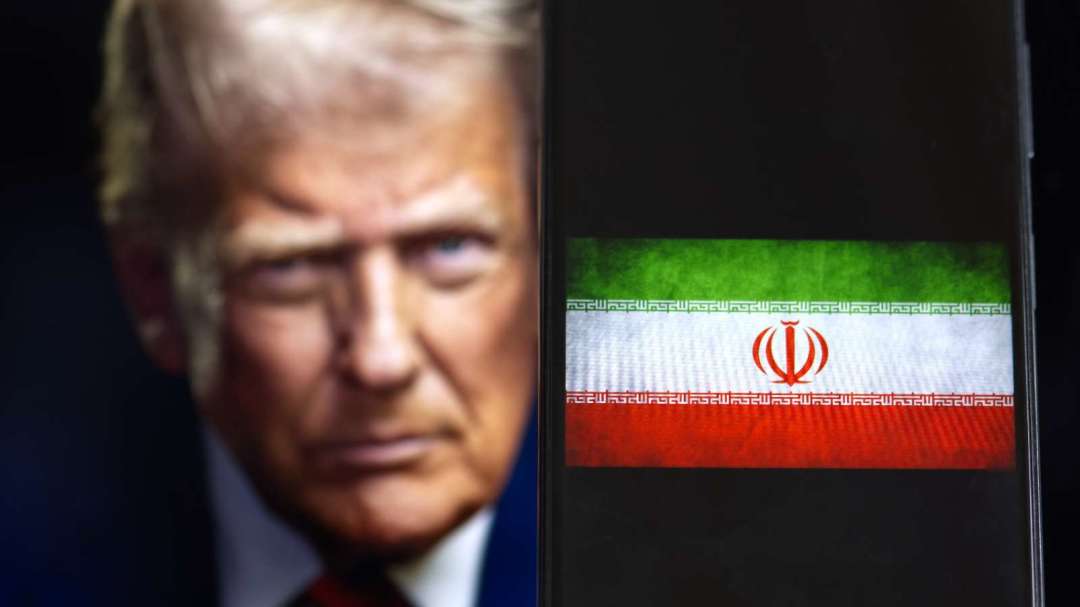
Tensions between the United States and Iran sharply escalated on Wednesday (15th), as U.S. President Trump claimed Iran was seeking negotiations and agreements, while U.S. forces launched two consecutive military strikes against Iranian targets within just 12 hours.
Although Trump stated in an interview with Fox Business that he had just received a message from Iran expressing a desire to meet, prior to departing for Pennsylvania to attend a Defense and Innovation Roundtable, defense analysts remain skeptical about the possibility of reconciliation.
According to U.S. Central Command (CENTCOM), the second wave of U.S. military strikes was launched at 3:00 p.m. Eastern Time on Wednesday, aiming to destroy Iran's military capabilities threatening the safe navigation of the Strait of Hormuz. Earlier that morning, U.S. forces had already conducted precision strikes against Iranian coastal defense systems and cruise missile storage and launch facilities on Greater Tunb Island.
Trump issued a further stern warning, stating that if Tehran does not cooperate with peace negotiations by next week, military actions will be significantly escalated. He declared that U.S. forces would then target Iran's critical infrastructure, including power plants and bridges, and threatened: 'Unless they return to the negotiating table, we will destroy all their power systems.' Trump subsequently announced that the ceasefire agreement between Washington and Tehran had 'ended.'
In response to military pressure, Iranian officials have adopted a stance of 'preparing for battle while maintaining diplomatic channels.' Iranian Parliament Speaker Mohammad Bagher Ghalibaf stated through state media that while Iran does not welcome war, it must always be ready to fight, and will also use diplomacy and negotiations to safeguard national interests.
As the situation deteriorates, global energy and shipping markets are being affected. On Wednesday morning, Brent crude oil prices remained above $85 per barrel. The International Shipping Organization BIMCO pointed out that the lack of transparency and frequent policy changes—such as Trump's initial threat to impose a 20% fee on cargo passing through the Strait of Hormuz, later canceled and replaced with compensation funded by Gulf states—have significantly increased uncertainty and costs for the shipping industry.
Several scholars have expressed pessimism about the situation. Andreas Böhm, a lecturer at the University of St. Gallen, noted that Trump's initiation of hostilities without clear strategic objectives could lead to a prolonged, low-intensity conflict, evolving into the very 'forever war' he once promised to end. He emphasized that if U.S. forces begin bombing Iranian infrastructure, Iran will inevitably retaliate by attacking energy facilities in the Gulf region.
Mike Rosenberg, a professor at IESE Business School, argued that the terms of the 'Islamabad Memorandum' signed by Trump in June were overly detached from reality. Currently, both sides are attempting to claim victory under the agreement, making it difficult to achieve any substantive positive outcomes in the near term.
FACT BOX
- Source: PR Times
- Category: News
- Organizations: BIMCO