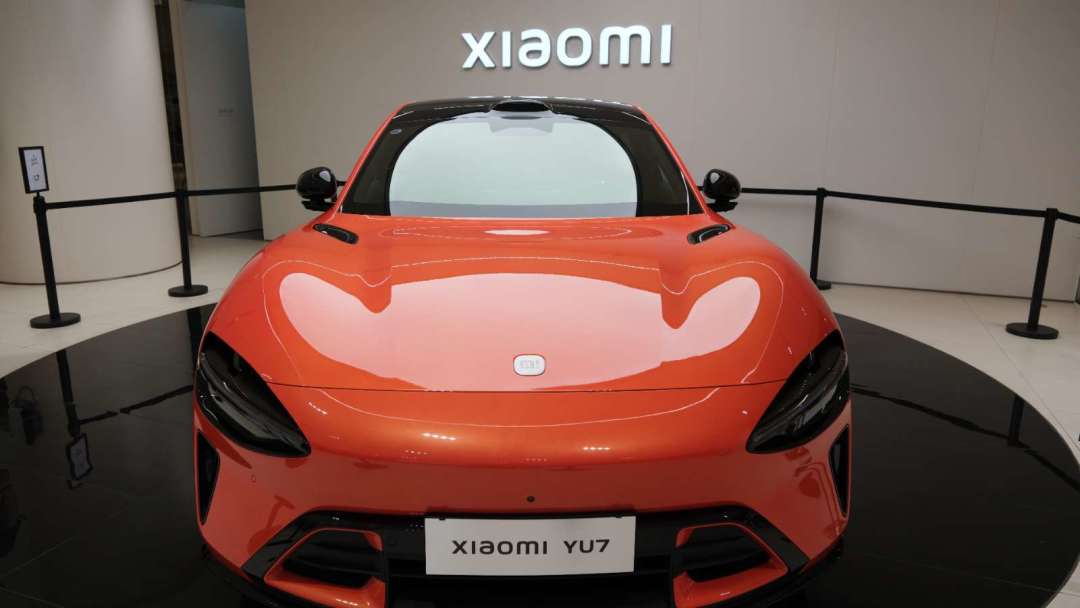
In July 2026, Xiaomi (01810-HK) founder Lei Jun unveiled the full-size extended-range SUV 'Pengcheng SkyNomad' at a product launch, aiming to showcase the company's determination in automotive manufacturing through a capital-intensive, long-cycle strategy. Behind this grand debut, however, Xiaomi is facing unprecedented challenges: its smartphone core business continues to lose ground, its automotive division is still consuming massive capital, and the once high-valuation 'ecosystem narrative' is no longer resonating with investors.
Since its peak in June 2025, Xiaomi's share price has dropped over 57%, wiping out nearly HK$1 trillion in market value.
Strategic Shift: From Pure EV to Pragmatic Extended-Range
Xiaomi's automotive product strategy is undergoing a passive correction. Previously, Xiaomi focused on the pure electric market with the SU7 and YU7 models. While monthly deliveries stabilized around 35,000 units, Xiaomi was forced to pivot as the new energy vehicle market surpassed 60% penetration and entered a phase of saturated competition.
To compete with brands like Li Auto and AITO in the RMB 300,000–400,000 family vehicle segment, Xiaomi launched the 'Pengcheng' extended-range SUV. This new model is seen as critical to achieving its annual delivery target of 500,000 units.
However, Xiaomi faces a major challenge in brand perception—consumers strongly associate Xiaomi with 'performance' and 'driving dynamics.' Shifting abruptly to a family-oriented extended-range market carries a high conversion cost. Moreover, the extended-range segment is already a red ocean with intense product competition, making it uncertain whether Xiaomi can break through the crowded field.
Smartphone Core: Crisis of Volume and Price Decline
Just as its automotive business urgently needs funding, Xiaomi's smartphone division is suffering from a 'double whammy' of declining volume and price. In Q1 2026, Xiaomi's global smartphone shipments fell 19.2% year-on-year, plunging 35% in the Chinese market and dropping out of the top five vendors. Gross margins also shrank to 10.1% due to a 80–100% surge in memory chip costs, the lowest in two years.
Xiaomi is now caught in a triple squeeze of 'cost, demand, and competition.' Internally, it struggles to pass on rising component costs to consumers. Externally, Huawei has made a strong comeback with its Mate and Pura series, reclaiming market share, while Apple is sweeping the mid-tier market through price cuts. This leaves Xiaomi unable to break into the premium segment or defend its existing market share.
Financial Warning: Cash Flow and Loss Pressure
The financial performance of Xiaomi's automotive business is equally concerning. In Q1 2026, the automotive division reported an operating loss of 3.1 billion yuan, with a net loss of nearly 40,000 yuan per vehicle. Key reasons include production downtime during model transitions, rising battery raw material costs, and self-funded purchase tax subsidies.
An even graver warning emerged in cash flow: Xiaomi's operating cash flow turned negative for the first time in years, recording a net outflow of 1.79 billion yuan. With the smartphone business unable to generate stable cash inflows, and continued heavy spending on automotive and AI R&D (budget maintained at 16 billion yuan), this 'scissors gap' has become Xiaomi's core dilemma. In response, Xiaomi has begun workforce optimization across multiple departments to cope with mounting financial pressure.
Narrowing Window for Transformation
Current valuations indicate that capital markets now view Xiaomi as a traditional hardware manufacturer rather than a high-premium ecosystem company. While analysts still hold hope that AI could reshape Xiaomi's ecosystem, the reality is that Xiaomi is enduring severe pain from its shift from a light-asset to a heavy-asset model.
FACT BOX
- Source: PR Times
- Category: New Product
- Products / services: SU7 / YU7