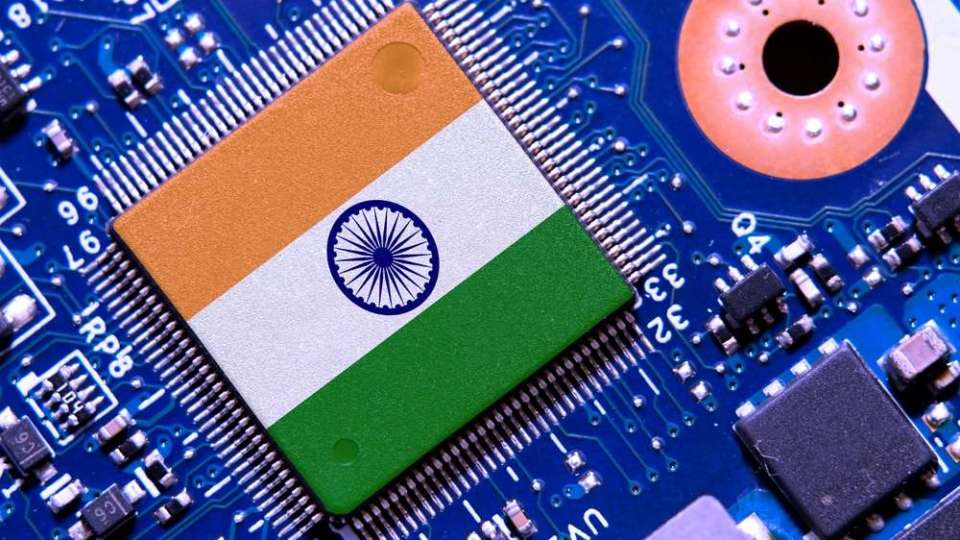
The Indian government announced on Wednesday (15th) the approval of a new 'Semicon 2.0' semiconductor initiative, committing over ₹1.275 trillion (approximately $13.3 billion) in substantial funding. The plan aims to accelerate domestic chip manufacturing, reduce dependence on imports, and establish India as a major player in the global semiconductor industry.
In addition to continuing support for domestic startups developing semiconductor intellectual property, the government will actively encourage investment in equipment, specialized materials, chemicals, and gases required for advanced chip manufacturing. This strategy is designed to attract global resources toward the construction of silicon wafer fabs, compound semiconductor fabs, discrete component fabs, and display fabs.
The newly launched 'Semicon 2.0' program encompasses six strategic pillars:
1. Design:
Semicon 2.0 builds on India's initial achievements in chip design. Currently, 105 startups are engaged in chip development. The initiative will further deepen the design ecosystem, focusing on the development of indigenous intellectual property (IP), chip design, and system design capabilities.
2. Equipment and Materials:
The government will provide incentives to companies investing in the research, development, and production of semiconductor manufacturing equipment, as well as materials, chemicals, and specialty gases essential for fabrication. This will establish a sustainable foundation for the semiconductor industry and simultaneously drive the upgrade of India's precision manufacturing sector.
3. Wafer Fab Construction:
India's first semiconductor wafer fabrication plant is scheduled to become operational by 2028, and global confidence in India's semiconductor strategy is steadily rising. The government will actively attract more companies to invest in manufacturing facilities in India, including silicon wafer fabs, compound semiconductor fabs, discrete component fabs, and display fabs.
4. ATMP/OSAT Industry:
With packaging, testing, marking, and packaging (ATMP) facilities achieving tangible results, India is gradually emerging as a new global hub for ATMP and outsourced semiconductor assembly and test (OSAT) capacity. The government will continue to encourage related investments, with a focus on adopting advanced ATMP technologies.
5. Research and Development:
India's semiconductor industry currently operates on process nodes ranging from 28 nanometers to 110 nanometers. Moving forward, the country will collaborate with leading domestic and international research institutions to accelerate the development of more advanced process nodes and next-generation semiconductor technologies.
6. Talent Development:
Currently, 315 universities are using the latest EDA tools to train students in advanced chip design, having cumulatively educated approximately 68,000 students. The initiative will further deepen specialized training at the university level and strengthen talent development in cleanroom operations, wafer fab construction, and other semiconductor ecosystem-related technologies through industry-academia collaboration.
Additionally, the program aims to further strengthen India's position within the semiconductor value chain by offering incentives to promote the establishment of advanced ATMP and OSAT facilities. It will collaborate with leading domestic and international research institutions to advance next-generation semiconductor research and expand educational outreach through deeper industry-academia partnerships. The Indian Cabinet emphasized that 'Semicon 2.0' signifies a transformative phase for the nation's technology and manufacturing sectors.
Looking back at the 'Semicon 1.0' initiative launched in 2021, which invested ₹1.64 trillion, it successfully drove 12 manufacturing and packaging projects. Among them, three projects—including Micron Technology—have already entered commercial production. Additionally, 24 design projects received funding, and 105 startups and small-to-medium enterprises are developing chips for AI, IoT, defense, and communications.
According to statistics, India's chip market was valued at approximately $38 billion in 2023 and is projected to grow to between $45 billion and $50 billion from 2024 to 2025. The Indian government has set a clear target to expand the semiconductor market to $100–110 billion by the end of 2030, demonstrating its firm ambition to become a global semiconductor powerhouse.
FACT BOX
- Source: PR Times
- Category: News
- Organizations: Micron Technology