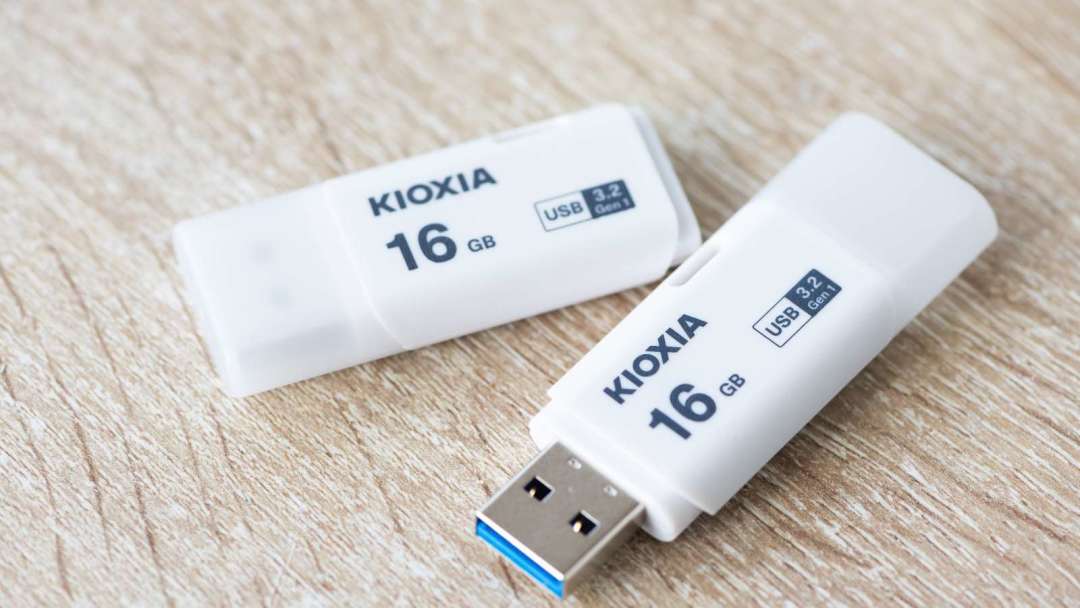
Global memory giant Kioxia has achieved a stunning milestone since its December 2024 IPO, with its market capitalization briefly reaching approximately 56 trillion yen (about $346 billion), surpassing Toyota Motor to become Japan's most valuable publicly traded company. Its stock price has surged by a cumulative 71 times.
Yet, this company now hailed as the 'stock king' of the AI era was, just nine years ago, merely a division Toshiba was forced to sell to survive a corporate crisis.
Toshiba's Costliest Strategic Error in History
Kioxia originated from Toshiba's memory division, which holds the distinction of developing the world's first NAND flash memory. However, after a massive accounting scandal erupted in 2015, followed by the 2017 bankruptcy filing of its U.S. nuclear subsidiary Westinghouse, Toshiba faced over 500 billion yen in negative equity and the threat of delisting from the Tokyo Stock Exchange.
To prevent this financial domino effect, Toshiba sold its memory business in 2018 for $18 billion to a consortium led by Bain Capital, which included South Korea's SK Hynix.
Ironically, the memory division generated an operating profit of 500 billion yen in the 2017 fiscal year. Had Toshiba retained this 'cash cow,' it likely could have restored its capital base without resorting to a sale.
Why Could It Only Soar After Independence?
Beyond financial pressure, Toshiba's internal 'big company disease' also hindered the memory business's growth. Toshiba's core businesses—nuclear power and heavy electrical equipment—prioritized long-term planning over decades. In contrast, the semiconductor industry is highly cyclical, requiring massive capital expenditures (CAPEX) during downturns to dominate the market during recovery.
Under Toshiba's structure, memory division investment requests underwent lengthy approval processes and were often viewed by management unfamiliar with the market as a burden. This caused Toshiba to gradually fall behind Samsung Electronics in competition.
After separating from Toshiba and rebranding as Kioxia, the company gained freedom from bureaucratic constraints, enabling it to focus on R&D and respond swiftly to market changes.
The AI Boom: Capturing the Core of the Era
Kioxia's success cannot be discussed without acknowledging the rise of AI. Since 2023, the proliferation of generative AI has driven demand for data center construction, leading to explosive demand for high-performance memory, particularly enterprise SSDs. In the first quarter of 2026, Kioxia achieved astonishing growth, with revenue up 459.2% and operating profit up 454% quarter-on-quarter.
Even more dramatically, Westinghouse's nuclear business—once the cause of Toshiba's near-collapse—is now showing signs of revival due to the massive power demands of AI data centers, securing numerous new orders. The two major businesses Toshiba once discarded as 'hot potatoes' now stand at the very center of the AI era.
Toshiba's Regret and Kioxia's Rebirth
Today, Toshiba has been privatized and delisted as of 2023. While its latest fiscal year recorded a record-high operating profit margin, a staggering 60% of that profit came from paper gains on its 16% stake in Kioxia.
Toshiba's story has become a classic case of 'short-term survival sacrificing long-term strategy,' while Kioxia, freed from its old structure and riding the AI wave, has emerged as a new benchmark for Japanese corporate success.
FACT BOX
- Source: PR Times
- Category: News
- Products / services: SSD