NearMe Releases 'Midnight Shuttle Shibuya/Mitaka' Demonstration Report: Taxi Ride-Sharing Increases Passengers Per Trip by Approximately 40%, Creates New Late-Night Taxi Demand
NearMe's demonstration of 'Midnight Shuttle Shibuya/Mitaka' shows that shared taxi rides increased passengers per trip by approximately 40%, creating new late-night taxi demand and reducing fares.
📋 Article Processing Timeline
- 📰 Published: April 2, 2026 at 20:00
- 🤖 AI Analyzed: June 2, 2026 at 12:59 (1456h 59m after Published)
NearMe Inc. (Headquarters: Chuo-ku, Tokyo; President and CEO: Koichiro Takahara; hereinafter "NearMe"), a social design company dedicated to solving societal issues related to mobility, has conducted operations for 'Midnight Shuttle Shibuya' and 'Midnight Shuttle Mitaka'. These operations utilized a "real-time ride-sharing matching system" developed under contract for the "COMmmmONS" (Commons) regional transportation DX promotion project, for which the Ministry of Land, Infrastructure, Transport and Tourism is the project implementing body. During these operations, the effectiveness of real-time ride-sharing matching was verified to resolve the taxi supply-demand mismatch in late-night hours and improve mobility convenience. We are pleased to announce the release of a report summarizing the results of this demonstration. The full report can be viewed on the "COMmmmONS" website (https://www.mlit.go.jp/commmmons/tech_report/?page=2).
*This report was prepared by NearMe under commission from the Ministry of Land, Infrastructure, Transport and Tourism.
Demonstration Results (Survey Results)
This demonstration confirmed the effectiveness of introducing a real-time ride-sharing matching system from the perspectives of user value, public value, and business value, including improved transportation efficiency and the creation of new taxi demand.
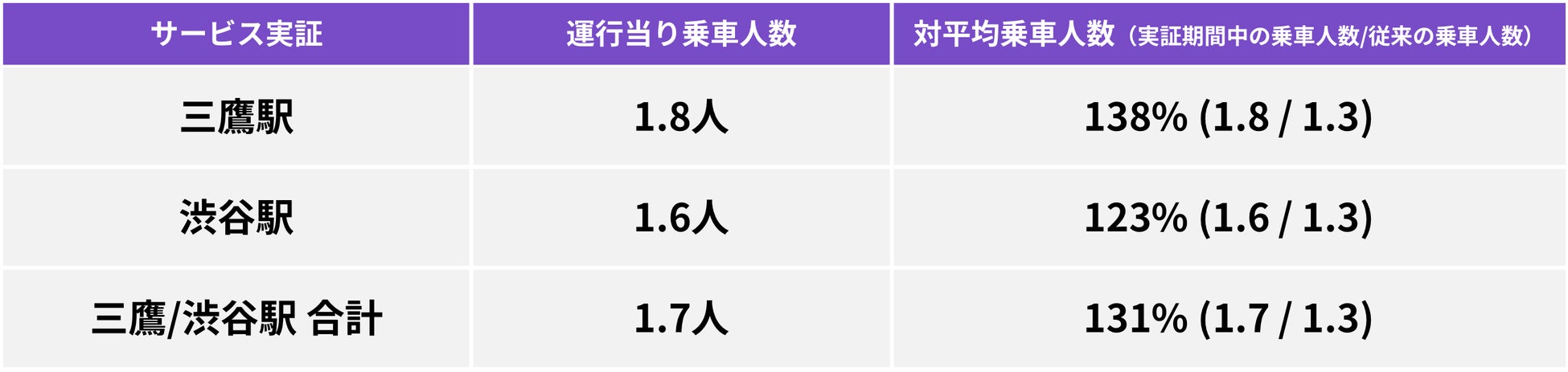
Taxi passengers per trip increased by approximately 40%
From the operational data during the demonstration period, the number of passengers per taxi trip was 1.7 people (1.8 in Mitaka, 1.6 in Shibuya). This represents an approximately 40% improvement in Mitaka compared to the average number of taxi passengers of 1.3 people in the Mitaka/Shibuya area*. This result indicates a demand for "shared rides" among users with similar destinations, and that real-time ride-sharing matching can function as a solution for late-night travel demand.
*According to NearMe's research: Based on the average number of passengers in March 2021 (Tokyo 23 wards/Musashino City/Mitaka City area).
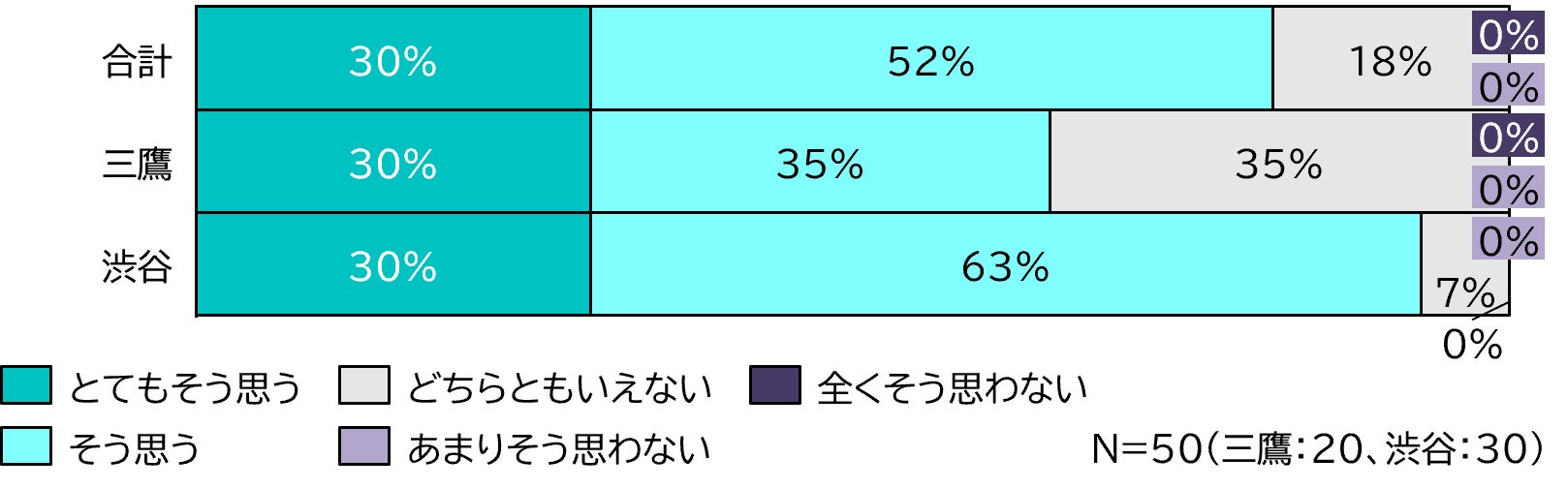
■Approximately 80% overall, and approximately 90% in Shibuya, responded "used a taxi late at night because Midnight Shuttle was available"
Approximately 82% of all users responded, "I used a taxi late at night because this service was available." Particularly in the Shibuya area, which operates mainly around stations and entertainment districts where night demand is concentrated, this figure rose to 93%, suggesting that this initiative is leading to the creation of new taxi demand.
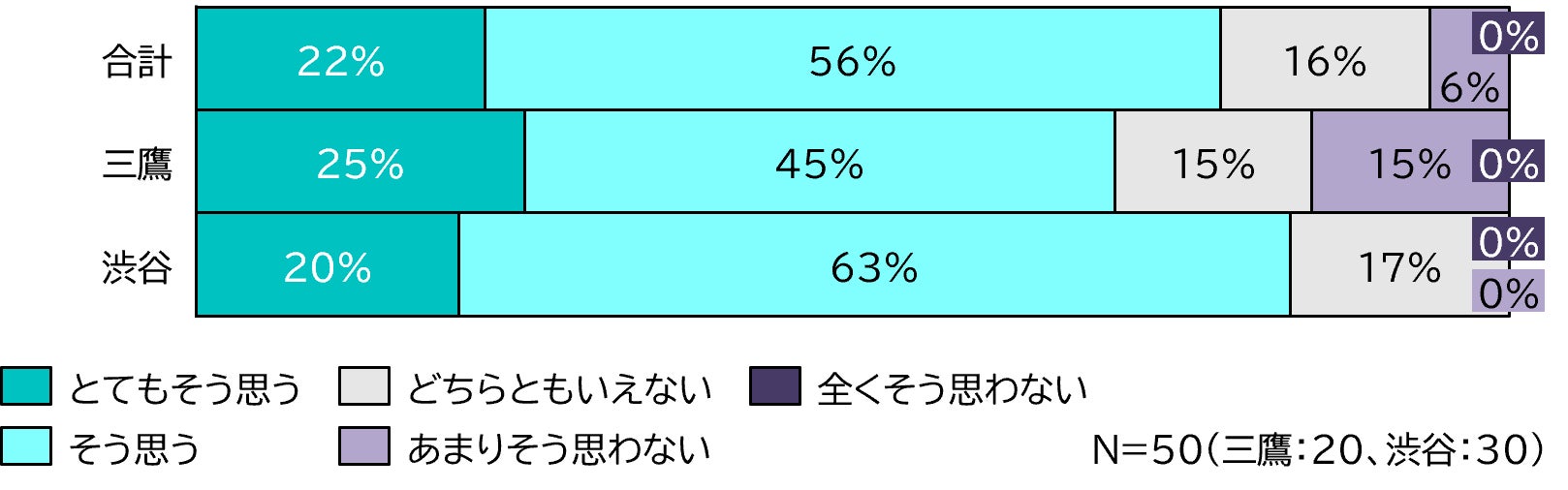
■Approximately 80% responded "want to stay longer at restaurants without worrying about the last train," indicating potential for expanding late-night travel demand
Users who responded, "If this service were available, I would want to stay longer at restaurants without worrying about the last train or bus," accounted for approximately 70% at Mitaka Station, approximately 83% at Shibuya Station, and 78% of all users. This result suggests that securing late-night transportation options could expand the scope of activities, such as dining out, and is expected to contribute to the revitalization of the night-time economy.
■Approximately 98% felt a reduction in taxi fares, highly rated as an affordable and convenient mode of transportation
From the user experience perspective, users highly praised the service for being more affordable than regular taxis due to shared rides, eliminating the need to wait in taxi queues with advance booking, and allowing them to return home without waiting for the first train. In particular, 98% of users responded "strongly felt/somewhat felt" a reduction in taxi fares.
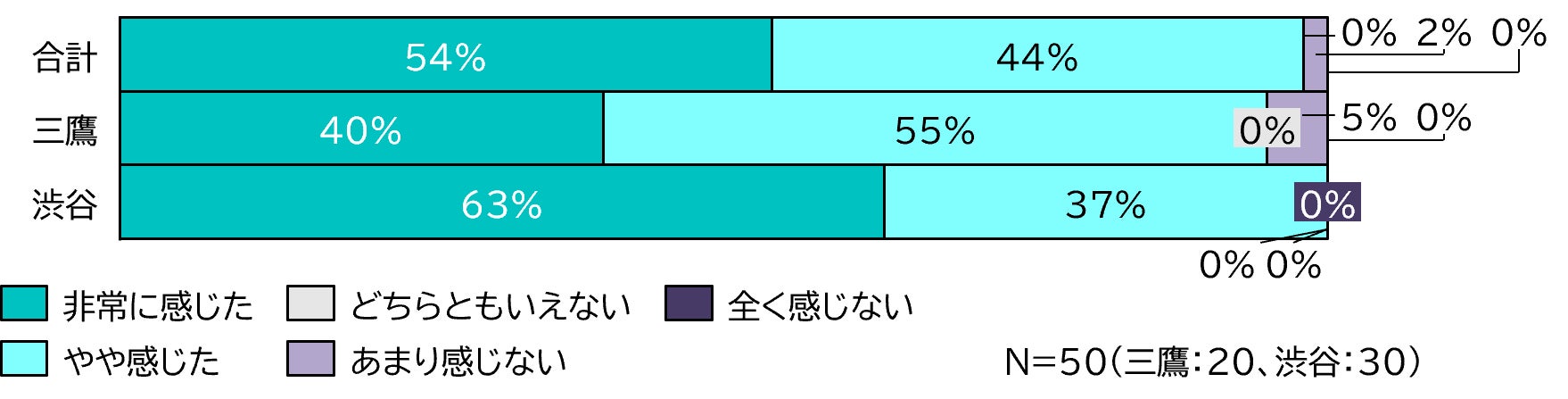
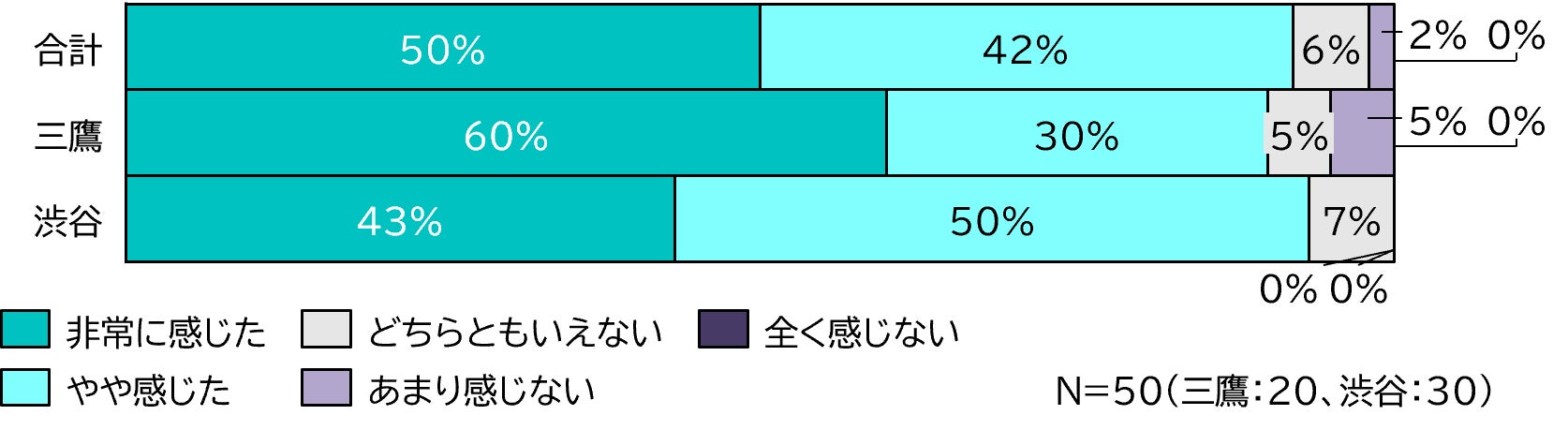
<Survey Overview>
Survey period: Shibuya area / November 1, 2025 - January 31, 2026, Mitaka area / October 31, 2025 - January 31, 2026 (Fri/Sat)
Number of respondents: Shibuya area (n=20), Mitaka area (n=30)
Survey method: Questionnaire survey of passengers
Future Development of Real-time Ride-sharing Matching System
This demonstration confirmed the effectiveness of introducing a real-time ride-sharing matching system from multiple perspectives, including improved taxi transportation efficiency, high user satisfaction, and the creation of new taxi demand. In particular, shared rides increased the number of passengers per vehicle, indicating the potential for more efficient utilization of existing taxi vehicles.
Furthermore, the survey showed that many users responded, "I used a taxi late at night because this service was available," indicating the potential to create new travel demand in late-night hours where transportation options were previously limited. Moreover, many users responded, "I want to stay longer at restaurants without worrying about the last train or bus," suggesting that securing late-night transportation options could contribute to the revitalization of the night-time economy.
Going forward, we will first establish a service model around a single station and, in collaboration with railway companies, local taxi operators, and local governments, promote operations that reliably capture late-night travel demand after the last train/bus. Subsequently, as a service that handles last-mile travel after arriving at a station, we will gradually expand to surrounding stations and lines with similar demand structures, aiming for sustainable service growth.
In addition, the real-time ride-sharing matching mechanism developed in this demonstration can be applied not only to late-night travel but also to temporary demand surges in urban areas, such as during events or public transport delays/cancellations. Moving forward, we will continue to improve functions through AI and data utilization, with a view to utilizing it as a new mode of transportation that complements public transport, and promote initiatives for the implementation of taxi ride-sharing services.
About the Regional Transportation DX Promotion Project "COMmmmONS"

In the field of regional transportation, while the spread of mobility services utilizing digital technology, such as MaaS apps and ride-hailing apps, is progressing, a problem of "siloization" has arisen where each service and data are not linked due to independently built business models and systems.
As improving the quality and productivity of transportation services to eliminate "transportation deserts" is an urgent issue, a new approach is needed to break down "siloization" and systematically promote regional transportation DX centered on collaboration and cooperation.
The Regional Transportation DX Promotion Project "COMmmmONS: Code for Mobility Common Society" is a new initiative that aims to create technical assets that become common property of society by integrally promoting the creation of best practices and standardization for problem-solving using digital technology across four pillars: services, data, management, and business processes, and then horizontally expanding them.
■Website
About the "Real-time Ride-sharing Taxi Matching System Development Project"
In recent years, with the recovery of inbound tourism and the expansion of tourism demand, overall domestic travel demand has been on an upward trend. The government also positions the tourism industry as an important sector supporting regional economies, and a further increase in human traffic from both domestic and international sources is expected in the future.
On the other hand, the taxi industry is facing a prominent labor shortage due to a decrease in drivers and an aging workforce. Particularly due to the impact of departures triggered by the COVID-19 pandemic, the recovery of supply capacity has not been sufficient, leading to situations where supply cannot keep up with demand during peak hours, especially in urban areas and tourist destinations.
In urban areas, there is a persistent need for late-night travel, such as "one more station" after work, dining, or events, or travel home when public transport ceases operations late at night. However, taxi supply is limited, leading to chronic supply-demand mismatches, such as long queues for taxis in front of stations after the last train.
This project verified the effectiveness of a "real-time ride-sharing matching system" in Shibuya and Mitaka as a mechanism to maximize the utilization of existing taxi resources and improve transportation efficiency. In the Shibuya area, the aim was to alleviate taxi shortages and congestion-related travel stress by operating mainly around stations and entertainment districts where night demand is concentrated. In the Mitaka area, the objective was to provide a smooth way to return home after the last train, catering to residential return demand originating from JR Mitaka Station.

|
Midnight Shuttle Shibuya |
Midnight Shuttle Mitaka |
|
|
Demonstration Purpose |
Verify the potential for resolving late-night urban taxi supply-demand mismatch |
Verify the potential for addressing late-night return demand in suburban residential areas after the last train |
|
Implementation Area |
Around Shibuya Station (within approx. 1km radius) |
Around JR Mitaka Station South Exit |
|
Operating Area |
Wide area including Tokyo 23 wards |
FAQ
What kind of service is Midnight Shuttle?
It's a service that enables shared taxi rides using a real-time ride-sharing matching system to meet late-night travel demand after the last train.
What effects were confirmed in this demonstration?
An approximately 40% increase in passengers per taxi trip, creation of new late-night taxi demand, fare reduction, and improved convenience were confirmed.
What are the future plans for this service?
After establishing a service model around a single station, gradual expansion to surrounding stations and lines, and application to temporary demand surges during events are envisioned.