People Who Protect Forests, People Who Mill Lumber, People Who Design, People Who Live in the City – Benches from the Expo, Born from a Co-Creation Project, are Moving to Various Regions. Aiming for a True 'Legacy' by Passing on 'Thinking About Life' to the Next Generation.
Benches made from Osaka-produced lumber, used at the Expo, are being relocated to local communities as an environmental education legacy.
📋 Article Processing Timeline
- 📰 Published: March 31, 2026 at 23:23
- 🔍 Collected: April 1, 2026 at 01:06 (1h 43m after Published)
- 🤖 AI Analyzed: April 16, 2026 at 15:48 (374h 41m after Collected)
The "Thinking Bench - Circulation of Life" project, operated by H2O Retailing Co., Ltd. (Headquarters: Kita-ku, Osaka; President and CEO: Naoya Araki, hereinafter H2O) and advanced through co-creation with diverse businesses and local residents within Osaka Prefecture. This project aimed to create opportunities to reflect on the 'circulation of life' through the creation of benches using Osaka-produced lumber and information dissemination via a web media platform developed in collaboration with local people. The benches created were installed at the Osaka-Kansai Expo (hereinafter, the Expo) during its duration, spreading 'thoughts.' After the Expo concluded, their relocation to elementary schools and other locations in Osaka and surrounding regions is now nearly complete. The project's endeavor to foster contemplation of forests and life will continue to be passed down in each community.
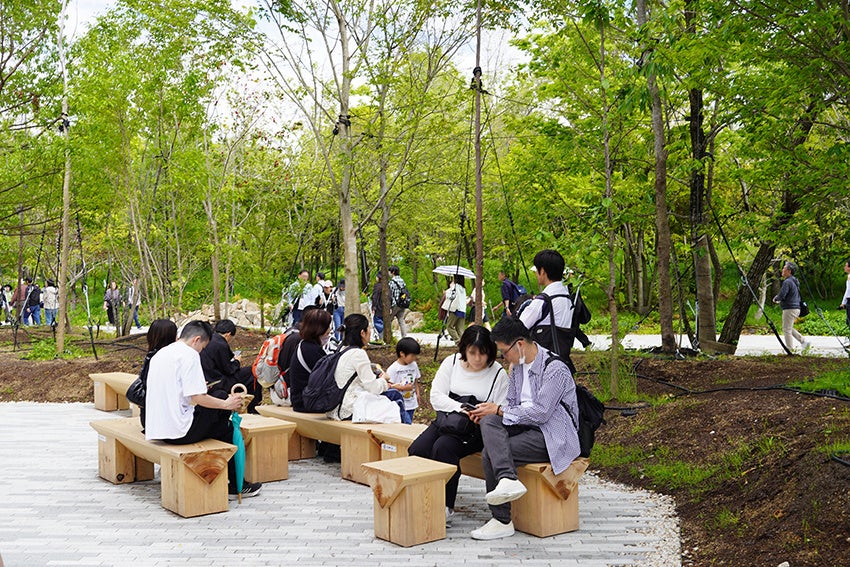
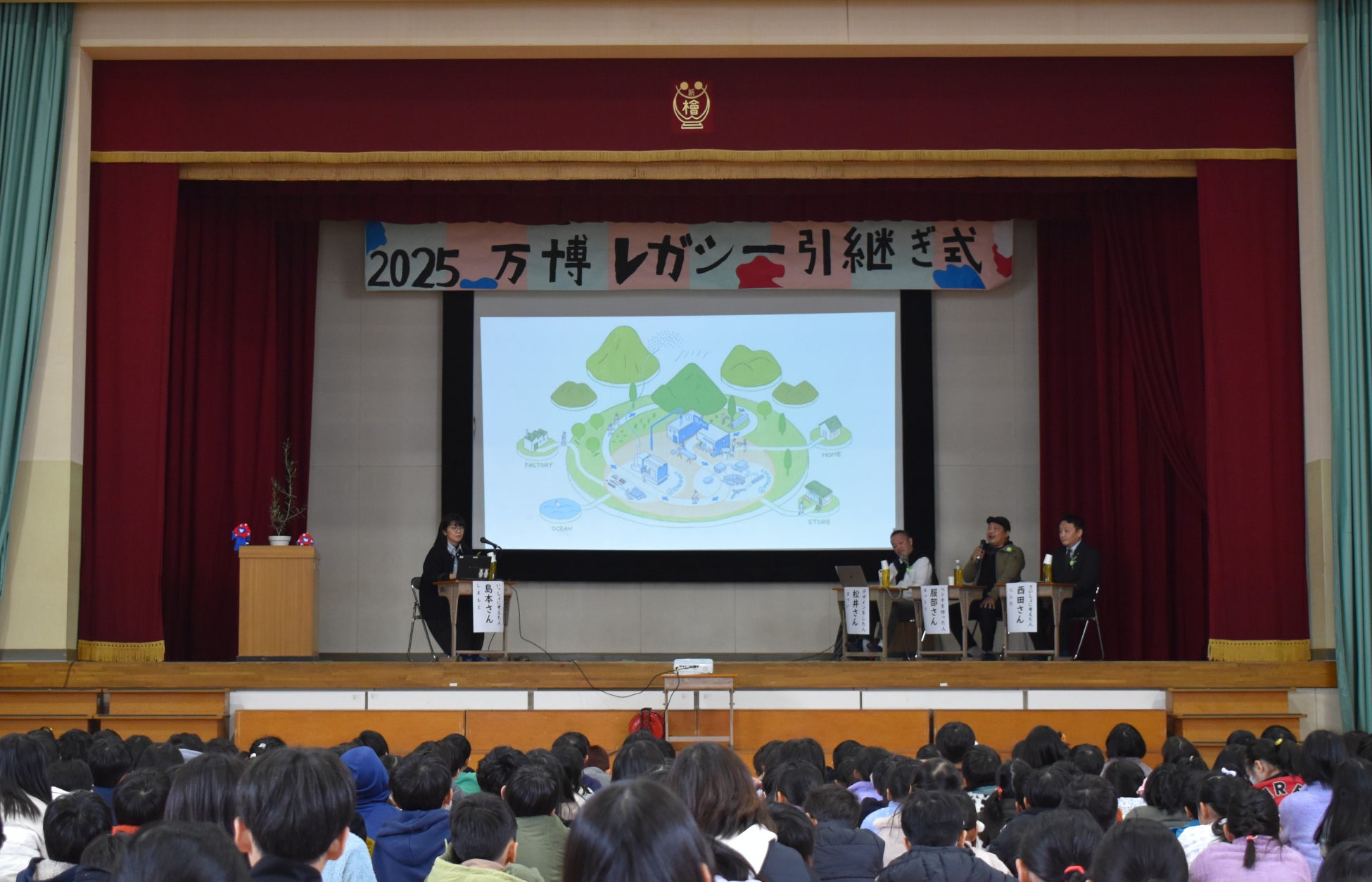
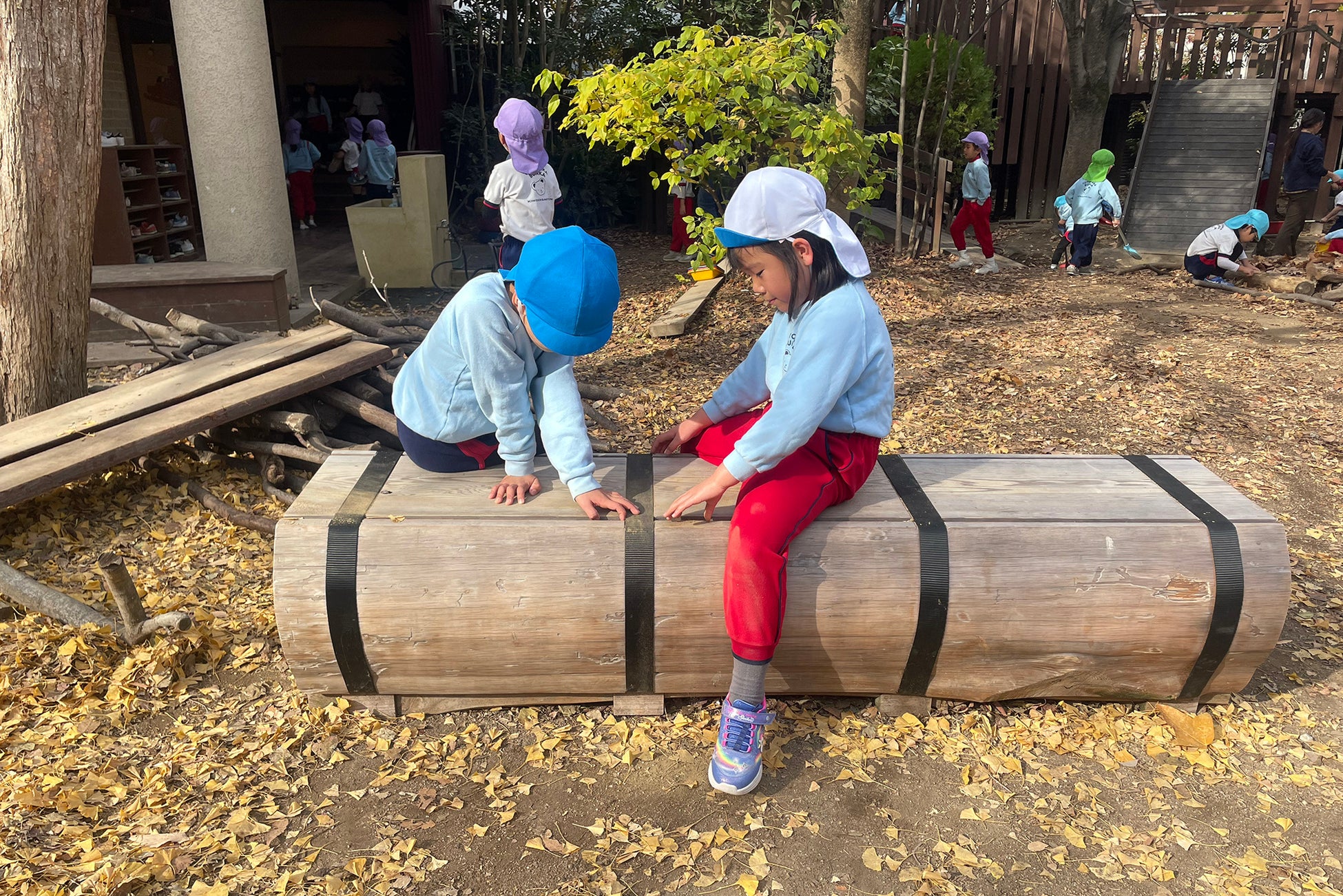
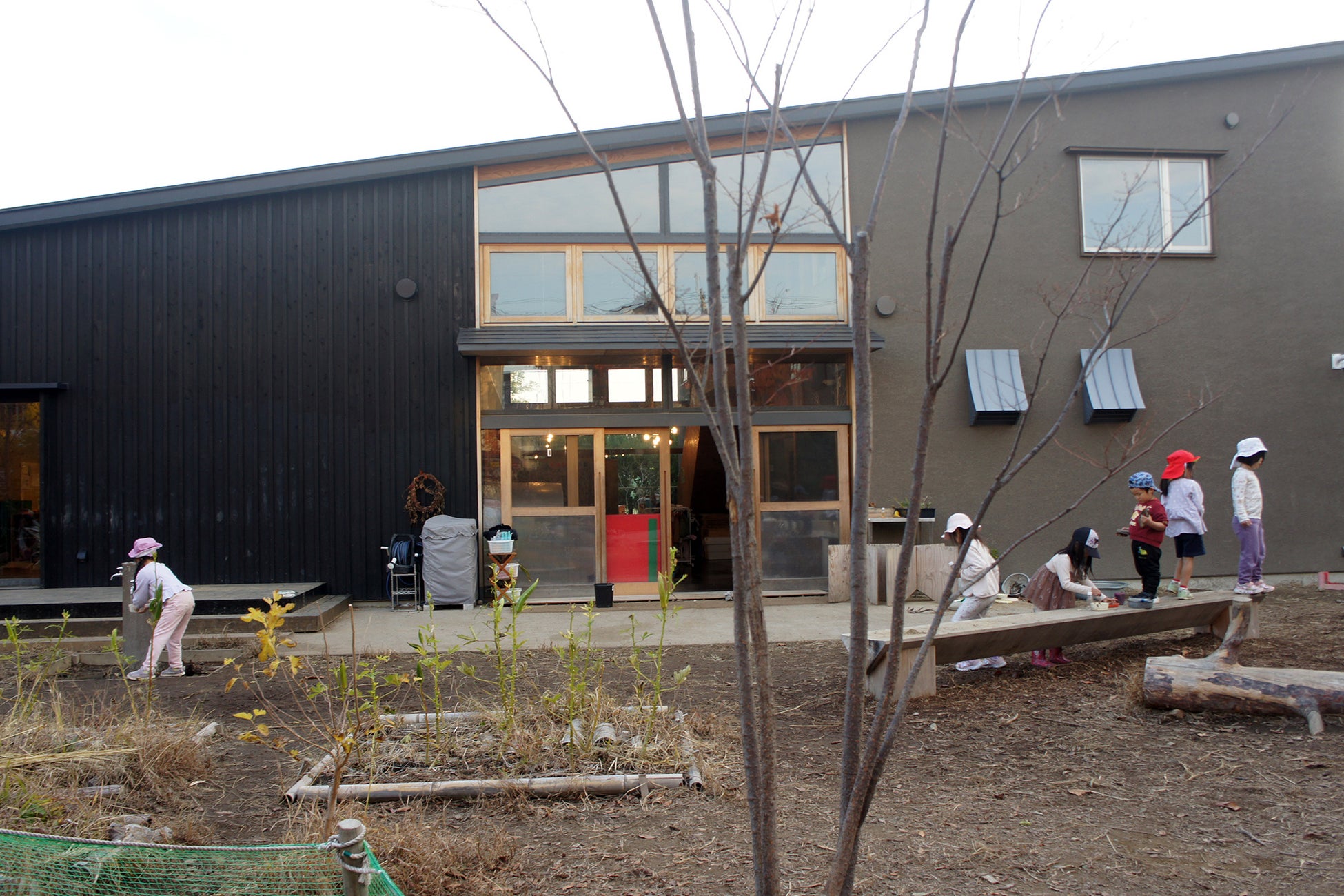
Table of Contents
◼ Beyond Local Lumber Consumption: The Future the Project Aimed For, Thinking of Forests and Life, Triggered by the Expo.
◼ Concept: "Design for Trees," Not "Trees for Design." What Kind of Benches Were Born from Dialogue Among Forest Cooperatives, Sawmills, and Designers?
◼ From Kindergartens to Hospitals: Encounters with Local Communities Who Empathize with the Concept and Inherit It, Rather Than Just "Reusing" It.
◼ A Project Book Has Also Been Completed, Summarizing the Project's Journey and the Spread of Thoughts.
◼ The "Thinking Bench" Project Continues into the Future.
Beyond Local Lumber Consumption: The Future the Project Aimed For, Thinking of Forests and Life, Triggered by the Expo.
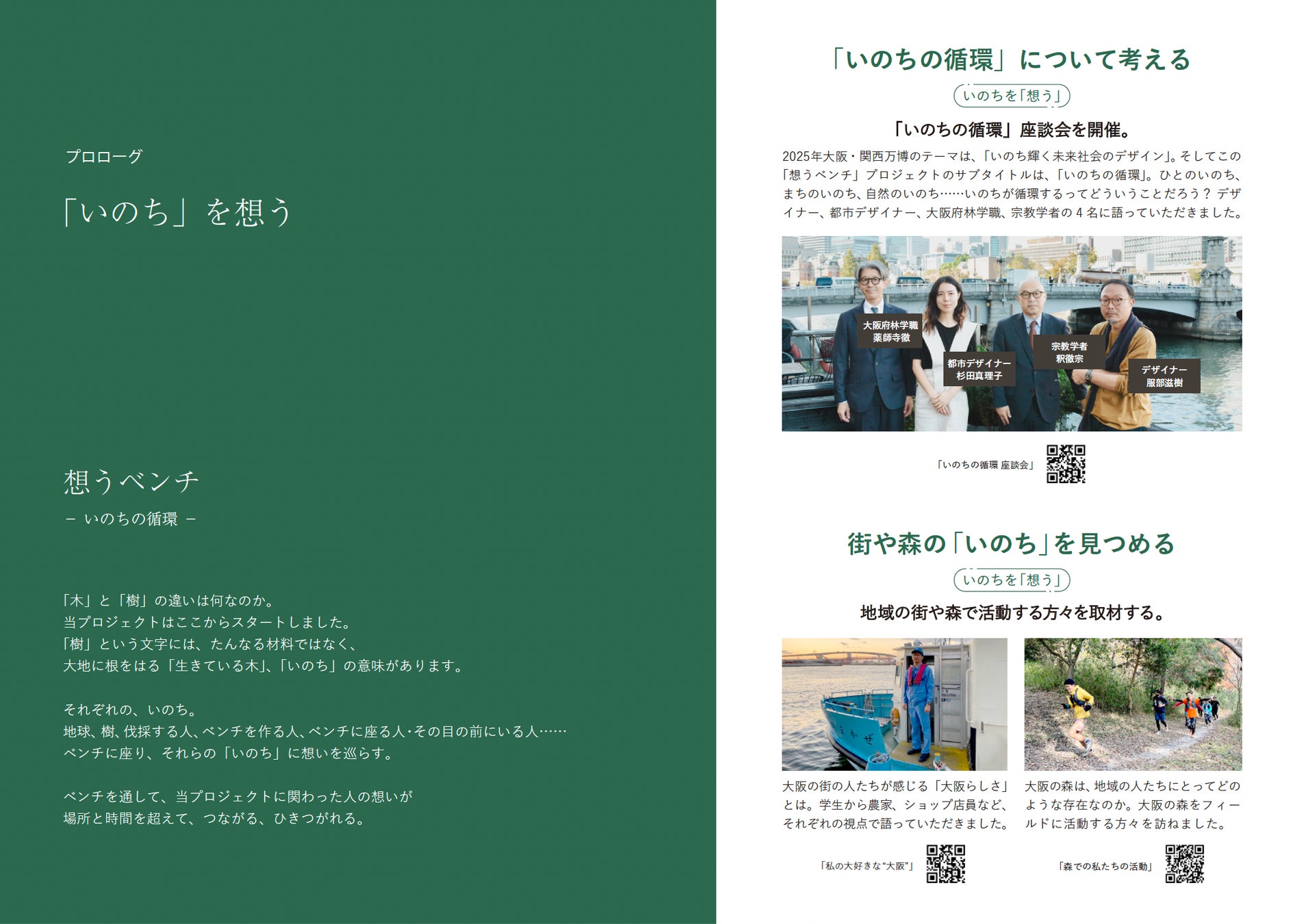
Starting by Looking at the Past and Future of Osaka's Forests
Although Osaka Prefecture has the smallest forest area in Japan, about one-third of its total area is still forest. Osaka's forests are characterized by their proximity to where people live. However, with changes in lifestyles, the use of wood has decreased, leading to a decline in forest management. This situation poses risks, including those related to disaster prevention. To maintain healthy forests, it is necessary to increase wood utilization and promote the forest cycle. With this in mind, H2O launched the "Osaka Forest Circulation Promotion Project" in 2021, increasing the use of local lumber. Furthermore, driven by the idea that "the future could change more if local residents could contemplate forests and life," the "Thinking Bench - Circulation of Life" project was initiated, using the Expo as a catalyst.
* For details on the changes in Osaka's forests, please read on the project website.
Interview with Mr. Shuji Kurimoto, Representative Director and President of the Osaka Prefectural Forest Cooperative, "As Forests Close to the City: Osaka's Forests, Protected and Passed Down Through Change, 'The Past, Present, and Future of Osaka's Forests.'
Creating Benches from Osaka Wood, Installing Them at the Expo, and Then Relocating Them to Local Communities.
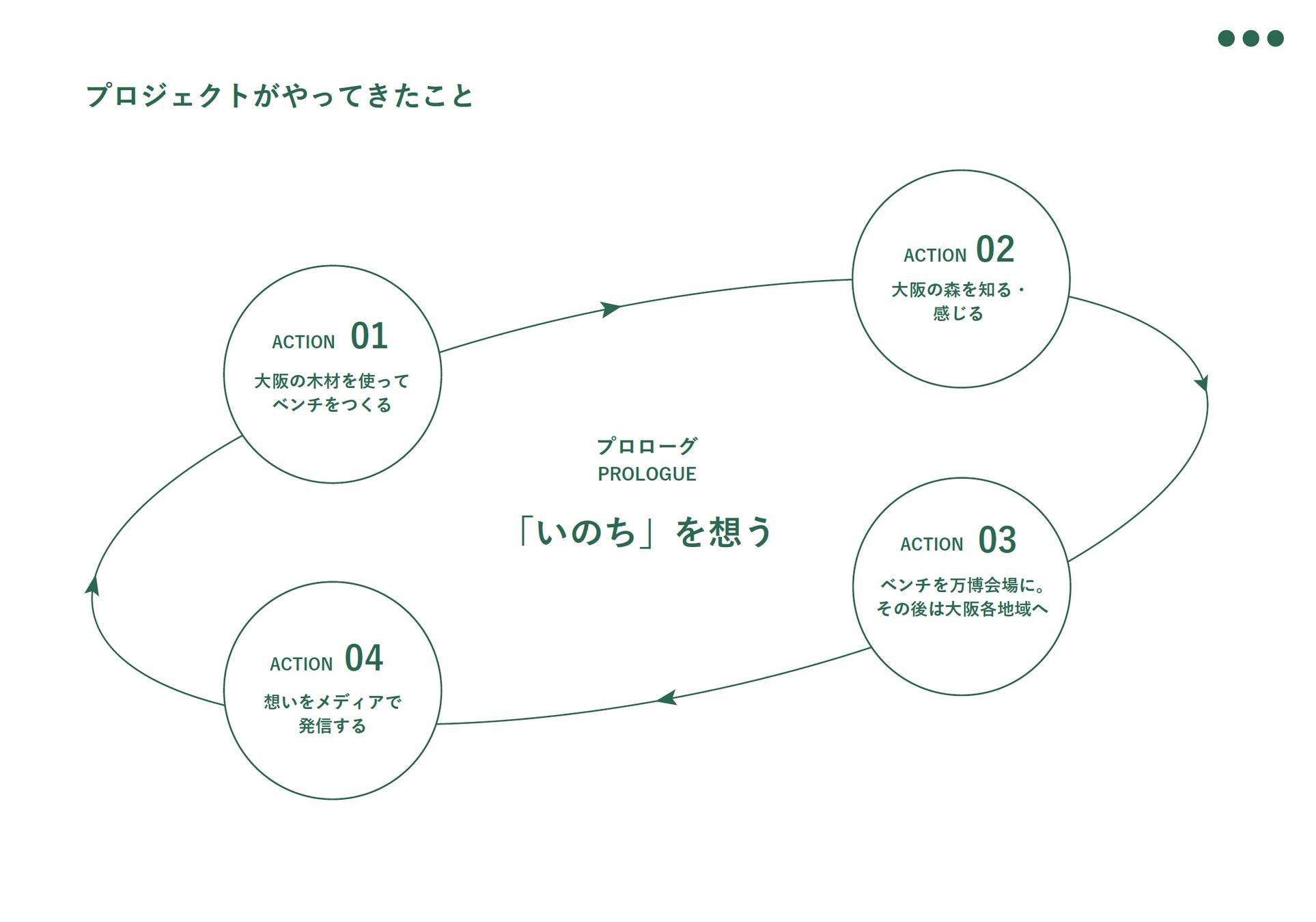
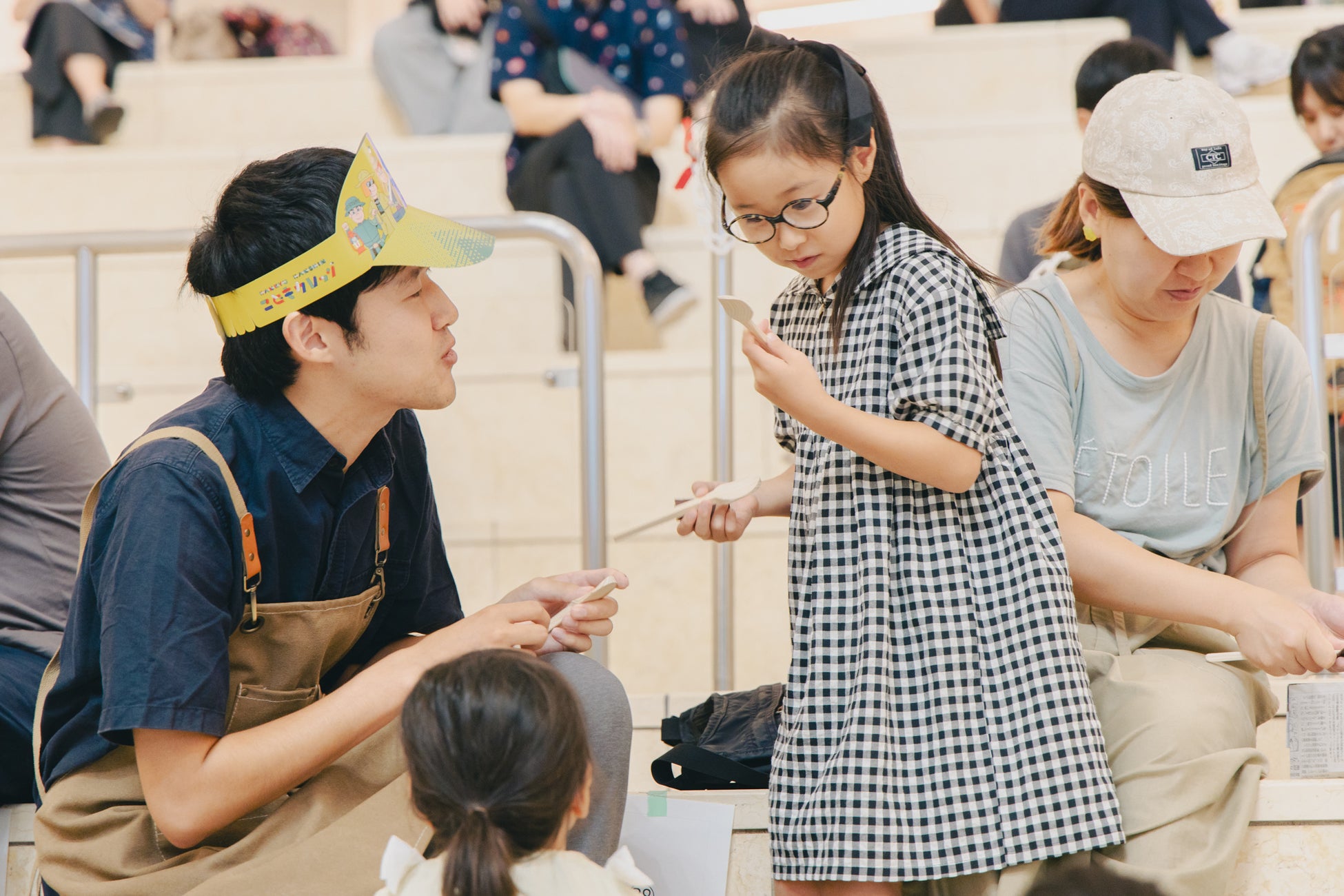
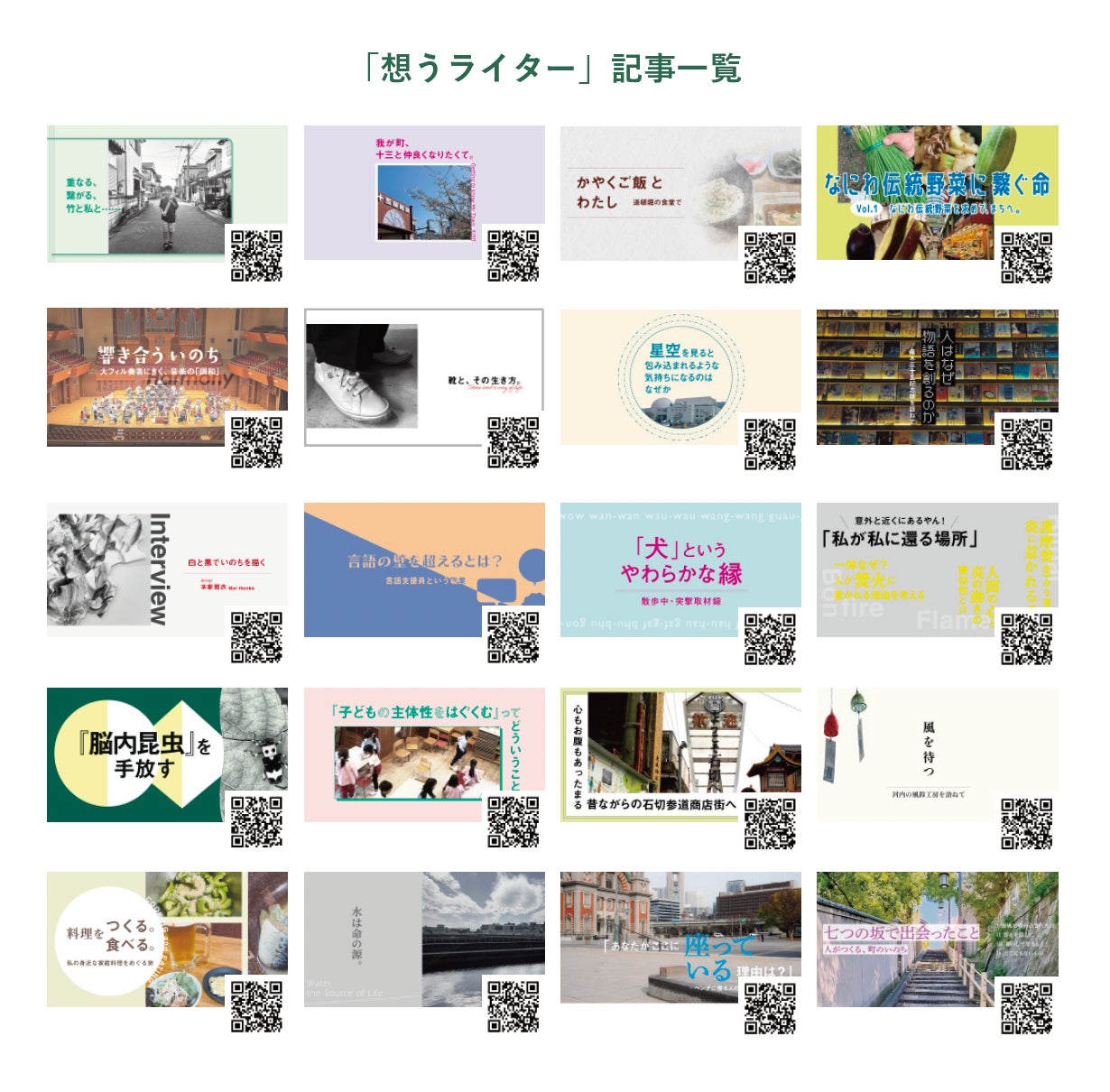
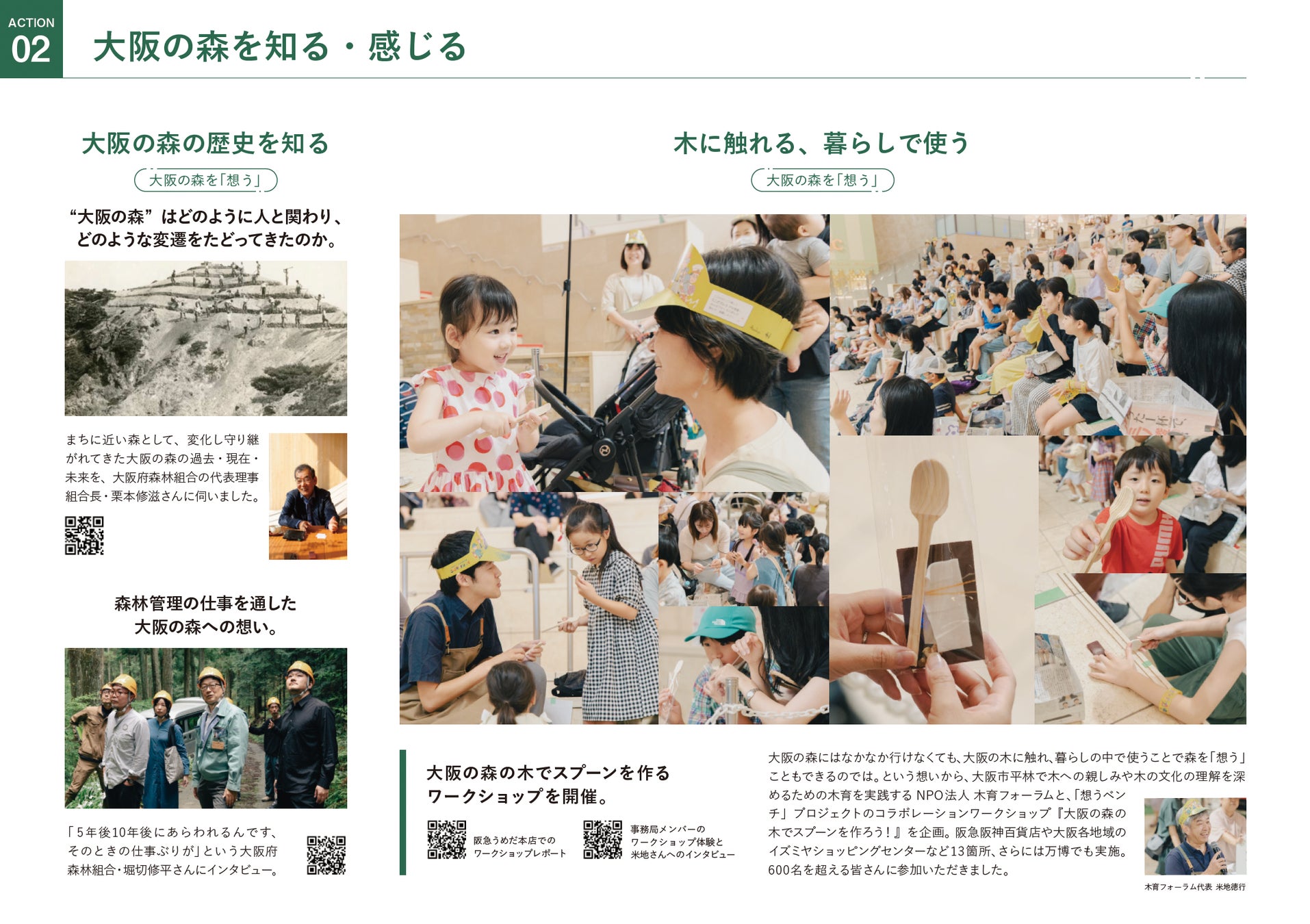
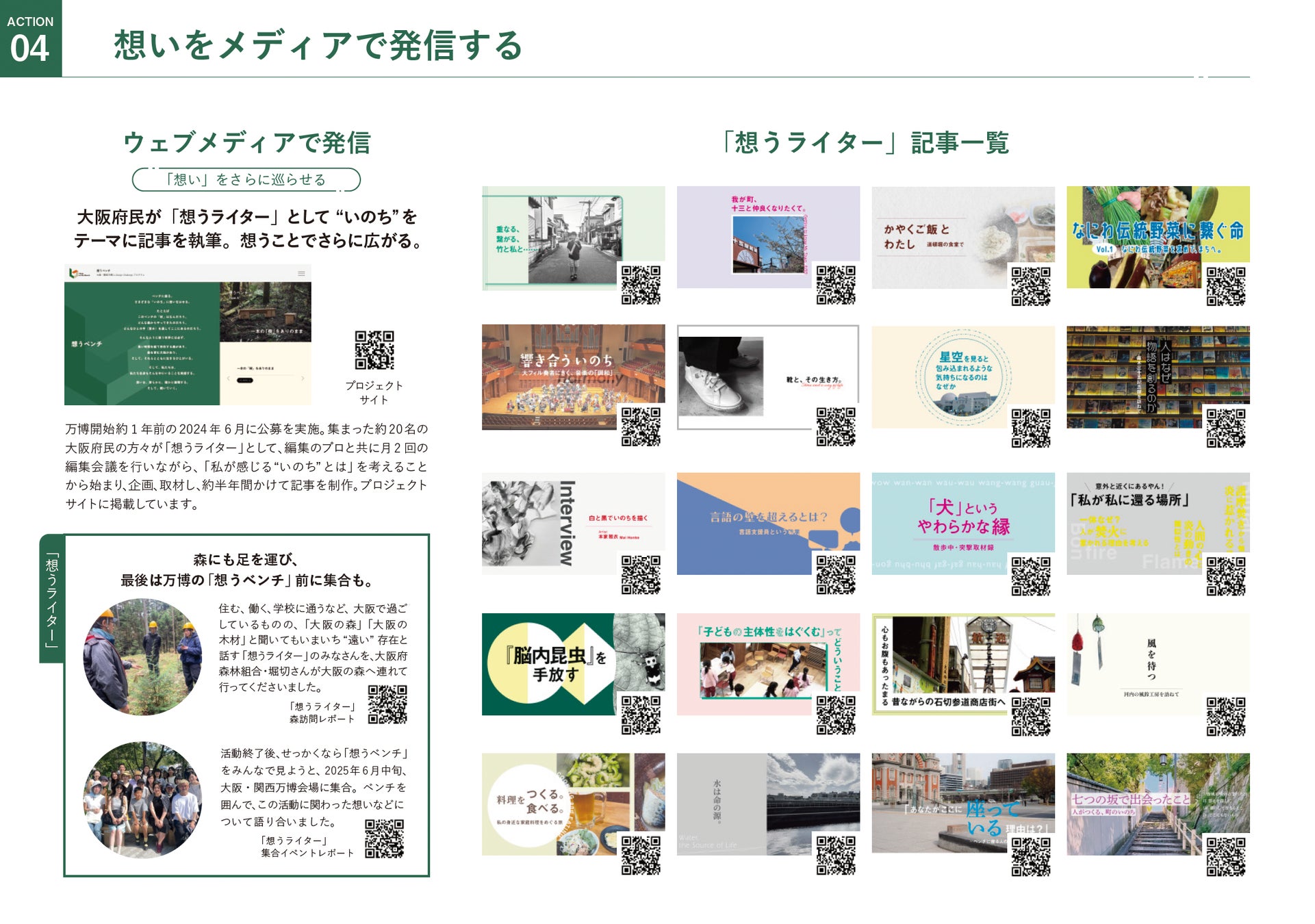
The "Thinking Bench - Circulation of Life" project, which began in 2023, involved creating benches from Osaka wood, installing them at the Expo, and then having them used in various locations across Osaka. This was achieved through dialogue with many individuals who gathered for the project, including the Osaka Prefectural Forest Cooperative, Osaka sawmills, and designers who sympathized with the concept. We fostered a broader impact beyond just wood utilization by enabling Osaka residents to think about the 'circulation of life' through operating a web media platform where they conducted interviews and created articles, and by holding workshops where people could experience wood up close. This project was also adopted by the Osaka-Kansai Expo's "Co-Design Challenge," which focused on the theme of 'life.'
Concept: "Design for Trees," Not "Trees for Design." – What Kind of Benches Were Born from Dialogue Among Forest Cooperatives, Sawmills, and Designers?
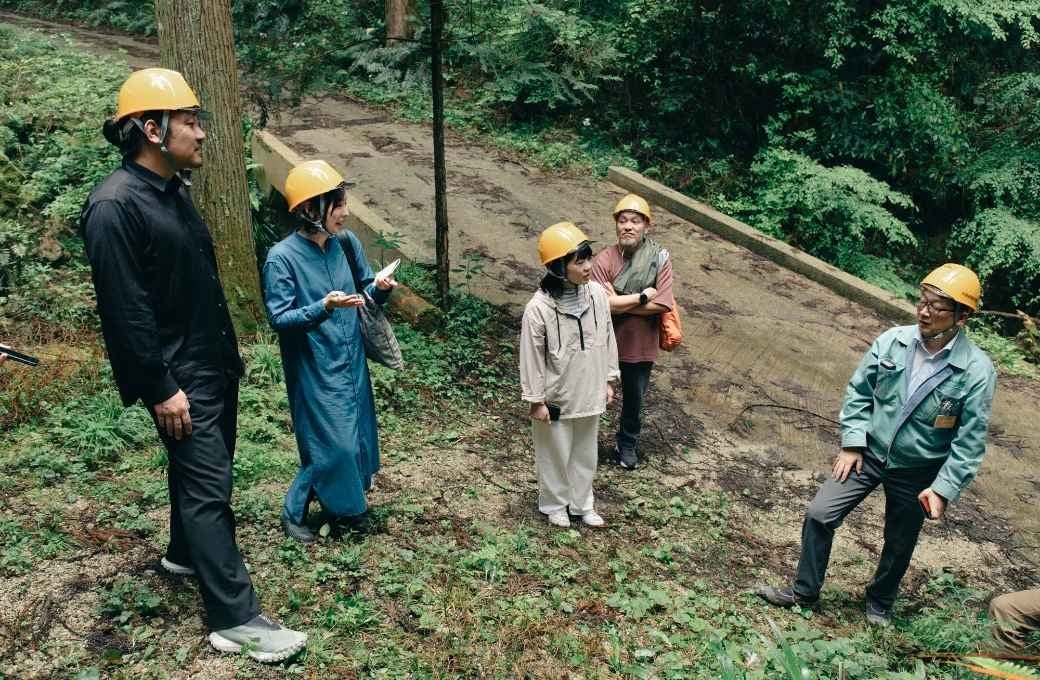
Designers visited Osaka's forests. Before them stood trees that had lived for decades. What does it mean to think about life? Generally, materials exist for design, but in this project, we wanted to consider "design for trees," not "trees for design." With this sentiment, the "Thinking Bench" was created. It is a bench born from the dialogue and co-creation of entities such as forest cooperatives, sawmills, and designers, who had not previously connected much, brought together by the Expo.
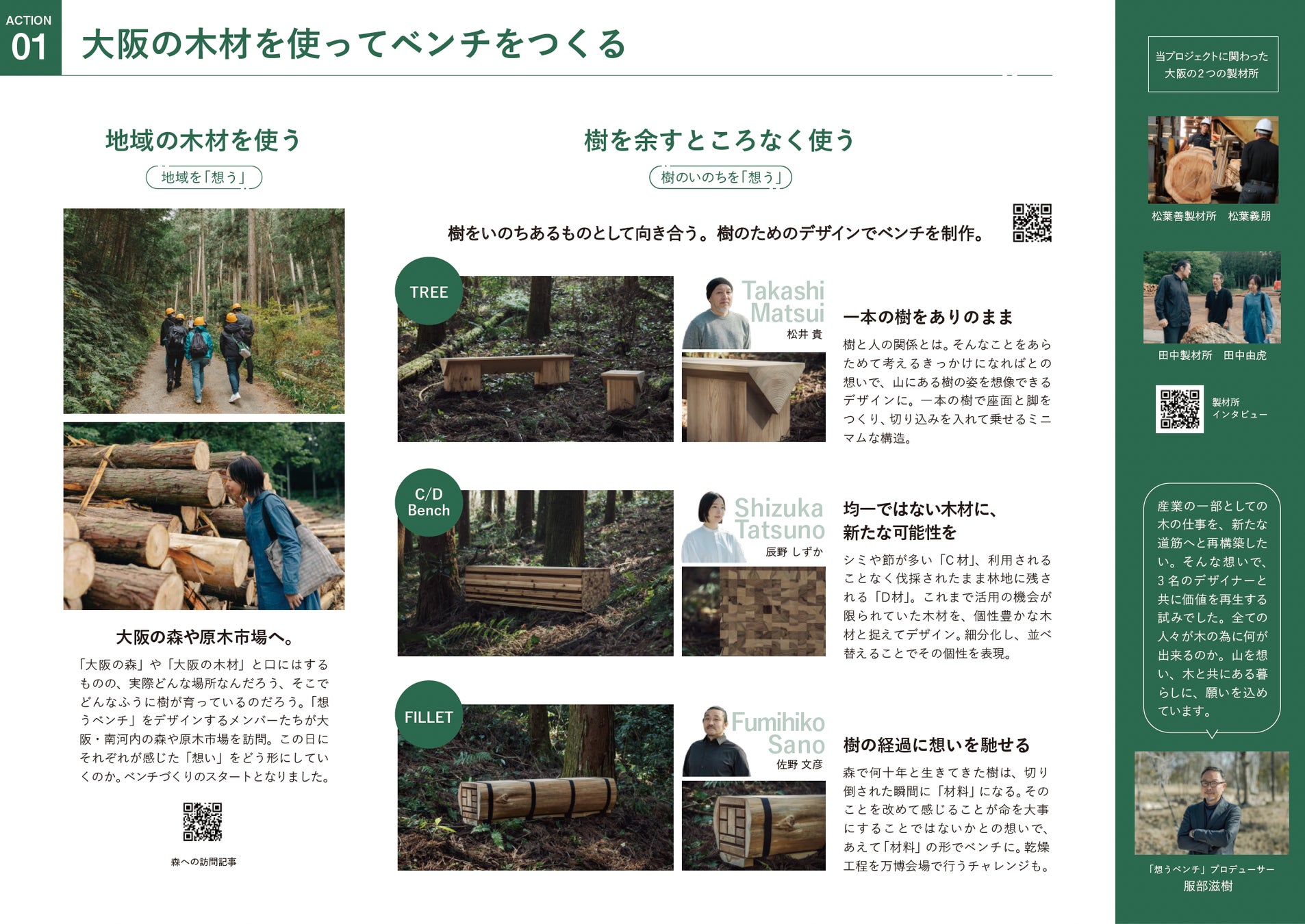
About the Three "Thinking Benches"
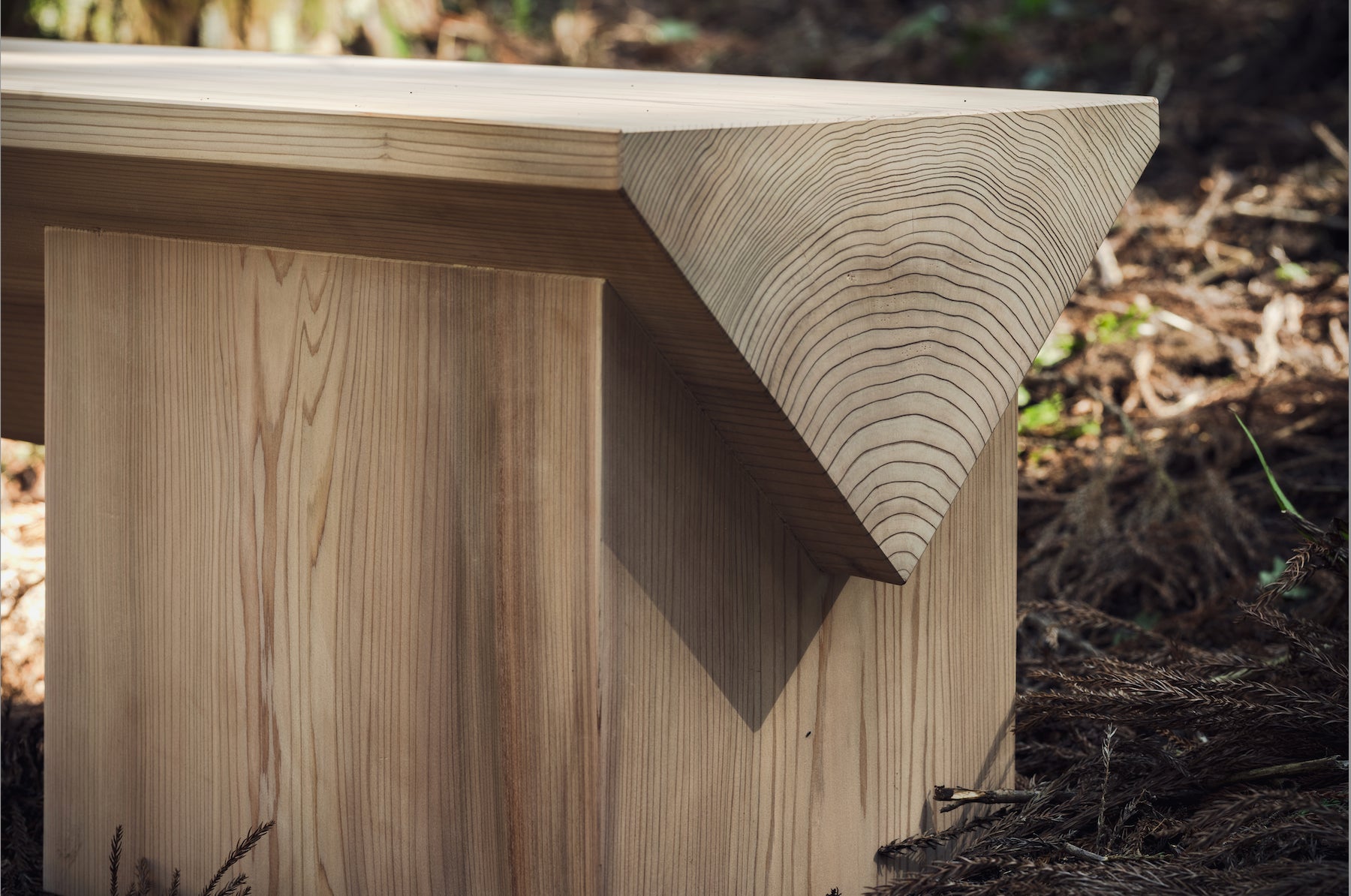
Type A: A Single "Tree" As It Is (Title: TREE)
What is the relationship between trees and people? With the hope that this will be an opportunity to reconsider this, the design imagines the form of a tree in the mountains. It is a minimalist structure made from a single tree, forming the seat and legs, with notches for assembly.
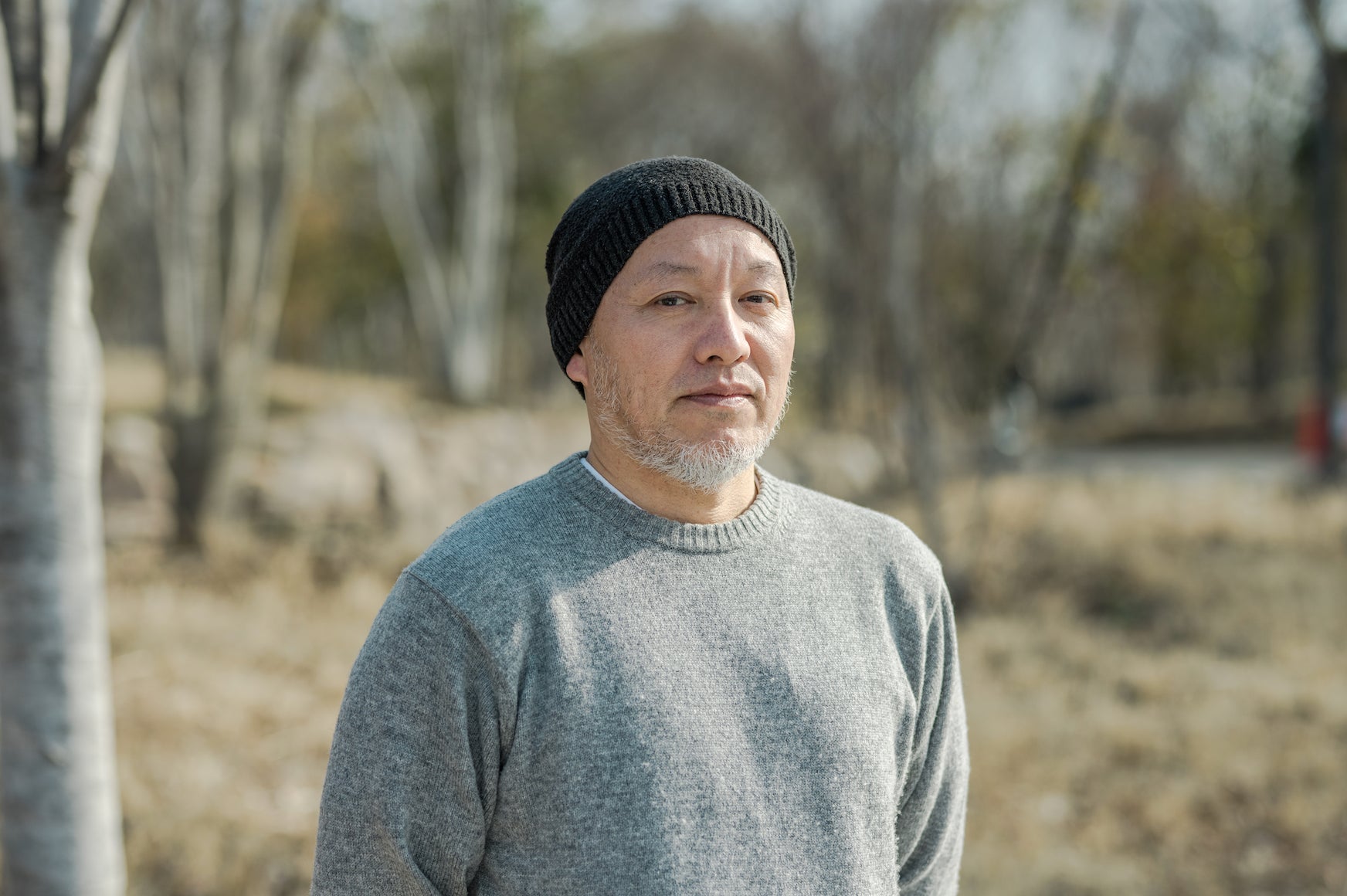
Designer: Takashi Matsui
Born in 1970, from Osaka Prefecture. Director and product designer at graf, a company involved in furniture manufacturing, sales, and product design in Osaka. Raised in a family that ran a shoe store in a downtown shopping street, with a father who was a shoemaker. After working at an architectural design office and as an antique furniture repairer at an interior shop, he started graf's activities with friends in 1998. He is responsible for design, primarily focusing on furniture and products.
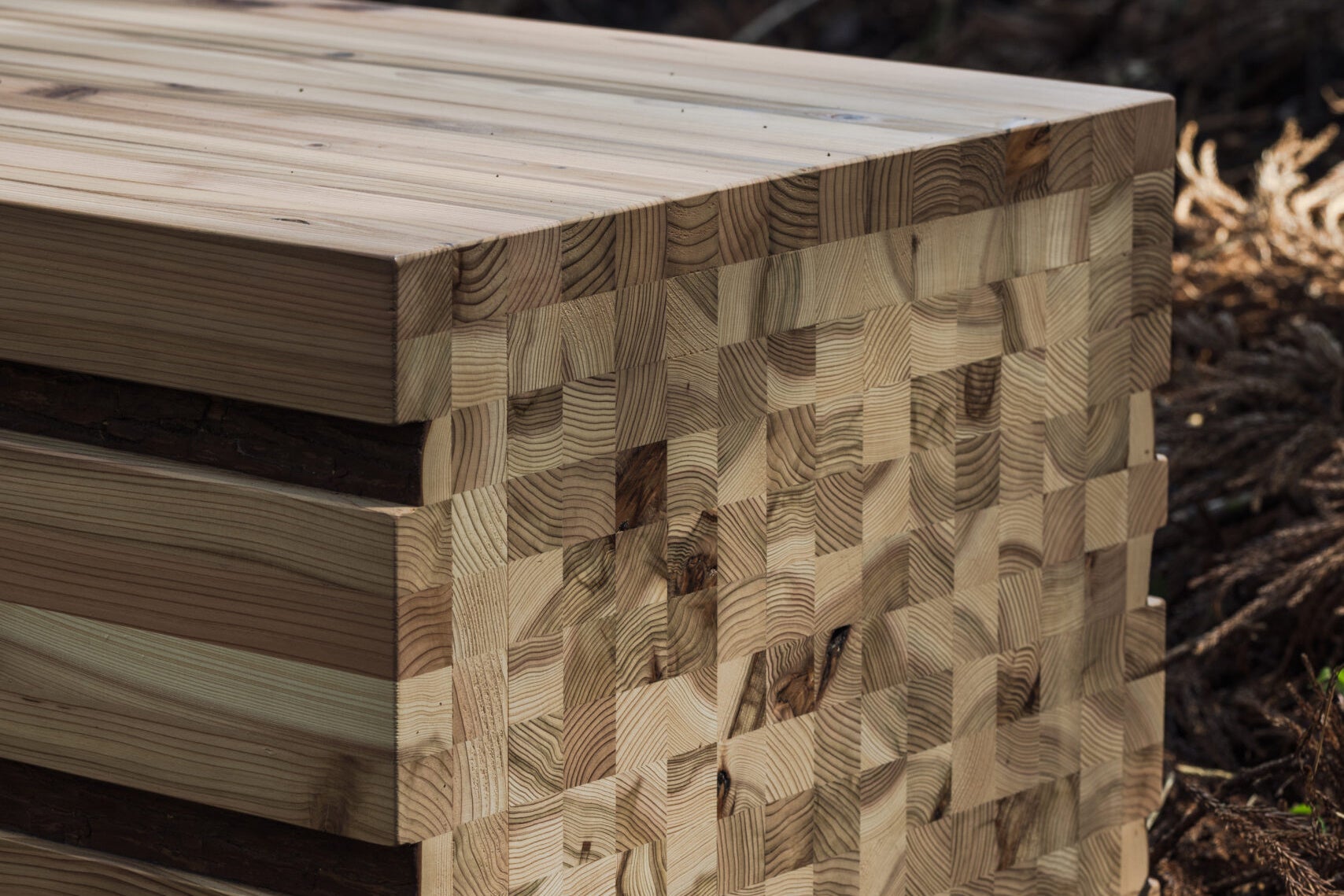
Type B: New Possibilities for Uneven Lumber (TITLE: C/D Bench)
Lumber with many stains and knots ("C grade") and "D grade" lumber left in the forest after felling without utilization. This design treats lumber that has had limited opportunities for use as uniquely characterized wood. Its individuality is expressed by subdividing and rearranging it.
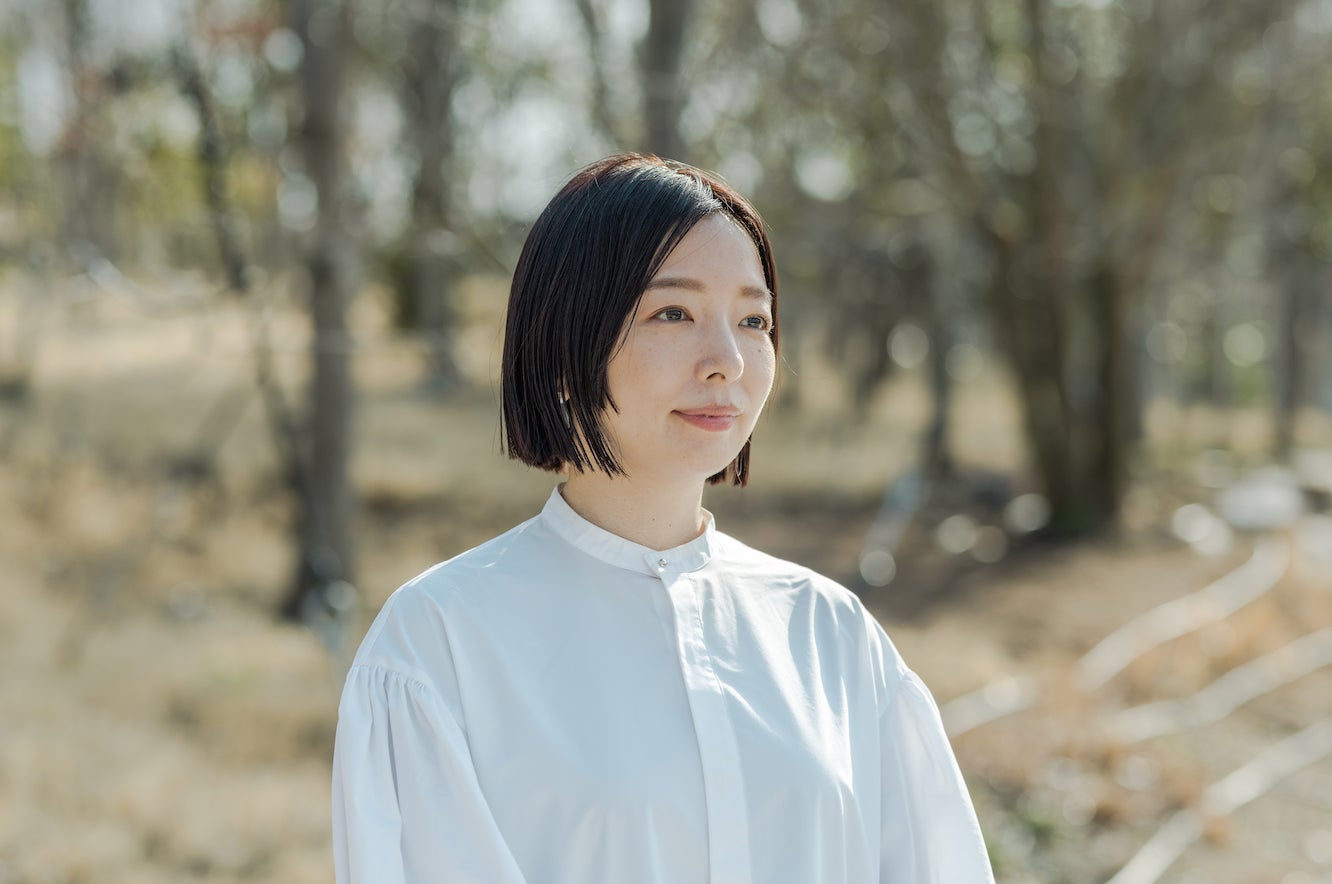
Designer: Shizuka Tatsuno
Graduated from Kingston University, London, with a degree in Product & Furniture Design. After working at a design firm, she established Shizuka Tatsuno Studio Inc. in 2017. Her strength lies in exploring and visualizing the hidden potential in things, working on a wide range of items from practical tools to emotional objects. Her activities extend beyond product design to art direction, exhibition space direction, and art creation, transcending conventional boundaries.
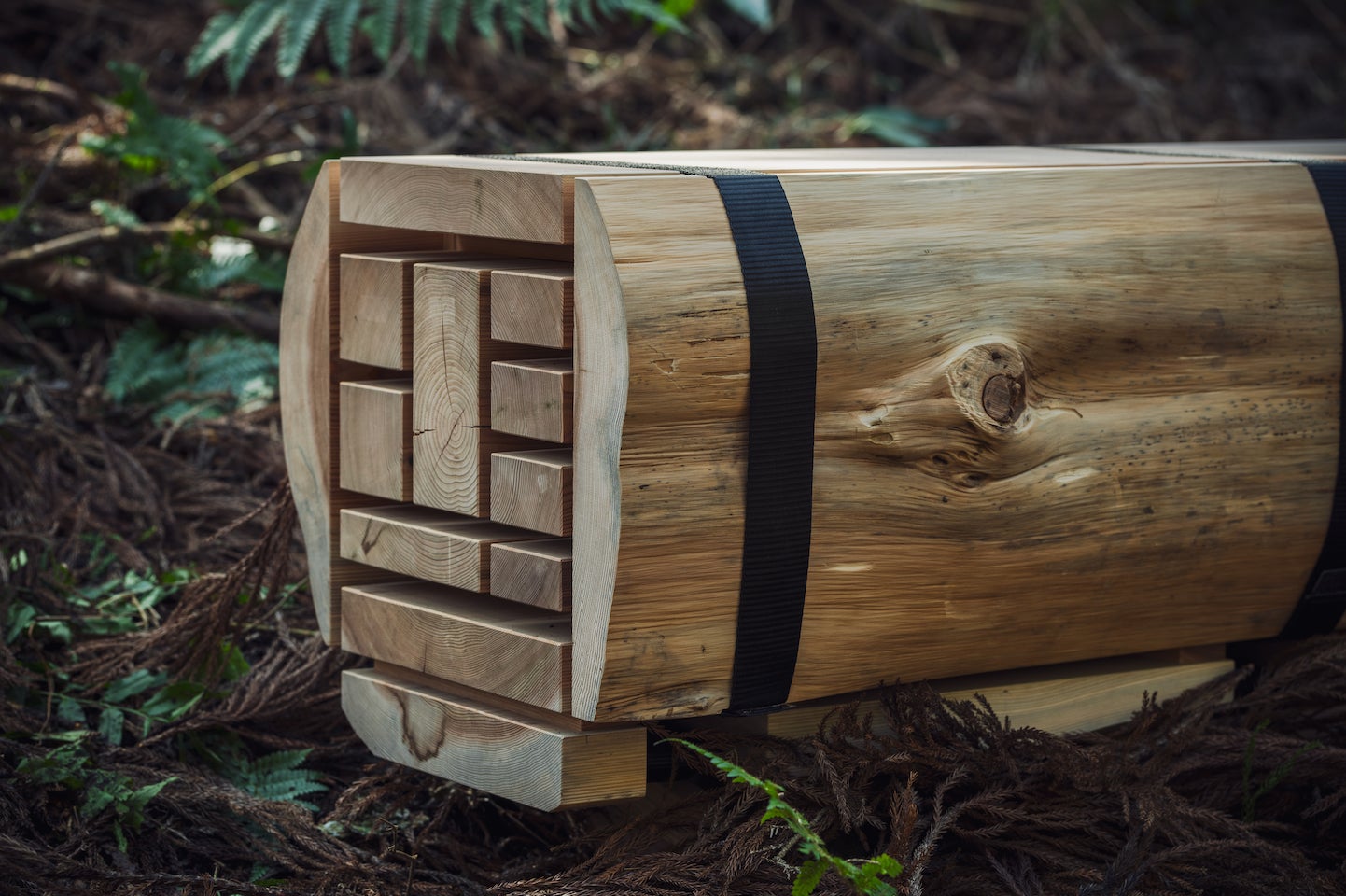
Type C: Reflecting on the Passage of Time in a Tree (TITLE: FILLET)
A tree that lived for decades in the forest becomes "material" the moment it is cut down. The idea is that realizing this anew is a way of cherishing life. The bench is intentionally made in its "material" form. A challenge was conducted at the Expo venue regarding the drying process.
Designer: Fumihiko Sano
Born in Nara Prefecture in 1981. Apprenticed as a carpenter at the workshop of master Sukiya-zukuri architect Gaiji Nakamura. After completing his apprenticeship, he worked at design firms and PPMOBLER before becoming independent in 2011. In 2016, he traveled to 16 countries as a cultural exchange envoy for the Agency for Cultural Affairs, undertaking numerous projects in collaboration with local cultures. He works across various fields, from architecture to art, utilizing the techniques and sensibilities gained from his unique experiences.
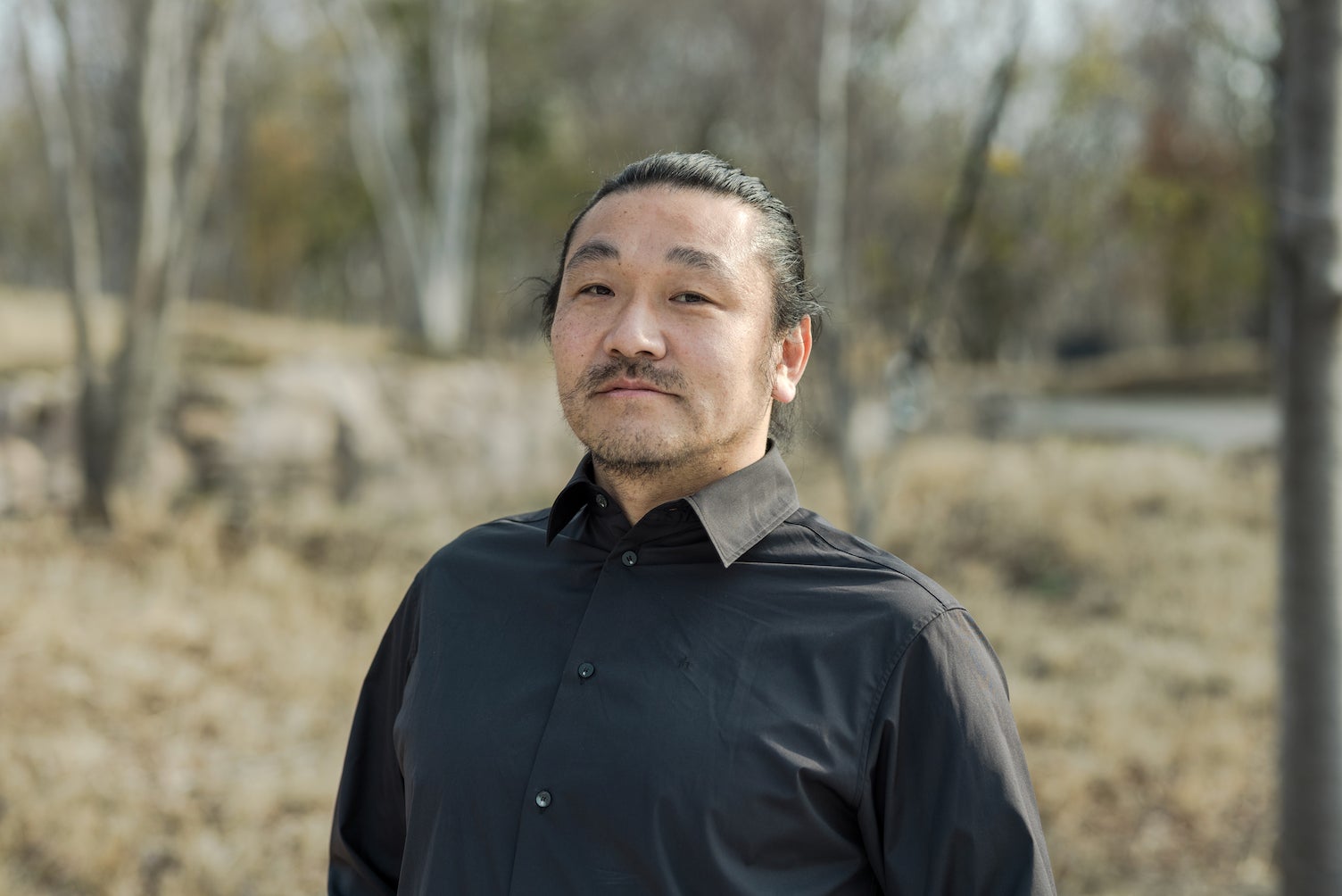
"Thinking Bench" Producer
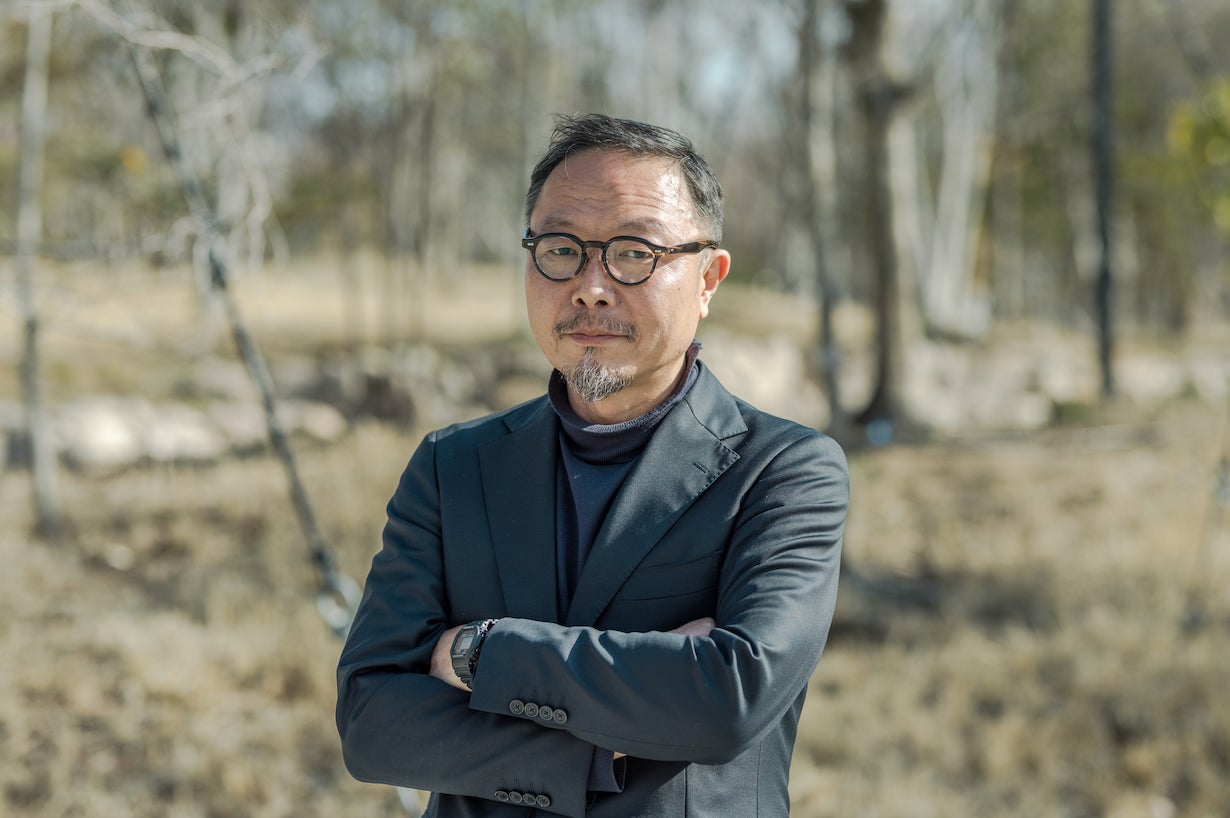
Shigeki Hattori (Representative of graf, Creative Director, Designer)
Comment: "With the desire to rebuild the work involving wood as an industry into a new path, this was an attempt to regenerate value together with three designers. What can everyone do for trees? We place our hopes on living in a way that considers forests and coexists with trees."
From Kindergartens to Hospitals: Encounters with Local Communities Who Empathize with the Concept and Inherit It, Rather Than Just "Reusing" It.
The Story Leading Up to the Bench Relocation
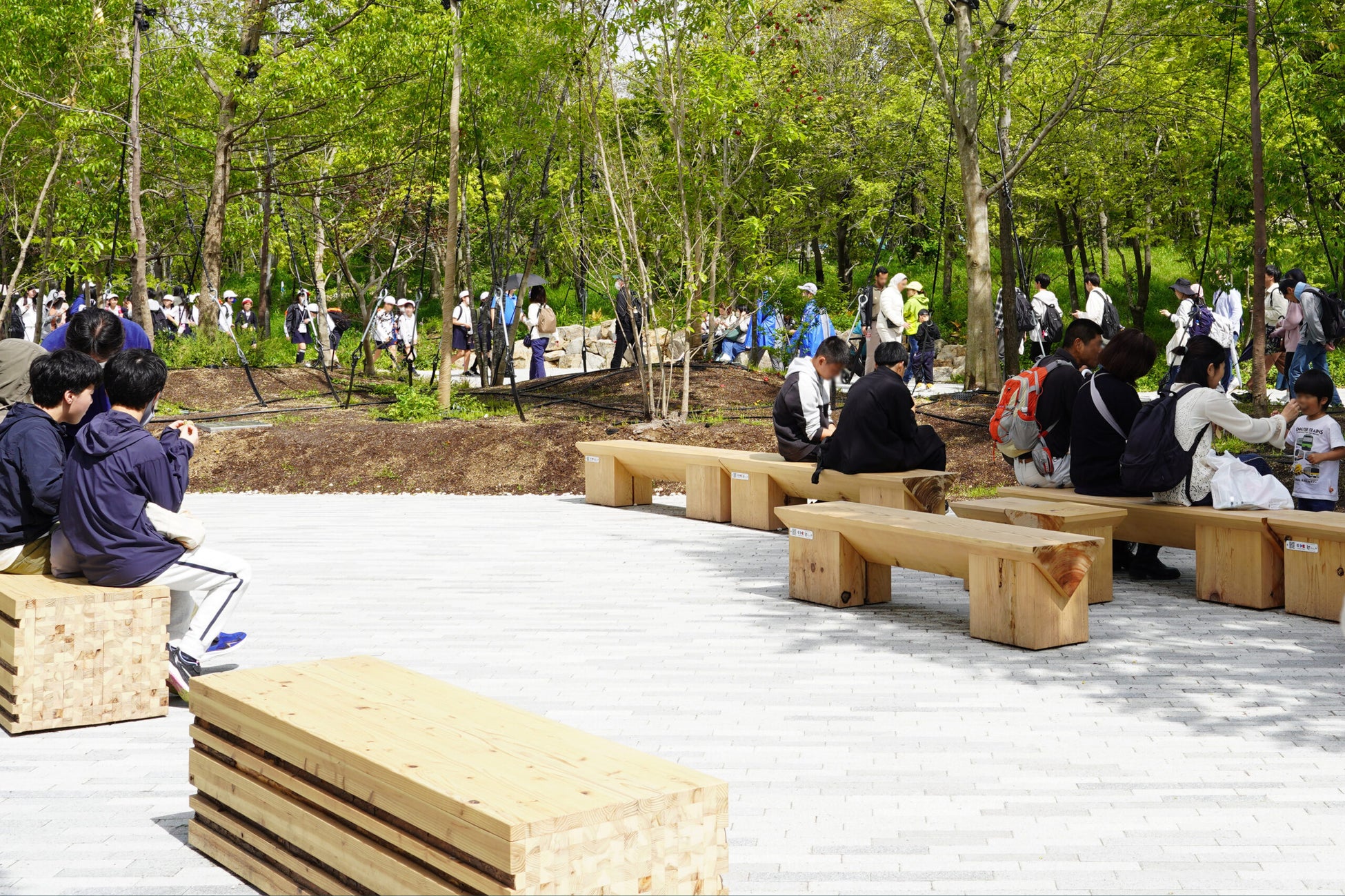
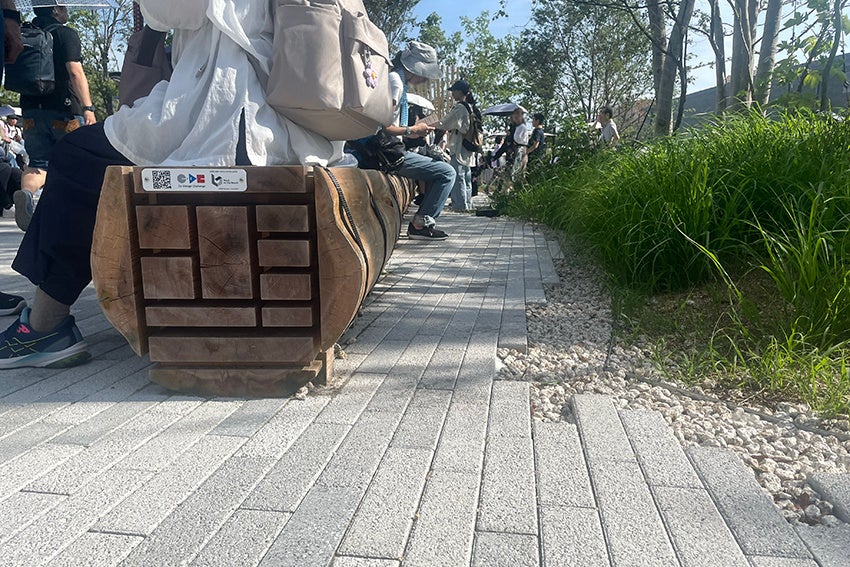
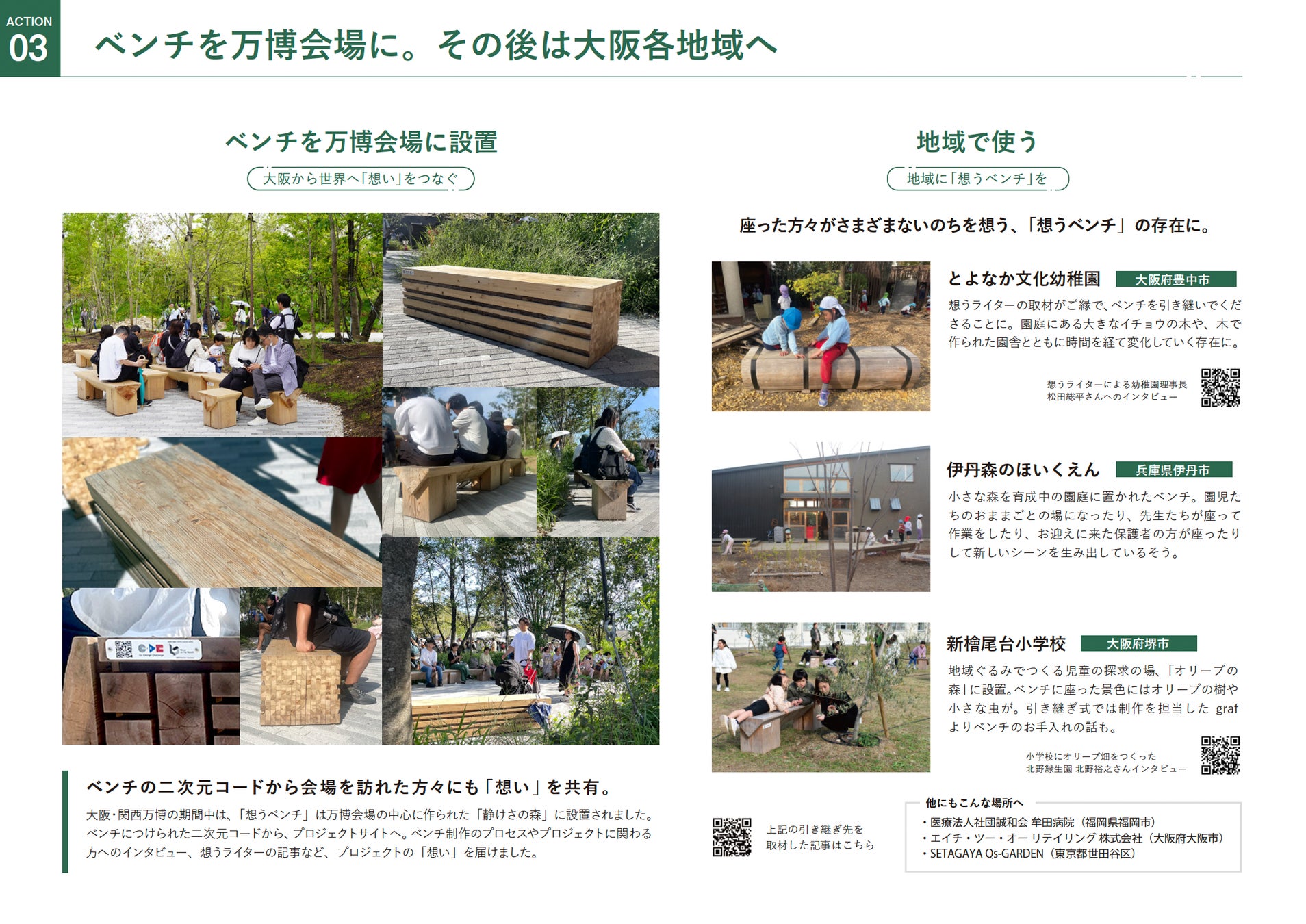
The "thoughts" that the project has continued to foster, leading up to the completion of the benches, can be read via QR codes attached to the benches. Many visitors read them at the Expo venue. Furthermore, from the start of the project, we planned initiatives to connect the efforts of contemplating forests and life through the benches to local communities, not just during the Expo. This expanded through interviews conducted by Prefectural Writers, leading to encounters with local communities eager to inherit the benches. After the Expo concluded, the relocation to respective communities is nearly complete (3 out of 16 benches scheduled for completion by the end of March). It is not simply about the benches being "reused"; rather, the project members' wish that the thoughts about life and new perspectives gathered at the Expo would be inherited through the benches, creating a "true legacy," has taken shape.
Scenes from the Expo
Introduction to Recipient Locations
The benches have been relocated to various locations, including kindergartens and community parks across the country. Here are some examples of where the benches have been placed.
Shin-Hiōdai Elementary School (Sakai City, Osaka Prefecture)
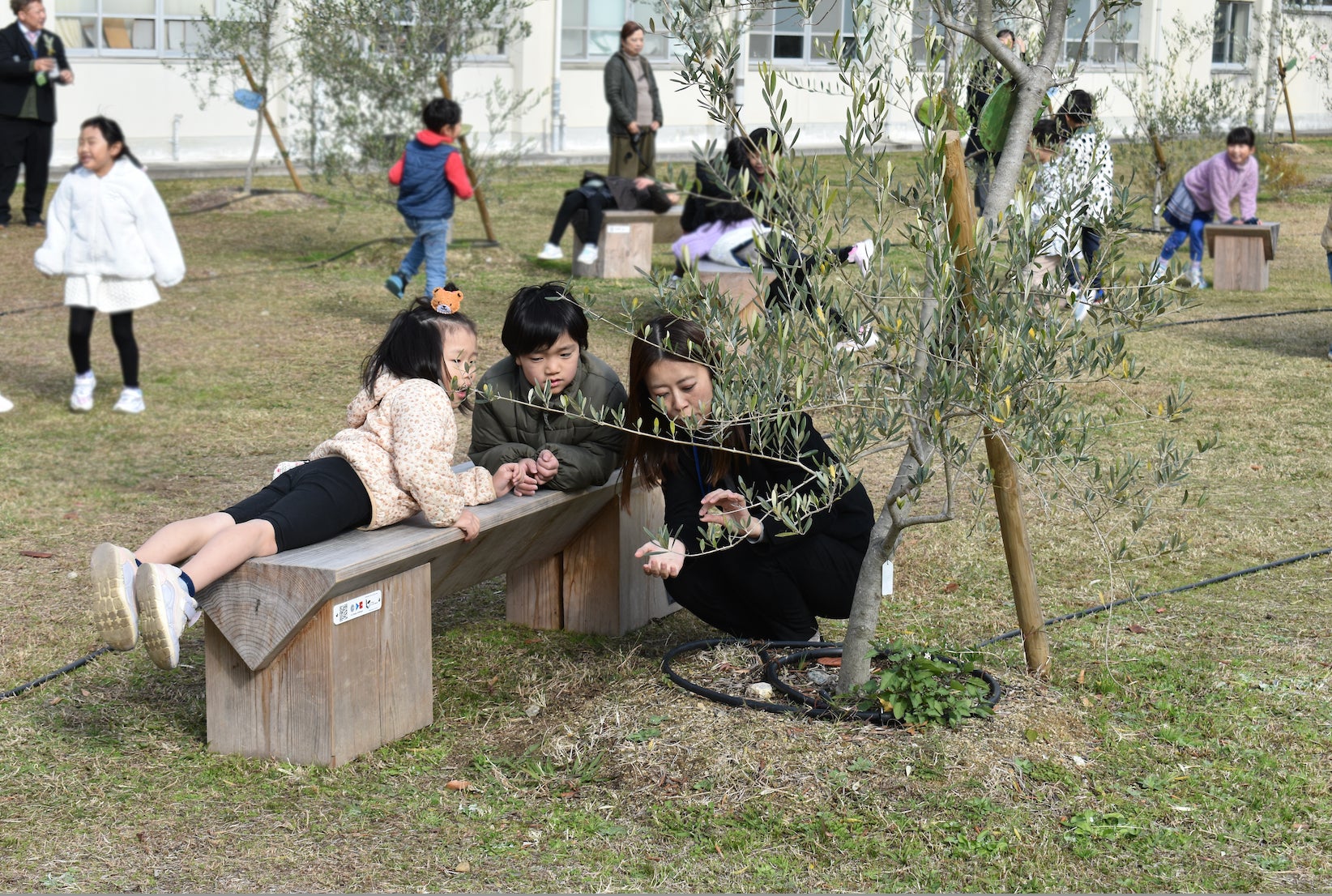
"We want it to be a place where people of all generations can talk and connect" (Principal Furuya)
Shin-Hiōdai Elementary School, located within the Senboku New Town and surrounded by rich nature, features the "Olive Forest for Everyone," completed in March 2025, in a corner of its schoolyard. Through an encounter with Mr. Hiroyuki Kitano of Kitano Ryokuseien, who was involved in planting the olive trees, the school decided to host the bench. The olive forest is also a walking course for children from nearby kindergartens and nurseries. "We want to keep this space as open as possible. We've heard from community members who want to compose haiku here," says Principal Furuya. "For this place and the bench to be passed down for a long time, it's important to involve the community, not just the school. We want it to be a place where people of all generations can talk and connect."
Toyonaka Bunka Kindergarten (Toyonaka City, Osaka Prefecture)
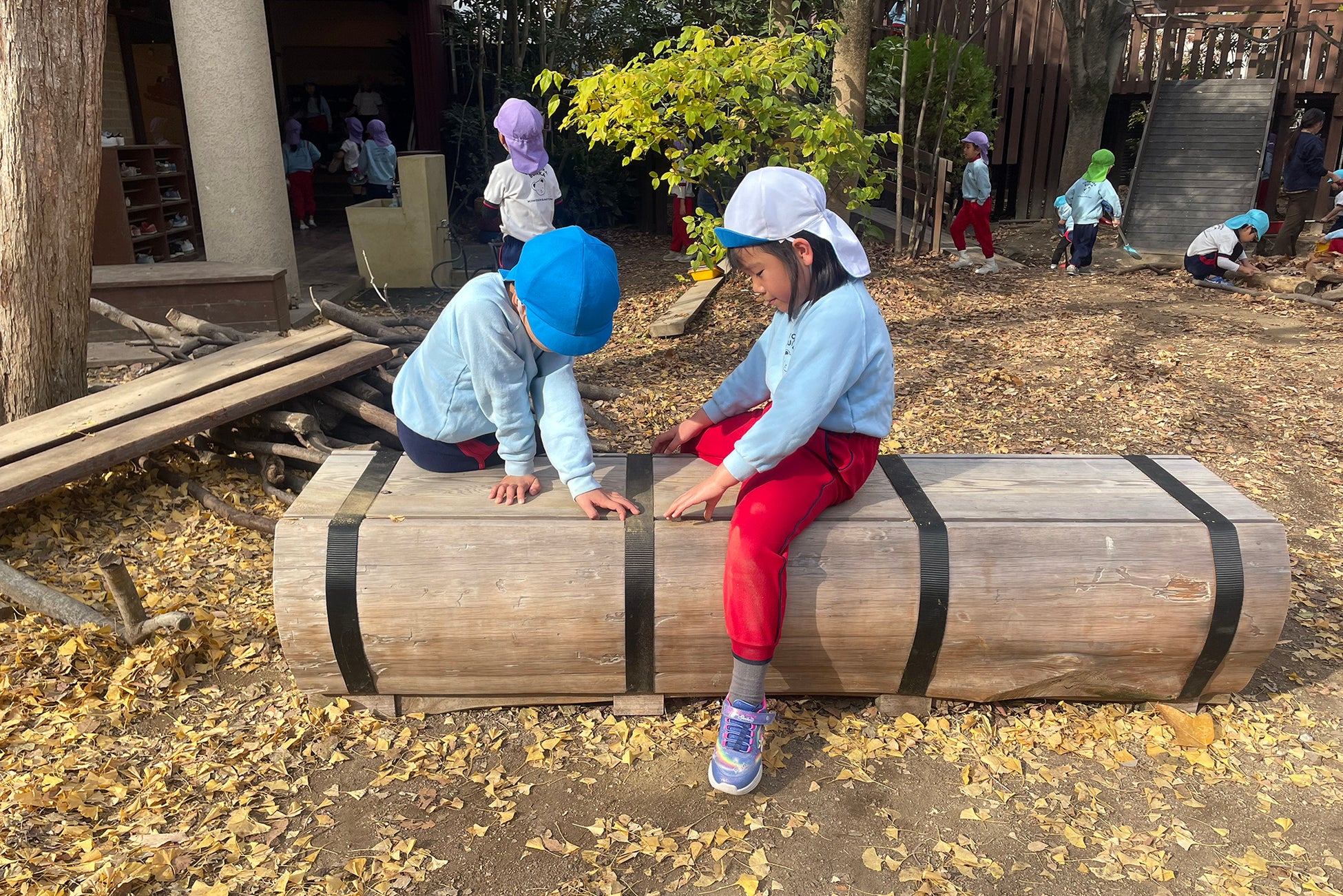
"We want children to experience the daily changes and cycles of nature firsthand" (Director Matsuda)
Toyonaka Bunka Kindergarten agreed to receive the bench after an Osaka Prefectural Writer conducted an interview with Director Sohei Matsuda. The "Thinking Bench - FILLET" is installed in the playground, which boasts large trees that reflect the kindergarten's 80-year history.
Currently, the Thinking Bench serves as a play area for the children and a place for them to rest. The "FILLET" bench, designed with the intention of allowing children to "experience the presence of trees changing over time," is designed for disassembly, as it is constructed by binding logs (processed for building materials) with belts. However, Director Matsuda states, "Rather than disassembling it immediately, we expect it will naturally break down over time as the wood decays. When that happens, we'll think together with the children about how to use the pieces." "Eventually, it will all decay and return to the earth. That is the cycle, and we want children to experience these daily changes firsthand."
Itami Mori no Hoikuen (Itami City, Hyogo Prefecture)
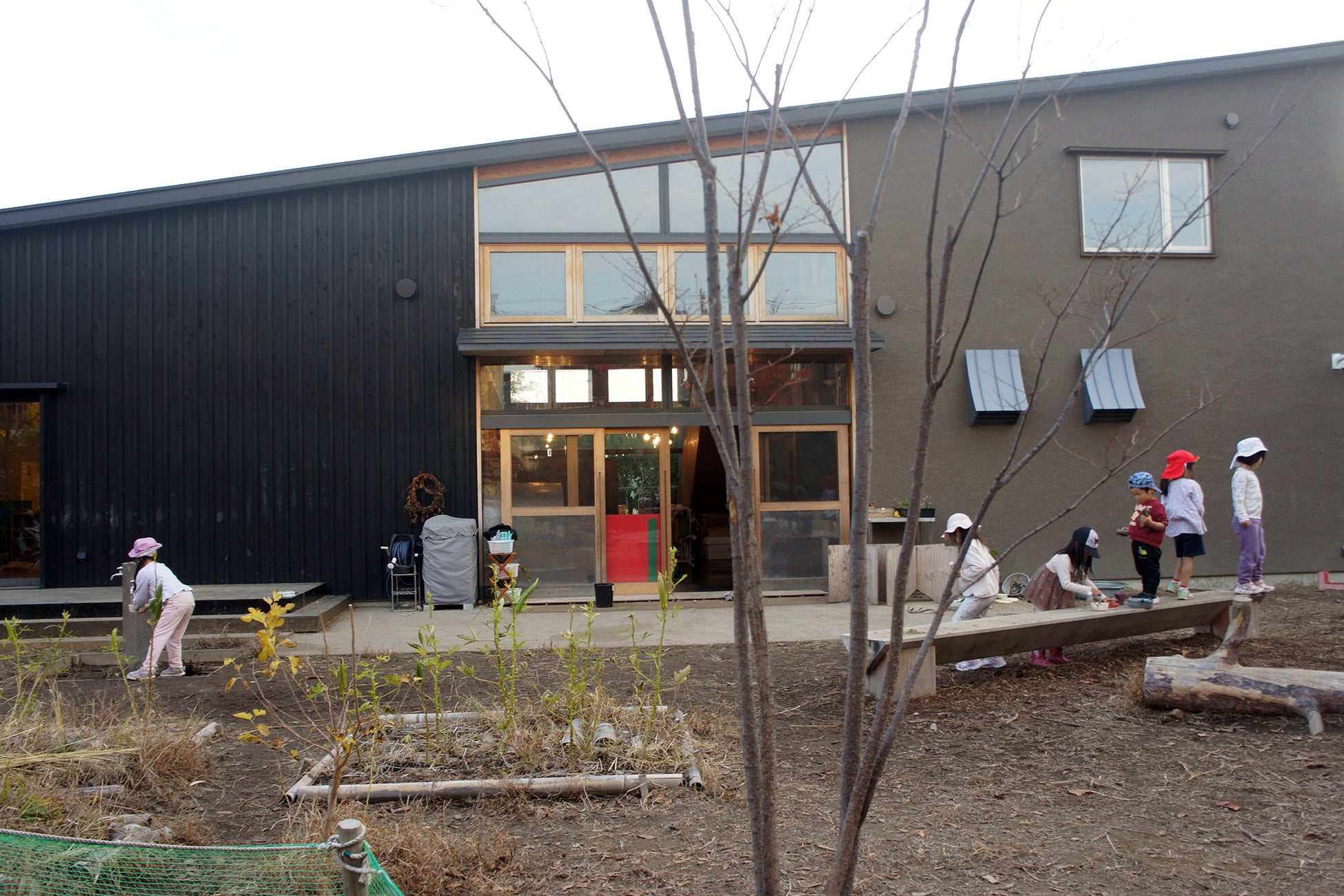
Scars and Handprints Accumulate to Create a Bench Unique to This Place.
The kindergarten features a single-story wooden building with a natural wood floor. The spacious, nature-rich playground is intended to be developed into a small forest by the children and gardeners. Itami Mori no Hoikuen was established by Mr. Sohei Matsuda, who is also the director of Toyonaka Bunka Kindergarten. The "TREE" bench was relocated here in October after the Expo. At this kindergarten, desks and chairs made from the flooring of the previous school building are used. "Things that might normally be discarded. But this sheen, it's proof that countless children have grown up playing on it. So, this flooring is a treasure to us," says Mr. Matsuda. The "TREE" bench, designed with the intention of fostering contemplation of the stories and time embedded in objects, not just as mere "things," may also become a unique presence in this place, marked by the relationships formed over time.
"Thinking Benches" Will Also Be Installed in Other Locations.
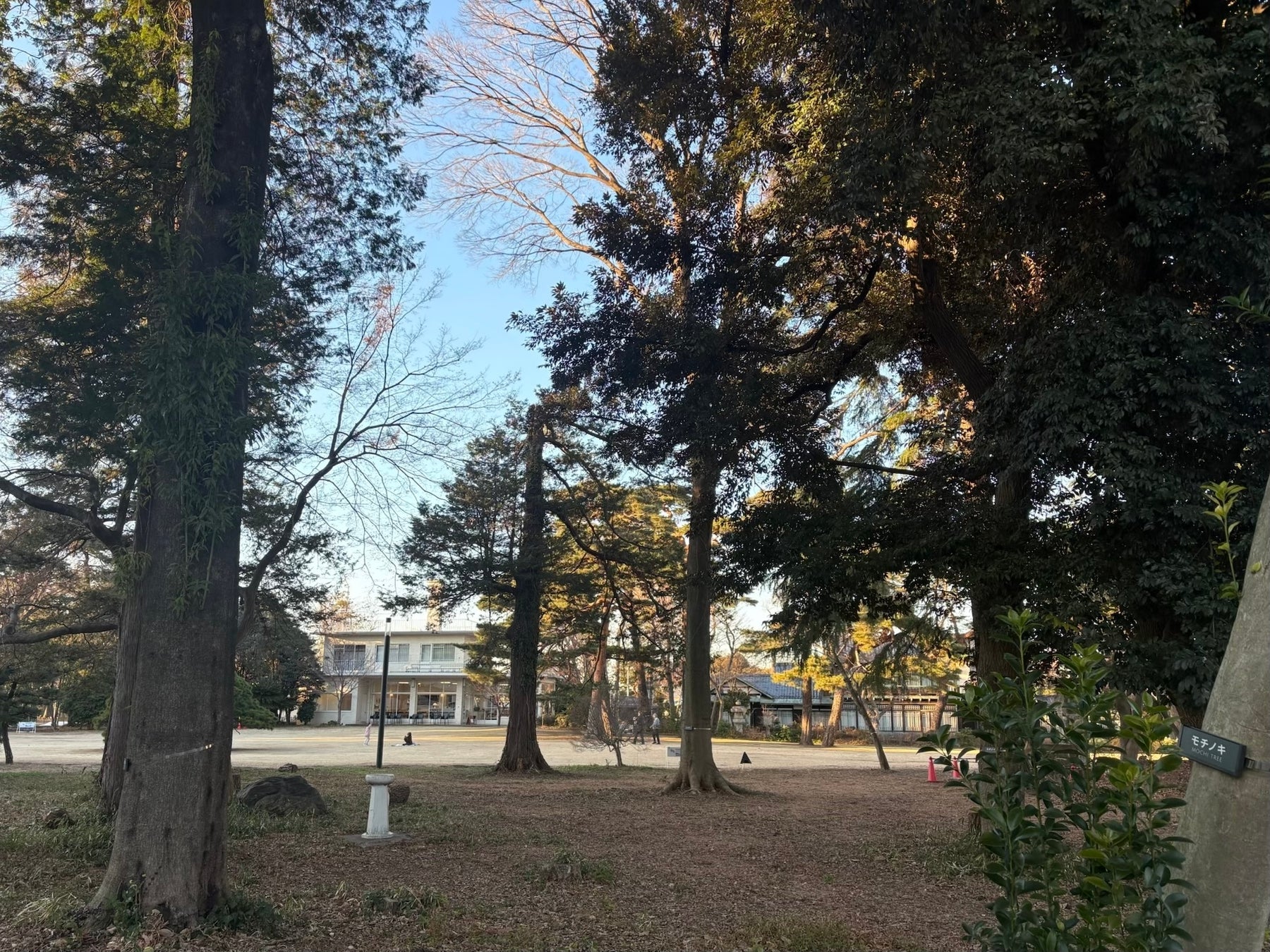
SETAGAYA Qs-GARDEN (Setagaya Ward, Tokyo)
Installed in the park within Qs-GARDEN, which is open to the public.
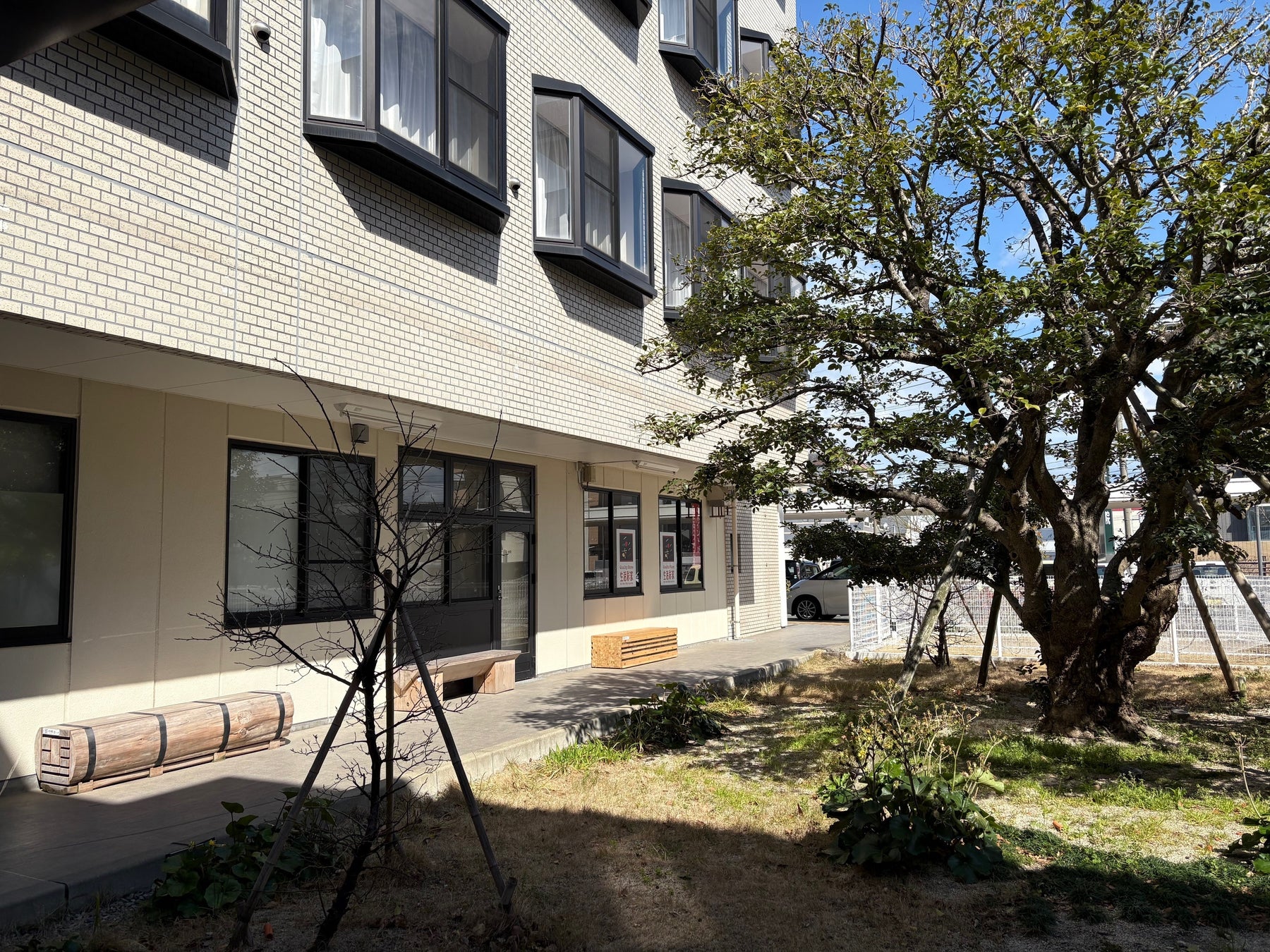
Seiwa-kai Mutai Hospital (Fukuoka City, Fukuoka Prefecture)
Scheduled for installation near the symbol tree at the entrance.
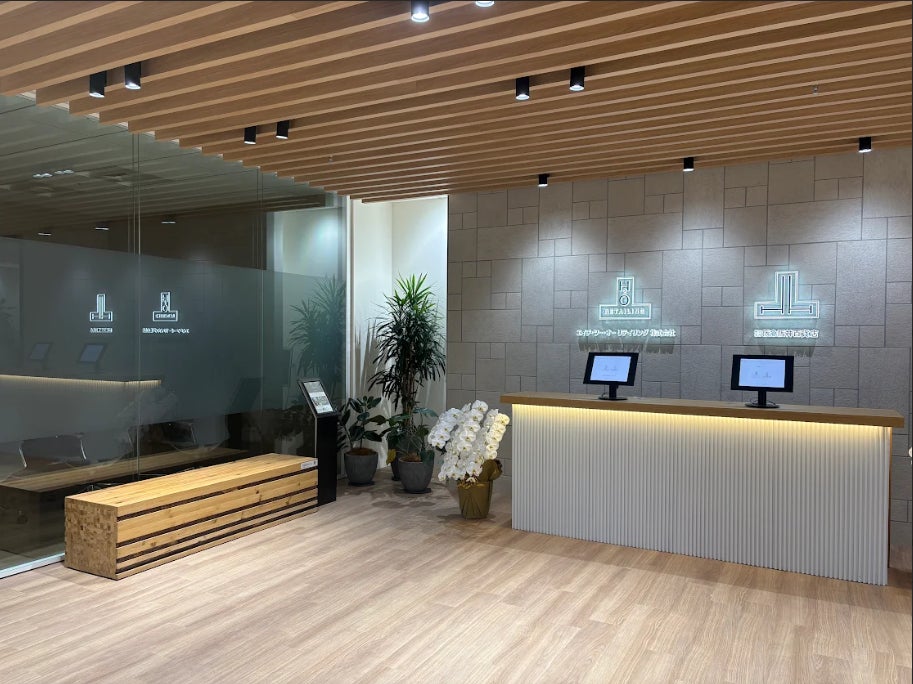
H2O Retailing Co., Ltd. Office Entrance (Osaka City, Osaka Prefecture)
A Project Book Has Also Been Completed, Summarizing the Project's Journey and the Spread of Thoughts.
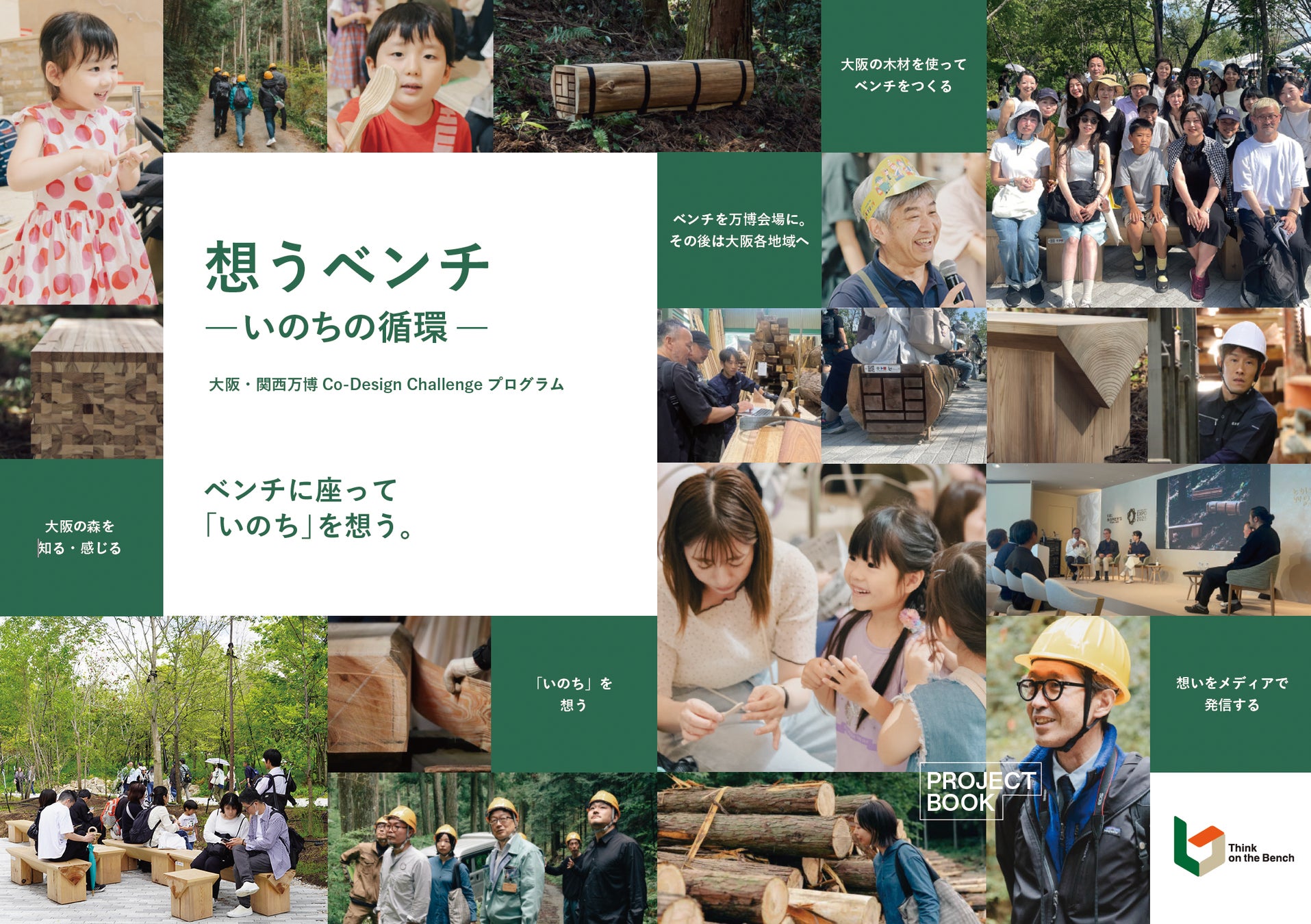
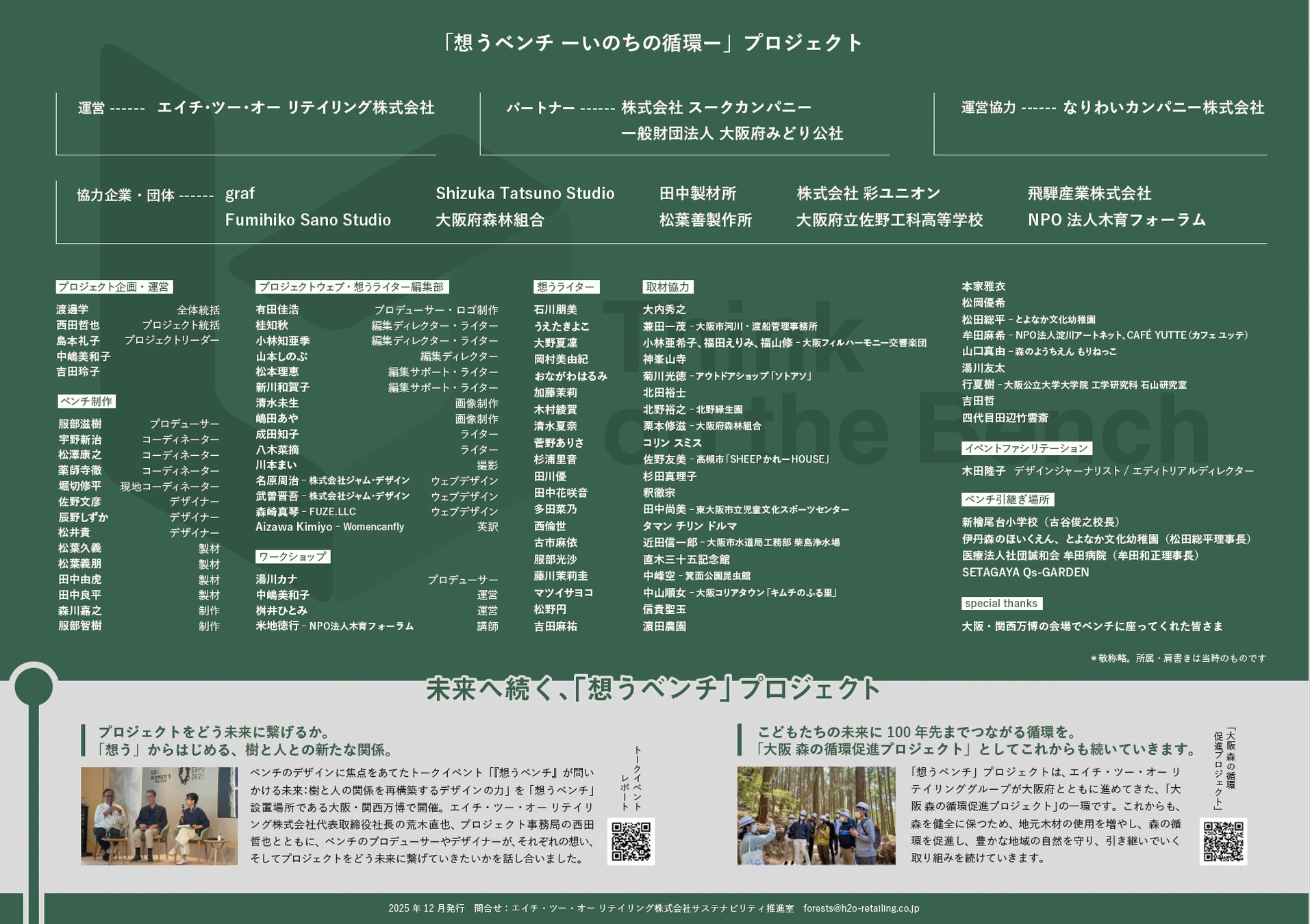
The "Thinking Bench" project, which has connected thoughts and actions with many people, including Osaka residents, has now culminated in the completion of a project book summarizing its journey, the designers' thoughts, and the involvement of various stakeholders. It is available online.
The "Thinking Bench" Project Continues into the Future.
The "Thinking Bench" project continues to expand in various directions, involving participants and communities.
◼️ Designer Shizuka Tatsuno Develops New Initiatives, Deepening the "Thoughts on Trees" Felt During the Project.
Shizuka Tatsuno, one of the designers of the "Thinking Bench," deepened her connection to the "time trees have lived" through her experiences in the forest during the project. Combining her design perspective with the insights gained from experiencing trees firsthand in the forest, she collaborated with Karimoku Furniture to plan, direct, and design an exhibition. The exhibition was held at Karimoku Commons Tokyo in Nishi-Azabu, Tokyo, from December 11, 2025, to January 27, 2026.
◼️ Exchange Among Bench Recipients Connected by "Shared Thoughts"
Principal Furuya of Shin-Hiōdai Elementary School and Director Matsuda of Toyonaka Bunka Kindergarten and Itami Mori no Hoikuen, recipients of the benches, connected after reading the interview articles. They expressed their desire to collaborate to support education focused on the circulation of life and exploration.
About the "Thinking Bench - Circulation of Life" Project
The "Thinking Bench - Circulation of Life" project was launched as part of the "Osaka Forest Circulation Promotion Project," promoted by H2O in accordance with its comprehensive partnership agreement with Osaka Prefecture. It was also adopted by the Expo's special program for operational participation, Co-Design Challenge.
Operator:
Partners:
Osaka Prefectural Greenery Association
Operational Support:
About the "Osaka Forest Circulation Promotion Project"
The H2O Retailing Group is engaged in initiatives to increase the use of local lumber and promote forest circulation to maintain healthy forests. Working together with various stakeholders, from forestry sites to group store sales floors, we are involved in creating sales spaces, developing products, and holding workshops using Osaka-produced wood.
FAQ
What is the "Thinking Bench" project?
It is a co-creation project that aims to deepen interest in the "circulation of life" and forests through benches made from Osaka-produced lumber. These benches were exhibited at the Osaka-Kansai Expo and subsequently relocated to elementary schools and other locations within Osaka Prefecture.
Where are the benches being relocated?
They are being relocated to public spaces such as elementary schools, kindergartens, and parks within Osaka Prefecture. Some have also been placed outside the prefecture, in locations like Tokyo and Fukuoka Prefecture.
What is the design concept of the benches?
The concept is "design for trees," rather than "trees for design." Three designers created three types of benches that express the nature of trees themselves, the characteristics of lumber, and themes such as the circulation of life.
What is the objective of the project?
Using the Expo as a catalyst, the project aims to create opportunities for local residents to contemplate forests and life, contributing to the realization of a sustainable society. It also aims to promote lumber utilization and raise awareness of the importance of forest management.
What is the project book?
It is a booklet that summarizes the project's journey, the designers' thoughts, and interviews with stakeholders. A PDF version is available on the project website.