Nakayoshi Gakuen's "Learning Connected to the World" 2026 Edition Starts Today
Connecting classrooms nationwide with global sites via Google Classroom. An inquiry-based learning model that fosters student autonomy and success while reducing teacher workload launches for the new academic year.
📋 Article Processing Timeline
- 📰 Published: April 1, 2026 at 19:00
- 🤖 AI Analyzed: June 2, 2026 at 12:59 (1481h 59m after Published)
The specified non-profit organization Nakayoshi Gakuen Project (Representative: Yuichi Nakamura / Matsudo City, Chiba Prefecture) officially launched the 2026 edition of its inquiry, peace, and inclusive education program "Learning Connected to the World (CoRe Loop)" today, April 1, 2026.
This program is a "reciprocal" learning mechanism that connects questions, teaching materials, and ideas born in Japanese classrooms to educational and support sites overseas, and then returns the results of local implementation back to the classrooms. For the 2026 edition, we have strengthened the operational system utilizing Google Classroom, establishing a structure that allows for real-time monitoring and sharing of progress for each participating school, consultations regarding lesson planning, and the status of local implementation overseas.
This will make it easier for teachers struggling with how to proceed with integrated studies and inquiry-based learning to utilize the program, and we will fully expand its nationwide deployment in the new academic year as an educational model that allows teachers and students to enjoy designing and practicing lessons together.
Learning Connected to the World Project Official Website
https://nakayoshigakuen.org/coreloop
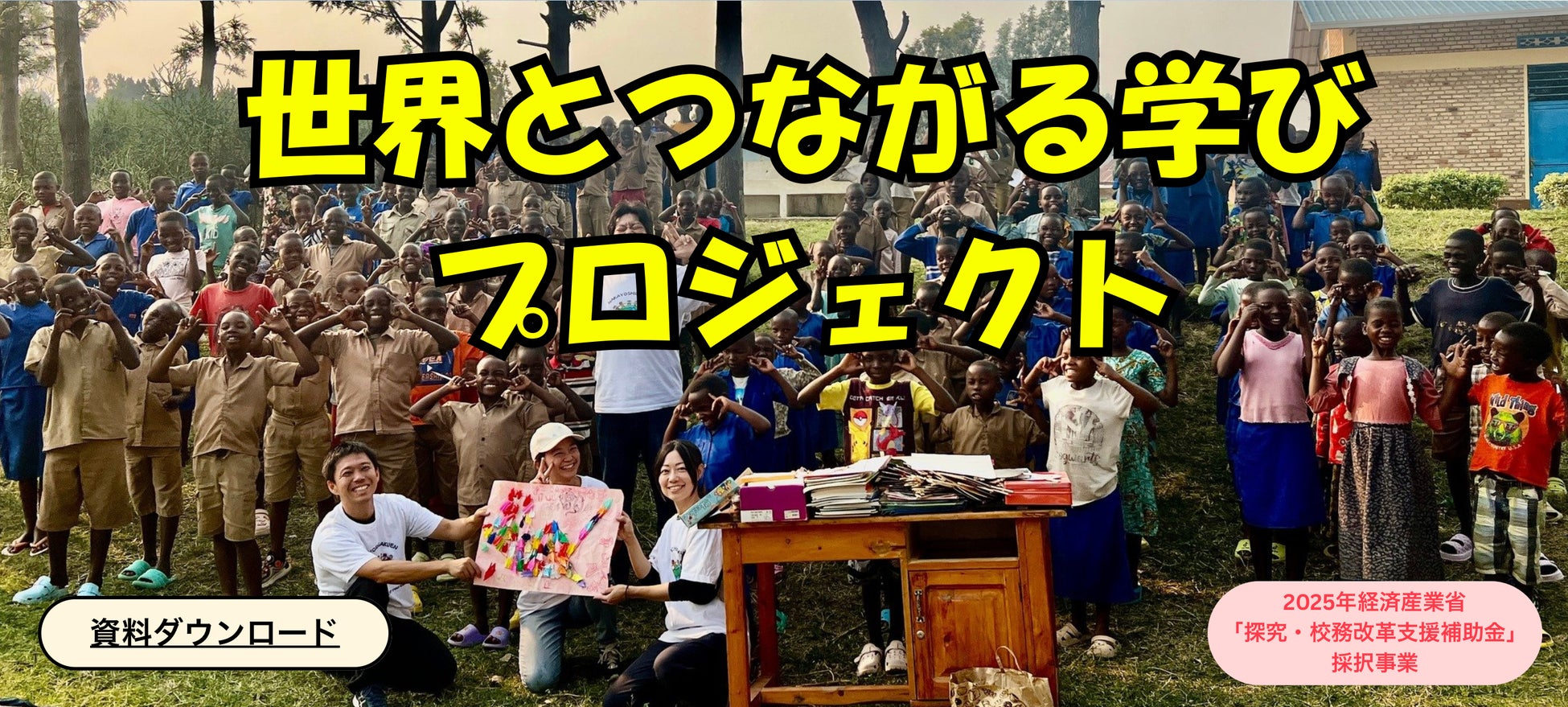
Nakayoshi Gakuen's Inquiry-Based Learning Model: Turning a "Distant World" into a "Personal Matter"
A key feature of "Learning Connected to the World (CoRe Loop)" is its ability to transform "distant worlds"—such as conflict, poverty, refugees, and educational disparities, which students previously only encountered through news—into "questions connected to oneself" within the classroom.
Students don't just learn about global issues; they start with "what they are good at," "things around them," and "what they learn at school" to form their own hypotheses for open-ended problems, give them shape, and deliver them to the world. When these outcomes are actually utilized in overseas educational and support settings, learning transcends mere knowledge acquisition, becoming an experience accompanied by action and real feeling.
This approach has received high praise in many school settings. For students, it leads to a successful experience where "their learning helps someone," and for teachers, it provides a practical model for designing inquiry-based learning while drawing out students' autonomy.
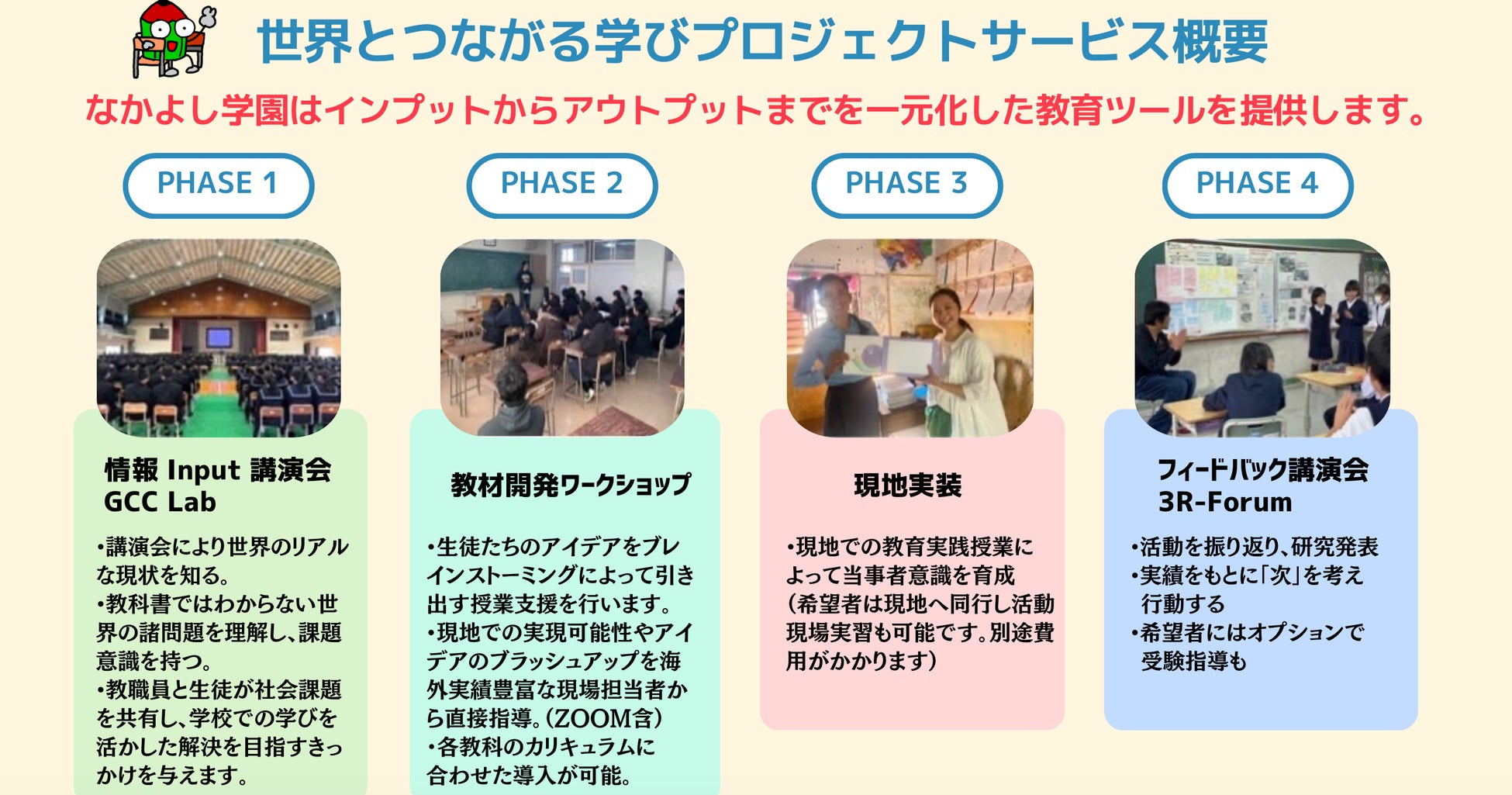
Google Classroom Operations: Reducing Teacher Burden While Advancing Inquiry
For the 2026 edition, we have established a system to more smoothly support the practices of participating schools, centered on operations utilizing Google Classroom.
Each school can share lesson progress, material creation processes, student ideas, and practical consultation matters online. Furthermore, feedback on how each school's materials and initiatives are being implemented locally through Nakayoshi Gakuen's overseas activities will be provided sequentially.
This allows teachers to proceed with lesson planning with accompanying support, rather than having to shoulder everything from scratch. It is easy for schools feeling anxious about integrated studies and inquiry activities to adopt, and is expected to be utilized in the field as a mechanism that can balance reducing administrative burden and improving the quality of education.
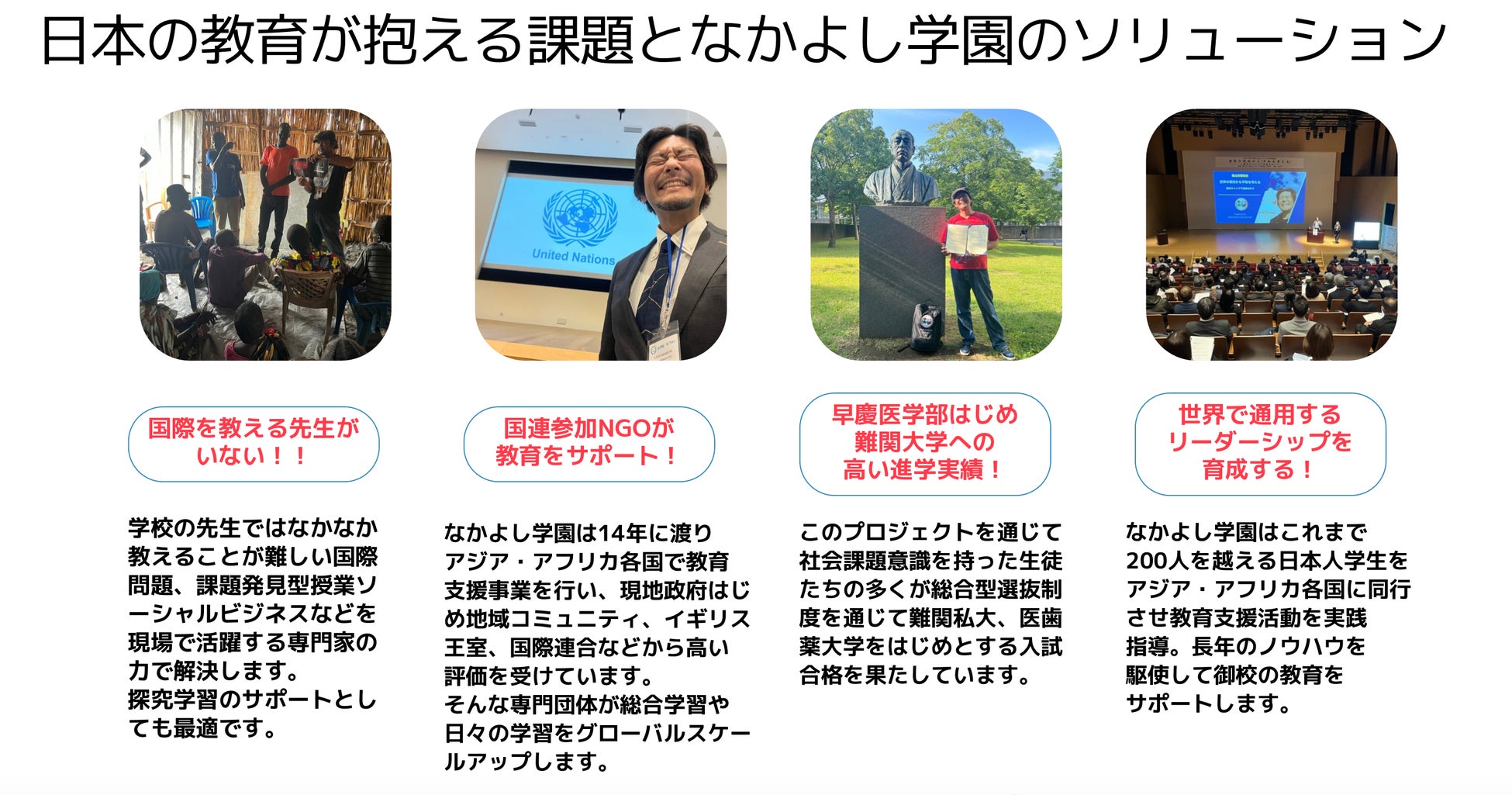
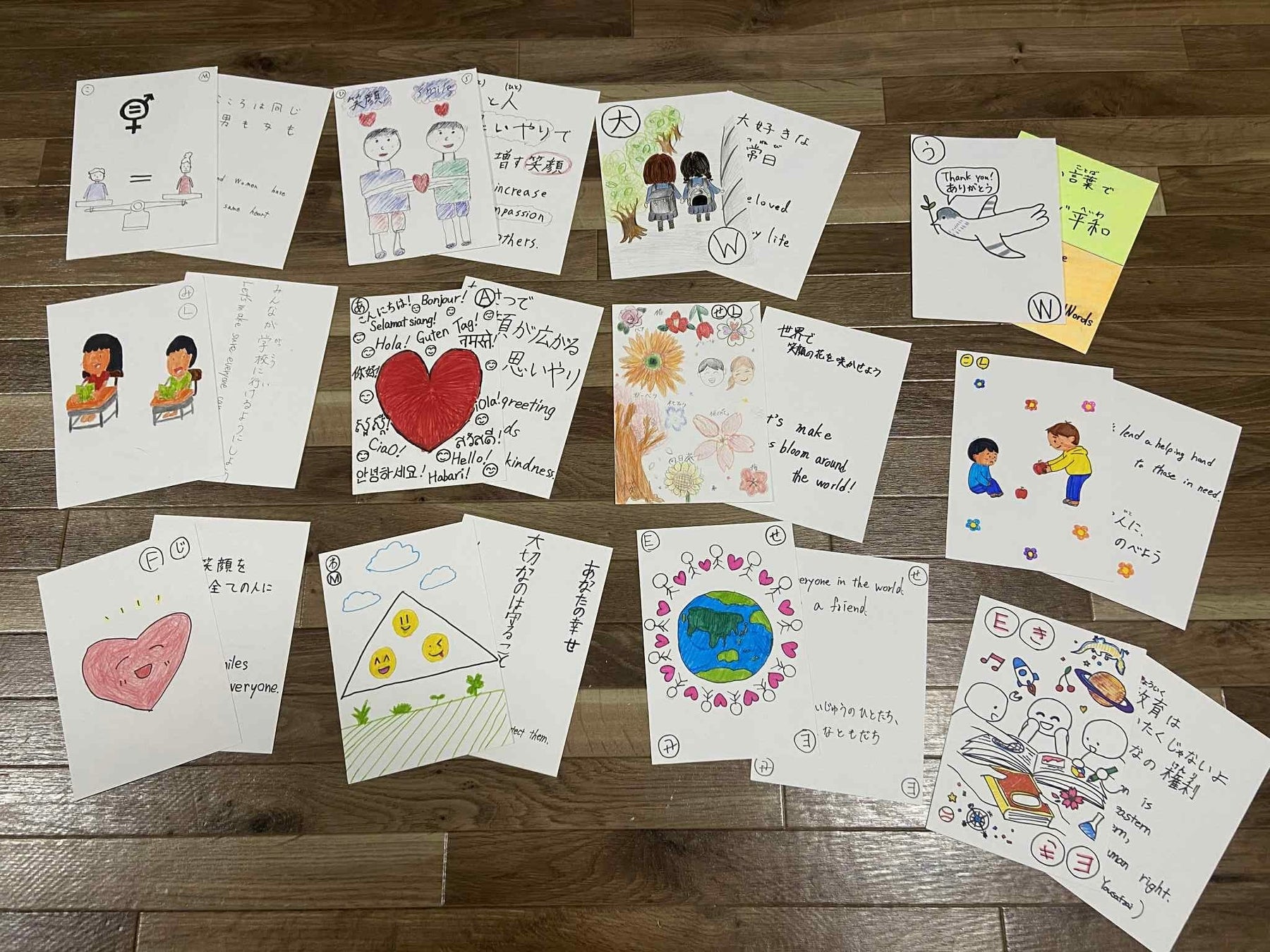

An Educational Service Backed by Achievements Cultivated Through Nationwide Expansion in 2025
Nakayoshi Gakuen's "Learning Connected to the World" was adopted as a project for the Ministry of Economy, Trade and Industry's Inquiry-Based School Affairs Reform Subsidy Program in 2025 and has been implemented in schools nationwide. So far, its expansion has reached over 50 schools and involved more than 10,000 students, children, and faculty members, with teaching materials and ideas born in Japanese classrooms actually being utilized in overseas educational support and peace education settings.
In practices across various regions, a flow has emerged where students, starting from lectures, consider what they can do, develop it into material creation and expressive activities, and then see their outcomes implemented in overseas lessons and support activities. Through such accumulation, this program has gained recognition not as a one-off lecture, but as an educational model with a cycle of "knowing," "thinking," "acting," "reaching," and "returning."
The 2026 edition is a redesigned service model, based on this experience and track record, to be more stably and continuously utilized by a greater number of schools.
Nakayoshi Gakuen News Release
https://prtimes.jp/main/html/searchrlp/company_id/166170


"Action-Oriented Learning" Leading to Comprehensive Selection, Essay Writing, and Expressive Activities
"Learning Connected to the World" is not merely a program to deepen international understanding. Since it is a learning experience that involves forming one's own thoughts on social issues, translating them into words, works, and plans, and connecting them to actual actions, a major feature is its strong connection to comprehensive selection entrance exams, essay contests, inquiry presentations, and presentation activities.
Deepening one's experiences and questions while fostering a perspective that connects with others and society is the very foundation of global leadership required in the coming era. Through this program, Nakayoshi Gakuen aims to foster successful experiences where each child feels "I can do it" and "my learning has meaning," leading to their future career paths and life choices.


2026: From Classroom to World. A New Year of Learning Begins.
The launch of the 2026 edition of "Learning Connected to the World (CoRe Loop)" marks a new step for Japanese schools to evolve inquiry-based learning into something more practical and more connected to society.
Questions in the classroom lead to hope for someone in the world.
A small step by a student can trigger change in a distant country.
And when that experience returns to the classroom, learning transforms from "passive" to "participatory," from "knowledge" to "practice."
Nakayoshi Gakuen will continue to expand "education where learning connects with the world" with schools nationwide in 2026.

Message from Rie Nakamura, Secretary-General
Last year, 50 schools nationwide participated in "Learning Connected to the World." Working with many teachers, I strongly reaffirmed that school settings face various concerns and challenges.
"I don't know how to proceed with inquiry-based learning."
"The learning we're doing now doesn't easily connect to the outside world."
"There's no place to practice what we've learned."
"Peace education becomes monotonous. We want peace, but we don't know specific approaches."
Facing these voices from teachers, I truly feel that this project is an initiative that can certainly respond to those concerns.
The quality of education in Japan is originally very high. However, there are not many opportunities for teachers themselves, and students themselves, to truly feel its value in their daily lives.
That's why I strongly wish to deliver the feeling that "what we are learning helps people in need around the world," "we can learn together with someone far away," and "we can create someone's smile with our learning" to both children and teachers.
At the feedback lecture at the end of the academic year, when children realize that "our learning becomes someone's hope," the atmosphere in the classroom changes. The expressions of teachers and students brighten up, and they genuinely feel, "It was good to do this." Every time I see that, I am convinced of the power of this learning.
And I have witnessed many times teachers, who face education with many conflicts and worries every day, being moved to tears. Each time, I have shed tears with them.
Education is not just about knowing.
FAQ
What exactly is the "Learning Connected to the World" program?
It's a reciprocal inquiry-based learning program that connects questions and materials from Japanese classrooms to educational and support sites abroad, then brings the results back to the classrooms.
How is Google Classroom utilized in this program?
It's used to share progress, class consultations, and local implementation status abroad in real-time, supporting inquiry-based learning while reducing teachers' administrative burden.
What achievements has this program made?
In 2025, over 50 schools and 10,000 students/teachers participated, contributing to fostering student autonomy, success experiences, and reducing teacher workload.