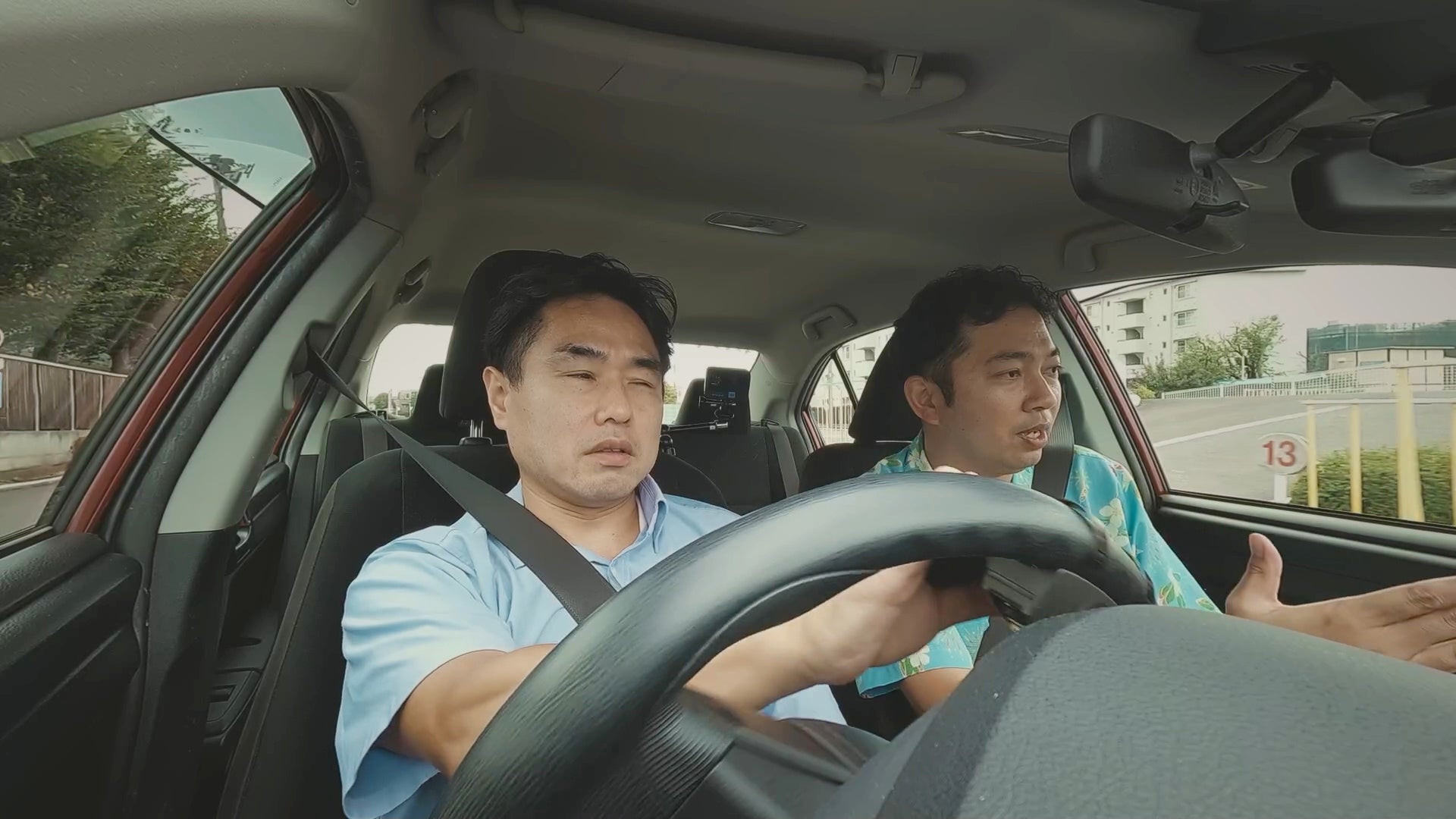
Musashi Sakai Driving School Co., Ltd. announced on March 28, 29, and 30, coinciding with the "3 Days to Consider a Society Coexisting with Visually Impaired and Low-Vision Individuals," the launch of a special brand website that supports "challenges" through what can be done at a driving school, regardless of disability.
https://musasisakai-ds.co.jp/brandlp65/
Project Background: The Presence of a Friend and a Wish for the Future The catalyst for this project was a friend of the representative director, Aki Takahashi's son, named Taylor, who was completely blind. "We want to create a future where even children like Taylor, who cannot see, can eventually drive by their own will." Furthermore, there was a strong desire to empathize with the earnest anxiety of Taylor's parents, who wondered, "How long can we continue to drive him to and from places?"
This is not limited to children. We believe there must be something we can do as a driving school to help many people experience the joy of driving. With a deep love and commitment to automobiles, we are undertaking a challenge that only we can achieve.
Our Approach: Thinking "How It Can Be Done" Instead of "Why It Can't Be Done"
Generally, when we hear "visual impairment," we tend to imagine someone who "cannot see anything at all." However, visual impairment encompasses a wide range of conditions. It includes not only those who are completely blind (seeing nothing or only sensing light) but also those with low vision (poor eyesight, narrow field of vision, etc.), and the characteristics of their vision vary from person to person. In this project, participants with various visual characteristics joined, including those who are completely blind, those with low vision, and individuals who have some sight in their right eye but in their left eye can only perceive movement and direction when a hand is waved in front of them (hand motion detection level).
For the driving experience, we began with preparations to ensure a sense of security. Before getting into the actual vehicle, we allocated time for "mental mapping," where participants traced the course layout with their fingertips to organize the turns and distances in their minds. We also had them use a simulator to grasp the feel of the accelerator and brakes, and to understand how the car reacts to different steering wheel movements, thereby gaining a sense of the car's responsiveness. <img src="https://prcdn.freetls.fastly.net/release_image
FACT BOX
- Source: PR TIMES
- Category: News