株式會社商船三井(社長:橋本 剛、本社:東京都港區、以下稱「本公司」)參與公益財團法人日本財團推動的無人運航船計畫「MEGURI2040」(註2),並於 2026 年 3 月 27 日宣布,該計畫第二階段的四艘實證船均已通過國土交通省的船舶檢查,取得自動運航船資格,並開始商業運航。
MEGURI2040 是由日本財團自 2020 年起推動的計畫,旨在實現無人運航船並穩定運輸人員與物資,以解決海事業界面臨的迫切問題,例如因少子高齡化導致的船員短缺以及人為失誤造成的事故。國內 53 家企業贊同本計畫的宗旨與社會意義,組成 DFFAS+(Designing the Future of Fully Autonomous Ships Plus)(註3)聯盟,各自發揮所長推動技術開發與社會實證。本公司參與 DFFAS+ 聯盟,並擔任實證船「みかげ」的工作小組領導者,負責統籌實證作業並準備取得自動運航船檢查證。
實證實驗與開發重點
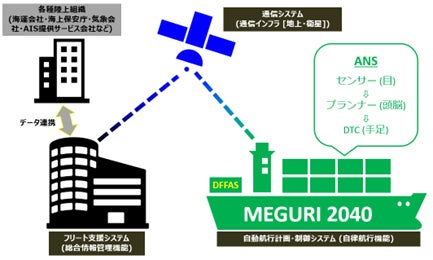
DFFAS+ 聯盟將自動運航船視為一個整合了船上系統、通訊系統與陸上支援系統的運航系統來進行設計與開發,而非單一技術。實證船涵蓋貨船、客船等多種用途與運航條件的船舶,透過新造船及現有船的改裝(為現有設備增加新功能以提升性能)方式,具備相當於自動駕駛等級 4 的自動運航功能。這些功能結合了周邊感知、航行狀況整合顯示、未來動態預測、避航與航路規劃等,並採用了以自主判斷輔以人工監視與介入為前提的設計。
這些船舶透過衛星線路及行動通訊線路提供的穩定通訊,與能夠同時監控及支援多艘船舶的陸上支援中心(設有常設與移動兩處據點)連携運航,確保了運航的安全性和冗餘性。
本公司的執行內容
本公司在 MEGURI2040 第二階段參與現有國內貨櫃船工作小組,並與井本商運株式會社、常石解決方案東京灣株式會社、古野電氣株式會社合作,致力於透過改裝現有國內貨櫃船來實現運航自動化。本公司運用至今累積的運航管理與船舶管理知識,負責專案整體統籌與風險評估,並根據本船的運航狀況實施實證駕駛,同時準備接受國家的「自動運航船」船舶檢查。本公司將持續致力於解決日本國內航運業面臨的船員短缺、減輕勞務負擔、防止海難事故等社會問題,以實現安全可靠的海上運輸。
【四艘實證船】
第二階段中,以下四艘用途與航行環境不同的實證船,在商業運航下驗證了相當於自動駕駛等級 4 的自動運航功能,並已通過國土交通省的自動運航船船舶檢查。
●新造國內貨櫃船「げんぶ」
「げんぶ」為 I-COS 株式會社管理、鈴與海運株式會社運營的國內貨櫃船,全長約 134 公尺,為 700 TEU 型。
常見問題
What is MEGURI2040?
MEGURI2040 is a project promoted by The Nippon Foundation since 2020, aiming to realize unmanned navigation and stable transportation of people and goods by addressing urgent issues in the maritime industry, such as crew shortages and accidents caused by human error.
What does "autonomous navigation Level 4" mean in this context?
Autonomous navigation Level 4 implies a high degree of automation where the vessel can operate independently under specific conditions, with human monitoring and the ability for intervention when necessary. The system integrates surrounding awareness, navigation status display, future behavior prediction, and route planning for autonomous decision-making.
How is the safety of autonomous vessels ensured?
Safety is ensured through an integrated operational system that includes onboard systems, communication systems, and shore-based support systems. These vessels operate in conjunction with shore-based centers via stable communication lines (satellite and mobile), allowing for simultaneous monitoring and support of multiple vessels, thus enhancing redundancy and safety.
What was Mitsui O.S.K. Lines' role in the project?
Mitsui O.S.K. Lines participated in the existing domestic container ship working group. They collaborated with other companies to automate existing domestic container ships through retrofitting, leveraging their expertise in operational and ship management. They also oversaw the project, conducted risk assessments, and prepared for the autonomous ship inspection.
What are the benefits of autonomous shipping as envisioned by this project?
The project aims to solve social issues in the maritime industry, including crew shortages due to an aging population, reducing the labor burden on seafarers, and preventing maritime accidents. Ultimately, it seeks to realize safe and secure maritime transportation.