mign, specializing in AI agents for Real Estate & Construction, raises ¥230 Million, actively recruiting core members.
AI agent specialist mign has secured ¥230 million in funding, led by Angel Bridge, to enhance its product development for automating building permit applications and legal compliance checks in the real estate and construction industries. The company aims to address industry challenges of an aging workforce and labor shortages.
📋 Article Processing Timeline
- 📰 Published: April 8, 2026 at 22:00
- 🔍 Collected: April 8, 2026 at 13:30
- 🤖 AI Analyzed: April 20, 2026 at 17:47 (292h 17m after Collected)
mign Inc. (Headquarters: Shibuya-ku, Tokyo; Representative Director: Masahiro Tsumai; hereinafter referred to as "mign"), which develops and provides Vertical Agentic AI (domain-specific AI agents) specialized in the real estate and construction sectors, is pleased to announce that it has successfully raised a total of 230 million JPY through a third-party allotment of shares. The funding round was led by new investor Angel Bridge, with participation from new investor Chiba Dojo and existing shareholders Samurai Incubate and Animal Spirits.
This funding will strengthen our development capabilities for products that replace the industry's most challenging tasks, such as "building confirmation" and "legal compliance checks," using AI. We are also actively recruiting core members for all positions.

Challenges mign Addresses
The real estate and construction industry, a cornerstone of Japan's economy, still retains many analog and complex business workflows. In particular, building confirmation, which is mandatory before constructing a building, and legal compliance checks, which involve deciphering vast numbers of ordinances, require extremely high expertise. Simultaneously, the industry faces severe challenges due to an aging workforce and labor shortages.
mign aims to overcome these extremely difficult industry challenges with AI agents. Since the release of the following product in August 2025, the number of companies adopting it commercially has been steadily increasing.
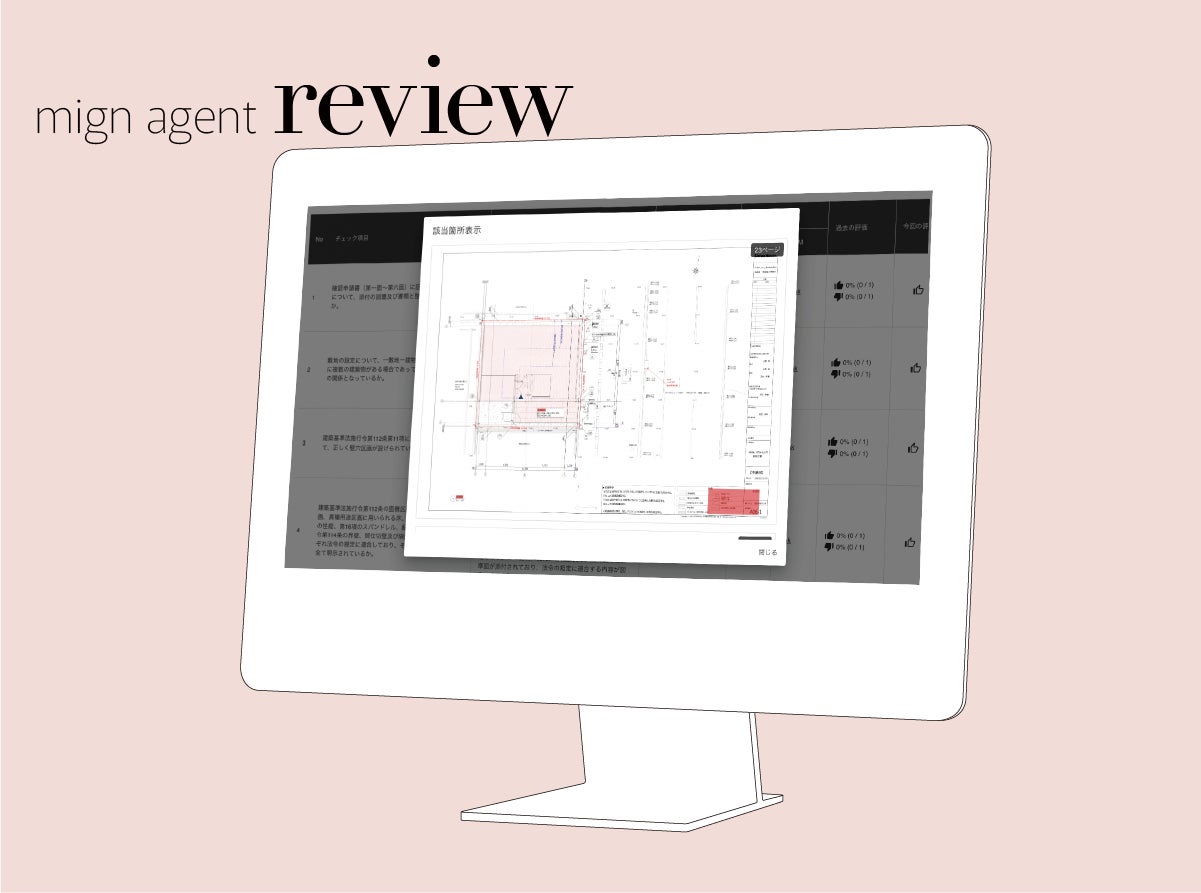
By comparing drawings with checklists, it automatically determines compliance with building standards and in-house criteria. For both review companies and applicant companies, AI replaces the expertise of seasoned professionals, dramatically reducing review times.
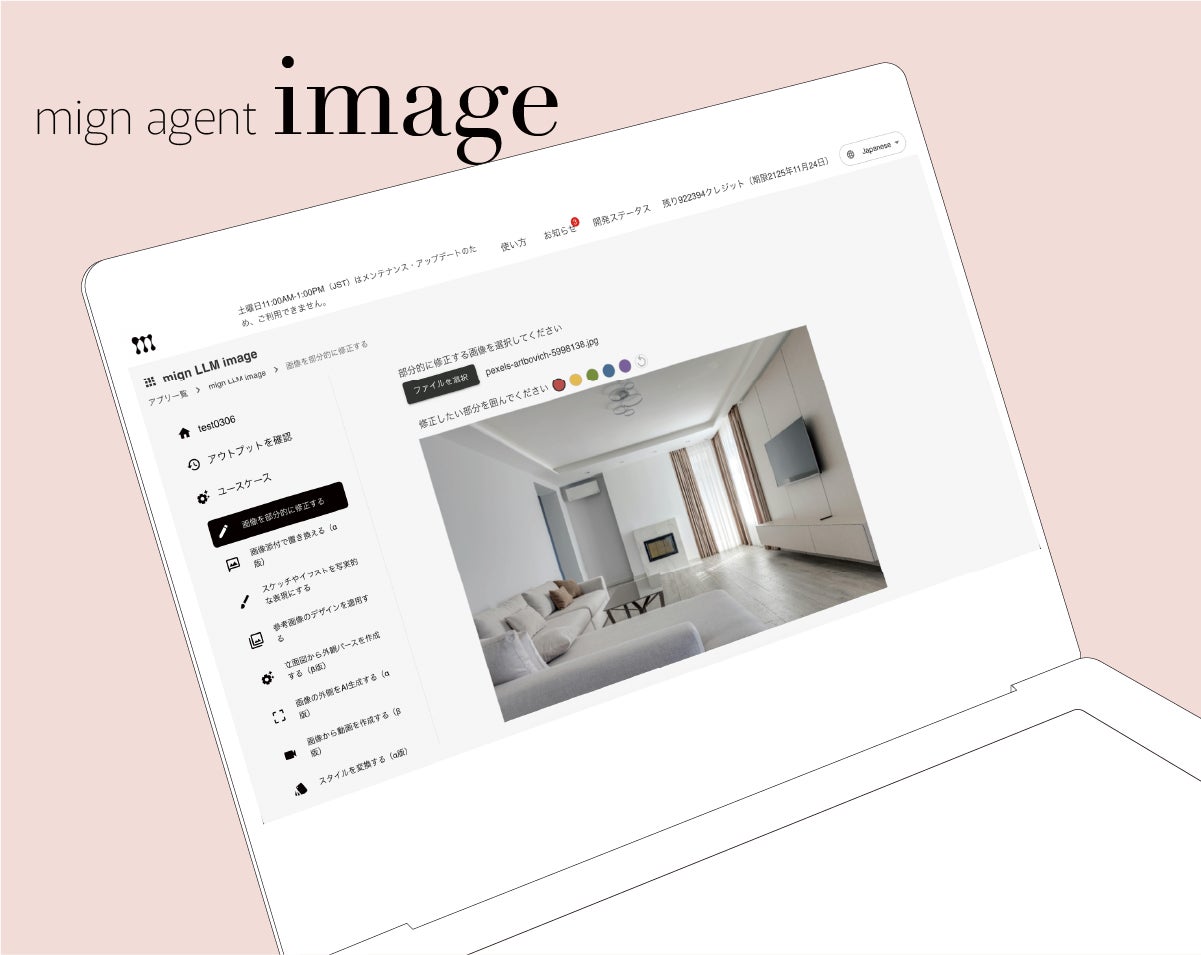
Generation and modification of architectural renderings