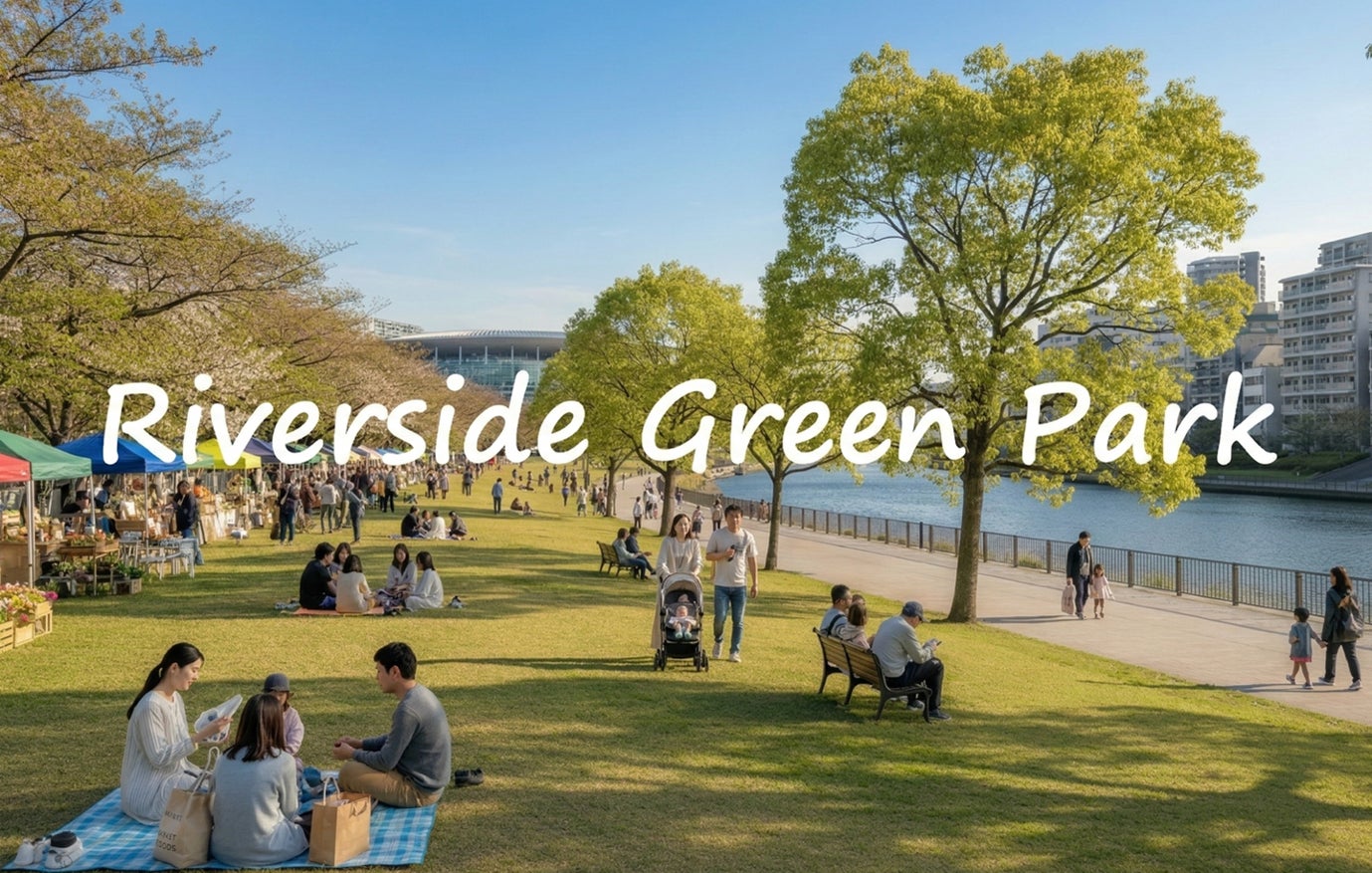
A key factor in achieving sustainability in urban redevelopment is creating spaces that diverse people find attractive and want to visit. Municipalities and related companies responsible for redevelopment often depict the planned cityscapes in renderings (perspectives) to communicate their appeal to a wide audience. However, discussions about the content of these renderings frequently focus on spatial elements like buildings and facilities. This research analyzed how the depiction of people spending time in these spaces affects the perceived attractiveness of a city. The element focused on here is the stroller. The presence of children and families with young children is expected to bring vitality to a city and, as exemplified by family restaurants, lower psychological barriers to entry. A randomized controlled trial検証ing the difference in city attractiveness with and without strollers revealed that renderings with strollers received significantly higher ratings. This effect was consistent across genders and age groups. These findings can be applied not only to appeal in renderings but also to the institutional design of cities. By creating spaces that are easily accessible for strollers, it is expected that the attractiveness of the city will increase for a diverse range of people. The results of this research, a joint project between NEC Corporation and Associate Professor Takumi Kato of the Faculty of Commerce, Meiji University, have been accepted for presentation at the 2026 International Conference on Management, Tourism and Technologies and will be published in *Business and Economics* (Springer).
Key Points of This Research ・Cities worldwide are engaged in fierce competition to attract residents, making urban branding a crucial policy tool for municipalities and urban developers. Parks are often positioned as symbols of urban branding. Represented by Hyde Park in London and Central Park in New York, green spaces function as urban symbols. Furthermore, from the perspective of enhancing sustainability, green spaces play a vital role, leading to their incorporation in many redevelopment projects.
・Sustainability demands not only environmental consideration but also the revitalization of local economies through the gathering of diverse people. Therefore, municipalities and related companies involved in redevelopment use renderings (completion perspective drawings) to depict the city and communicate its appeal to a broad audience.
・Discussions regarding the content of renderings tend to lean towards buildings and facilities, with insufficient knowledge accumulated on the impact of depicted "people." Considering that in general marketing communication, consumers tend to focus on the characters using a product or service rather than the product/service itself, the depiction of people in city renderings is presumed to be important.
・In this study, we prepared two sets of urban park redevelopment renderings: one without strollers (control group, Figure 1) and one with strollers (treatment group, Figure 2). Participants were randomly assigned to view either one. They were then asked to evaluate the attractiveness of the city. The results showed that 64.4% of the control group found the city attractive, compared to 74.1% in the treatment group, a statistically significant difference of approximately 10 percentage points.
・The effect of strollers was confirmed regardless of gender or age. For women, an improvement of 11 percentage points was observed (68.2% → 79.2%), and for men, an improvement of 7.9 percentage points (61.0% → 68.9%). By age group, an improvement of 10.7 percentage points was confirmed for those aged 20-44 and 8.4 percentage points for those aged 45-69. Furthermore, for those with low attitudinal engagement with parks, the improvement was 13.0 percentage points (37.7% → 50.7%), and for those who use parks infrequently, it was 14.0 percentage points (61.0% → 75.0%), indicating a significant effect.
FACT BOX
- Source: PR TIMES
- Category: News