調查報告:「米飯消費調查 ~價格飆漲對米飯飲食習慣的影響~」
調查顯示,儘管米價持續飆漲,但晚餐食用米飯的頻率並未發生顯著變化。
📋 文章處理履歷
- 📰 發表: 2026年3月31日 00:57
- 🔍 收集: 2026年3月30日 22:56
- 🤖 AI分析完成: 2026年4月15日 22:21(收集後383小時25分鐘)
朝日大學(岐阜縣瑞穗市)附屬研究機構朝日大學行銷研究所(所長:中畑千弘)進行了關於米飯消費的調查。
調查背景
在人力短缺和成本上漲等背景下,米飯的銷售價格持續飆升。漲幅非常大,預計越來越多人已經或將要採取對策。本次調查旨在了解目前的狀況對米飯消費行為產生了何種影響,以及人們是否正在遠離米飯。我們進行了這項調查以掌握實際情況。
「米飯消費調查 ~價格飆漲對米飯飲食習慣的影響~」主要結果
■ 米價飆漲,但晚餐食用米飯的頻率並未發生顯著變化
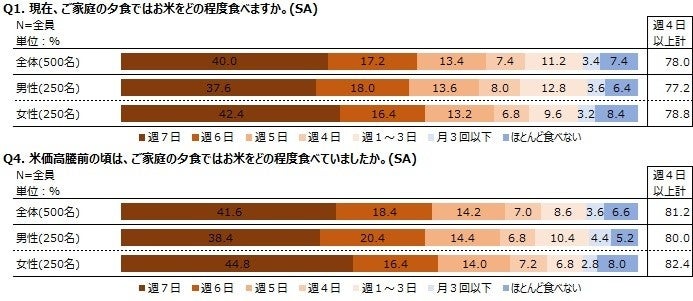
比較米價飆漲前後,晚餐時「每週食用米飯4天以上」的比例,飆漲前為81.2%,飆漲後為78.0%。減少了3.2個百分點,但並非顯著變化。即使觀察每週食用米飯「7天」的比例,飆漲前(41.6%)和飆漲後(40.0%)也幾乎處於同一水平。儘管價格飆漲,但或許是因為許多人認為「餐桌上不可或缺米飯」,目前並未出現食用頻率的顯著變化。
■ 晚餐主食為米飯的比例也未發生顯著變化
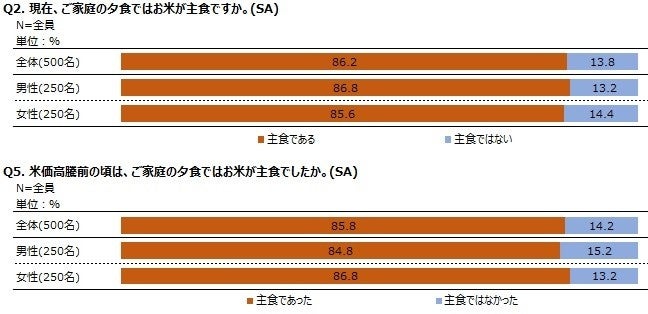
比較米價飆漲前後,晚餐主食選擇米飯的比例,飆漲前為85.8%,飆漲後為86.2%,差異僅為微小。即使面對價格飆漲,米飯仍持續維持其作為晚餐主食的角色。
■ 女性較常以其他食材替代米飯
為應對米價飆漲,增加替代食用的食材中,依序為「蕎麥麵、烏龍麵、素麵、冷麥」(41.2%)、
「義大利麵」(32.2%)、「麵包」(28.2%)、「拉麵、中華麵」(25.8%)。其中,女性的比例均高於男性,其他類別如「披薩」、「豆類、麥類、雜糧、根莖類」也呈現相同趨勢。另一方面,男性回答「沒有特別增加食用」的比例較高(男性42.4%,女性36.0%)。
在目前米價飆漲的現況下,女性傾向於尋找替代食材,而男性則顯得較為被動。特別是60至69歲的男性,在米價飆漲前食用米飯的頻率就較低,且認為米飯是主食的人也較少。
目前來看,影響米飯食用狀況的因素,似乎是年齡層的影響大於價格。
常見問題
What was the main purpose of this survey on rice consumption?
The survey aimed to understand the actual impact of soaring rice prices on rice consumption behavior and to determine if people are moving away from eating rice.
Did the frequency of eating rice for dinner change significantly after the price increase?
No, the change was not significant. The proportion of people eating rice 4 or more days a week for dinner decreased only slightly from 81.2% before the price hike to 78.0% after.
Is rice still the primary staple food for dinner?
Yes, the proportion of people whose staple food for dinner is rice remained largely unchanged, at 85.8% before and 86.2% after the price increase.
Which demographic group was more likely to switch to alternative foods instead of rice?
Women were more likely than men to increase their consumption of alternative foods like noodles (soba, udon), pasta, bread, and ramen in response to higher rice prices.
What factors seem to have a greater influence on rice consumption habits than price?
The survey suggests that age might have a greater influence than price. For example, men aged 60-69 showed lower rice consumption frequency and were less likely to consider rice a staple food even before the price surge.