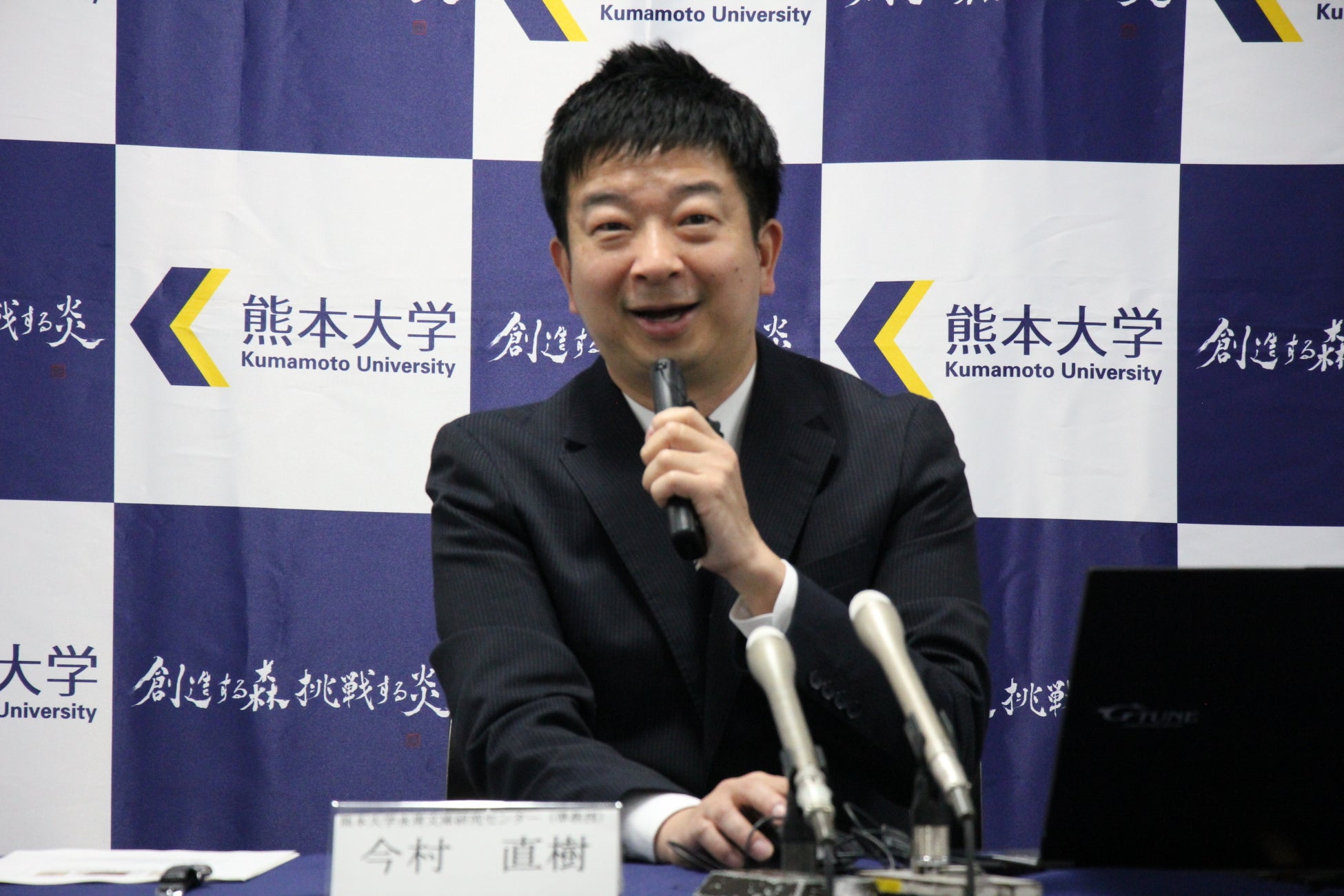
On Monday, March 30, 2025, Associate Professor Naoki Imamura of the Kumamoto University Center for the Eisei Bunko Research held a press conference to explain his research findings in Conference Room A on the 2nd floor of the Faculty of Engineering Building 1 at Kumamoto University. Reporters from participating media outlets asked numerous questions regarding the following research findings, and a lively exchange of opinions took place. Associate Professor Naoki Imamura
The Meeting
[Regarding Research Findings]
(Key Points) ・Analysis of the "Kuchigaki" (written testimonies) from the Hosokawa family documents from the late Edo period has revealed the reality of Kumamoto Domain residents who went missing or fled outside the domain during that period. In the late Edo period, the Kumamoto Domain was ordered to guard Kyoto, leading to many samurai retainers (ashigaru, chugen, komono) accompanying their lords to the capital. As a result, the number of missing persons in Kyoto increased. ・Many of those who went missing made a living as day laborers. However, some became sumo wrestlers, while others committed extortion (oshikake), threatening merchants to steal money and goods, thereby worsening public order. ・Characteristic cases include a farmer who fled all the way to Edo after being encouraged to become a samurai, and a local samurai (go-shi, or goke-nin) who went missing in Osaka and joined the Shinsengumi.
(Overview) Associate Professor Naoki Imamura and his colleagues at the Kumamoto University Center for the Eisei Bunko Research have been engaged in a comprehensive study of the Hosokawa family documents "Kuchigaki" since receiving a Grant-in-Aid for Scientific Research in fiscal year 2023. "Kuchigaki" are a collection of historical materials created by the Kumamoto Domain's criminal law department (Keihōkata). Primarily targeting commoners, they contain the deposition records of suspects involved in crimes and incidents that occurred inside and outside the domain. These deposition records not only detail the circumstances leading to the crimes and incidents but also record the suspects' feelings and their relationships with those around them, making them extremely rich in information. When Associate Professor Imamura and his team analyzed the "Kuchigaki" (10 volumes in total) from the late Edo period (Bunkyū 3 [1863] to Keio 3 [1867]) within the Hosokawa family documents, the following new facts and findings were revealed: ①
FACT BOX
- Source: PR TIMES
- Category: News