Kobetsu-no-kai Survey: Is Junior High School Entrance Exam Performance Determined by 4th-5th Grade? Verification with Latest Data
This survey by Kobetsu-no-kai, an individual tutoring school, analyzes data on junior high school entrance exams to re-evaluate the "academic fixation" theory. It reveals that while performance tends to stabilize by 4th-5th grade due to curriculum structure and cognitive shifts, this fixation is not absolute. The study highlights how systemic factors in cram schools can be overcome with individual tutoring, which effectively addresses specific weaknesses and facilitates significant improvement even in the final preparatory stages, rejecting a deterministic view of exam success.
📋 Article Processing Timeline
- 📰 Published: April 6, 2026 at 19:00
- 🔍 Collected: April 6, 2026 at 10:30
- 🤖 AI Analyzed: April 18, 2026 at 05:31 (283h 1m after Collected)
Redefining the discourse on "academic fixation" in junior high school entrance exams and its background
In the current junior high school entrance exam market, the perception that "performance is mostly decided in 4th-5th grade" is widespread.
This is not just an urban legend but also includes statistical implications.
The junior high school entrance exam curriculum introduces basic concepts in 4th grade and covers 70-80% of all units in 5th grade, making proficiency during this period directly linked to passing probability.
However, analysis of academic data from the individual tutoring school "Kobetsu-no-kai" and public mock exams reveals that the "academic fixation theory" has two aspects.
One is "systemic fixation," where students who falter under a cram school's uniform curriculum find it difficult to recover. The other is a "cognitive developmental branching point" where understanding abstract concepts like ratios and proportions affects learning efficiency.
This report, based on survey data and actual data, explains in detail the reasons for academic fixation and the characteristics of students who improve in the final preparatory period.
This is a strategic proposal to overcome the "5th-grade wall."
This survey was conducted in accordance with PR TIMES' survey release standards, ensuring objectivity and transparency.

|
Survey Item |
Content |
|
Survey Period |
January 10, 2025 – February 28, 2026 |
|
Survey Organization |
In-house survey (Kobetsu-no-kai Survey Secretariat) |
|
Target Audience |
Parents of elementary school students who have experienced or are currently preparing for junior high school entrance exams, and those with experience teaching for junior high school entrance exams. |
|
Valid Responses |
100 samples |
|
Survey Method |
Internet survey |
This survey targeted a wide range of students, from those aiming for prestigious schools to middle-tier schools, without bias towards specific percentile ranges.
This allows for deep insights into universal challenges such as "transferring cram schools," experienced by 41% of junior high school exam students, and the sharp decline in performance after 5th grade, rather than just trends in the "top tier."
Statistical data shows "deviation value rigidity" and qualitative changes in the parent population
In junior high school entrance exams, deviation values tend to become "less mobile" from 4th to 6th grade.
This is because as the curriculum becomes more advanced, the academic performance of the upper echelon stabilizes, making it harder for students with insufficient fundamentals to catch up.
Statistically, by 6th grade, the standard deviation of the student population stabilizes, and it is said that the score increase required to raise a deviation value by 5 is about 1.5 times that of 4th grade.
The illusion created by the "denominator" of deviation values
When students reach 5th grade, many families face the phenomenon where "deviation values decrease despite studying the same way as before."
The background to this is the qualitative change in the "population" used for calculating deviation values.
In the lower grades, many students who have not yet seriously started exam preparation take mock exams, making it easier to achieve high deviation values with basic abilities.
However, from 5th grade onwards, the population primarily consists of students with extremely high motivation for exams or those who have prepared diligently from an early stage. Consequently, the average score itself rises, and deviation values are calculated relatively lower.
|
Grade |
Characteristics of Mock Exam Population |
Deviation Value Volatility |
|
4th Grade |
Diverse academic levels mixed, immediately after starting cram school. |
Very high (±10 points or more) |
|
5th Grade |
Exam-oriented students are fixed, introduction of difficult units. |
High (±5 to 8 points) |
|
6th Grade |
Preparation for target schools begins, focus on practice. |
Low (±3 to 5 points) |
As this table shows, statistically, raising a deviation value by more than 10 points after entering 6th grade is considered an "unusual" event.
This is the biggest reason why it is said that "performance is decided in 4th-5th grade."
The branching point of "upward trend" and "downward trend" in academic progress
Analyzing the data of enrolled students, common precursors are seen in students whose performance enters a downward trend in the latter half of 5th grade.
This is their hesitation in setting up equations using "ratios" and "proportions," despite stable calculation accuracy.
On the other hand, students who show dramatic improvement in the final preparatory period of 6th grade, even if their deviation values stagnated in 5th grade, have the characteristic that their foundational concepts (e.g., ability to create line segment diagrams, accuracy of inverse calculations) are not destroyed.
The "5th-grade wall": The impact of "abstract concepts" in mathematics
The biggest factor determining the success of junior high school entrance exams is mathematics.
This section explains "ratios and proportions," the most difficult part of mathematics, learned in 5th grade.
Ratios and Proportions: The challenge of a mismatch in cognitive development
The reason many students get stuck in 5th grade is that the learning content shifts from "concrete numbers" to "relative relationships."
For example, even if students have mastered the calculation techniques themselves, such as multiplying and dividing fractions, they often lack the ability to read from the problem statement "what is the whole and what is the comparison object."
Taking the "three methods of proportion" as an example, the following relational formula is used.
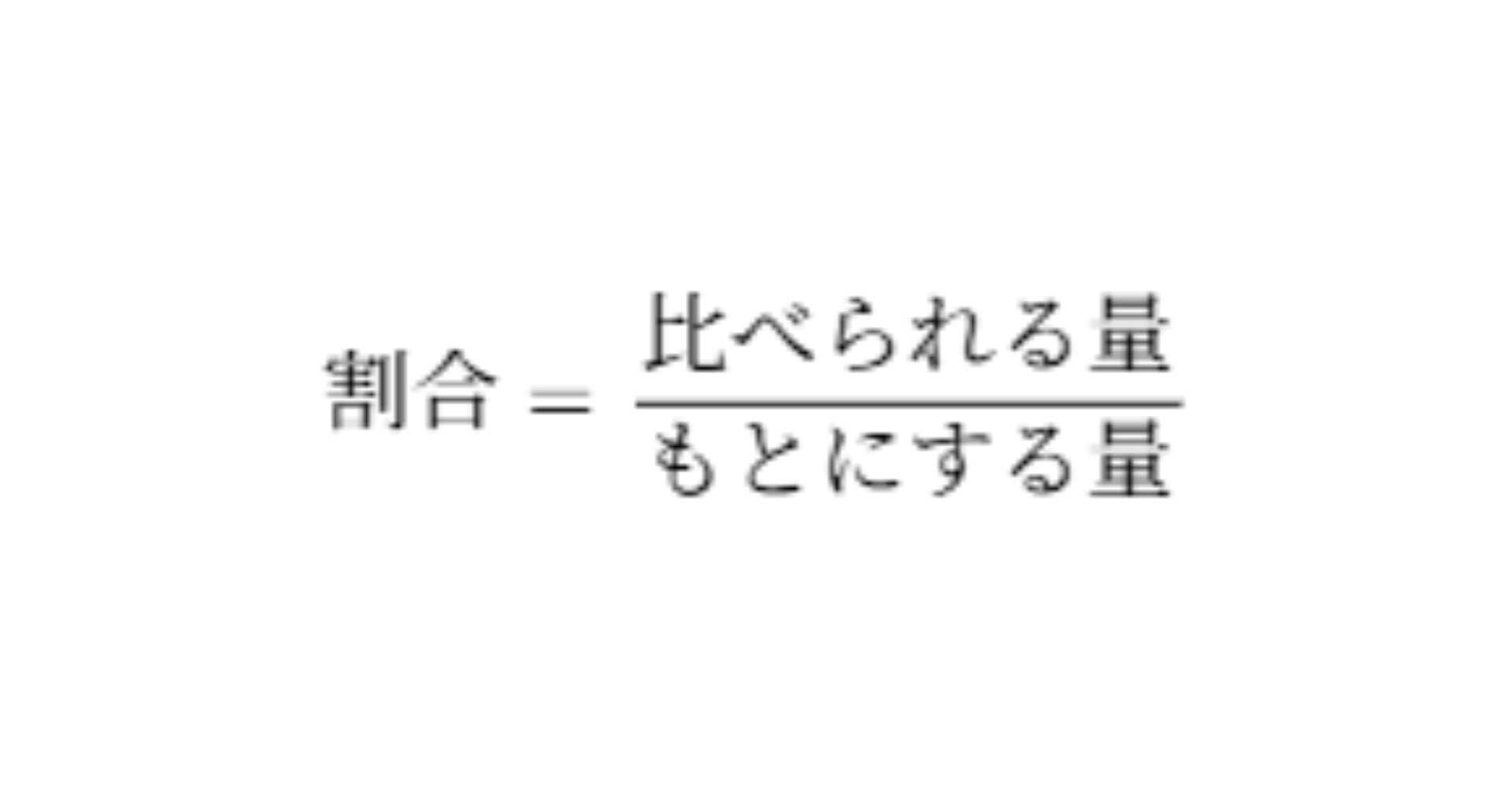
Students who merely memorize this formula mechanically cannot handle applications where the "base amount" changes mid-problem (e.g., the relationship between list price and sale price in profit/loss calculations).
Without breaking through this "conceptual wall," advancing to 6th grade leads to academic fixation, causing "wasted effort" where deviation values do not improve no matter how much study time is increased.
Specific signs of "struggle" observed in tutoring sessions
In our tutoring experience at "Kobetsu-no-kai," students whose math performance is stagnating share a common characteristic: their notebooks either lack diagrams (line segment diagrams, area diagrams) or the diagrams are very inaccurate.
The inability to visualize information is evidence that the thought process is not verbalized or logicalized.
Calculation errors: Not simply carelessness, but a lack of fundamental stamina in converting fractions and decimals.
Refusal to diagram: A tendency to immediately write an equation after reading the problem.
In situations requiring the composition of ratios (linked ratios), they rely on brute-force calculations without organizing relationships using line segment diagrams, and get stuck midway.
Weakness in inverse calculations: Tendency to misjudge the order of operations in inverse calculations, which require an algebraic way of thinking.
Discovering these signs in 5th grade and returning to the fundamental understanding of "why draw that diagram" through individual instruction is the only way to break academic fixation.
Cram School Transfers and Individual Tutoring Usage: The effect of "environmental change" experienced by 41%
The survey revealed that about 4 out of 10 junior high school exam students experience "transferring cram schools."
This section explains the timing of cram school transfers and their correlation with passing rates.
Timing of Cram School Transfers and Correlation with Pass Rates
The peak for transferring cram schools is 5th grade, which coincides with the period when the cram school curriculum becomes more difficult, leading to class demotions or poor performance becoming apparent.
However, what is noteworthy is the difference in pass rates after transferring.
In the survey, the pass rate for target schools among students who "did not transfer cram schools" was 80.97%, while for "students who transferred cram schools," it was only 62.79%.
This suggests that transferring cram schools itself is not disadvantageous, but rather that cases where countermeasures are delayed until a review of the learning environment becomes necessary are common.
Therefore, it is important to create a learning environment early on.
Optimizing the learning system early, such as by supplementing group lessons with individual tutoring, is a major point for increasing the probability of passing target schools.
|
Learning Status |
Target School Pass Rate |
|
Students who did not transfer cram schools |
81.0% |
|
Students who transferred cram schools |
62.8% |
This difference of approximately 18% does not mean that transferring cram schools itself has a negative impact, but rather reflects the reality that "by the time one realizes the need to change environments due to declining performance, there isn't enough time to cover the gaps from up to 5th grade."
Therefore, when one can no longer keep up with the pace of a group cram school, it is extremely important to switch to or supplement with individual tutoring that can pinpoint and solve individual issues, rather than blindly moving to another group cram school.
The "Comeback Curriculum" advocated by the individual tutoring school "Kobetsu-no-kai"
"Kobetsu-no-kai" maintains a policy of not conducting entrance examinations.
This is based on the belief that even if the current deviation value is very low, recovery is possible by identifying the "starting point of struggle" up to 5th grade and constructing a custom curriculum from there.
In group cram schools, students often fall into a cycle of "understanding imperfectly but memorizing solutions to get by" due to the pressure of weekly tests.
In individual tutoring, a professional instructor continuously observes the student's problem-solving process during the 2-hour lesson and corrects thought bugs the moment their hands stop.
This "close-knit guidance" is the catalyst for re-fluidizing fixed academic performance.
Common traits of students who experience a "growth spurt" in the final preparatory period
The biggest counterargument to the theory that "performance is decided in 5th grade" is the existence of students who show explosive growth from December to January of 6th grade.
Here, we introduce the types of students who achieve such growth.
The mechanism of "explosive growth" just before the entrance exams
Ironically, the period when junior high school entrance exam students grow the most is just before the exams.
Especially after experiencing trial exams in January, and personally feeling their "weaknesses" and "exam pressure," a sense of connection forms among their accumulated knowledge.
For example, concepts learned separately, such as geometric properties and ratio thinking, connect, and the method for solving complex "geometry x ratio" problems becomes instantly apparent.
This phenomenon occurs because after learning all major units, the increased practice of complex problems allows previously disjointed knowledge to bind together.
As a result, understanding becomes three-dimensional, and performance dramatically increases in a short period.
Students who grow during this period have the following foundations built by 5th grade:
Complete fundamental stamina: Even if they can't solve difficult problems, they make very few mistakes in calculations and one-line problems.
Mental flexibility: Parents do not impose excessive pressure, and the student has autonomous motivation to "want to pass."
Matching with target schools: They polish "answerability" specific to the exam trends of their target schools, rather than relying on the uniform indicator of deviation value.
The importance of pinpoint preparation for target schools and subjects
From the latter half of 6th grade onwards, trying to raise the deviation value in all subjects is inefficient.
To exceed the minimum passing score, "tactical learning" is required to reliably tackle frequently tested units for the target school.
Individual tutoring allows for guidance that only fills the "difference" between an individual's weaknesses and the target school's trends, such as specific descriptive questions for university-affiliated schools or complex solid geometry problems for prestigious schools. This supports a turnaround victory in a short period.
Parental roles and mental management for preventing academic fixation
Junior high school entrance exams are significantly influenced not only by the student's academic ability but also by the mental stability of the household.
In the survey, "how to deal with the child" and "parent's own stress" ranked high among the most difficult aspects during exam preparation.
Here, we introduce support methods for parents.
"Parental wisdom" when performance declines in 5th grade
When deviation values drop in 5th grade, the most important thing to avoid is "parents becoming anxious and scolding."
This carries the risk of causing the child mental distress, and in the worst case, school refusal or giving up on the exam.
|
Inappropriate Parental Response |
Impact on Child |
|
Getting angry solely based on deviation value numbers. |
Induces cheating or false reporting. |
|
Comparing with other children. |
Lowered self-esteem, loss of motivation to study. |
|
Parent directly teaching too much. |
Increased parent-child arguments, lack of autonomy. |
The parent's role is not to manage the study content but to focus on supporting daily habits and mental well-being.
If there is anxiety, "outsourcing" to cram school teachers or individual tutoring counselors helps maintain the home as a "safe place," which ultimately leads to improved performance.
Conclusion: Rejecting determinism, an exam strategy seeking individual optimal solutions
The conclusion drawn from this survey and data analysis is that "while junior high school entrance exam performance tends to show a certain stability in 4th-5th grade, it is by no means an unchangeable fate."
Indeed, if understanding abstract concepts like "ratios and proportions" learned in 5th grade is delayed, subsequent learning efficiency decreases, and deviation values tend to become fixed.
However, this phenomenon mainly occurs within the uniform curriculum of group cram schools.
In an environment of individual tutoring that can identify issues according to each student's understanding and cognitive development and carefully resolve their struggles, it is not uncommon for performance to significantly improve starting from 6th grade.
What determines exam results is not the starting time, but whether the essence of the current challenges is correctly understood.
With appropriate analysis and a supportive learning environment, academic ability can continue to grow until the entrance exam day.