"Shogun Dinner" Service Begins. Fully Restored Sankin-kotai Cuisine from 300 Years Ago. On-yado Tsutaya Starting April 11.
On-yado Tsutaya, a long-established inn in Kiso-Fukushima, Nagano Prefecture, is launching the "Shogun Dinner" experience from April 11, 2026. This dining experience fully recreates the hospitality cuisine served during the Sankin-kotai (alternate attendance) system approximately 300 years ago, based on historical documents and literature.
📋 Article Processing Timeline
- 📰 Published: April 9, 2026 at 18:30
- 🔍 Collected: April 9, 2026 at 10:00
- 🤖 AI Analyzed: April 18, 2026 at 17:17 (223h 17m after Collected)
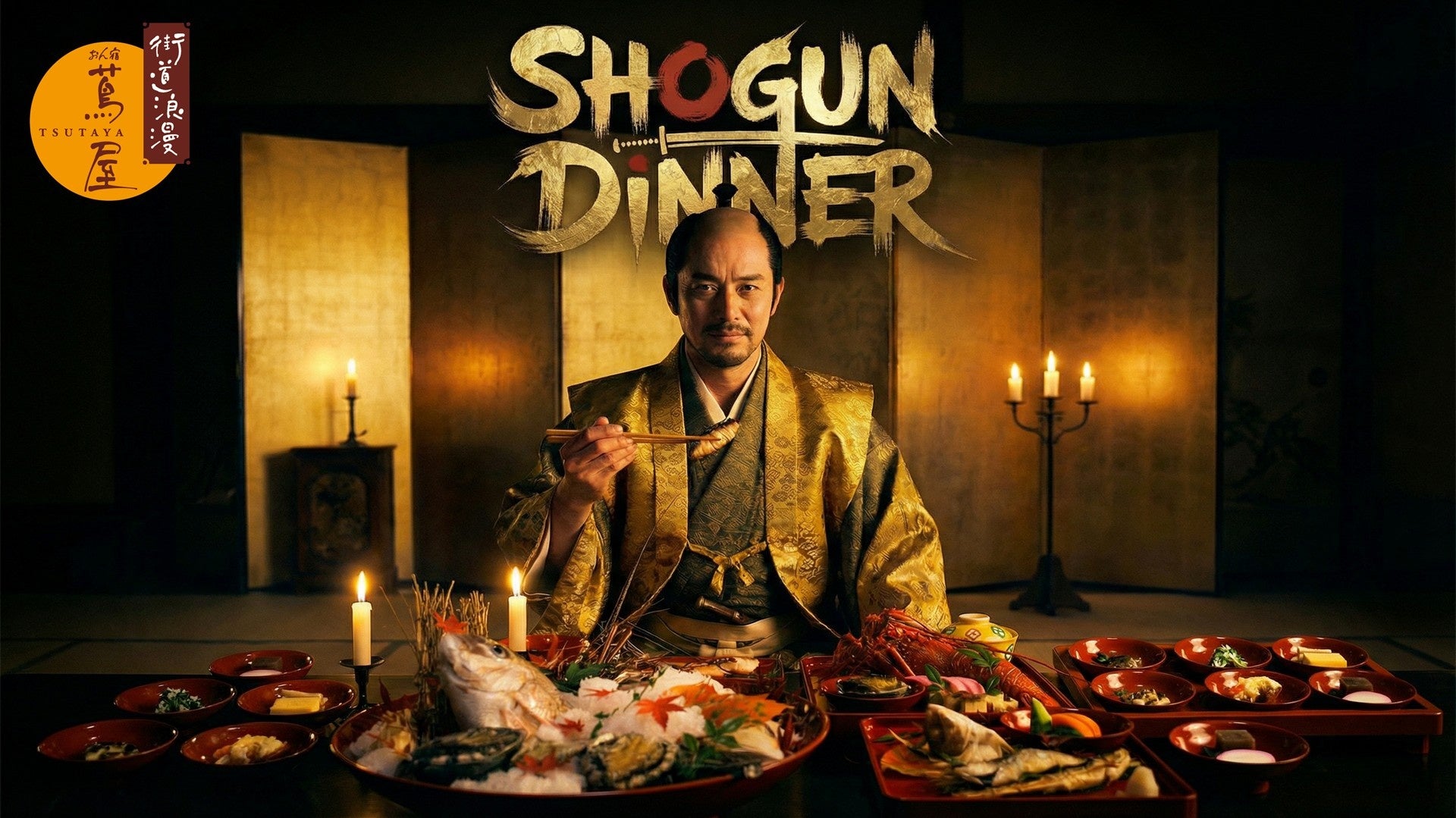
Tsutaya Honten Co., Ltd. (Head office: Kiso Town, Kiso-gun, Nagano Prefecture; President: Mieko Tsuda) will begin offering the "Shogun Dinner" dining experience, a reproduction of hospitality cuisine from the Sankin-kotai era approximately 300 years ago, to overnight guests at the long-established inn "Kaido Roman On-yado Tsutaya" (Kiso Town, Nagano Prefecture, Nakasendo Kiso-Fukushima Post Town) starting Saturday, April 11, 2026.
The Shogun Dinner is a culinary content that allows guests to experience the hospitality of the Edo period, along with the historical background of the Sankin-kotai system, through the food culture of that era. The feast, recreated based on historical materials and literature from the Yamamura Daikan Yashiki (Fukushima Post Town, Nakasendo), is served on Kiso lacquerware, allowing guests to experience the hospitality culture of the Sankin-kotai through food. Despite being inland, seafood transported from Ise was preserved in ice houses using snow from Mount Ontake, and at that time, it was served as a special form of hospitality.
We offer two formats: the special full-course "Shogun Dinner (Fully Restored Five-Dish Course)" and the "Shogun Dinner (One-Dish Style)," which can be enjoyed as a regular dinner for inn guests.
【Reservation Sites】
▶Reservation Site ① Shogun Dinner (Fully Restored Five-Dish Course)
▶Reservation Site ② Shogun Dinner (One-Dish Style)
【Experience Content】The Shogun Dinner is offered in two formats for overnight guests.
① Shogun Dinner (Fully Restored Five-Dish Course)
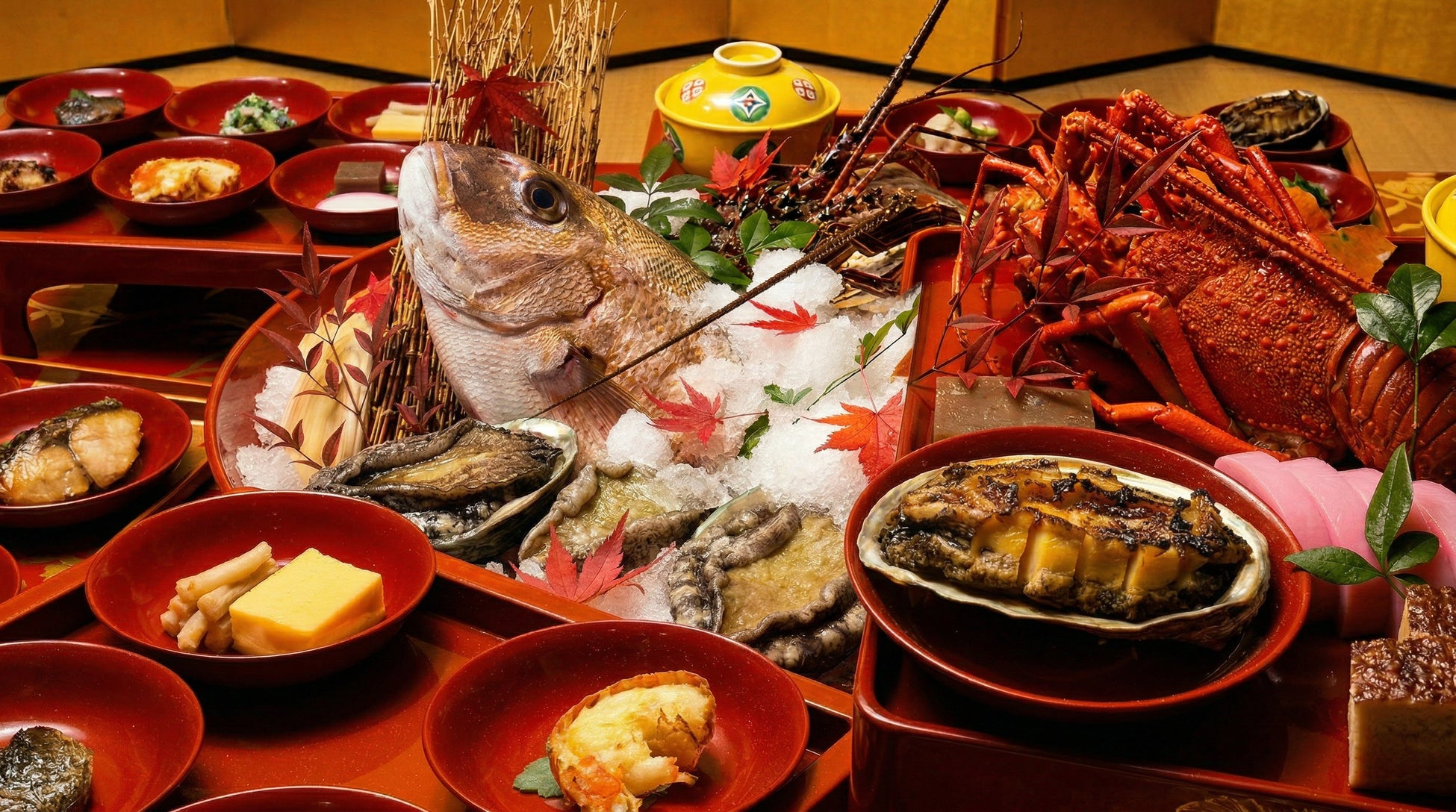
This is a special meal reproduced based on the format of "Honzen Ryori," the hospitality cuisine of samurai families during the Edo period. It is served as a five-dish course, starting with rice, followed by the first, second, and third trays, chawanmushi, and Ichimonji-gohan, allowing guests to experience the flow of a feast prepared to welcome feudal lords at that time.
The meal features a variety of dishes reflecting Edo period food culture. Highlights include "Awabi no Fukuran-ni" (simmered abalone) served with Kiso's famous Iwatake mushroom, "Funamori Ise Ebi" (sashimi boat of Ise lobster) using seafood transported from the Ise Sea, and "Komochi Ayu no Kanro-ni" (sweetly simmered pregnant ayu fish) which conveys the preserved food culture of the Edo period. Despite Kiso being deep in the mountains, the menu features abundant seafood. Furthermore, dishes based on traditional cooking methods such as sea bream and Japanese sea bass kobujime (cured with kelp), grilled char with salt, and steamed clams in their own broth are also offered.
② Shogun Dinner (One-Dish Style)
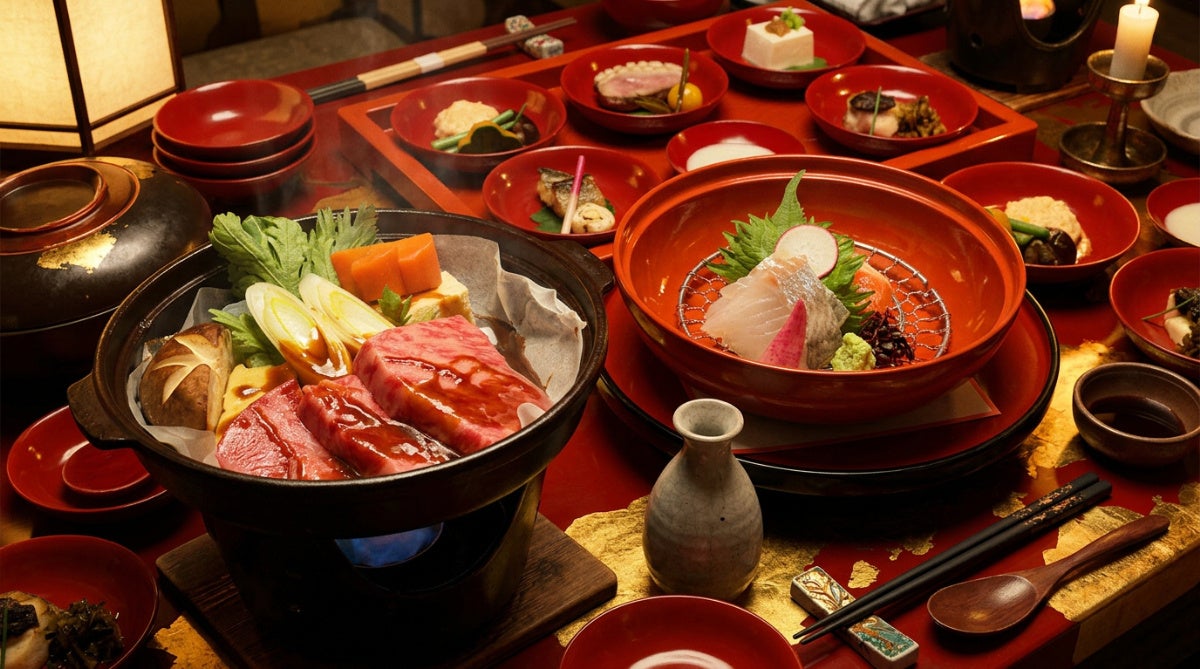
This is a modern version of the Shogun Dinner that can be enjoyed as part of the inn's regular evening meal. While retaining the structure and narrative of Edo period hospitality cuisine, it is offered as a single-dish meal adapted to contemporary tastes.
The menu includes "Edo no Nikunabe" (Edo meat hot pot) prepared with miso, symbolizing the food culture of the late Edo period. Although eating meat was long prohibited in Edo, there was a culture of eating venison and wild boar as "yakugui" (medicinal eating) to build strength. In the late Edo period, beef dishes became widespread, giving rise to the culture of gyunabe (beef hot pot) where miso, sake, and green onions were used to suppress the odor. This one-dish style allows guests to experience not only the hospitality cuisine of the samurai but also the flavors of Edo townspeople's culture.
【Video】Shogun Dinner footage reproducing Sankin-kotai and hospitality cuisine from approximately 300 years ago
The meal incorporates a video production that recreates scenes from the Sankin-kotai as an introduction, allowing guests to experience history through both visual and culinary aspects.
1. Experience the food culture of the Sankin-kotai era approximately 300 years ago
During the Edo period, the Nakasendo was an important highway traversed by daimyo (feudal lords) on their way to Edo for Sankin-kotai. Kiso-Fukushima (Fukushima Post Town) was located at a key point, a post town where daimyo and their retainers were welcomed with hospitality. "On-yado Tsutaya," founded in 1688 (Genroku 1), is a long-established inn that has walked alongside this post town.
The name "Shogun Dinner" originates from the journey daimyo made during Sankin-kotai to Edo to meet the Shogun. Guests can experience a "time travel" dining experience back to the Sankin-kotai era of approximately 300 years ago, while enjoying the hospitality culture that welcomed daimyo in Edo period post towns.
2. Recreation of cuisine based on historical documents
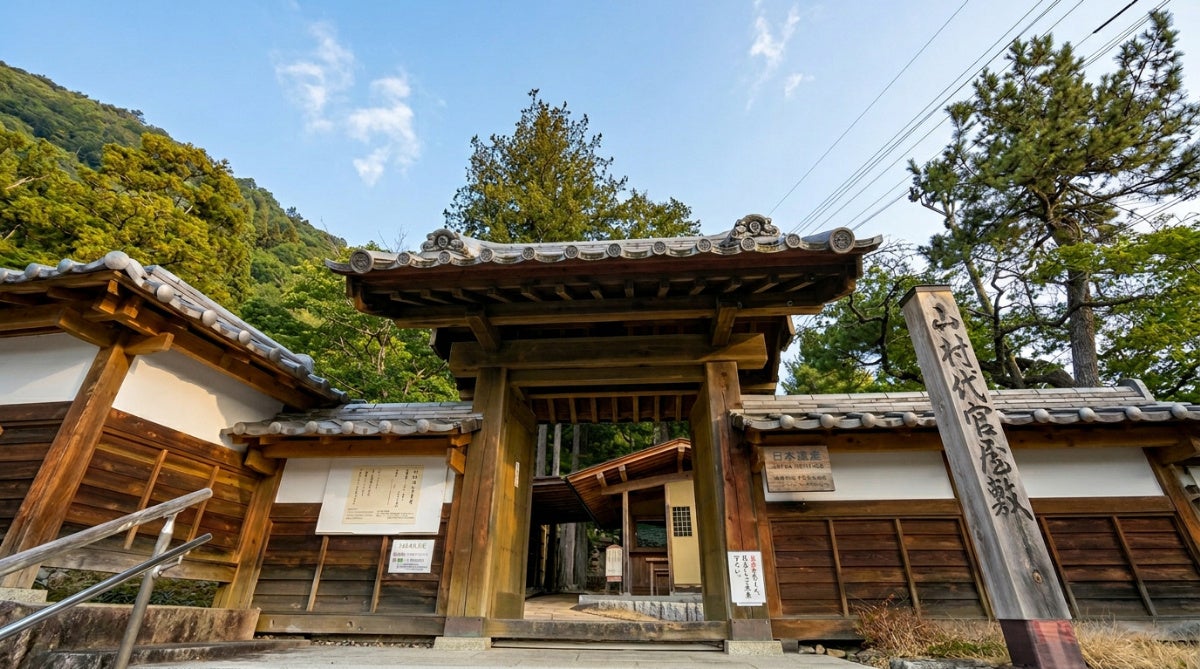
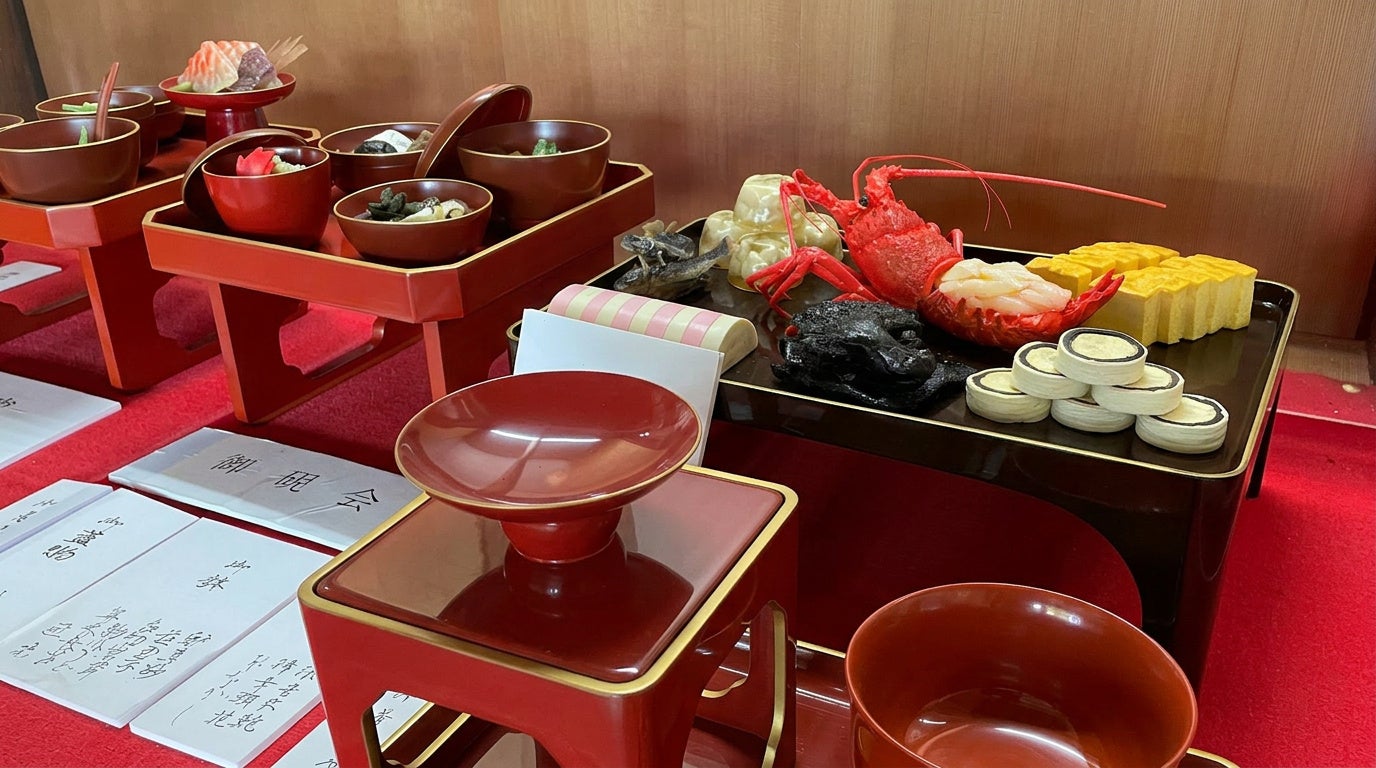
The dishes for the Shogun Dinner have been recreated based on historical materials remaining in Kiso-Fukushima. In particular, references were made to historical documents from the Yamamura Daikan Yashiki, which governed Kiso during the Edo period, and literature/records of hospitality cuisine prepared to welcome daimyo at that time. Back then, serving seafood in the deep mountains of Kiso was a special act of hospitality symbolizing wealth and authority. Seafood transported from the Ise Sea was preserved fresh in "Hyomuro" (ice houses), natural refrigerators utilizing snow from Mount Ontake, and delivered to the post town.
"It took a long time to decipher the ancient menu documents. Also, since the menu structure of that time differs greatly from today, we repeatedly tried and erred in presentation and taste reproduction until its completion."
3. A dining experience that connects the Nakasendo culture to the future
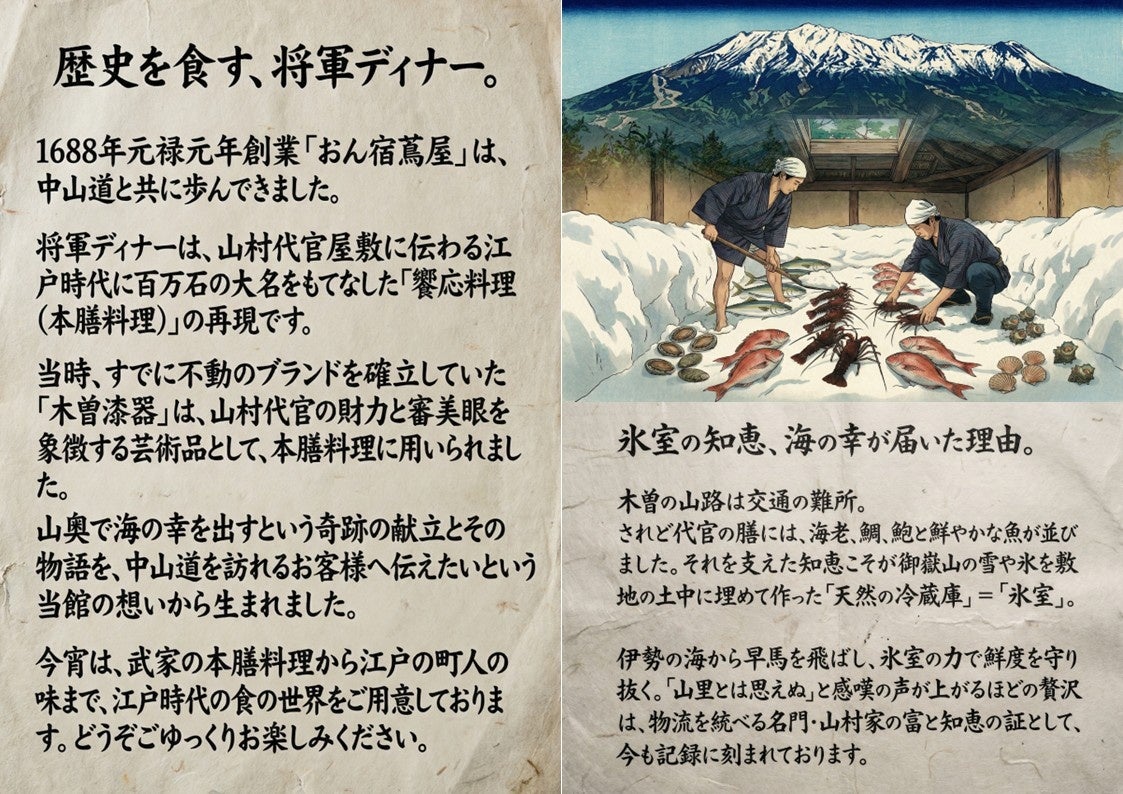
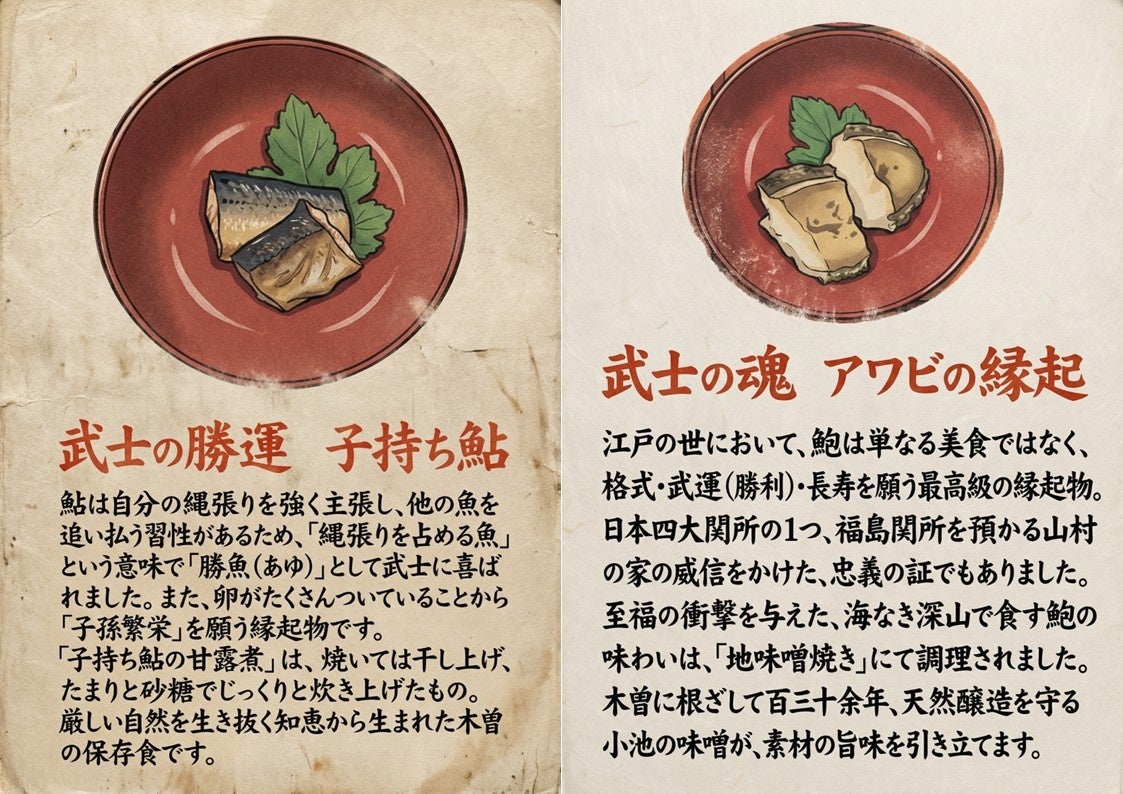
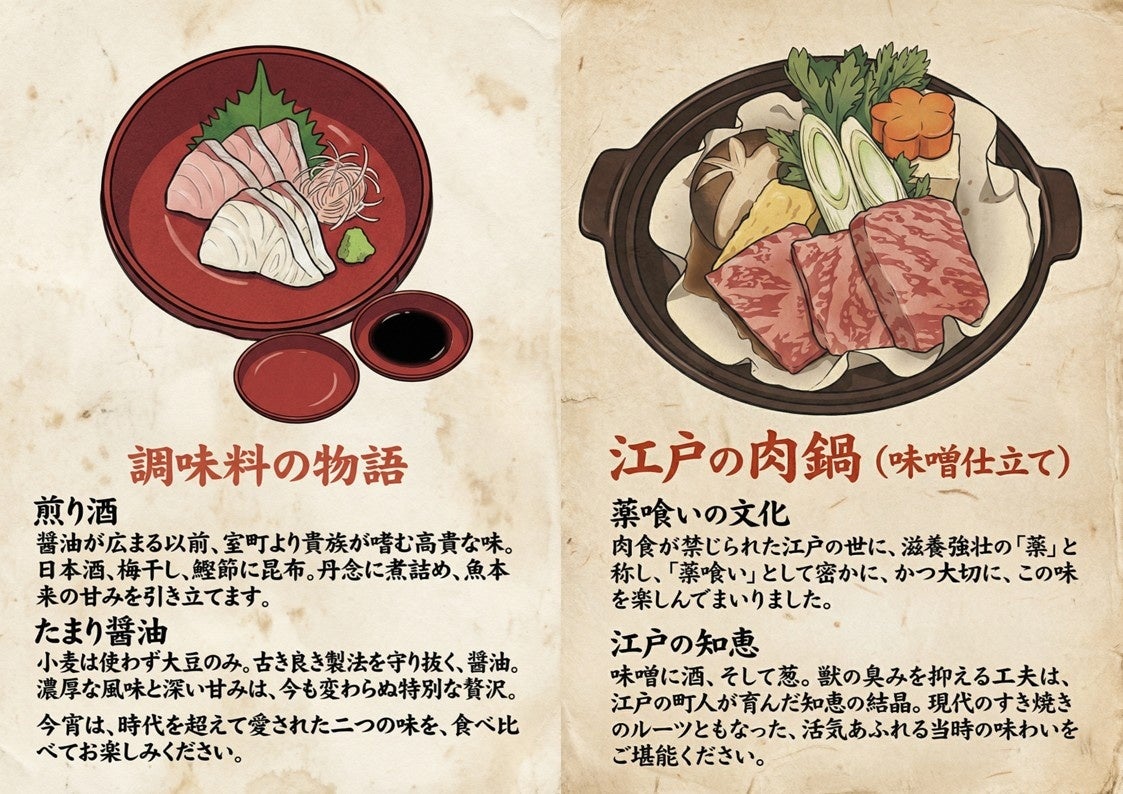
Kiso lacquerware is a craft that has continued since the Edo period, known as a vessel symbolizing the wealth and aesthetic sense of the Yamamura Daikan. The "Shogun Dinner" is a new dining experience that combines historical materials, local food culture, and traditional crafts, with attention paid even to the tableware. By adding lodging content that allows guests to experience history through food to the Nakasendo, which is globally popular as a walking tour, we propose a form of tourism where the charm of the region can be enjoyed regardless of the season.
Kaido Roman On-yado Tsutaya, a hot spring inn in Fukushima Post Town on the Nakasendo
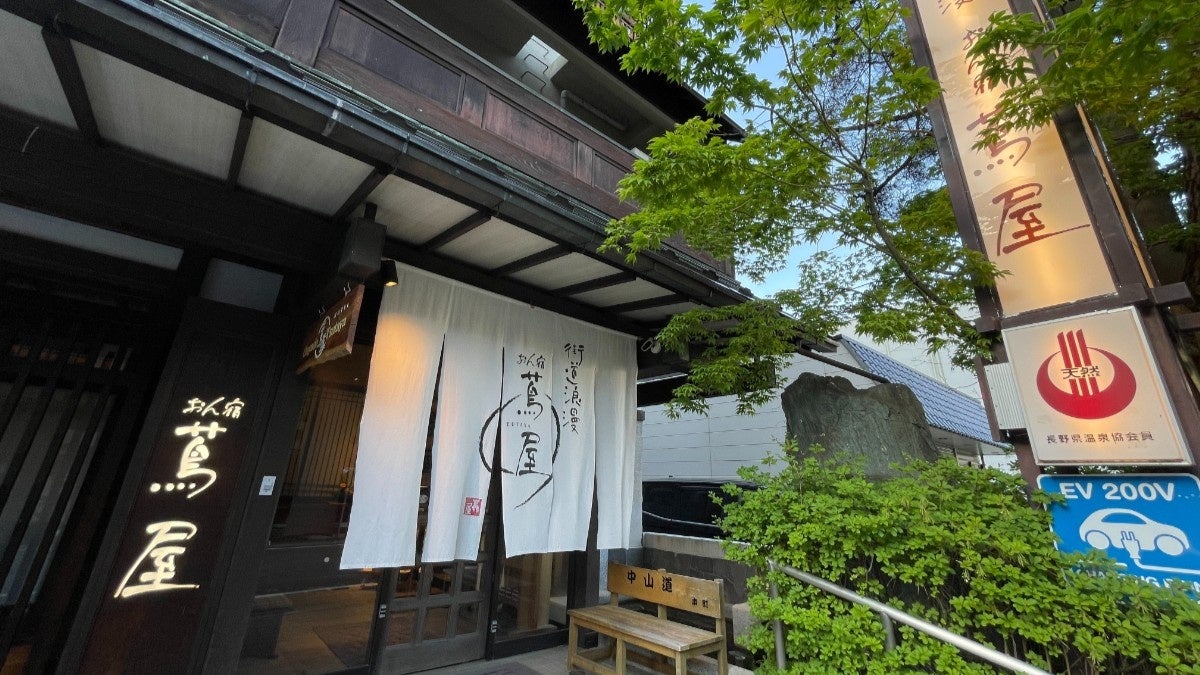
Kaido Roman On-yado Tsutaya is a hot spring inn founded in 1688 (Genroku 1) during the Edo period as a post inn in "Fukushima Post Town" on the Nakasendo and Kisoji routes. With the theme of "Nakasendo Time Travel," we will implement initiatives to invigorate the Nakasendo, starting with the guided tour "Kaido Roman Meguri," collaborating with the Kiso-bushi Preservation Society to "Spread Kiso-bushi to the World," and creating a "Fukushima Town Walking Mystery Solving Game."
【Facility Overview】
Kaido Roman On-yado Tsutaya
Address: 5162 Fukushima, Kiso Town, Kiso-gun, Nagano Prefecture, 397-0001
Phone: 0264-22-2010 (Reception hours 9:00~20:00)
HP: https://kiso-tutaya.com/
Company: Tsutaya Honten Co., Ltd. (5162 Fukushima, Kiso Town, Kiso-gun, Nagano Prefecture)
Representative: Mieko Tsuda
【Shogun Dinner Cuisine Restoration Supervisor】
Norihiko Sakamoto, Owner of Sakamoto-ke Food Promotion / Maebashi Fuku
Phone: 027-219-8600
Representative: Norihiko Sakamoto
【Design & Generative AI Video Production】
Company: SUSUMU Inc.
Phone: 03-6260-9754
Representative: Sho Soga