Kimura Kakoki Joins "J-BAS", an Industry-Academia Consortium Aiming to Establish a Domestic Production Process for Low-Cost Bioethanol from Sorghum
Kimura Kakoki has joined "J-BAS," an industry-academia consortium aiming to produce domestic bioethanol from sorghum. To contribute to the expansion of Sustainable Aviation Fuel (SAF) supply, the company will provide its distillation and hydrothermal treatment technologies.
📋 Article Processing Timeline
- 📰 Published: April 7, 2026 at 01:00
- 🔍 Collected: April 6, 2026 at 16:30
- 🤖 AI Analyzed: April 21, 2026 at 00:48 (344h 17m after Collected)
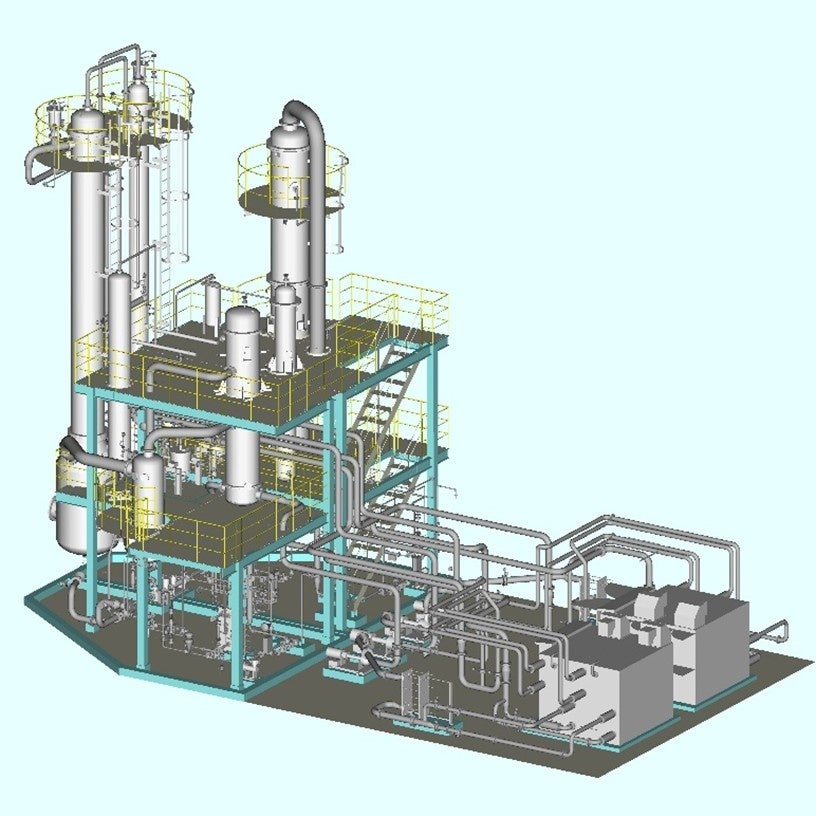
Kimura Kakoki Co., Ltd. (hereinafter "the Company") will participate in "J-BAS (Japan Bio Alcohol from Sorghum)," an industry-academia consortium established by the Japan Society of Industrial Machinery Manufacturers (hereinafter "the Association"). The consortium aims to establish a domestic production process for low-cost bioethanol from sorghum*2, with the goal of expanding the supply of Sustainable Aviation Fuel (SAF)*1 and realizing a carbon-neutral society. In the four processes of bioethanol production—"pretreatment," "fermentation," "distillation," and "purification"—the Company can contribute with its "hydrothermal treatment technology," "membrane treatment technology," and "distillation technology." Specifically, in the process of distilling ethanol with a low alcohol concentration immediately after fermentation, the Company proposes the introduction of a "heat pump bioethanol distillation unit" that significantly reduces CO2 emissions. The Company also joined "ACT FOR SKY"*3, a voluntary organization working on the commercialization and widespread adoption of domestic SAF, in April 2024.
-
*1. "SAF" is an abbreviation for Sustainable Aviation Fuel, which is a fuel manufactured from circular raw materials. It serves as an alternative to fossil-derived jet fuel and can suppress carbon dioxide (CO2) emissions, a greenhouse gas.
-
*2. "Sorghum," also known as morokoshi or takakibi, is a grain originating from Africa, said to have been introduced to Japan by the Muromachi period at the latest. The stalks and other parts of the plant, besides the grain, are used as raw material for bioethanol. Professor Yoshihiko Amano of the Bio-Chemical Laboratory, Department of Material Chemistry, Faculty of Engineering at Shinshu University, has been researching biomass, including the utilization of sorghum, for many years.
-
*3. "ACT FOR SKY" is a voluntary group of all-Japan companies, municipalities, etc., aiming for the popularization and expansion of Sustainable Aviation Fuel (SAF). It consists of ACT members (companies directly involved in domestic SAF business and central to building the supply chain) and SKY members (companies, municipalities, etc., necessary for building the domestic SAF supply chain). URL: https://actforsky.jp/
●Overview of J-BAS
・Background of J-BAS Establishment
The aviation industry is currently in the midst of a global trend toward decarbonization. The International Civil Aviation Organization (ICAO) and the International Air Transport Association (IATA) have set a high goal of halving carbon dioxide emissions by 2050 compared to 2005 levels.
To achieve this, it is essential to transition 10% of fuel use to SAF by 2030. The Japanese government (Ministry of Land, Infrastructure, Transport and Tourism) has also formulated a clear goal to "replace 10% of fuel usage by Japanese airlines with SAF"*4. However, as of 2020, the global SAF supply accounted for a mere 0.03% of total jet fuel*5, and the supply-demand gap remains extremely large. To bridge this gap, creating a foundation for innovative manufacturing technology and a stable domestic supply system is an urgent issue.
Therefore, the Japan Society of Industrial Machinery Manufacturers, an industry organization that promotes the development of industrial machinery and related industries in Japan, has established a consortium with the aim of building a low-cost domestic bioethanol production process using sorghum as a raw material, to expand the supply of SAF (Sustainable Aviation Fuel) and realize a carbon-neutral society.