Realizing the Utilization of Virtually Renewable Energy and Local Production for Local Consumption of Environmental Value in the Kawasaki Coastal Area (Kawasaki Port)!
Kawasaki Mirai Energy and three other companies collaborate to achieve local production for local consumption of virtually renewable energy and environmental value in the Kawasaki coastal area, supporting the Kawasaki Carbon Neutral Combinat Concept and Carbon Neutral Port formation.
📋 Article Processing Timeline
- 📰 Published: April 1, 2026 at 22:00
- 🤖 AI Analyzed: June 2, 2026 at 12:57 (1478h 57m after Published)
Kawasaki City is promoting the Kawasaki Carbon Neutral Combinat Concept (hereinafter "CNK") and the formation of a Carbon Neutral Port (hereinafter "CNP") by developing integrated initiatives between the industrial sector and the port in the coastal area, aiming to achieve carbon neutrality in the Kawasaki coastal region.
Kawasaki Mirai Energy Co., Ltd. (Head office: Saiwai-ku, Kawasaki City; President and CEO: Jun Ida; hereinafter "Kawasaki Mirai Energy"), Kawasaki Rinko Soko Futo Co., Ltd. (Head office: Kawasaki-ku, Kawasaki City; Chairman and Representative Director: Tetsuya Takahashi; hereinafter "Kawasaki Rinko Soko Futo"), Kureha Environmental Co., Ltd. (Head office: Iwaki City, Fukushima Prefecture; President and CEO: Masahiro Namikawa; hereinafter "Kureha Environmental"), and Enet Co., Ltd. (Head office: Minato-ku, Tokyo; President and CEO: Hiroaki Taniguchi; hereinafter "Enet") have realized the introduction of virtually renewable energy and the local production for local consumption of environmental value in the Kawasaki coastal area (Kawasaki Port) as initiatives related to the CNK and CNP promoted by Kawasaki City.
1. Outline of the Initiative
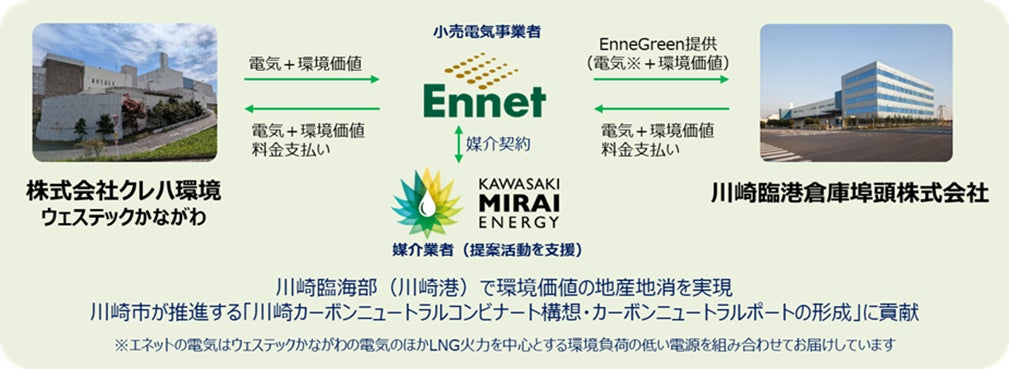
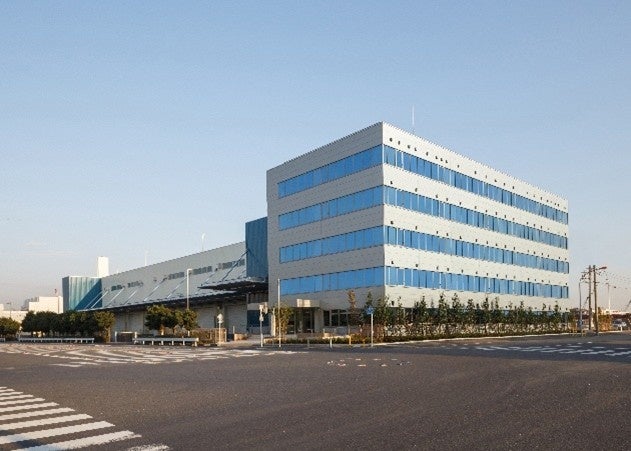
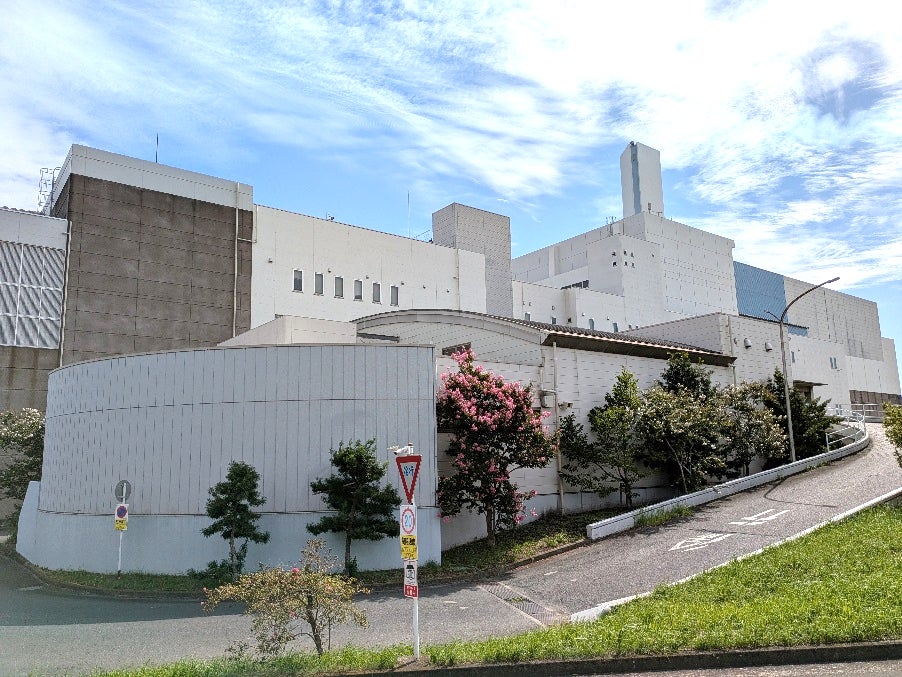
This project aims to promote the local production for local consumption of environmental value using virtually renewable energy. It achieves "local production for local consumption" of environmental value by supplying virtually renewable energy, derived from environmental value originating from Kureha Environmental Westec Kanagawa located in Chidori-cho, Kawasaki-ku, to Kawasaki Rinko Soko Futo, also located in Chidori-cho, Kawasaki-ku. Electricity supply and demand commenced on Wednesday, April 1, 2026.
<Business Scheme>
2. Features of this Initiative
(1) Achieving Carbon Neutrality by Utilizing 100% Environmental Value from the Kawasaki Coastal Area
The virtually renewable energy supplied by Enet to Kawasaki Rinko Soko Futo secures environmental value by Enet procuring electricity generated from industrial waste incineration at Kureha Environmental Westec Kanagawa and non-FIT non-fossil certificates (with renewable energy designation). Kawasaki Rinko Soko Futo achieves carbon neutrality for the electricity used in its buildings and warehouses by utilizing 100% of the environmental value created in the Kawasaki coastal area.
(2) Collaboration among Businesses
Kureha Environmental, which was exploring the utilization of biomass-derived electricity (equivalent to renewable energy) generated within Kawasaki City, and Enet, which procures that electricity and environmental value, collaborated with Kawasaki Mirai Energy, which aims to serve as a regional energy platform. By proposing this to Kawasaki Rinko Soko Futo, which is actively engaged in carbon neutrality initiatives, they realized the local production for local consumption through the utilization of virtually renewable energy in the Kawasaki coastal area (Kawasaki Port).
Furthermore, Kawasaki Rinko Soko Futo is actively promoting carbon neutrality initiatives, including receiving the nation's first CNP certification (for container terminals) from the government for the Kawasaki Port Container Terminal it manages and operates.
FAQ
What is the Kawasaki Carbon Neutral Combinat Concept (CNK)?
It's a concept aiming for carbon neutrality by integrating industries and ports in the Kawasaki coastal area.
What exactly is "virtually renewable energy"?
It's electricity derived from renewable sources combined with environmental value certificates, effectively deemed zero-CO2 emissions.
What is the biggest feature of this initiative?
It's a local production for local consumption model that achieves carbon neutrality by utilizing 100% of environmental value generated in the Kawasaki coastal area within the same region.