Lost Place Name 'Osaka Ikaino', Revived Through Poetry and Photography
The Korean Cultural Center in Osaka is hosting an exhibition from April 9th to May 12th, showcasing the 'Scenery of Kim Si-jong's Poems, Takumi Fujimoto Photography Exhibition "Ikaino Poetry Collection"'. This exhibition highlights the history and memories of Zainichi Koreans in Ikaino, a former district in Osaka that lost its name in 1973. It features 8 poems by Kim Si-jong and 60 photographs by Takumi Fujimoto, accompanied by lectures and fieldwork to deepen understanding of the area's past and present.
📋 Article Processing Timeline
- 📰 Published: April 8, 2026 at 19:02
- 🔍 Collected: April 8, 2026 at 10:30
- 🤖 AI Analyzed: April 17, 2026 at 17:57 (223h 26m after Collected)
● Takumi Fujimoto Memorial Lecture (April 10) and 'Ikaino' Fieldwork (April 18) also to be held
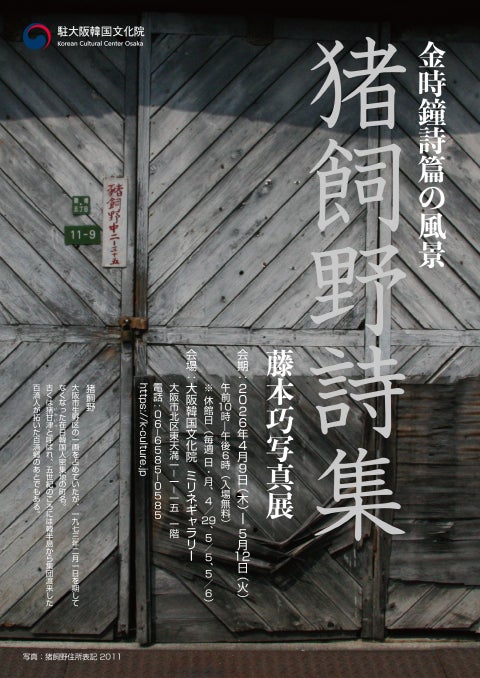
The Korean Cultural Center in Osaka (Director Kim Hye-soo) will hold the 'Scenery of Kim Si-jong's Poems, Takumi Fujimoto Photography Exhibition "Ikaino Poetry Collection"' from Thursday, April 9th to Tuesday, May 12th at the Miline Gallery on the 1st floor of the center.
'Ikaino' was a densely populated area for Zainichi Koreans in Ikuno Ward, Osaka City, but its name disappeared from maps following administrative boundary changes in 1973. This area is also known as the site of 'Kudara-go', which was pioneered by people from Baekje who came from the Korean Peninsula around the 5th century. Today, it has become a tourist destination known as 'Osaka Korea Town', attracting many K-pop fans even on weekdays.
This exhibition, based on the 8 poems collected in Mr. Kim Si-jong's poetry collection 'Ikaino Poetry Collection' (1978) and the photo collection 'Ikaino Remaining Scenery' (2025) composed of photographs by photographer Takumi Fujimoto, sheds light on the journeys and memories of Zainichi Koreans who lived rooted in the land of Ikaino.
Mr. Kim Si-jong is a leading poet in Zainichi Korean literature, having received awards such as the Takami Jun Prize (2011) and the Jirō Osaragi Prize (2015) in Japan. His fourth poetry collection, 'Ikaino Poetry Collection,' is a work that describes the experiences of the diaspora and issues of identity against the backdrop of Ikaino. Meanwhile, photographer Takumi Fujimoto, winner of the Ken Domon Prize (2020), has visually documented the changes and memories of the Ikaino region through everyday landscapes for approximately 40 years. This exhibition will showcase 60 of his photographic works. Additionally, five media works combining Kim Si-jong's spoken word readings and Takumi Fujimoto's video are scheduled to be displayed.
Furthermore, an opening ceremony will be held on April 9th, the first day, and a commemorative lecture by Takumi Fujimoto titled 'Ikaino Penned by Poet Kim Si-jong and Photographer Takumi Fujimoto' on the following day, the 10th. Through these events, we will offer an opportunity to learn more deeply about Ikaino and the stories embedded in this exhibition.
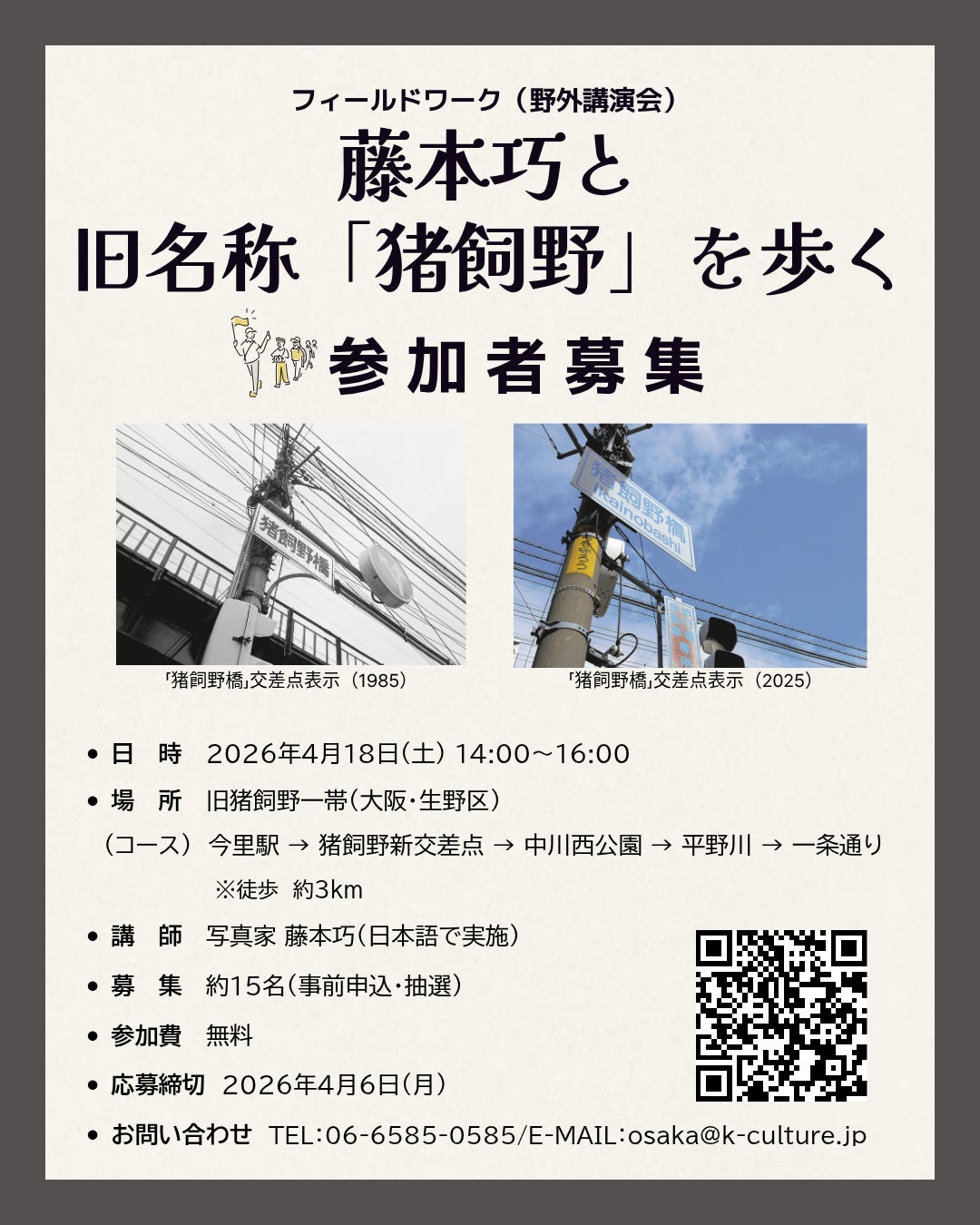
Following this, on April 18th, a fieldwork session titled 'Walking with Takumi Fujimoto Through the Old Place Name 'Ikaino'' will be conducted, where participants will actually stroll through the former Ikaino region with Takumi Fujimoto. This program is designed to trace the remnants of the place name 'Ikaino,' which has disappeared from maps, and to reflect directly on the history etched in that land on-site. Through this program, you will be able to experience not only the landscapes within the photographs but also the ever-changing reality of Ikaino.
Director Kim Hye-soo of the Korean Cultural Center in Osaka stated, 'While previous exhibitions, lectures, and documentary productions related to the diaspora by the Cultural Center have focused on material collection and information dissemination, this time we have added an artistic perspective to try to stereoscopically illuminate the cultural solidarity and exchange flowing within it.' She added, 'We hope that through the fusion of poetry and photography, this will be an opportunity for visitors to feel the history and regional characteristics of Ikaino more vividly and concretely.'