[Activity Report] Towards Drowning Prevention in the Asia-Pacific Region: Micronesia Water Safety Project Completed
The Japan Life Saving Association (JLA) has successfully completed its water safety project in the Federated States of Micronesia, aiming to reduce drowning incidents.
📋 Article Processing Timeline
- 📰 Published: March 31, 2026 at 19:24
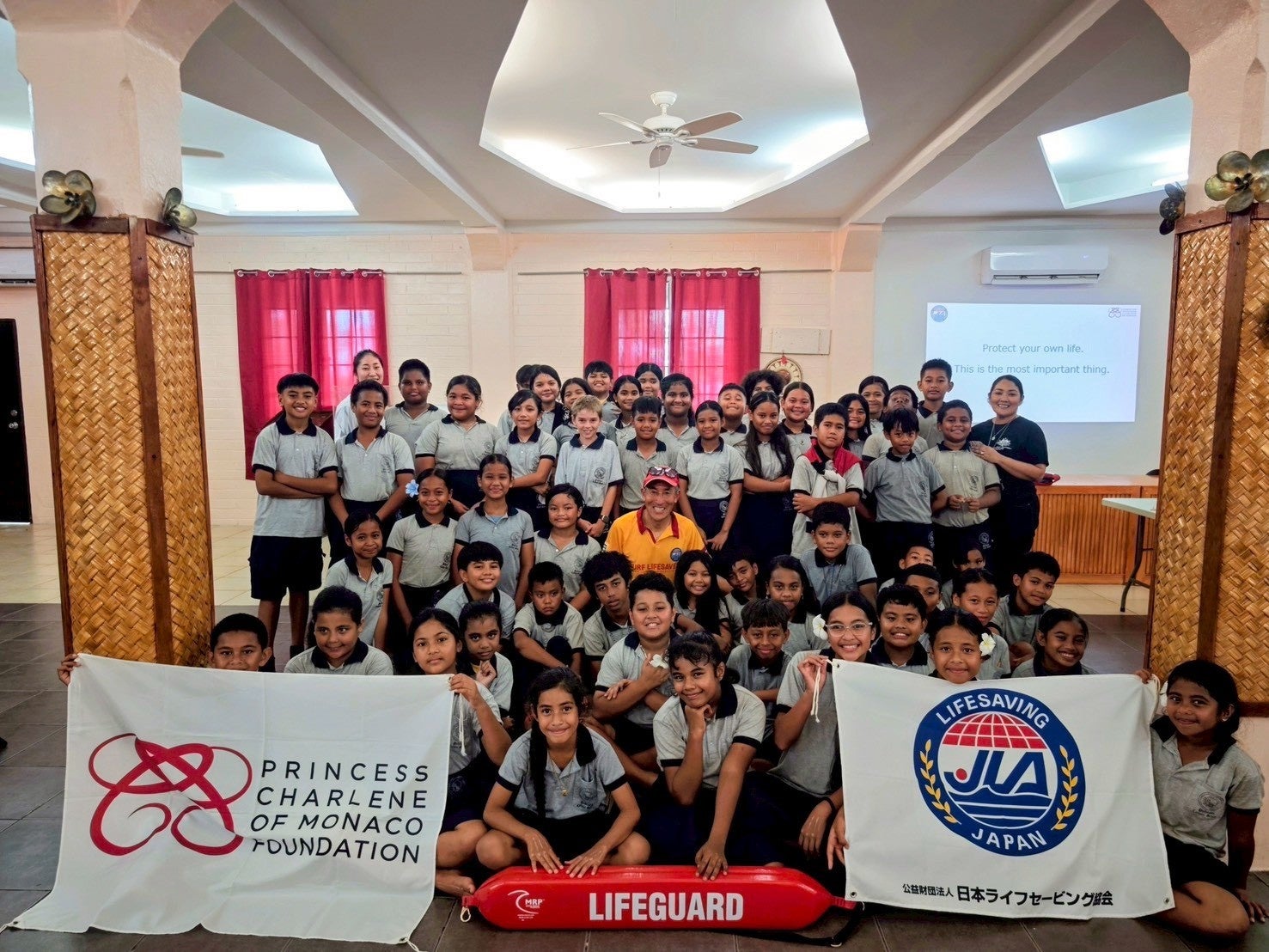
The Japan Life Saving Association (JLA) established the special committee 'Asia-Pacific Water Safety Project Committee' to embody the 'promotion of cooperation with neighboring countries as a member of the Asia-Pacific region' as outlined in the 'JLA Grand Design 2061' and 'Action Plan 2031'. This project, undertaken as a pilot initiative with funding from the Princess Charlene of Monaco Foundation, which primarily focuses on activities within Japan, successfully executed a water safety program in the Federated States of Micronesia.
We are pleased to report that a mission to the local state of Pohnpei was realized, achieving significant results within a tight schedule.
■ Background: The Federated States of Micronesia faces a severe drowning accident rate, with 15.2 deaths per 100,000 people, among the highest in the world.
According to the WHO's 2024 report, the drowning death rate in the Federated States of Micronesia is an alarming 15.2 per 100,000 people (ranking second globally). Drowning is the leading cause of death for children aged 5-14 in the Western Pacific region. Accidents occur not only in oceans and rivers but also in 'water tanks' used for storing household water. To address this critical situation, JLA delivered safety education tailored to the local lifestyle.
■ Main Activities: Instruction for Approximately 220 People Across 5 Educational Institutions
Within the limited four-day stay, we visited three elementary schools, a university, and a swimming club, conducting a total of five training sessions.
Primary Education (3 Elementary Schools):
Approximately 180 children were taught the role of lifeguards, 'floatation techniques,' 'dry rescue' (Talk/Reach/Throw) using equipment, and CPR (Cardiopulmonary Resuscitation). The universally recognized red and yellow lifeguard uniforms were familiar to the children, who participated with great enthusiasm.

Higher Education (The University of Micronesia):
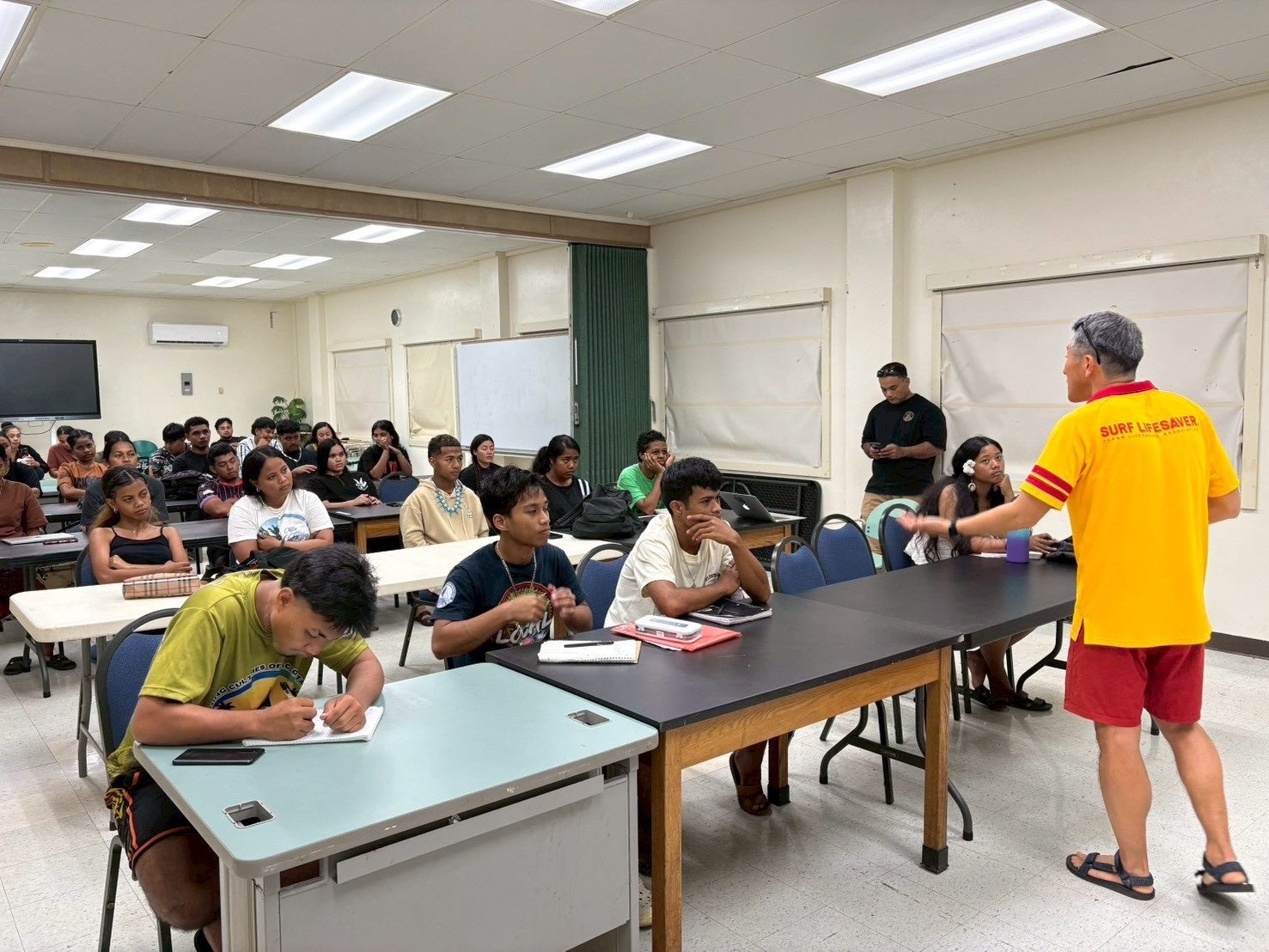
Discussions were held with approximately 30 students majoring in Marine Science and Sociology. We emphasized the importance of 'not jumping in' when witnessing someone drowning and the necessity of carrying flotation devices if one must enter the water.
Specialized Training (Micronesia Swimming Club):
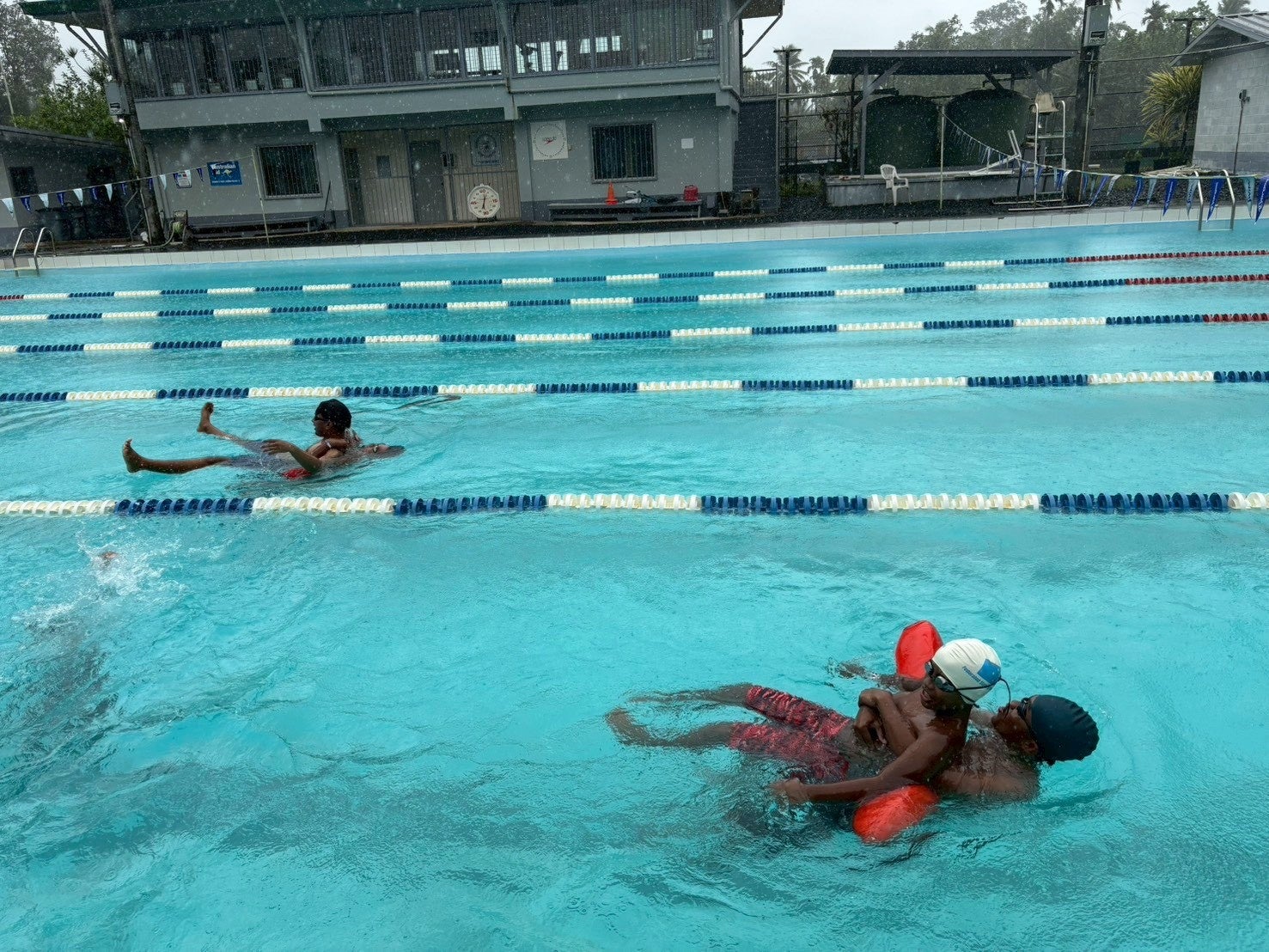
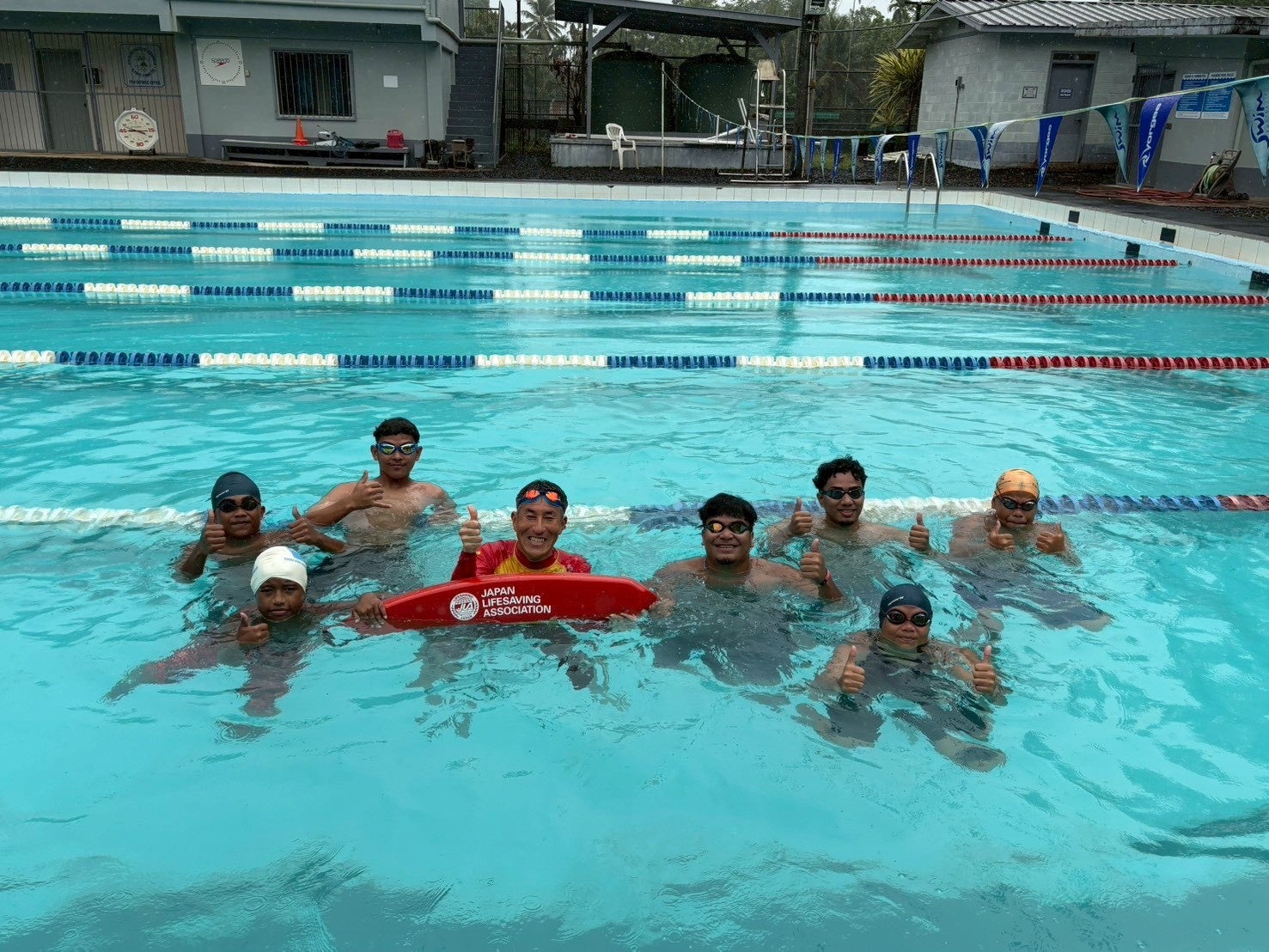
Specialized 'lifeguarding' training was provided to top swimmers aged 12-18. They experienced a wide range of skills, from entering the water, treading water, and diving, to rescues using rescue tubes and transport techniques like the cross-chest carry. Following the training, rescue tubes and life jackets were donated, with the hope of fostering the emergence of 'Micronesia's first lifeguards'.
■ Multifaceted Investigation and Strengthening of Cooperation
In parallel with the training sessions, we visited key local institutions, including the Ministry of Health, the Fire Department, the Red Cross (MRCS), and the JICA Micronesia Office. We gathered information on the current state of drowning accidents, observed emergency response systems, and received advice on future support structures.
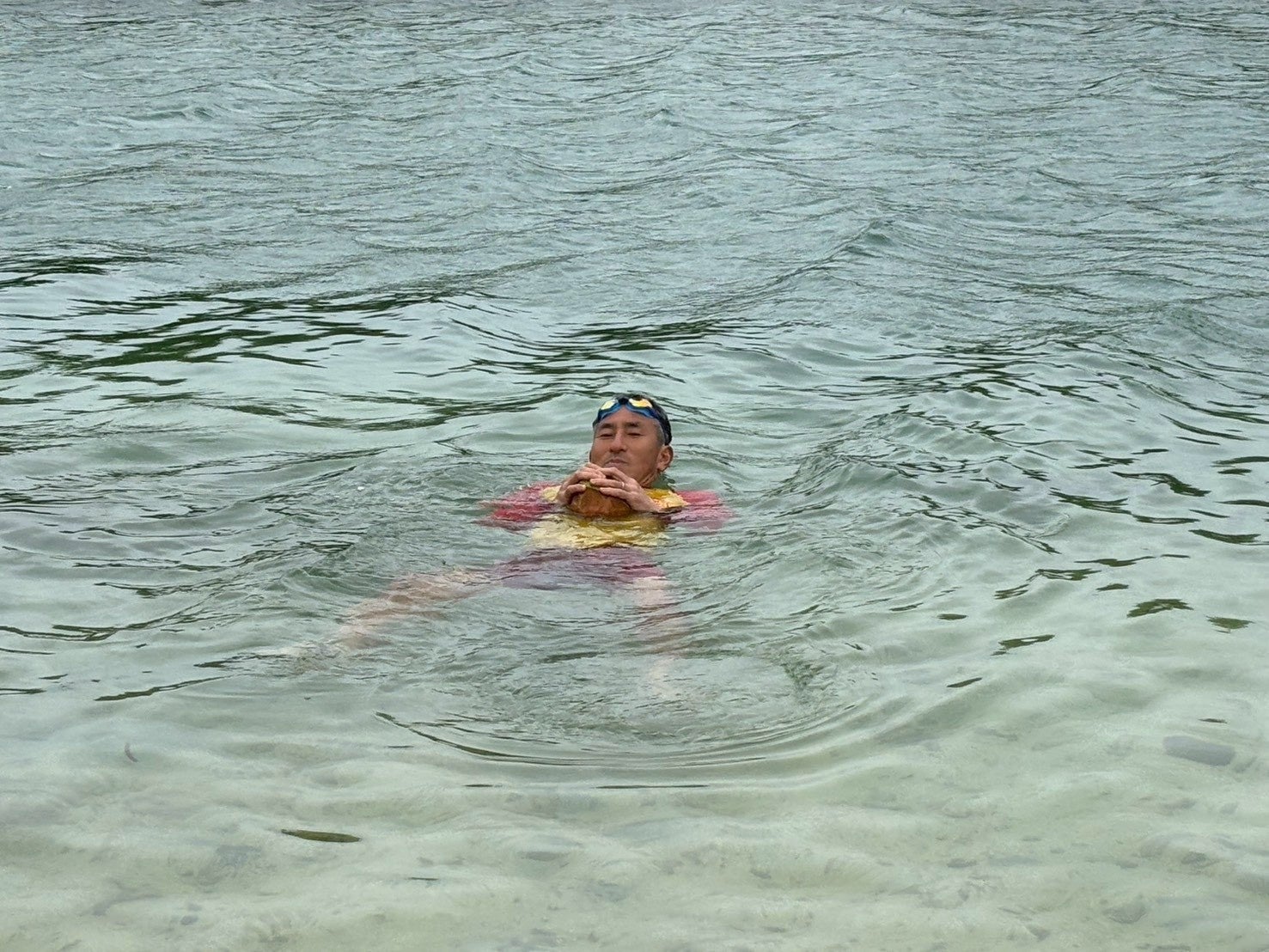
Locally, we had the opportunity to personally experience the practical use of 'coconuts' as flotation devices, a traditional method. We recognized their high utility and believe this knowledge, particularly for the younger generation unfamiliar with using coconuts for buoyancy, is invaluable from a 'self-rescue' perspective.
■ Future Outlook
This mission allowed us to directly feel the heightened safety awareness in the region and reaffirmed the necessity of continuous support. Building upon the achievements made possible by the cooperation of many, including His Excellency John Fritz, Ambassador of the Federated States of Micronesia to Japan, JLA will continue to strive for the widespread adoption of lifesaving culture with the goal of 'zero water accidents' in the Asia-Pacific region.

Japan Life Saving Association
The Japan Life Saving Association (JLA) is an organization dedicated to promoting and developing lifesaving activities, including the conservation of water environments such as coasts and pools, safety guidance, surveillance, and rescue operations. Its objective is to contribute to the safe and comfortable use of waterside environments by the public.
FAQ
What is the main objective of this project?
To improve the high drowning rate in the Federated States of Micronesia and provide water safety education.
How was the project funded?
It was carried out with a grant from the Princess Charlene of Monaco Foundation.
What kind of education was provided?
Instruction on the role of lifeguards, first aid, and rescue methods was given at elementary schools, a university, and a swimming club.