【FY2025 Domestic Demand Trend Survey for Single-Distilled Shochu Conducted】Authentic Shochu and Awamori: Diverse and Free Enjoyment Spreading Among Younger Generations. Straight and Cocktail Drinking Styles Growing Among Those in Their 20s
A survey by the Japan Sake and Shochu Makers Association reveals that diverse ways of enjoying authentic shochu and awamori are spreading among younger generations, with 'straight' and 'cocktail' styles growing among those in their 20s, and images of 'luxury' and 'stylishness' becoming established. Inbound demand at bars is also increasing.
📋 Article Processing Timeline
- 📰 Published: March 31, 2026 at 22:00
- 🔍 Collected: April 1, 2026 at 13:39 (15h 39m after Published)
- 🤖 AI Analyzed: April 17, 2026 at 02:33 (372h 54m after Collected)
The Japan Sake and Shochu Makers Association (hereinafter referred to as "the Association"), which comprises approximately 1,600 alcoholic beverage manufacturers nationwide (sake, authentic shochu/awamori, and hon-mirin), conducted the "Domestic Demand Trend Survey for Single-Distilled Shochu" from November to December 2025. The survey targeted a total of 3,090 men and women aged 20 to 60s and above (309 individuals from each age group) across Japan, as well as 67 bartenders.
This survey revealed that the drinking styles, image, and consumption scenes of authentic shochu and awamori are diversifying, particularly among younger generations.
Summary of Domestic Demand Trend Survey for Single-Distilled Shochu (Authentic Shochu/Awamori)
≪Drinking Styles≫ Soda-mixed is mainstream, with diverse drinking methods also established among those in their 20s
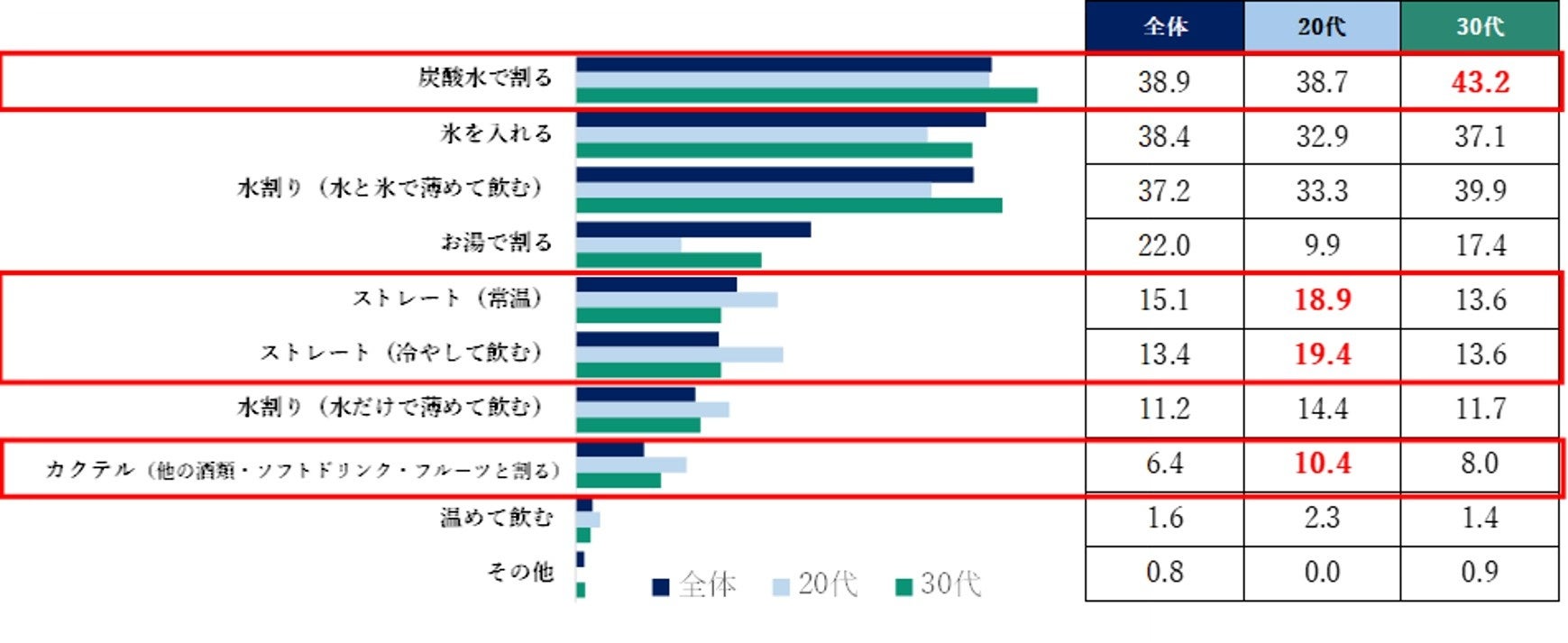
Regarding drinking methods, "mixed with soda water" (38.9%) was the most popular, followed by classic styles such as "on the rocks," "mizuwari (mixed with water)," and "oyuwari (mixed with hot water)." By age group, while "soda-mixed" was highly popular among those in their 30s, the proportion of those in their 20s who drink it "straight" or as a "cocktail" was higher than the overall average, indicating a spread of free and diverse ways to enjoy it.
≪Image≫ In addition to a "traditional" image, "luxury" and "stylish" are also highly rated among younger generations
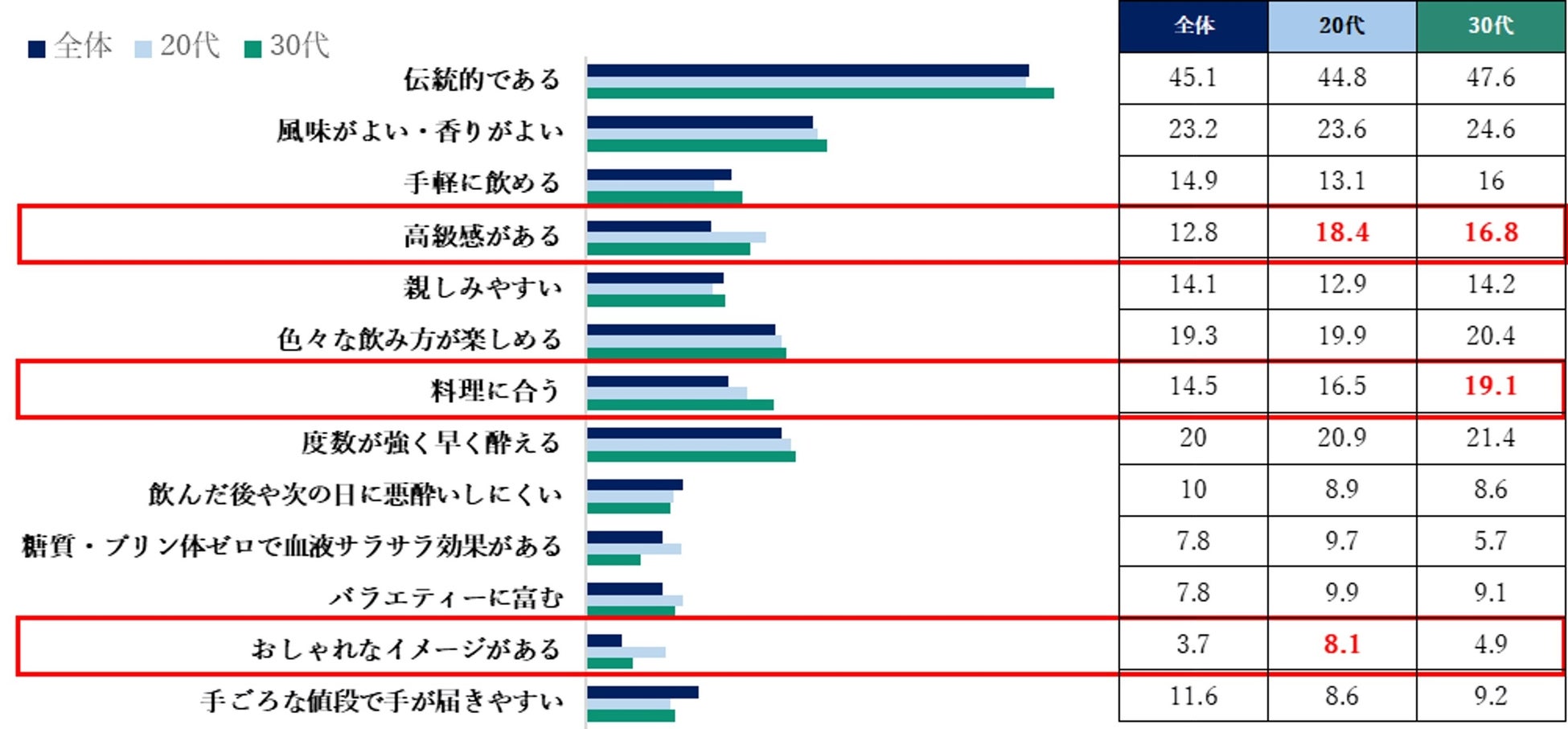
The most common image for authentic shochu and awamori was "traditional," cited by 45.1%. Furthermore, its appeal in terms of "good flavor and aroma" was also highly rated. Among those in their 20s and 30s, images such as "luxurious," "stylish," and "pairs well with food" exceeded the overall average.
This reveals that authentic shochu and awamori are being perceived as "attractive and modern alcoholic beverages" even among younger generations.
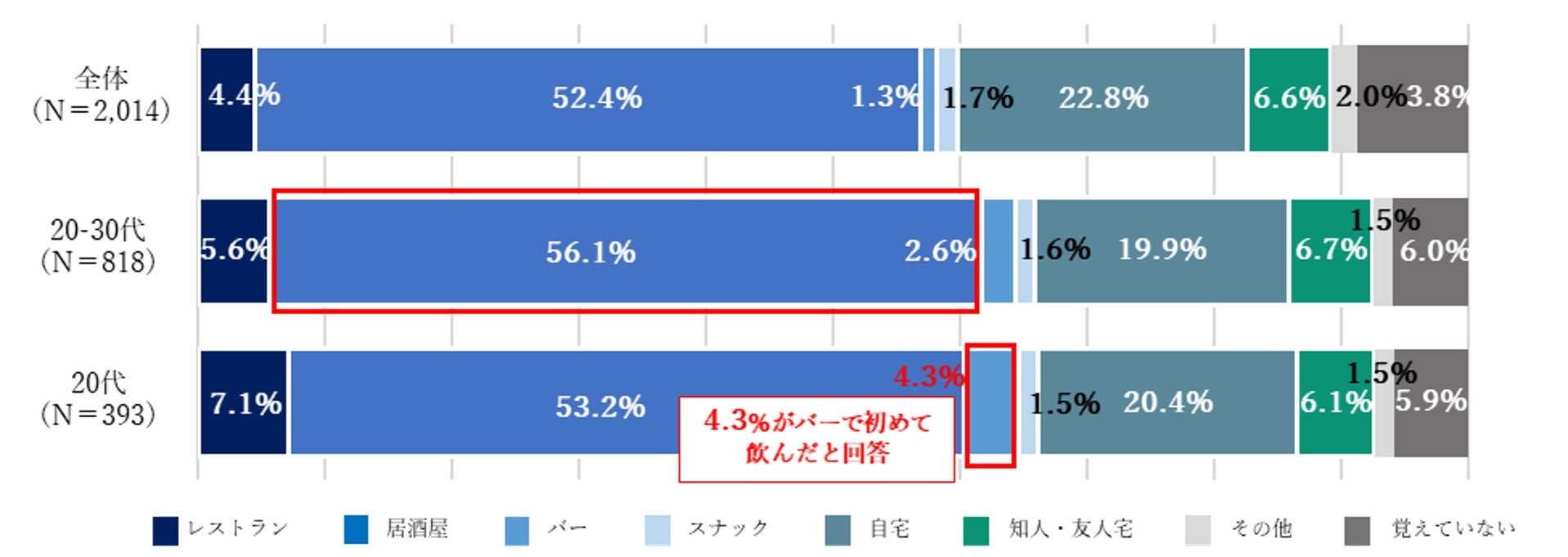
≪Touchpoints≫ First consumption mainly at "Izakaya," with "bars" increasing among those in their 20s
The most common place where people first drank authentic shochu or awamori was an "Izakaya" (52.4%). Among those in their 20s, the proportion who first drank it at a "bar" was higher than the overall average, indicating a diversification of consumption scenes.
≪Expansion in Bars≫ Cocktail offerings widely adopted for inbound tourists
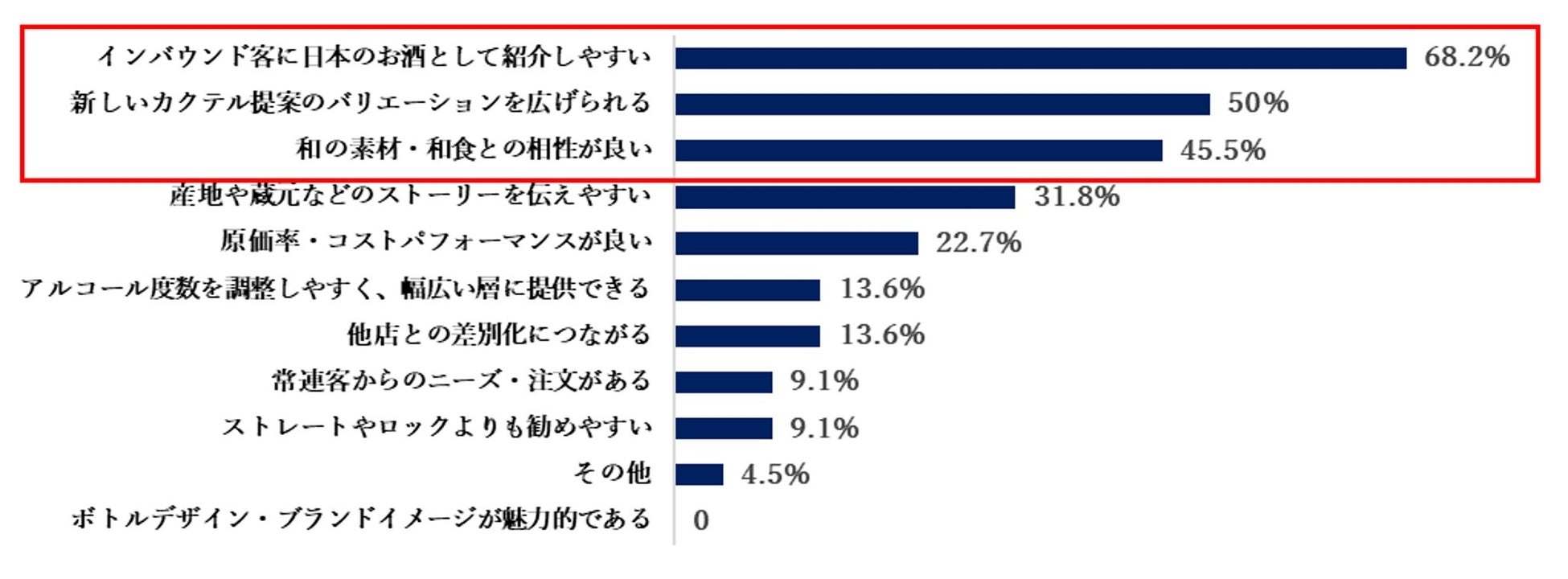
Reasons for offering included "easy to introduce as a Japanese alcoholic beverage to inbound tourists" (68.2%) and "expands variations for new cocktail proposals" (50%). This highlights the attention shochu and awamori are receiving in bars for inbound tourism and as new ingredients for cocktails.
■Survey Outline
R7 Domestic Demand Trend Survey for Single-Distilled Shochu (Survey conducted by Mitsubishi Research Institute)
・Survey Area: All 47 prefectures nationwide
・Target Audience: A total of 3,090 men and women aged 20s to 60s and above, 309 individuals from each age group.
(Conducted among those who "drink alcohol." The number of current drinkers, past drinkers, and non-drinkers of "shochu" was equal for each gender and age group.)
・Survey Period: November 2025
※Due to rounding, the composition ratio of survey results may not always add up to 100%.
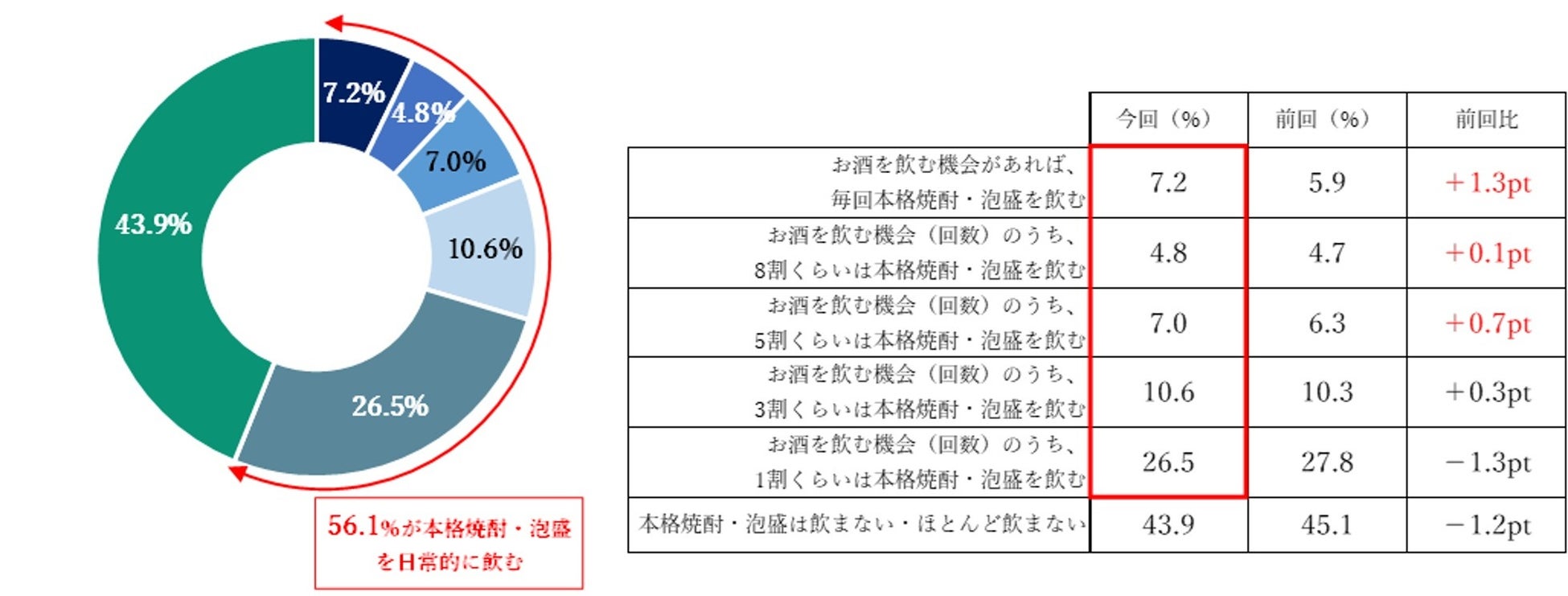
■Over half of respondents regularly consume authentic shochu/awamori
The proportion of respondents who answered that they drink authentic shochu or awamori "50% or more" of their drinking occasions (frequency) showed a slight increase compared to the previous survey (2021 survey), indicating an expansion of frequent drinkers.
Q. Proportion of occasions (frequency) for drinking authentic shochu/awamori out of total drinking occasions
Only respondents who have drunk authentic shochu/awamori answered (N=2,014)
■Expanding opportunities for authentic shochu/awamori consumption among younger generations
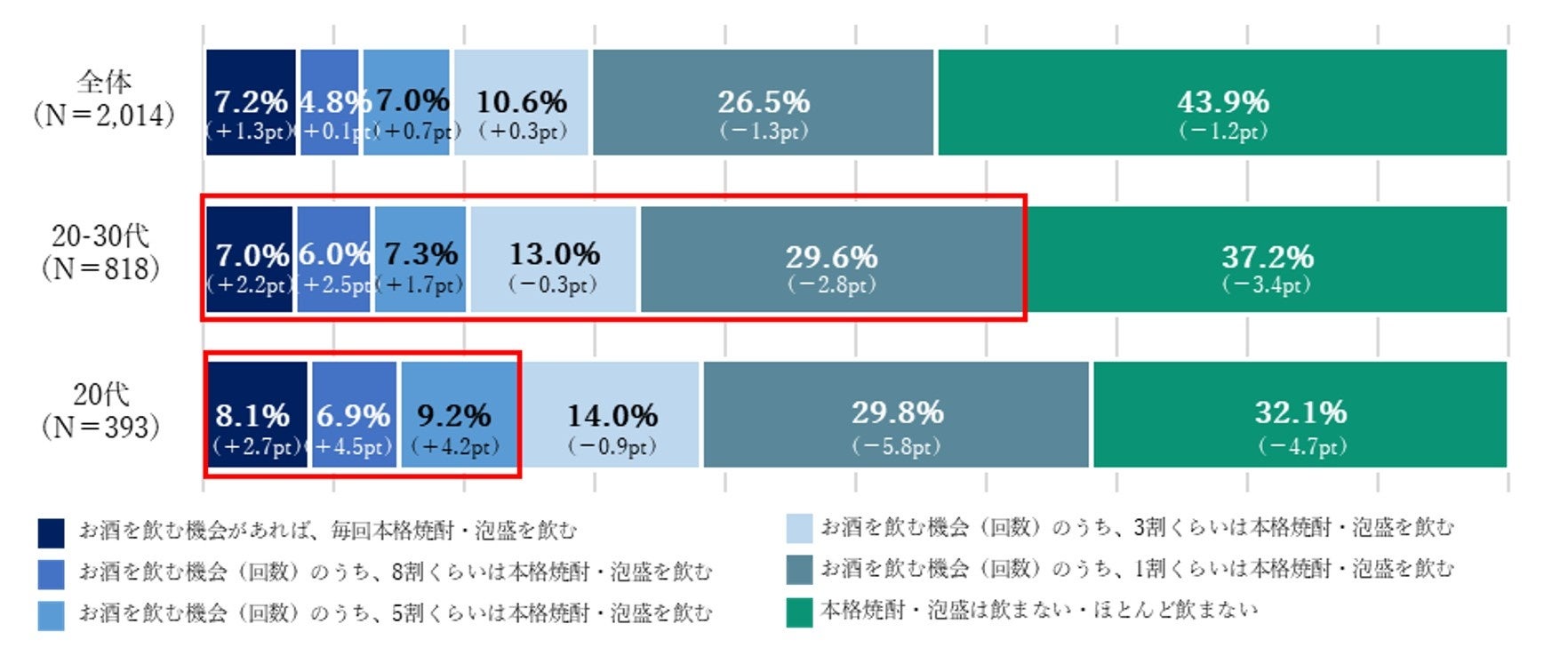
Among those in their 20s-30s, 62.8% answered that they regularly drink authentic shochu or awamori during their drinking occasions, a higher result compared to the overall trend. Particularly among those in their 20s, the proportion who answered that they drink "50% or more" increased to 24.2% from the previous survey, suggesting an expansion of opportunities for authentic shochu/awamori consumption among younger generations.
Q. Proportion of occasions (frequency) for drinking authentic shochu/awamori out of total drinking occasions
Only respondents who have drunk authentic shochu/awamori answered (N=2,014)
■Soda-mixed is mainstream, with increasing support for "straight" and "cocktails" among those in their 20s
The most common way to drink authentic shochu or awamori was "mixed with soda water" (38.9%), followed by "on the rocks" (38.4%), "mizuwari (mixed with water and ice)" (37.2%), and "oyuwari (mixed with hot water)" (22.0%).
By age group, the proportion of "soda-mixed" was higher among those in their 30s compared to the overall trend. Among those in their 20s, the proportion of people who drink it "straight" or as a "cocktail" was higher compared to the overall average.
Q. How to drink authentic shochu/awamori
Only respondents who drink authentic shochu/awamori almost daily to less than once a month (N=958)
■"Traditional" is most common, with "luxury" and "stylish" also prominent among younger generations
The most frequently cited image for authentic shochu and awamori was "traditional," answered by 45.1% of respondents. This was followed by "good flavor/aroma" at 23.2%, revealing that its high palatability and aroma also contribute to its image.
By age group, "traditional" remained the most common image among those in their 20s-30s, similar to the overall trend. However, those in their 20s-30s rated images such as "luxurious," "stylish," and "pairs well with food" above the overall average.
Q. Image of authentic shochu/awamori (Positive image)
All respondents: Multiple answers Overall (N=3,090), 20s (N=618), 30s (N=618)
■"Izakaya" is still most common among those in their 20s-30s, but "bars" are also notable among those in their 20s
The most common place where those in their 20s-30s first drank authentic shochu or awamori was an "Izakaya" at 56.1%, similar to the overall trend. Among those in their 20s, the proportion who first drank it at a "bar" (4.3%) was higher compared to the overall trend.
Q. Scene/Location where authentic shochu/awamori was first consumed
Only respondents who have drunk authentic shochu/awamori answered (N=2,014)
From here, a survey was conducted targeting bartenders
■Survey Outline
R7 Domestic Demand Trend Survey for Single-Distilled Shochu (Survey conducted by Mitsubishi Research Institute)
・Target Audience: Bartenders who are members of the Japan Hotel Bartenders' Association (HBA) and beverage purchasing managers, totaling 67 individuals.
・Survey Period: November 26 to December 31, 2025
■Over 80% of establishments offer it, and cocktail offerings are also widely adopted
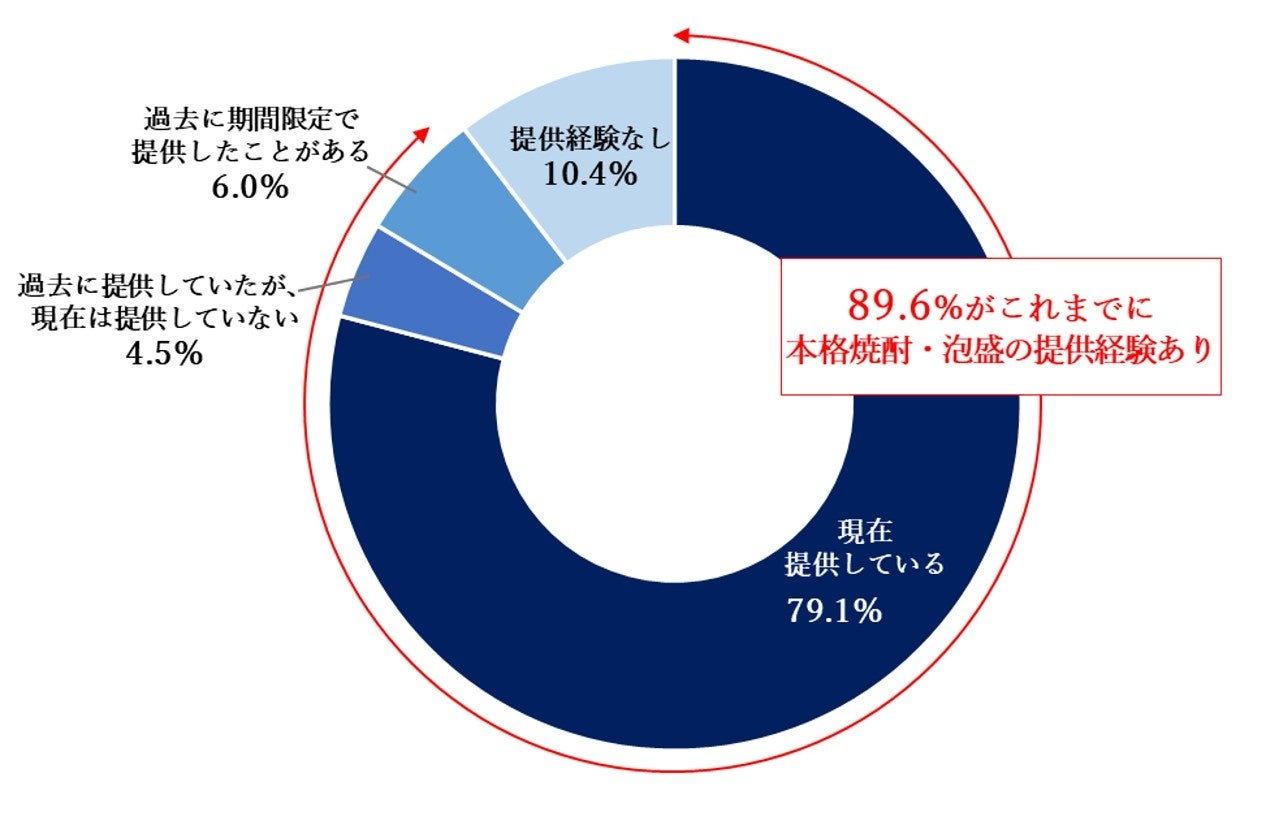
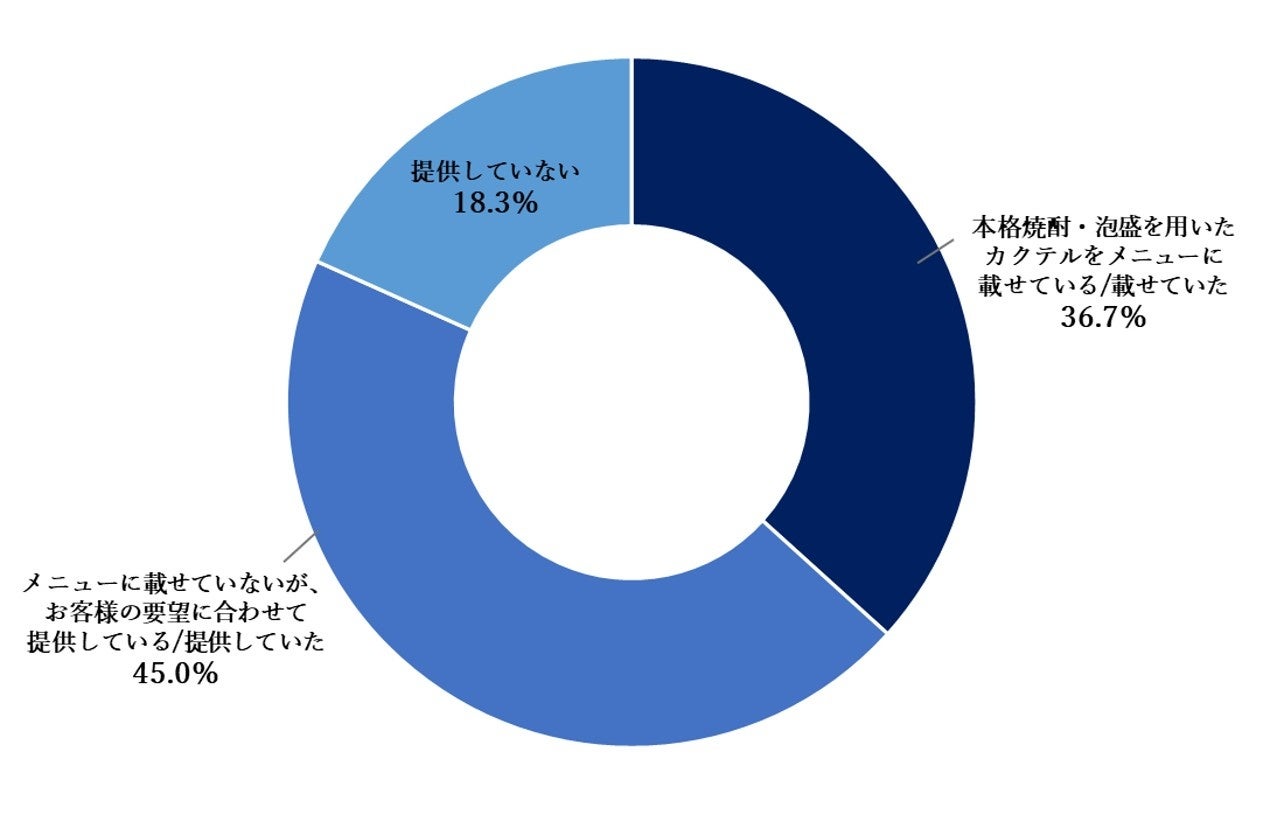
Over 80% of establishments currently offer authentic shochu or awamori, and approximately 90% have experience offering it. Furthermore, 81.7% of establishments have experience offering cocktails made with authentic shochu or awamori, with 45.0% of those not listing them on their menu.
Q. Status of authentic shochu/awamori offerings (N=67)
Q. Status of cocktail offerings using authentic shochu/awamori (N=60)
■"For inbound tourists" is the most common reason for offering. Cocktail development and compatibility with Japanese food are also highly rated.
The most common reason for offering was "easy to introduce to inbound tourists" (68.2%), followed by "expansion of cocktail variations" (50.0%) and "compatibility with Japanese ingredients/Japanese food" (45.5%).
Q. Reasons for offering/having offered cocktails using authentic shochu/awamori (N=22)
The results of this survey indicate that authentic shochu and awamori are changing their image to become "familiar and easy-to-choose alcoholic beverages" even for younger generations. Furthermore, it suggests that new ways of enjoying them are expanding through cocktails and bar scenes.
Initiatives of the Japan Sake and Shochu Makers Association
The Japan Sake and Shochu Makers Association is working to expand consumption scenes and appeal to new values with the aim of stimulating domestic demand for authentic shochu and awamori in Japan. While cherishing the appeal of these traditional alcoholic beverages, the Association aims to penetrate a wider range of demographics by adapting to modern lifestyles and diverse dining scenes.
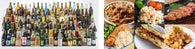
Initiative ① Promotion of authentic shochu/awamori and food pairing
Focusing on their excellent compatibility with a wide range of dishes, including Japanese, Western, and international cuisines, the Association is promoting their value as "sake for meals." Through pairing proposals that leverage their diverse aromas and flavors, they are conveying the new appeal of authentic shochu and awamori that can be enjoyed with food.
・Food Pairing Image
FAQ
What are the popular ways for young people to drink shochu/awamori?
For those in their 20s, drinking it straight or in cocktails is growing, and soda-mixed is also mainstream.
Has the image of shochu/awamori changed?
In addition to its traditional image, younger generations now associate it with luxury, style, and good food pairing.
Why is shochu/awamori increasingly offered at bars?
It's easy to introduce to inbound tourists and expands cocktail variations.