[Nearly 1 Year Since Major Earthquake in Myanmar] Starting with Disaster Relief, Security Deteriorates Amidst Political Instability, Yet Approximately 10,000 Treatments Per Year are Provided. "If we stop medical care even once, patients won't come anymore. That's why we can't stop."
Japan Heart Reports on Medical Activities Following Myanmar Earthquake
📋 Article Processing Timeline
- 📰 Published: March 30, 2026 at 01:05

Japan Heart, a non-profit organization providing international medical assistance originating from Japan (Taito-ku, Tokyo; Chairperson: Haruna Yoshioka), will report on its annual treatment results and the current situation in Myanmar, marking one year since the major earthquake on March 28, 2025.
Japan Heart began its medical support activities at Wattye Charity Hospital in Sagaing Region, Myanmar, at the time of its establishment in 2004. For 20 years, the organization has continued its activities through periods of democratic transition, the COVID-19 pandemic, a coup, and the re-establishment of military rule. On March 28, 2025, a magnitude 7.7 earthquake struck Myanmar.
Wattye Charity Hospital, located in the epicenter area, was significantly impacted, with some wards collapsing and operations being suspended for approximately two months. Following this, hospital operations resumed, starting with the acceptance of inpatients on June 1st and the performance of surgeries on June 2nd. Mobile clinics to various regions were also continued until a request to cease operations was received from the government in August.
Through these activities, in fiscal year 2025, outpatient and mobile clinic visits totaled approximately 9,500 cases, with over 500 surgeries performed, leading to a total of approximately 10,000 treatments (final figures are scheduled for announcement in September 2026). Despite the chaos immediately following the major earthquake and the escalating political instability due to the general election at the end of the year, which posed significant challenges to patient access to medical care, the number of treatments maintained a scale comparable to the previous year.
On the other hand, this was partly influenced by the mobile clinics conducted as disaster relief, which saw many patients. Since the earthquake, there has been a sharp increase in cases where patients are unable to come to the hospital due to the worsening security situation, stating, "We want to go to Japan Heart's hospital, but we cannot due to the poor security." Japan Heart's Myanmar program will strengthen its system to continue delivering free medical care even under these circumstances, including by decentralizing medical bases in the future.
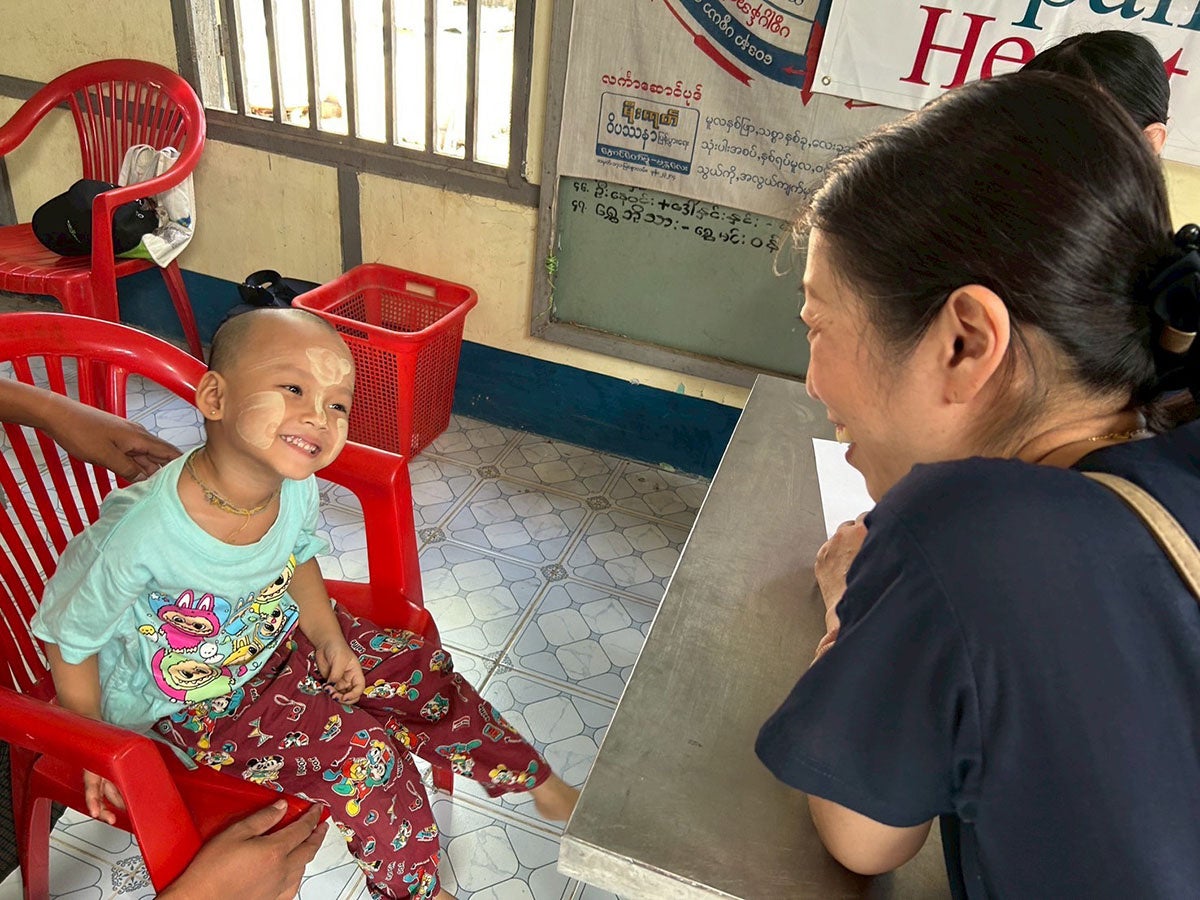
[Comment from Tomoko Kono (20 years stationed in Myanmar, Head of Myanmar Medical Operations, Nurse)]
Amidst the instability of the entire country, we first ensure the safety of our staff, including doctors and nurses on the ground, and then continuously think and devise ways to deliver medical care to those who cannot access it. If we stop medical care even once, there is a high possibility that patients will not come anymore, so we cannot afford to stop medical care. While carefully observing the situation, we believe that "continuation of activities" is paramount moving forward.
The people of Myanmar have a very strong sense of... (The original text is cut off here.)