Conclusion of an Industry-Academia Collaboration Agreement with Nagoya University
Nagoya University and JA Aichi Shinren have signed an industry-academia collaboration agreement to promote the development of regional agriculture.
📋 Article Processing Timeline
- 📰 Published: March 29, 2026 at 00:22
- 🤖 AI Analyzed: May 26, 2026 at 21:27 (1413h 4m after Published)
March 13, 2026
To the Press
Tokai National Higher Education and Research System, Nagoya University
Aichi Prefecture Credit Federation of Agricultural Cooperatives (JA Aichi Shinren)
The Tokai National Higher Education and Research System, Nagoya University (hereinafter "Nagoya University") and the Aichi Prefecture Credit Federation of Agricultural Cooperatives (hereinafter "JA Aichi Shinren") signed an "Industry-Academia Collaboration Agreement" today.
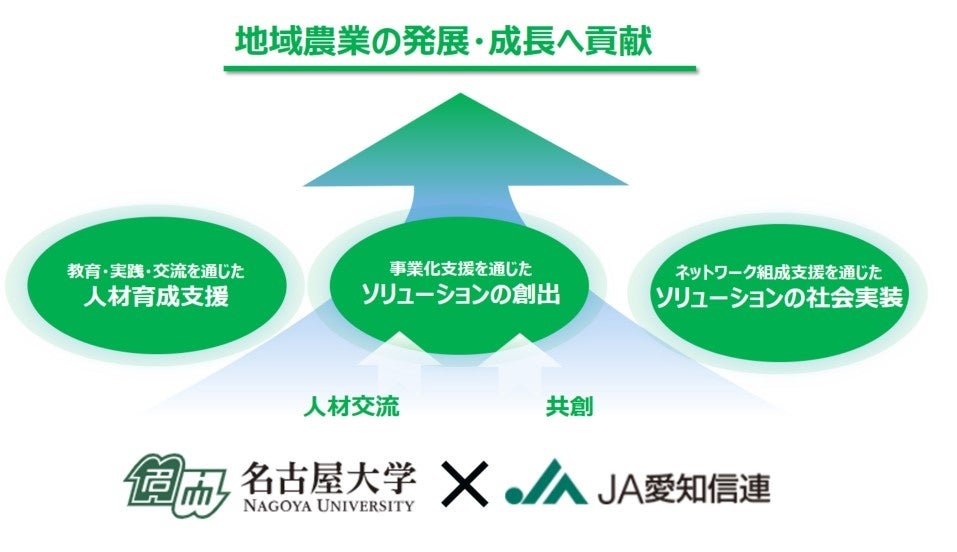
Through this agreement, both parties will collaborate on research, information exchange, and personnel exchanges. The goal is to consistently promote everything from human resource development that contributes to solving agricultural issues to the creation and social implementation of solutions, thereby contributing to the development and growth of regional agriculture.

1. Purpose of the Partnership
With the aim of contributing to innovation in the food and agriculture sector and solving regional agricultural issues, we will work on supporting human resource development for the future of agriculture, supporting startups, and building an industry-academia collaboration network in the Tokai region. JA Aichi Shinren will act as a "bridge," connecting the high research capabilities of Nagoya University with the implementation and commercialization capabilities of the nationwide JA Group to promote co-creation and contribute to the realization of sustainable regional agriculture.
2. Specific Initiatives for Industry-Academia Collaboration
(1) Support for human resource development through education, practice, and exchange
We aim to increase the number of students motivated to solve agricultural issues and produce the next generation of talent. We will provide step-by-step support from sparking interest to acquiring skills through education, practice, and exchange.
(2) Creation of solutions through commercialization support
We will support the creation and growth of startups that possess solutions to agricultural issues and could become future partners. We will provide seamless support from discovery and incubation to scaling.
(3) Social implementation of solutions through network formation support
We will contribute to a mechanism for solving problems with an eye toward implementation by supporting the formation of networks that cross regional and industry boundaries, where industry, academia, and government collaborate on agricultural issues.
End