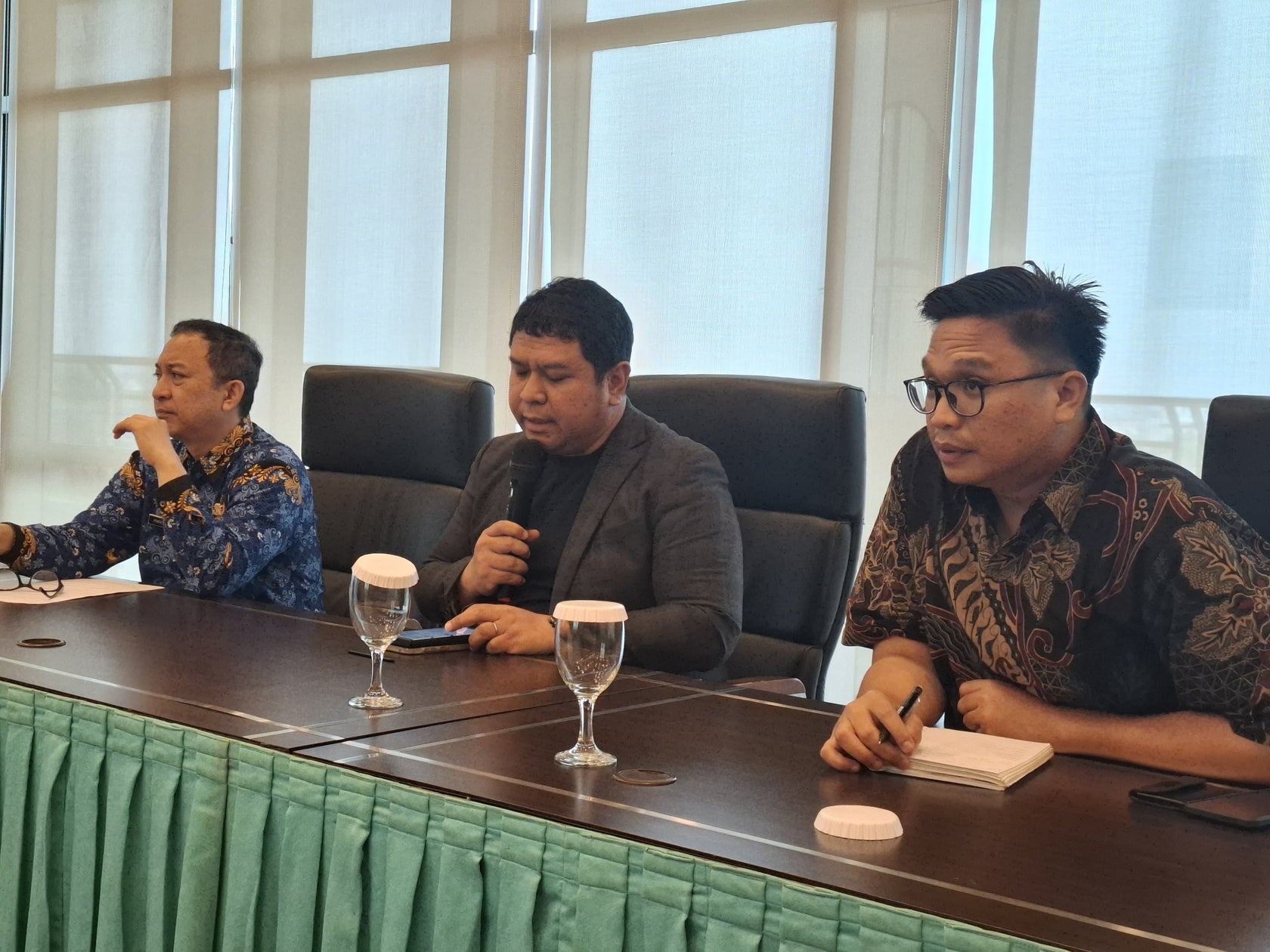
Indonesia Soken Research Institute Co., Ltd. (Head Office: Shibuya-ku, Tokyo; President & CEO: Albertus Prasetyo Heri Nugroho; hereinafter "Indonesia Soken") has reached a collaborative agreement with three prominent local governments in Indonesia – West Nusa Tenggara (NTB) Province, South Tangerang City, and Buton Regency – to prevent early turnover among technical intern trainees. This agreement, finalized in late June 2026, aims to establish a new human resource infrastructure that allows Japanese companies to confidently accept long-term working personnel by eliminating the space for malicious brokers through the combined use of public authority and public education from local governments.
Background: The Management Challenge of "Hiring Them Only to See Them Leave Immediately" for Japanese Companies
Labor shortages are becoming increasingly severe in all sectors across Japan, including care work, construction, transportation, manufacturing, and fishery processing. As a solution, expectations for Indonesian personnel, including those under the Technical Intern Training Program, are higher than ever before.
On the other hand, there is a constant stream of complaints from managers and HR personnel at accepting companies, such as, "Despite incurring significant recruitment costs, we lost contact with them within months of their arrival," and "They were approached by an unknown company via social media and suddenly offered their resignation."
Indonesia Soken aims to solve these issues structurally by providing Japanese companies with a system that combines the public authority and public education of local governments, going beyond mere business partnerships with dispatch organizations.
Structural Factors of Early Turnover—The Vicious Cycle Created by Malicious Brokers
Early turnover of international workers from Indonesia (PMI) is not an accidental occurrence but has organizational and structural background.
The biggest factor is the existence of malicious intermediary brokers deeply rooted in the local community. By overcharging job seekers for the various expenses required for travel to Japan (training fees, document processing fees, travel expenses, etc.) and burdening them with high-interest informal loans, job seekers are constantly under psychological pressure to "find a workplace with even slightly better conditions."
This is exploited by recruitment brokers who operate covertly through social media, enticing personnel who have only recently settled in to switch jobs one after another with promises like "higher monthly salary" or "easier work."
As a result, accepting companies repeatedly suffer losses in recruitment costs, and workplaces cannot escape chronic staff shortages. Indonesia Soken aims to change this structure itself and has moved to direct negotiations with local governments in Indonesia.
Details of Collaboration with Three Indonesian Municipalities—Local Governments as "Guardians of Human Resources"
West Nusa Tenggara (NTB) Province—Zero Mismatches with "Reverse-Calculated Interviews" from the Recruitment Stage
In late June 2026, Indonesia Soken held consultations with responsible officials from various departments of the West Nusa Tenggara Provincial Government.
West Nusa Tenggara Province is one of Indonesia's leading regions for producing international workers. However, in previous recruitment processes, there were cases where selection was conducted without regard to the actual conditions of the accepting companies, simply by gathering local talent for interviews.
In the newly agreed model, the job requirements and corporate culture sought by Japanese companies will be synchronized with the provincial government-led recruitment network from the initial stages of recruitment. Before the interview, the local government will screen the candidate's personality and career aspirations. This will prevent mismatches after entry into Japan, allowing Japanese companies to focus on acceptance preparations with greater peace of mind.
South Tangerang City—"Zero-Cost Travel" and Career Roadmaps to Specified Skilled Worker Category 2 and Certified Care Worker
On June 18, 2026, Mr. Syarifudin Saafa, the Deputy Regent of Buton Regency, visited the Indonesia Soken headquarters in Jakarta.
Buton Regency has a long-standing tradition of a thriving fishery industry and produces many young people with physical strength and diligence. Its most distinctive feature is the incorporation of Japanese language education into the public education curriculum of high schools and vocational high schools. In cooperation with SOKEN ACADEMY, with whom Indonesia Soken collaborates, a phased educational roadmap is being designed as follows:
During high school: JLPT N5 / JFT-Basic A1 Clear
After graduation (in collaboration with SOKEN ACADEMY): Achieve JFT-Basic A2
While enrolled in LPK (Vocational Training Institution): Acquire N3 level proficiency and industry-specific Japanese necessary to be immediately effective in the workplace.
Furthermore, a characteristic is that they have already acquired the following industry-specific specialized Japanese upon entry into Japan:
Specialized Japanese for the fishery and fishing industry sector
Specialized Japanese for the construction, rebar, and formwork sectors
Specialized Japanese for the care work sector
Specialized Japanese for the logistics and transportation (driver) sector (planned for phased expansion)
In many general dispatch organizations, individuals learn Japanese on-site after arrival, which often places an educational burden on the workplace. However, personnel from Buton Regency are assigned with practical Japanese skills usable from the time of entry, simultaneously reducing the educational burden and enabling them to become productive quickly.
Additionally, discussions are underway with the Buton Regency government on specific system designs for administrative mechanisms that continuously track the employment status of personnel dispatched by the local government, suppressing casual job changes while supporting their contributions to Japanese accepting companies.
Differences from Traditional Dispatch Models
There is a significant difference in the design philosophy between the traditional dispatch model and the model developed by Indonesia Soken when accepting personnel from Indonesia.
Regarding broker involvement, in the traditional model, intermediary brokers were involved, and the heavy debt incurred by job seekers directly triggered disappearances and job changes. In the Indonesia Soken model, brokers are structurally eliminated by the leadership of local governments.
Regarding Japanese language proficiency before entry, many traditional models allowed entry at a conversational level (N4 or below), leading to cases where instructions on-site were not fully understood. In the Indonesia Soken model, individuals acquire N3 level proficiency equivalent and industry-specific Japanese before entry, enabling them to function as productive members from their first day of deployment.
Regarding post-entry support systems, traditional models often ended with dispatch, and there was no tracking at the municipal level. In the Indonesia Soken model, local governments continuously track personnel and administratively suppress casual job hopping.
Regarding career vision, many job seekers in the traditional model had short-term aspirations, whereas the Indonesia Soken model selects only individuals with long-term employment motivation, looking ahead to Specified Skilled Worker Category 2, Certified Care Worker, and post-return careers.
Background to Three Municipalities Moving to Collaborate in Just Two Weeks
It is unprecedented for three prominent municipalities in Indonesia to decide to collaborate with Indonesia Soken and establish concrete schemes in such a short period of just two weeks.
This is underpinned by the trust relationship that Indonesia Soken has built over time with government agencies and local authorities. By placing government relations (lobbying) in Indonesia at the core of its business and deeply understanding the decision-making processes of local governments, the realization of this agreement has been achieved. In response to the question, "Why do Indonesian personnel not stay in Japan?" we will present a fundamental solution—the reform of the dispatch structure itself—rather than superficial symptomatic treatment.
Seeking Partner Companies and Accepting Companies
Indonesia Soken is currently recruiting "partner companies" and "accepting companies" who wish to utilize this human resource supply infrastructure. For Japanese local companies facing a crisis of survival due to labor shortages, such as those in Hokkaido and Tokushima Prefecture, a clean human resource route officially recognized by local governments is an effective option for recruiting foreign personnel.
For accepting companies (in sectors such as care work, construction, transportation, logistics, manufacturing, fishery processing, etc.), if you are struggling with issues like "they leave immediately after being hired" or "we are reaching our limits with on-site Japanese language education," please consult Indonesia Soken. We will provide details on a clean recruitment route directly linked with local governments.
For HR agents, support organizations, and supervisory organizations, if you are concerned about "the lack of transparency in local recruitment routes and compliance issues" or "seeking a stable route to secure excellent personnel," please consult us. Indonesia Soken's network will be a valuable asset for your organization as well.
As this scheme will be operated within limited quotas with each local government, priority will be given to companies that consider it early. Moving beyond the era of "dispatch and done," we invite you to contact Indonesia Soken casually to discuss securing "personnel who stay long-term and build the future together" that Japanese companies truly seek, in collaboration with Indonesian local governments.
https://www.indonesiasoken.com/
FACT BOX
- Source: PR TIMES
- Category: ビジネス
- Organizations: SOKEN ACADEMY