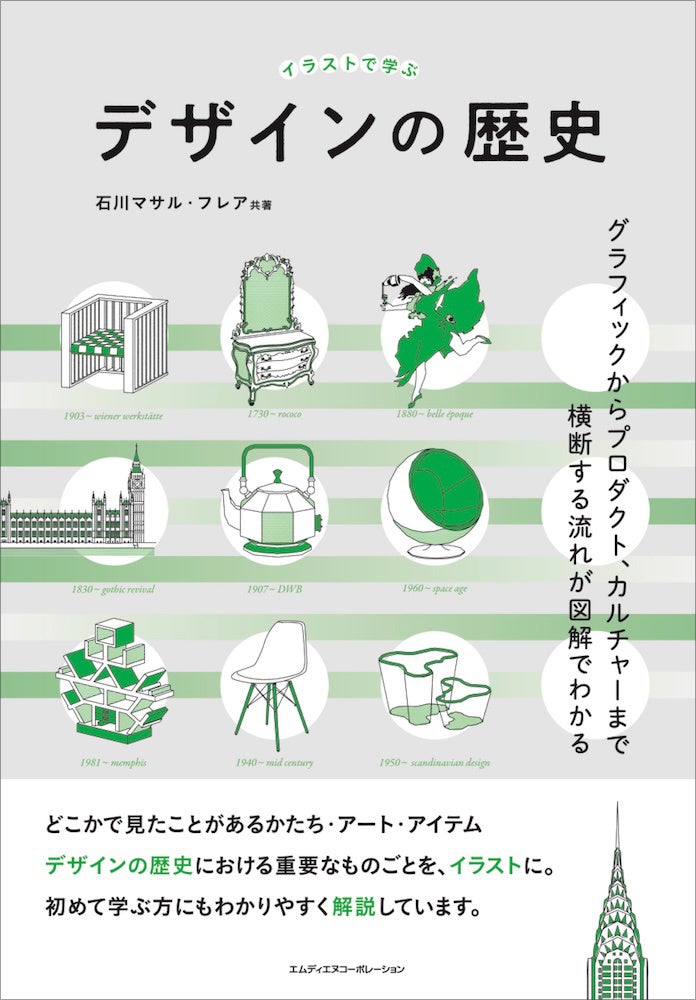
Impress集團旗下負責設計領域媒體業務的株式會社MdN(總公司:東京都千代田區,代表取締役社長:小川亨,簡稱:MdN)已發售《圖解設計史:橫跨平面、產品到文化的脈絡全覽》,這是一本能讓您透過視覺直觀理解設計史的書籍。
《圖解設計史:橫跨平面、產品到文化的脈絡全覽》
https://books.mdn.co.jp/books/3225303039/
本書大幅更新並補充了2015年出版的《視覺化設計史》中的最新主題,使其成為一本更容易學習設計歷史的書籍。透過將代表性作品與設計師為中心,共80個重要主題視覺化,讀者能夠一眼掌握其氛圍與概念。本書不僅涵蓋平面設計,更橫跨產品、美術、運動、次文化等領域,讓您能直觀地理解設計史。對於初學者而言易於入門,同時也適合想重新學習設計史的讀者。
此外,本書還收錄了許多21世紀以後出現的設計術語。對於僅從文字難以理解的IT領域和抽象概念,透過符號化的插畫將有助於理解。本書讓您能夠廣泛地概覽從古代至今的設計史。
〈推薦給這樣的您〉
・首次學習設計史的讀者
・想了解各歷史年代設計與文化之間關係的讀者
・想認識各時代代表性作品與設計師的讀者
〈本書內容〉
以插畫形式,依年代介紹設計史上應知的80個重要事項。
史前~1200年代
古埃及樣式/古希臘樣式/古羅馬樣式/拜占庭樣式/羅曼式樣
1200~1800年代
哥德式/文藝復興/古騰堡/巴洛克/洛可可
1800~1950年代
工藝美術運動/新藝術運動/立體主義/
俄羅斯前衛藝術/包浩斯/現代主義…等
1950~2000年代
有機設計/1964年東京奧運/生態設計/
後現代主義/無設計/通用設計…等
2000年代以後
UI/UX設計/社會設計/扁平化設計/傳播
設計/創用CC授權…等
常見問題
What is the main purpose of the book 'Learning Design History Through Illustrations'?
The main purpose of the book is to provide an intuitive and visual understanding of design history, covering trends from graphic design to products and culture, making it accessible for beginners and those looking to refresh their knowledge.
What makes this book different from previous publications on design history?
This book significantly updates and expands upon the 2015 publication 'Visualizing Design History' by incorporating the latest topics and using a wealth of illustrations and diagrams to explain 80 key design history points visually.
Who is the target audience for this book?
The book is recommended for individuals learning design history for the first time, those interested in the relationship between design and culture across different eras, and anyone wanting to learn about key works and designers throughout history.
Does the book cover modern and contemporary design concepts?
Yes, the book includes numerous design terms that emerged since the 21st century, such as UI/UX design, social design, and flat design, using illustrations to help understand abstract concepts.
What historical periods and design movements are covered in the book?
The book covers design history chronologically, from ancient styles (Egyptian, Greek, Roman) through major movements like Gothic, Renaissance, Baroque, Arts and Crafts, Art Nouveau, Bauhaus, Modernism, Postmodernism, and contemporary trends like UI/UX and social design.