IDP Power Lunch 'The Man Called a War Criminal ~How to Rebuild from Failure~' Event Report
Identity Partners Inc. hosted its 3rd 'IDP Power Lunch' online study session, featuring fencer Toshiya Saito, who discussed overcoming failure. Saito, who faced intense public criticism after the Tokyo Olympics and was not selected for the Paris Olympics despite his team winning gold, shared his mindset on accepting failure and rebuilding. The report highlights his journey from being labeled a 'war criminal' to winning World Cup medals, emphasizing the importance of accepting setbacks, viewing them as evidence of challenge, and fostering strong communication with mentors.
📋 Article Processing Timeline
- 📰 Published: April 2, 2026 at 21:00
- 🔍 Collected: April 2, 2026 at 13:35
- 🤖 AI Analyzed: April 17, 2026 at 19:46 (366h 11m after Collected)
Identity Partners Inc. (Headquarters: Shibuya-ku, Tokyo; Representative Director: Kosuke Nakano) held the 3rd 'IDP Power Lunch' (online study session) titled 'The Man Called a War Criminal ~How to Rebuild from Failure~' on Thursday, March 26, 2026.

The 'IDP Power Lunch' is an online study session launched with the aim of creating a space where 'business professionals can hear the true thoughts of leading experts in 50 minutes during lunchtime.' It invites experts from various fields to provide business professionals with the opportunity to directly access essential knowledge.
For the third session, we invited Toshiya Saito, a fencer who participated in the Tokyo Olympics, to speak about 'How to Rebuild from Failure.'
This report condenses and introduces insights from Saito's mindset, which allowed him to overcome unimaginable failures and backlash and return to the world stage, offering tips that business professionals can apply starting tomorrow.
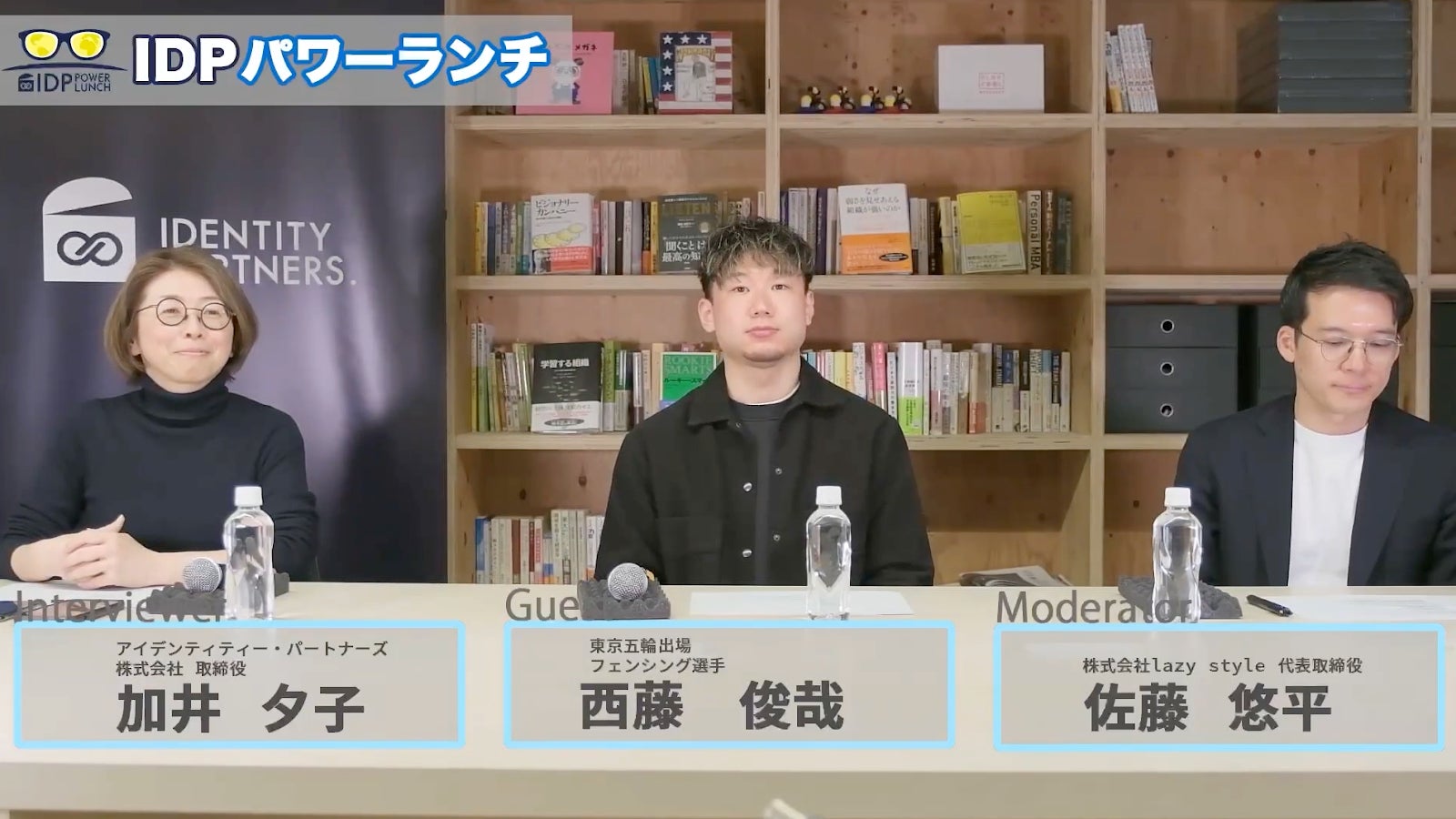
The Day "War Criminal" Trended
Saito looks back at 'that day' in 2021: the men's foil team semifinals at the Tokyo Olympics.
On Sunday, in the televised semifinals, Saito suffered a result of 'minus 13 points by himself.'
In a team competition where the first to 45 points wins in a relay format, this loss of points had a significant impact. The team lost both the semifinals and the 3rd-place playoff, finishing the tournament in 4th place.
After the match, when he returned to his phone, which he had left on the massage bed in the locker room, he immediately noticed something was wrong.
"When I got back, my phone was buzzing too much. I wondered what it was, and then I saw that the notification count on my SNS account was at its maximum, like '99+.' When I looked, there were a ton of defamatory DMs."
Furthermore, when his teammates checked X (formerly Twitter), 'Toshiya Saito War Criminal' was trending. Despite fencing being a sport where even gold-medal-level performances rarely become a big topic, at that moment, attention suddenly converged on him in the worst possible way.
"I felt so sorry for the team. I think that was probably my lowest point."
What further compounded his distress was the Paris Olympics three years later. Three of his Tokyo Olympic teammates were selected for the same team, but he alone was left out. And that team went on to win a gold medal in Paris.
"I was frustrated that I couldn't participate, and while I was happy that my teammates achieved results, I was also frustrated, which made me very depressed."
How did Saito, who experienced two major lows—the 'war criminal' backlash in Tokyo and non-selection for Paris—manage to bounce back? His story is filled with profound insights for business professionals.
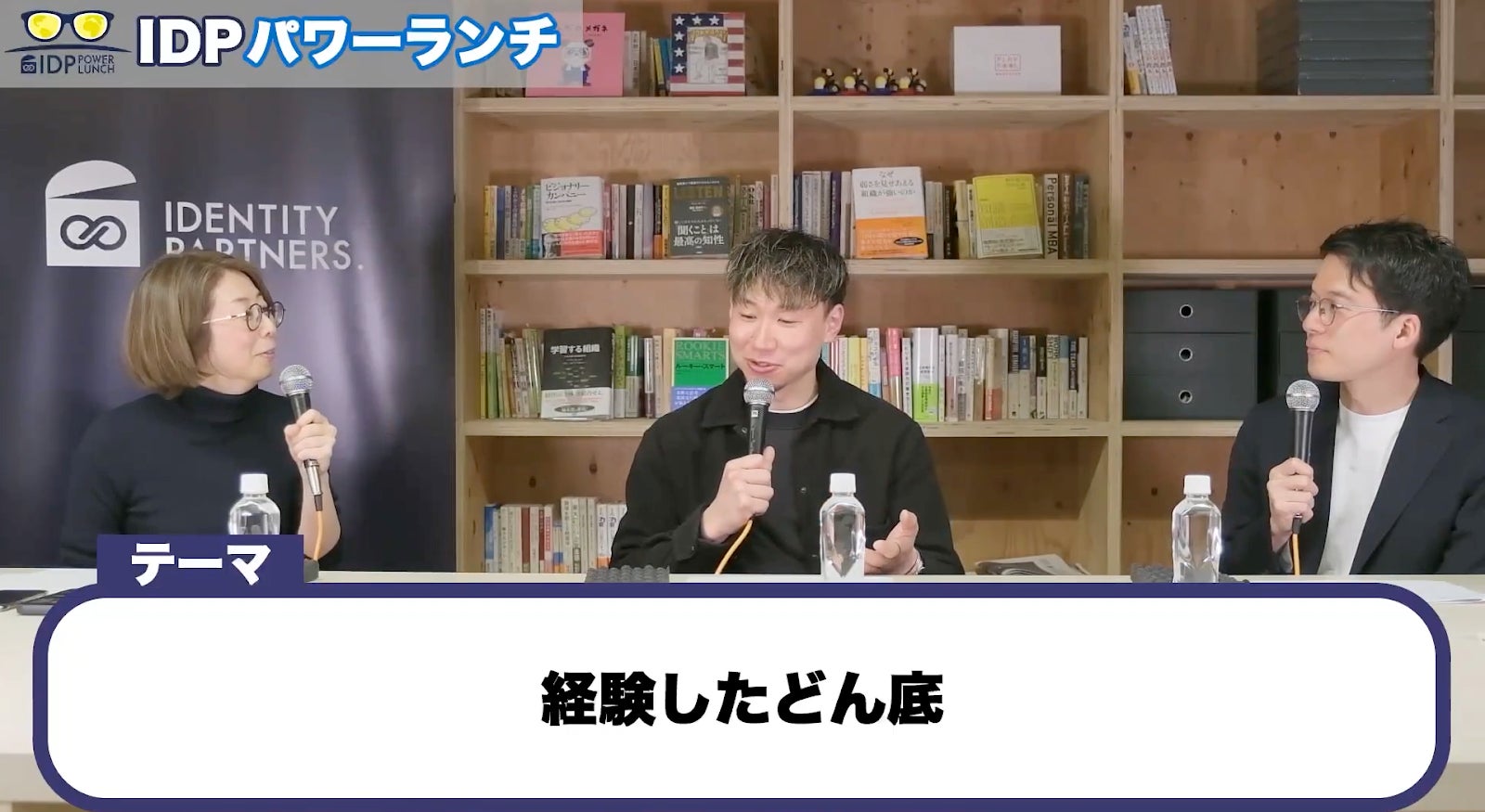
Accepting Failure Opens the Door to the Next Step
Saito cited conversations with his current coach as a turning point in his recovery.
His coach repeatedly emphasized the importance of 'accepting failure.'
"Sometimes you lose a point. That's the nature of the sport. So, instead of panicking and thinking, 'Why did I just lose a point?', you immediately switch to, 'Okay, my opponent was good, but what should I do next?'"
While this refers to the scoring system in fencing, it's a concept that can be applied to business failures. There's a significant difference between ignoring the fact of failure and accepting it to move forward.
"You want to turn a blind eye to the fact that you lost or failed, but by accepting it, you feel like you can immediately move on to the next thing. So, I think accepting is very important."
Saito further spoke about the importance of reframing failure as 'proof of challenge.'
"It's important to focus not on the fact that you failed, but on the fact that you challenged. I believe that challenging and failing leads to the next step. It's important to praise yourself for having challenged."
"If you fear failure, failure will happen."
Among Saito's words, this one phrase was particularly striking:
"If you fear failure, you will fail. Failure will happen."
In a match situation, the moment you start thinking, "What if I lose this match?" or "What if I can't win here?" before the match, you lose focus on the present. Your attention shifts to the unknown, and you neglect the preparations you should be making.
This also applies to business. The more you think, "What if I fail?" before a presentation or negotiation, the sloppier your immediate preparations become. The best defense is not anxiety about the outcome, but concentration on what you can do now.
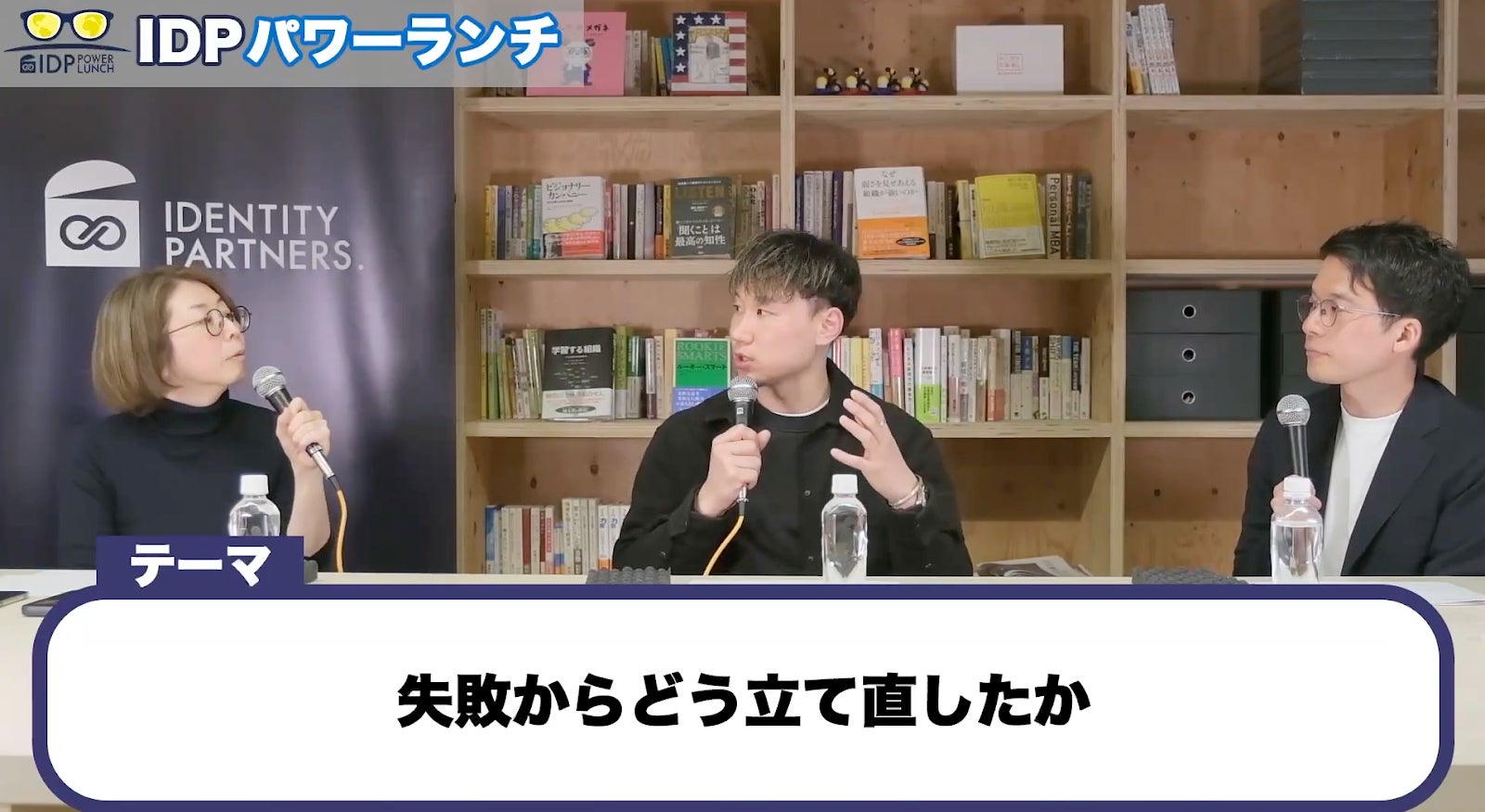
The "Talking a Lot" Relationship with the Coach Creates Strength
A question from a participant that particularly sparked discussion was about the relationship with his coach.
"I talk a lot with my coach. About private matters too, and I try to communicate a lot. I definitely can't win fencing by myself."
What Saito values is 'internalizing' things. When his coach says something, instead of just following it without understanding, he firmly expresses his own opinion. He says that through this friction, an approach that truly becomes his own is born.
"When my coach says something, I might think, 'No, that's not right,' but I can't say it. I think that's quite common for Japanese people. But if you do it without saying anything, you don't internalize it, so whatever you try becomes half-hearted."
A manager participant also voiced, "It's hard to talk about private matters due to concerns about harassment." Saito responded:
"There are many things that won't be conveyed unless you put them into words, and you won't understand the other person either. So, what I value is to talk a lot and communicate."
Before being a boss or subordinate, it's about having casual conversations as people. This accumulation of interactions leads to a relationship where true feelings can be expressed when it matters. This was a moment that offered hints for management.
Conclusion
Called a "war criminal," inundated with slander, and not selected for the Olympics. After experiencing such a double low, Saito has won World Cup medals in two consecutive tournaments since last year.
What was repeatedly discussed in this interview was the power of 'acceptance.' Instead of pretending failure didn't happen, it's about accepting the facts as they are. Then, focusing on the fact that you challenged yourself. That changes how you take the next step.
This approach to dealing with failure can be directly applied in the workplace. Whether it's the failure of a big project or a team setback, rebuilding should begin with 'accepting and focusing on the fact that you challenged.'
3rd Session Overview
・Date: Thursday, March 26, 2026, 12:00 PM - 12:50 PM
・Format: Online (Streaming platform: YouTube)
・Participation Fee: Free (Pre-registration required)
・Organizer: Identity Partners Inc.
Guest
Toshiya Saito
Fencer (Foil) who participated in the Tokyo Olympics
Born: May 29, 1997
Hometown: Minowa Town, Nagano Prefecture
Alma Mater: Hosei University, Faculty of Law, Department of Law
Affiliation: Septeni Holdings Co., Ltd.
【Main Achievements】
2017: World Championships Silver Medal
2017: All Japan Championships Winner
2019: Asian Championships Bronze Medal
2021: Tokyo Olympics Participant, Individual 13th place, Team 4th place
2025: Prince Takamado World Cup Team Bronze Medal
2026: World Cup Paris Tournament Team Bronze Medal
Interviewer
Yuko Kai
Director / Research Fellow, Identity Partners Inc.
CTI Japan Basic Course Completion
PLAYFOOL Certified Facilitator
Moderator
Yuhei Sato
After joining a specialized trading company, he worked for 4 years as a public secretary for a member of the Diet.
During his tenure, he also supported a Minister of State.
Currently, as the CEO of lazy style Inc., with the motto "Making life's correlation diagram more interesting than anyone else," he is involved in activities related to politics, sports, and local governments.
Future Events
The 4th session is scheduled to feature karateka Junna Tsukii.
It will be streamed on YouTube from 12:00 PM on Thursday, April 16, 2026.
▼Details here
https://idp-powerlunch2604.peatix.com/
The IDP Power Lunch aims to be a place where business professionals can encounter essential knowledge and expand their learning and challenges, and is scheduled to be held monthly.
Each time, with a different theme, we will invite guests who are active at the forefront of business and various fields, providing opportunities to boost the growth of Japanese companies.
End
【Identity Partners Inc. Overview】
Trade Name: Identity Partners Inc. (IDENTITY PARTNERS CO., LTD,)
Location: Diatech Building 2F, 1-20-13 Jingumae, Shibuya-ku, Tokyo
Established: March 2023
Representative: Kosuke Nakano
Business Activities: Human resource development business (organizational development, human resource development support services) and business school management business
URL: https://www.idp-inc.co.jp/
【Contact for this press release】
Corporate Planning Department (Sato)
pr@idp-inc.co.jp