【Employee Stress Survey (Part 2)】"Mind" and "Body" Health Clearly Correlated. Support from Peers, Coping Mechanisms, and Sleep Influence Mental and Physical Health More Than the Magnitude of Stress Causes
Humanage Co., Ltd. announced the results of a large-scale analysis of stress check and health examination data, revealing a clear correlation between mental and physical health. The study, conducted from 2023 to 2025 using data from Humanage's 'Co-Labo' stress check and 'HealthCore' health management system, indicates that individuals identified as highly stressed have a higher rate of abnormal findings in health examinations. Interestingly, the magnitude of stress causes did not show a clear correlation with abnormal findings, suggesting that factors like social support, coping strategies, and sleep are more influential.
🔍 Collected: April 1, 2026 at 13:39 (15h 39m after Published)
🤖 AI Analyzed: April 22, 2026 at 04:11 (494h 31m after Collected)
Humanage Co., Ltd. (Headquarters: Chiyoda-ku, Tokyo; Representative Director and President: Ryozo Saito; hereinafter, Humanage), which operates human resource services supporting talent from "recruitment" to "retention" and "success," has announced a related analysis of corporate stress checks and health examination results. This was a large-scale analysis conducted over three years from 2023 to 2025, targeting data from Humanage's 'Co-Labo' stress check and 'HealthCore' health management system.
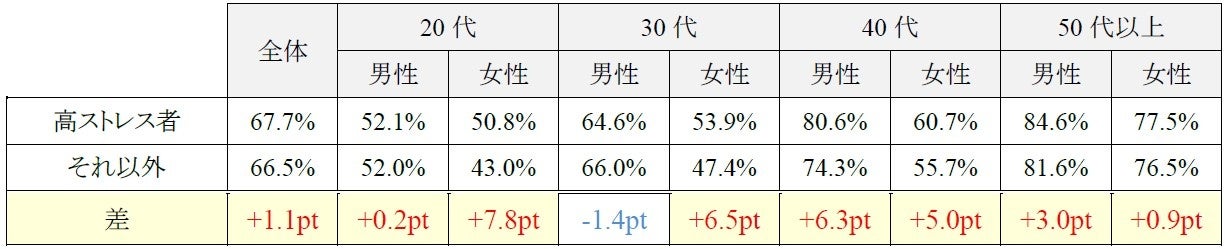
"High-stress individuals" in stress checks have a high "abnormal findings rate" in regular health examinations.
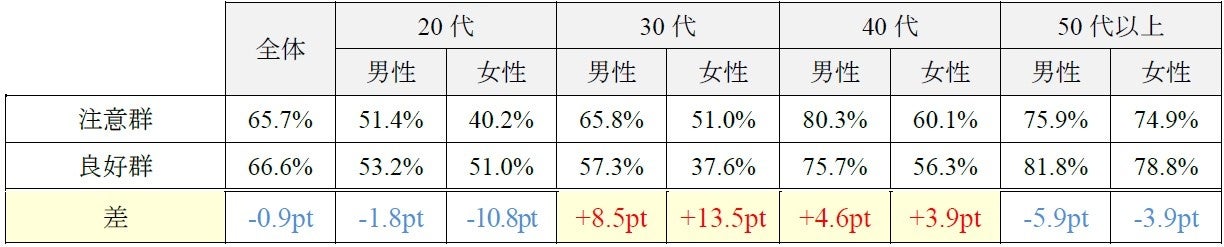
Conversely, the magnitude of stress causes showed no clear correlation with the "abnormal findings rate."
In corporate stress checks, individuals with significant stress-related health issues or those at high risk of developing further issues are identified as "high-stress individuals" and are subject to interviews with doctors. This time, when comparing high-stress individuals with others regarding their "abnormal findings rate" (the percentage of people with abnormal findings requiring re-examination or treatment), it was found that high-stress individuals had a higher abnormal findings rate, indicating a clear correlation between "mind" health (stress check) and "body" health (health examination results).
On the other hand, when examining the correlation between "causes of stress (stressors)" among the stress check measurement items and the "abnormal findings rate" in health examinations, variations were observed depending on age and gender, and no clear correlation was confirmed.
High-stress individuals and the "abnormal findings rate" in health examinations;
Causes of stress (stressors) and the "abnormal findings rate" in health examinations;
* Abnormal findings are determined if items related to lifestyle diseases ("body measurements (BMI/waist circumference)", "blood pressure measurement", "blood tests (lipids/blood sugar/liver function)", "urine tests") fall under the Japan Society of Ningen Dock's judgment categories "C (requires re-examination/lifestyle improvement)" or "D (requires detailed examination/treatment)".
* In stress checks, an evaluation of 2 or less is considered a "caution group," and 4 or more is considered a "good group."
Other items correlated with physical health include "support from superiors/colleagues," "coping with stress causes," and "sleep." These factors may be related to mental and physical health.
Among the stress check measurement items, other factors found to correlate with the "abnormal findings rate" in health examinations included "support from superiors and colleagues (social support)" and "coping with stress causes (behavioral coping/cognitive coping)." These factors are likely related to mental and physical health.