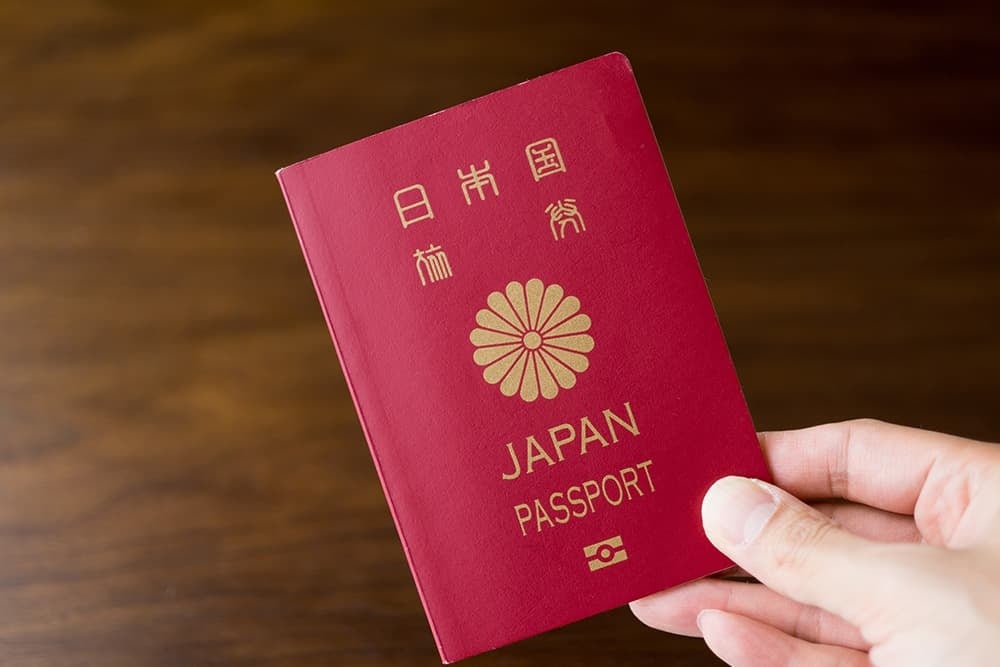
Currently, only 1 in 5 people in Japan hold a passport, but the desire for overseas travel is entering a new phase. According to our latest travel survey conducted in 2026, 28% of respondents indicated a desire to travel to Asian countries in the future. There is a particular interest in countries such as South Korea, Taiwan, Singapore, Indonesia, and Thailand.
Simultaneously, people's travel styles appear to be undergoing a fundamental shift from the past pursuit of "luxury" to an era of "practical vacations" that focus on minimizing excessive costs and effort for smart refreshment. This report will delve into the identities that appeal to Japanese travelers by region and the role of digital tools like eSIMs, which are essential for achieving smooth and valuable journeys.
Five Key Topics for "Overseas Travel in 2026" Revealed in This Survey
"Proximity" is the Keyword: The Reason for Asia's Overwhelming Popularity Neighboring Asian countries like South Korea, Taiwan, Thailand, and Singapore are popular destinations for Japanese travelers. The overwhelming ease of access and sense of security, allowing for "refreshment" without strain even within limited vacation time, seem to be the deciding factors in choosing realistic travel destinations.
Choosing Destinations by "Emotion": Different Expectations for Each Country When asked to choose travel destinations based on emotions and purposes, clear country-specific identities emerged, such as "South Korea for gaining vitality," "Taiwan for experiencing historical and cultural depth," "Indonesia for seeking peace," and "Singapore for romantic moments."
From "Luxury" to "Balance": Smart Travel Styles Become Mainstream Instead of the luxurious travel of the past, a "balance-oriented" approach, aiming for the optimal midpoint between cost and comfort, is becoming mainstream. The style of smartly choosing practical yet high-quality experiences without excessive luxury can be considered the current standard.
"Digital Tools" for Walking with Confidence Smartphones are now the "compass" for smooth travel abroad. Map and navigation apps, in particular, are essential tools for acting with confidence even in unfamiliar places. It is expected that utilizing digital tools will lead to deeper, more active experiences at travel destinations.
The Origin of Travel is "Liberation from the Everyday" The primary purpose of overseas travel remains overwhelmingly "leisure and sightseeing." The need for "the extraordinary," by stepping away from daily routines and experiencing foreign landscapes and cultures, appears to be the biggest motivation for international travel.
"Taiwan is great because they speak Japanese, and even when they don't, everyone is kind. The food is delicious, and there are many fun tourist spots, so I visit often." Hyogo Prefecture, Woman in her 40s
Survey Results Which Asian destination do you most want to visit within the next 2 years? (Single response)
*n=1,000 (500 males, 500 females). Off-white = Total, Light blue = Male, Blue = Female. Numbers indicate the number of respondents (people).
[Next Country Ranking] South Korea, Taiwan, and Singapore Take the Top 3. Travel Intent to Asia is Clear Among respondents who chose an Asian destination they want to visit within the next 2 years, "South Korea (33.3%)" was chosen most frequently. "Taiwan (21.0%)" followed in 2nd place, and "Singapore (15.2%)" in 3rd.
Other destinations such as Indonesia (6.2%), Thailand (5.4%), the Philippines (4.7%), and Hong Kong (4.0%) are also attracting interest as future travel destinations.
On the other hand, 72.4% of all respondents did not specifically choose an Asian destination they wish to visit within the next 2 years.
What kind of travel style do you prefer most when traveling in Asia? (Single response)
*n=398 (193 males, 205 females). Off-white = Total, Light blue = Male, Blue = Female. Numbers indicate the number of respondents (people).
[Ideal Travel Style] 58.0% Emphasize "Balance Between Comfort and Cost." Smart Choices, Not Just Cheap or Luxurious, Are Mainstream Modern travelers are not seeking extreme cheapness or unattainable luxury. In this survey, over half of the respondents, 58.0%, answered that "a trip balancing comfort and cost" is their ideal style.
This was followed by "low-budget travel (16.8%)" and "depends on the destination (14.3%)", while the segment seeking "luxury/high-end experiences (6.5%)" remained a small minority.
These results highlight that the travel trend in 2026 is being driven by the "pragmatic middle class" who are discerning about quality relative to price.
Which Asian country would you choose for the "most vibrant and energetic trip"? (Single response)
*n=1,000 (500 males, 500 females). Off-white = Total, Light blue = Male, Blue = Female. Numbers indicate the number of respondents (people).
For a trip filled with "vibrancy and energy," South Korea, Singapore, and Taiwan Dominate the Top Ranks As a country to visit seeking "vibrant and energetic experiences," South Korea was chosen as the top destination with 22.2%. Singapore followed closely in 2nd place with 20.4%, and Taiwan in 3rd with 17.0%. Southeast Asian countries like Thailand (10.3%) and Vietnam (9.3%) are also attracting attention. While 50.5% of respondents answered "no particular preference in this category," countries where one can enjoy the unique energy and dynamism of Asia are strongly supported among those with specific destinations in mind.
"In South Korea, all the food was delicious, and Japanese was spoken, making it easy to get around." Kanagawa Prefecture, Woman in her 20s
Which of the following countries would you most want to visit to enjoy "cultural heritage and history"? (Single response)
*n=1,000 (500 males, 500 females). Off-white = Total, Light blue = Male, Blue = Female. Numbers indicate the number of respondents (people).
Trips to explore "cultural heritage and history" are led by Taiwan, China, and Thailand. The depth of Asian history becomes a criterion for destination selection.
For travel exploring cultural heritage and history, Taiwan received the most support at 18.0%. China (17.2%) and Thailand (15.8%) followed in the top ranks, with South Korea (12.6%), Indonesia (8.9%), Singapore (8.5%), and Vietnam (6.9%) following. While 50.6% of respondents answered "no particular preference," the diverse cultural backgrounds of Asian countries are a major attraction for those who prioritize historical depth.
Which country would you most want to visit for "peace and relaxation"? (Single response)
*n=1,000 (500 males, 500 females). Off-white = Total, Light blue = Male, Blue = Female. Numbers indicate the number of respondents (people).
Indonesia Ranks First for "Peace and Relaxation." Singapore and Taiwan Also Become Staples for "Healing Journeys" For destinations aimed at "peace and relaxation," Indonesia (including Bali) was chosen as the top destination with 24.0%. Singapore (17.7%) followed in 2nd place, and Taiwan (17.3%) in a close 3rd. Thailand (12.8%) and South Korea (12.4%) are also supported as destinations for refreshing travel. While 50.9% of respondents stated "no particular preference in this category," countries with rich nature and sophisticated environments are strong options for those seeking to heal their minds and bodies away from daily life.
Which country would you most want to visit as a "romantic destination"? (Single response)
*n=1,000 (500 males, 500 females). Off-white = Total, Light blue = Male, Blue = Female. Numbers indicate the number of respondents (people).
Singapore Ranks First for "Romantic Trips." Indonesia, Home to Bali, Ranks Second As a destination for romantic experiences, Singapore was chosen as number one with 24.3%. Indonesia, which includes Bali, ranked second with 20.0%. South Korea (10.7%), Taiwan (10.0%), Hong Kong (8.2%), Thailand (7.0%), and Macau (6.8%) followed as countries with romantic appeal. While 56.0% of respondents answered "no particular preference," sophisticated cities and resort areas have become established as ideal destinations for those who prioritize special moments and atmosphere.
What do you mainly use your smartphone for during overseas travel? (Multiple responses)
*n=412 (194 males, 218 females). Off-white = Total, Light blue = Male, Blue = Female. Numbers indicate the number of respondents (people).
Smartphone Use During Overseas Travel Centered on "Navigation" and "Communication." Emphasis on Practicality and SNS Connectivity During overseas travel, smartphones are indispensable tools supporting movement and communication at the destination. Specifically, "Maps/Navigation" was the most common use at 59.7%, followed by "Messaging Apps" at 44.2%. "Social Networking Services (SNS) (26.5%)" and "Video Streaming (24.3%)" were also cited as major usage scenarios. Other uses included "Games (9.0%)", "Online Shopping (7.8%)", and "Work-related tasks (5.6%)", with "Other" accounting for 8.5%. The data suggests that travelers are enhancing the quality of their stays through practical support and social interaction by utilizing their devices.
Conclusion
The 2026 survey results indicate that Japanese interest in Asian travel is concentrated on "ease of access," "quality," and "compatibility with modern lifestyles." Popular cities like South Korea, Taiwan, and Singapore are receiving strong support from contemporary travelers who prioritize self-improvement and realistically attainable experiences over traditional luxury.
Furthermore, the use of digital tools has become indispensable throughout the entire travel process. Platforms such as LINE, Google Maps, and X (formerly Twitter) serve as partners supporting spontaneous enjoyment and a sense of security at travel destinations. This pursuit of efficiency is also reflected in the spread of eSIMs and the rise of AI tools, showing a trend towards optimizing the entire journey from departure to return.
What Japanese travelers are seeking in 2026 is a smooth, fulfilling travel experience where technology is seamlessly integrated. The travel industry's focus on convenience and value will continue to meet the expectations of those who view international travel as a part of their lifestyle.
Survey Overview
To clarify the behavior and preferences of Japan residents regarding travel in Asia, three surveys were conducted in March 2026 using the self-administered questionnaire tool "Freeasy."
First, on March 2nd and March 4th-5th, 2026, a screening survey (1,000 participants each time) was conducted targeting a total of 2,000 men and women aged 15 to 99 nationwide. This survey aimed to understand the trends in overseas travel, destination selection in Asia, and communication environment assurance during stays.
Subsequently, based on the screening results, a follow-up survey was conducted on March 6th targeting 100 individuals who had experience using eSIMs for overseas travel. A more detailed analysis was performed on connection status at travel destinations and specific travel habits.
This article selectively presents key findings from the full survey report, focusing on preferences for Asian destinations, travel styles, smartphone usage, and digital connectivity.
In the two screening surveys, some questions were only presented to respondents who met certain conditions based on their previous answers, resulting in a smaller number of respondents (n-count) for those questions. Additionally, even if the overall number of respondents for a question is larger, answers such as "no particular preference" may not be displayed on graphs for clarity. In such cases, the corresponding numerical values are supplemented in the text as needed. Therefore, please check the number of respondents indicated in the graph legend or the explanations in the text for each percentage.
Furthermore, comparisons between attributes such as gender in this report are only published for data where statistically significant differences were observed. Through these surveys, we comprehensively summarize the latest realities of how Japanese travelers engage with Asian countries and utilize digital tools like eSIMs.
About Holafly
Holafly is a global leader in eSIMs for international travel, supporting seamless communication in over 200 destinations worldwide. Chosen by over 15 million users and earning a high rating of 4.6/5 on the review site Trustpilot, Holafly has earned the trust of travelers globally. Its main feature, the "unlimited data" plan, provides a reliable internet environment that allows travelers to focus on their trip without worrying about data consumption.
For more details, please visit our official website: https://esim.holafly.com/ja/
Regarding Citation and Reproduction of This Data
When citing or reproducing the results, data, or images from this survey, please adhere to the following two points:
Indicate the source: Please clearly state that the survey was "conducted by Holafly."
Reference URL: Include a direct link to the source website (https://esim.holafly.com/ja/news/top-asian-travel-destinations-for-japanese/).
[Contact Information for Inquiries]
PR team: press@holafly.com
FACT BOX
- Source: PR TIMES
- Category: 市場Survey
- Organizations: HOLAFLY LIMITED / LINE / Google