Over 70% Do Not Pay for Generative AI — Freelancer Generative AI Utilization Survey 2026 Released
Growthfree LLC released a survey on generative AI utilization among freelancers, revealing that over 70% use it without paying, despite high adoption and efficiency gains.
📋 Article Processing Timeline
- 📰 Published: April 1, 2026 at 18:26
Growthfree LLC (Headquarters: Fukuoka) has released the "Freelancer Generative AI Utilization Survey 2026" conducted among 309 active freelancers nationwide.
This report can be utilized as a foundational resource for companies and organizations that outsource work to freelancers, for those planning AI utilization seminars and training, and for businesses considering generative AI implementation support. It helps to understand the penetration of generative AI in the field, which tasks show effectiveness, and where operational challenges lie.
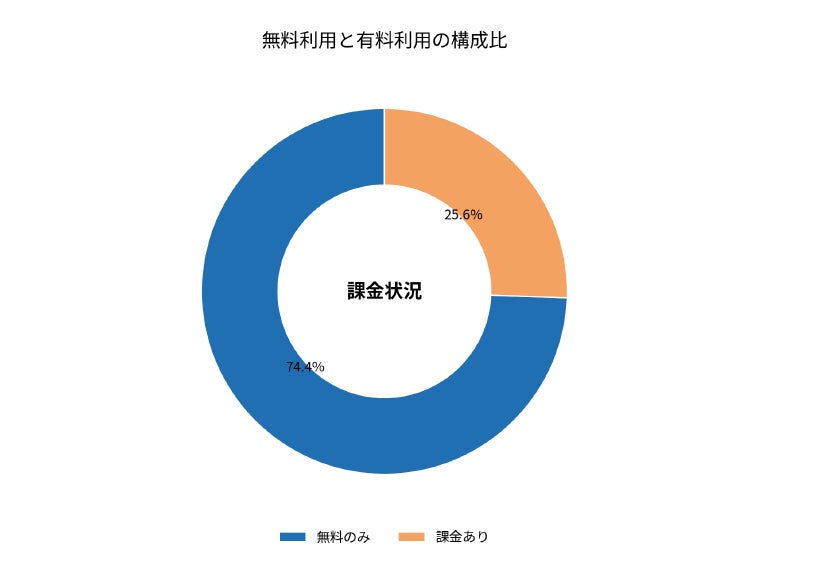
The survey results show that 78.3% of respondents use generative AI for work at least once a week, and 45.6% use it almost daily. On the other hand, 74.4% of users only utilize free plans, with only 25.6% using paid plans. This indicates that while generative AI is widely adopted, the majority are still in the phase of "using it for free first."
Furthermore, 76.4% reported a time reduction of "10% or more," and among them, 48.2% felt a "time reduction of 30% or more." This suggests that generative AI is transitioning from a mere auxiliary tool to a practical infrastructure that reorganizes the work process itself.

Meanwhile, operational rules for client work are still in a transitional phase. While 66.0% use generative AI in some form for client projects, 48.5% either "use it but do not specifically inform the client" or "change usage and disclosure depending on the client." This indicates that despite the widespread adoption, disclosure standards and accountability design are not yet fully organized.
Moreover, the main challenges in utilization were "variability in accuracy and quality of generated content" at 58.3% and "anxiety about misinformation" at 54.0%. As generative AI adoption progresses, not only the presence or absence of use but also "operational design" including quality control, scope of responsibility, and agreement with clients, is becoming a crucial issue.
This report is intended for use in the following applications:
・Consideration of outsourcing management and ordering rules for companies utilizing freelancers
・Design of AI training and seminar plans for local governments, commercial organizations, educational institutions, and private companies
・Reference data for AI utilization support, business improvement proposals, and sales material creation
・Understanding the penetration and challenges of AI utilization in the freelance market
The survey outline is as follows:
【Survey Outline】
Survey Name: Freelancer Generative AI Utilization Survey 2026
Target: Active freelancers working nationwide
Valid Responses: 309
Survey Period: March 9, 2026 – March 23, 2026
Survey Method: Internet survey (using Lancers' questionnaire function)
Survey Organizer: Growthfree LLC
A simplified version of this survey report is available on our company website, where you can check key indicators and overall trends. In addition, a detailed version, which includes differences by occupation, differences in usage based on payment status, client disclosure status, and free-text analysis, is also available on note.
Growthfree LLC will continue to promote practical AI utilization support through information dissemination, seminars, and training programs for regional businesses, small and medium-sized enterprises, and independent professionals.
FAQ
What is the current state of generative AI utilization among freelancers?
78.3% use generative AI for work at least once a week, and 45.6% use it almost daily. However, 74.4% only use free plans.
Does generative AI help with work efficiency?
76.4% feel a time reduction of 10% or more, with 48.2% experiencing a time reduction of 30% or more.
What are the main challenges in utilizing generative AI?
The top challenges are 'variability in accuracy and quality of generated content' (58.3%) and 'anxiety about misinformation' (54.0%).