Over 70% Don't Pay for Generative AI - 2026 Survey on Freelancer AI Usage Released
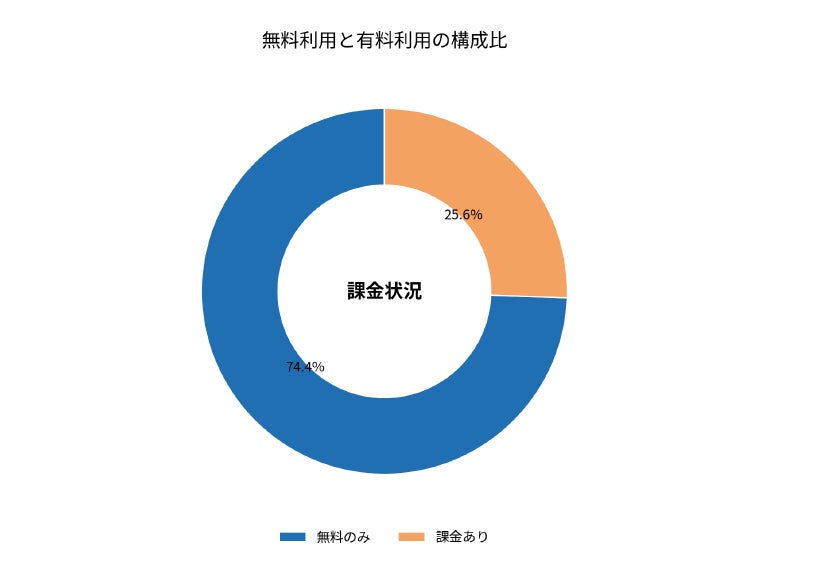
Growth Free LLC has released a survey on generative AI usage among 309 freelancers. While 78.3% use it weekly, 74.4% stick to free plans, highlighting challenges in monetization and the lack of operational rules despite widespread adoption.
📋 Article Processing Timeline
- 📰 Published: April 1, 2026 at 18:26
- 🔍 Collected: April 1, 2026 at 10:15
- 🤖 AI Analyzed: April 22, 2026 at 03:53 (497h 37m after Collected)
Growth Free LLC (Headquarters: Fukuoka) has released the "Freelancer Generative AI Usage Survey 2026," conducted among 309 active freelancers nationwide.
This report can be utilized as foundational material for companies and organizations that commission work to freelancers, organizers of AI utilization seminars and training, and businesses considering generative AI implementation support, to understand the extent of generative AI penetration in the field, which tasks are yielding results, and where operational challenges lie.
The survey found that 78.3% of respondents use generative AI for work at least once a week, and 45.6% use it almost daily. On the other hand, 74.4% of users only utilize free plans, with paid plan users accounting for just 25.6%. This indicates that while generative AI is becoming widely adopted, the majority are still in the 'try it for free first' stage.
Additionally, 76.4% experienced 'time savings of 10% or more,' with 48.2% of them feeling 'time savings of 30% or more.' This suggests that generative AI is transitioning from a mere supplementary tool to a practical infrastructure that restructures the work process itself.

Meanwhile, operational rules for client work are still in a transitional phase. While 66.0% of respondents use generative AI for client projects in some form, 48.5% either 'use it but don't specifically inform the client' or 'change usage and disclosure depending on the client.' This reveals a situation where the design of disclosure standards and accountability has not been sufficiently organized to keep up with the spread of its use.
Furthermore, the main challenges in utilization were 'variability in the accuracy and quality of generated content' at 58.3% and 'anxiety about misinformation' at 54.0%. It can be said that as the adoption of generative AI progresses, 'operational design'—including quality control, scope of responsibility, and consensus-building with clients—is becoming a more critical issue than just whether to use it or not.
This report is intended for uses such as: