Green Coop and 'Abukuma Ushirose Urushi Project' Collaborate to Regenerate Satoyama in Fukushima/Abukuma through Urushi Planting
Key facts
- Green Coop and 'Abukuma Ushirose Urushi Project' Collaborate to Regenerate Satoyama in Fukushima/Abukuma through Urushi Planting
- Green Coop, an association of 16 co-ops in western Japan, is partnering with the 'Abukuma Ushirose Urushi Project' to regenerate the satoyama (traditional managed woodlands) in Fukushima's Abukuma region. The project involves planting urushi (lacquer) trees to create sustainable livelihoods, restore the environment post-earthquake and nuclear accident, and reduce CO2 emissions.
- Date: March 30, 2026
Direct answer
Green Coop, an association of 16 co-ops in western Japan, is partnering with the 'Abukuma Ushirose Urushi Project' to regenerate the satoyama (traditional managed woodlands) in Fukushima's Abukuma region. The project involves planting urushi (lacquer) trees to create sustainable livelihoods, restore the environment post-earthquake and nuclear accident, and reduce CO2 emissions.
- Citation
- Green Coop and 'Abukuma Ushirose Urushi Project' Collaborate to Regenerate Satoyama in Fukushima/Abukuma through Urushi Planting (March 30, 2026)
- Source
- PR Times
- Date
- March 30, 2026
Green Coop, an association of 16 co-ops in western Japan, is partnering with the 'Abukuma Ushirose Urushi Project' to regenerate the satoyama (traditional managed woodlands) in Fukushima's Abukuma region. The project involves planting urushi (lacquer) trees to create sustainable livelihoods, restore the environment post-earthquake and nuclear accident, and reduce CO2 emissions.
📋 Article Processing Timeline
- 📰 Published: March 30, 2026 at 05:11
- 🤖 AI Analyzed: May 26, 2026 at 21:27 (1384h 15m after Published)
Green Coop, a general incorporated association composed of 16 co-ops mainly in western Japan (headquarters: Hakata-ku, Fukuoka; representative director: Yoko Hidaka), will collaborate with the "Abukuma Ushirose Urushi Project," which works on satoyama regeneration in the Abukuma region of Fukushima Prefecture, to create a sustainable community through the planting of urushi (lacquer) trees.
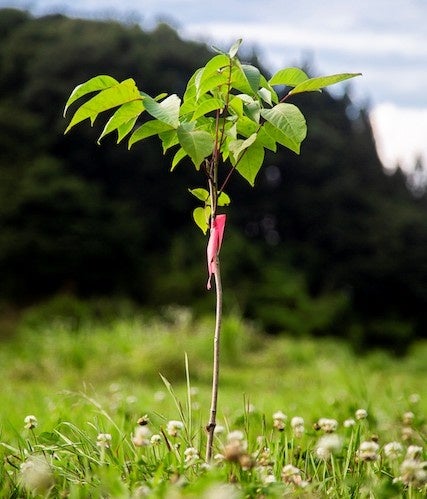
■Background and Purpose
The satoyama in the Abukuma region of Fukushima Prefecture were once maintained through a cyclical lifestyle connected to agriculture and forestry. In recent years, due to depopulation, an aging population, and the decline of the forestry industry, an increasing number of forests have been left unmanaged, leading to their degradation. Furthermore, the Great East Japan Earthquake and the nuclear power plant accident have significantly impacted the region's livelihoods and community foundations. In this context, there is a need to regenerate the satoyama in a sustainable way by utilizing local resources and creating new sources of income.
In this initiative, we will plant urushi trees in the Abukuma satoyama with the aim of creating future livelihoods such as lacquer harvesting and refining, while also striving for sustainable community development that utilizes local resources.
Furthermore, as urushi trees absorb CO₂ during their growth, they contribute to reducing the environmental impact. After planting, we will also proceed with initiatives to monitor and visualize the amount of CO₂ absorbed as the trees grow.
■What is the "Abukuma Ushirose Urushi Project"?
This is an initiative that aims to regenerate the satoyama by focusing on urushi, which supports traditional Japanese culture, through the planting and utilization of urushi trees. Urushi trees are a species well-suited to the satoyama environment, and their value as a domestic resource is expected to increase, offering the potential to combine forest regeneration with the creation of local industry. Along with satoyama regeneration, the project aims to create sustainable, locally-rooted livelihoods and build a cyclical community that can be passed on to the next generation.
Abukuma Ushirose Urushi Project
https://www.ushinose.com/p/01.html
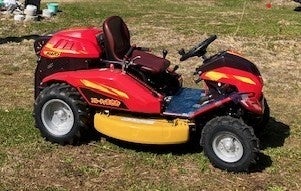
■ About the Donation of a Riding Lawn Mower
The regeneration of satoyama requires not only planting but also continuous management, including daily grass cutting. However, maintaining planting sites scattered over a wide area requires a great deal of labor, and reducing this workload has been a challenge.
In response to these challenges, Green Coop has decided to donate a riding lawn mower to improve the working environment and efficiency. This will significantly increase the efficiency of grass cutting work and make it possible to manage areas that were previously not well-maintained.
■Donation Ceremony Outline
The main goal is to regenerate satoyama in Fukushima/Abukuma through the planting of urushi trees, aiming to create sustainable communities and future livelihoods. The satoyama in the Abukuma region are facing degradation due to depopulation, an aging population, and the decline of the forestry industry, leading to unmanaged forests. Urushi trees absorb CO₂ during their growth, which contributes to reducing the environmental impact and mitigating climate change. Future livelihoods envisioned include those related to lacquer harvesting and refining, utilizing the sap from the urushi trees. The 'Abukuma Ushirose Urushi Project' is focused on regenerating satoyama by planting and utilizing urushi trees, which are deeply connected to traditional Japanese culture.FAQ
What is the main goal of the collaboration between Green Coop and the 'Abukuma Ushirose Urushi Project'?
What is the current environmental challenge faced by the satoyama in the Abukuma region of Fukushima Prefecture?
Besides community regeneration, what other environmental benefit do urushi trees offer in this project?
What kind of future livelihoods are envisioned through the planting of urushi trees in this initiative?
What is the 'Abukuma Ushirose Urushi Project' specifically focused on for satoyama regeneration?