Fortience Participates in Establishing CO2 Emission Calculation Rules Covering the Entire Software Product Lifecycle
Fortience participates in establishing CO2 emission calculation rules for software products
📋 Article Processing Timeline
- 📰 Published: March 28, 2026 at 01:11
- 🔍 Collected: March 28, 2026 at 21:59 (20h 48m after Published)
- 🤖 AI Analyzed: April 15, 2026 at 04:36 (414h 36m after Collected)
Fortience Consulting Co., Ltd. (formerly Kunie, Inc.), an NTT DATA Group company headquartered in Chiyoda-ku, Tokyo, with President & CEO Shigeki Yamaguchi (hereinafter "Fortience"), has participated as a member of the Decarbonization Study Group for the Software Sector under the Japan Environment Club (Note 1) in formulating and publishing CO2 emission calculation rules covering the entire lifecycle of software products. (Note 2) By utilizing these calculation rules, companies can assess and evaluate CO2 emissions from software product development, operation, and disposal based on the Ministry of Economy, Trade and Industry's "Carbon Footprint Guidelines" (Note 3), and can also formulate and execute strategies aimed at minimizing CO2 emissions attributable to software. Fortience will continue to promote initiatives contributing to CO2 reduction across the software sector and entire supply chains.
【Background】
Power consumption and CO2 emissions from the ICT industry are projected to exceed 20% of global power consumption by 2030. (Note 4) While software does not consume physical resources on its own, it indirectly increases energy consumption through the use of cloud services, data centers, networks, and user devices, making it a challenge to understand and address CO2 emissions.
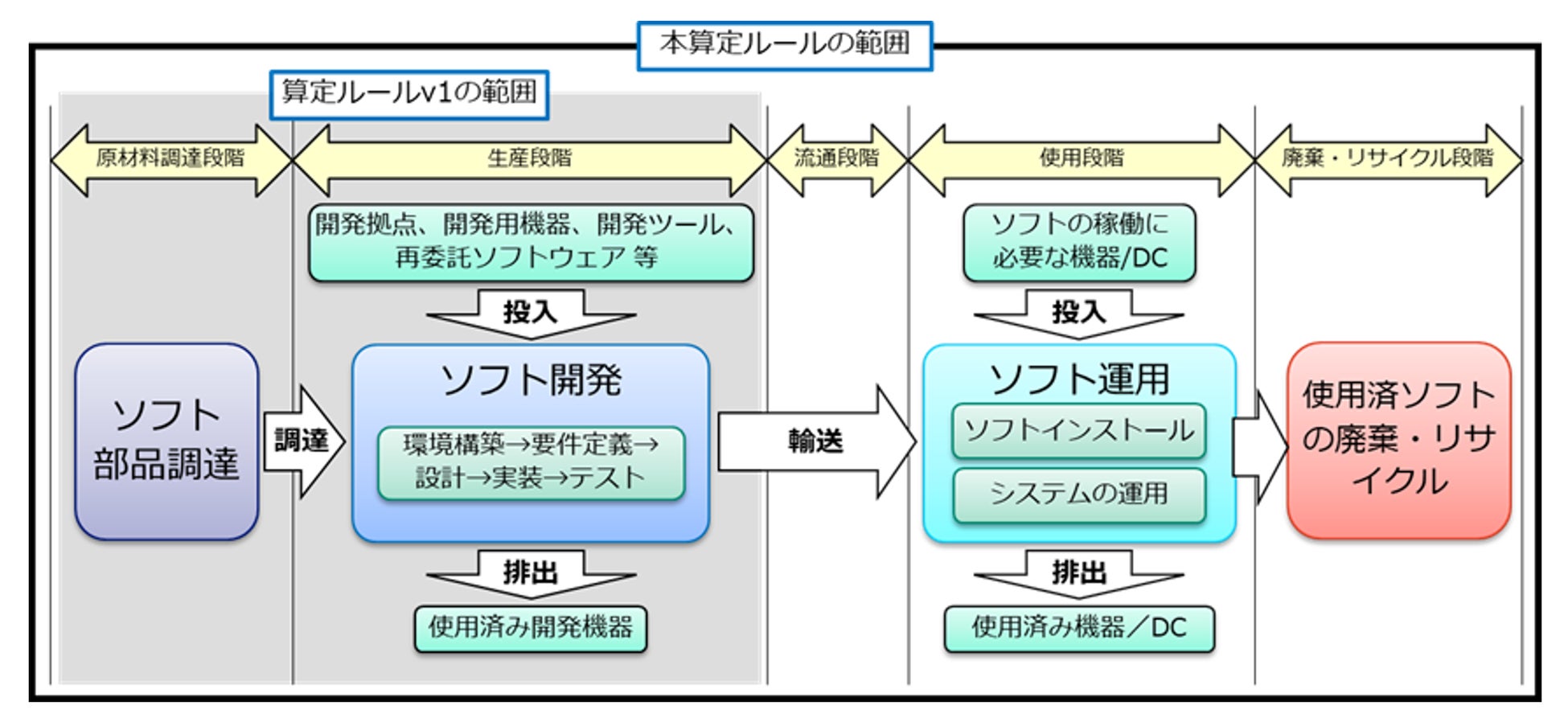
Fortience also participated in formulating the Cradle-to-Gate (Note 5) version of the calculation rules (v1.0, published March 2024) as part of METI's "FY2023 Project to Support the Establishment of Product-Specific Carbon Footprint Calculation Rules for GX Promotion." This enabled emissions assessment during the development phase. However, since software products are typically used for extended periods after development, it was necessary to also account for post-development emissions.
In recent years, social demands for corporate Scope 3 emissions disclosure have been growing, making disclosure of emissions attributable to software products increasingly important as an evaluation and decision-making factor in procurement and business transactions.
In response, the Decarbonization Study Group for the Software Sector, in which Fortience participates, decided to expand the scope of the calculation rules to cover the entire lifecycle and publish them.
【Overview】
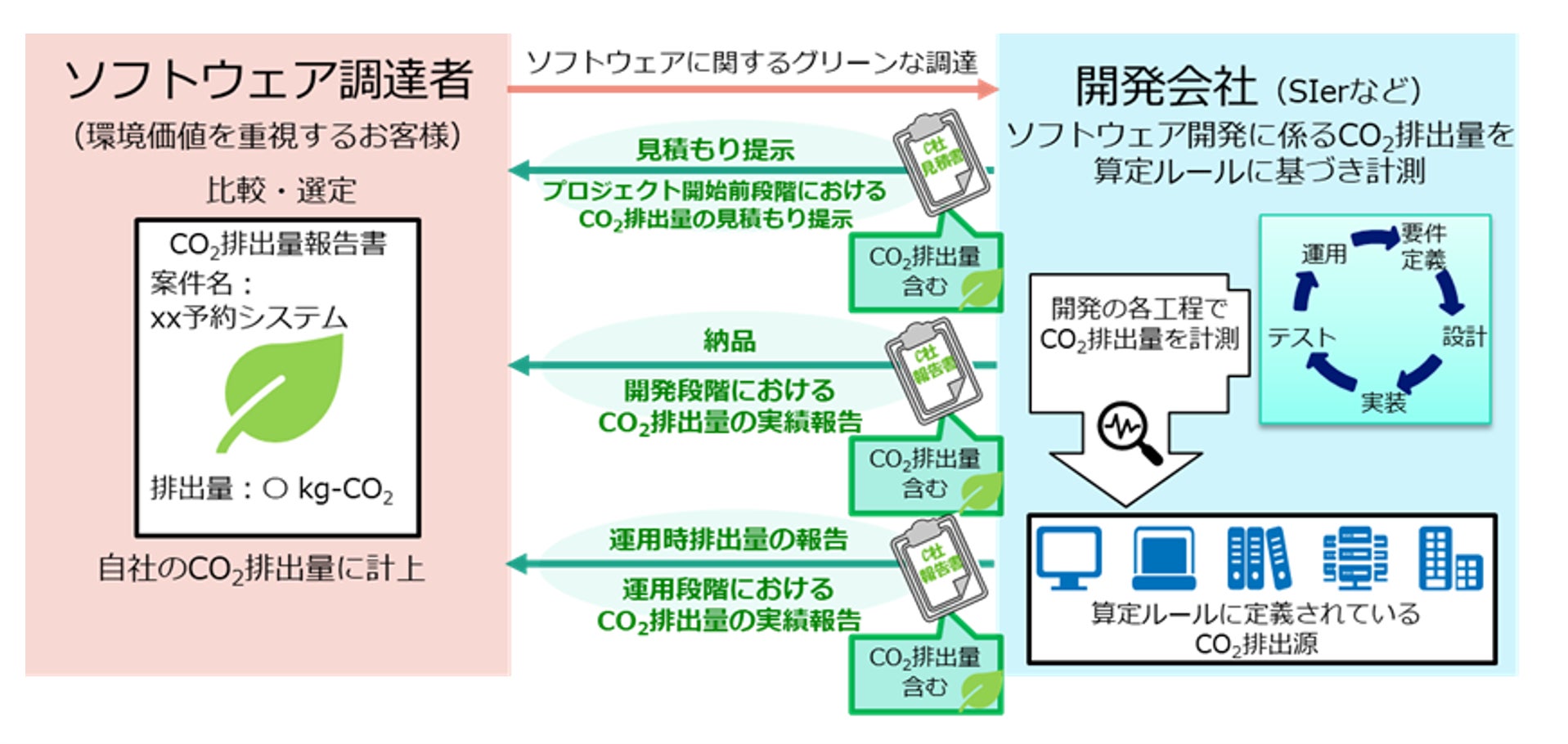
The Decarbonization Study Group for the Software Sector, in which Fortience participates, has established a Cradle-to-Grave (Note 6) version of the calculation rules that expands the scope of the conventional rules—previously limited to the procurement and development stages—to cover the entire lifecycle. Based on METI's "Carbon Footprint Guidelines," these rules enable calculation of CO2 emissions across procurement, development, operation, and disposal, providing a foundation for formulating emission reduction strategies attributable to software and promoting greening of the entire supply chain.