Results of the 37th 'What I Want to Be When I Grow Up' Survey Announced
Key facts
- Results of the 37th 'What I Want to Be When I Grow Up' Survey Announced
- Dai-ichi Life Insurance announced the results of its 37th 'What I Want to Be When I Grow Up' survey of 3,000 students and parents. 'Company Employee' remains a top choice, while 'Baseball Player' is rising in popularity for boys inspired by stars like Shohei Ohtani, and 'Investor' has appeared for the first time among high school boys. A special section also explored the growing use of AI among students for learning and advice, with 75% of parents viewing it positively.
- Source: PR Times
- Date: March 28, 2026
Direct answer
Dai-ichi Life Insurance announced the results of its 37th 'What I Want to Be When I Grow Up' survey of 3,000 students and parents. 'Company Employee' remains a top choice, while 'Baseball Player' is rising in popularity for boys inspired by stars like Shohei Ohtani, and 'Investor' has appeared for the first time among high school boys. A special section also explored the growing use of AI among students for learning and advice, with 75% of parents viewing it positively.
- Citation
- Results of the 37th 'What I Want to Be When I Grow Up' Survey Announced (March 28, 2026), PR Times
- Source
- PR Times
- Date
- March 28, 2026
Dai-ichi Life Insurance announced the results of its 37th 'What I Want to Be When I Grow Up' survey of 3,000 students and parents. 'Company Employee' remains a top choice, while 'Baseball Player' is rising in popularity for boys inspired by stars like Shohei Ohtani, and 'Investor' has appeared for the first time among high school boys. A special section also explored the growing use of AI among students for learning and advice, with 75% of parents viewing it positively.
📋 Article Processing Timeline
- 📰 Published: March 28, 2026 at 00:19
- 🔍 Collected: March 28, 2026 at 21:59 (21h 40m after Published)
- 🤖 AI Analyzed: April 15, 2026 at 02:20 (412h 21m after Collected)
Dai-ichi Life Insurance Company, Limited
Dai-ichi Life Insurance Company, Limited (President: Shunsuke Sumino, hereinafter "the Company") announces the results of its 37th "What I Want to Be When I Grow Up" survey, conducted among 3,000 pairs of elementary, junior high, and high school students and their parents nationwide.
Survey Results (Highlights)
◆37th "What I Want to Be When I Grow Up" Survey
◇"Pâtissier" for elementary school girls and "Company Employee" for elementary school boys and junior/senior high school students remain No. 1 for the 6th consecutive year
◇"Baseball Player" surpasses "YouTuber/Video Creator" to rank 2nd for elementary school boys!
With an increasing number of players expanding their careers overseas, including Shohei Ohtani, more children are aspiring to "aim for the world in baseball"!
◇ "Investor" ranks for the first time among high school boys
This suggests a growing interest in investing, with increased opportunities to encounter information about asset formation, such as through financial education in schools.
◆【Special Feature】Children's Use of Generative AI and Conversational AI
◇About 25% of elementary, junior high, and high school students use generative or conversational AI regularly
A quarter of elementary students reported using it a few times a month, while a quarter of junior high and high school students use it a few times a week. It was found that they also use it for studying and seeking advice on their problems.
◇ 75% of parents are positive about their children's use of AI
37th "What I Want to Be When I Grow Up" Survey Results (Details)
Q. Please tell us what profession you want to have when you grow up.
Q. Please tell us why you want to be the .
Elementary School Division
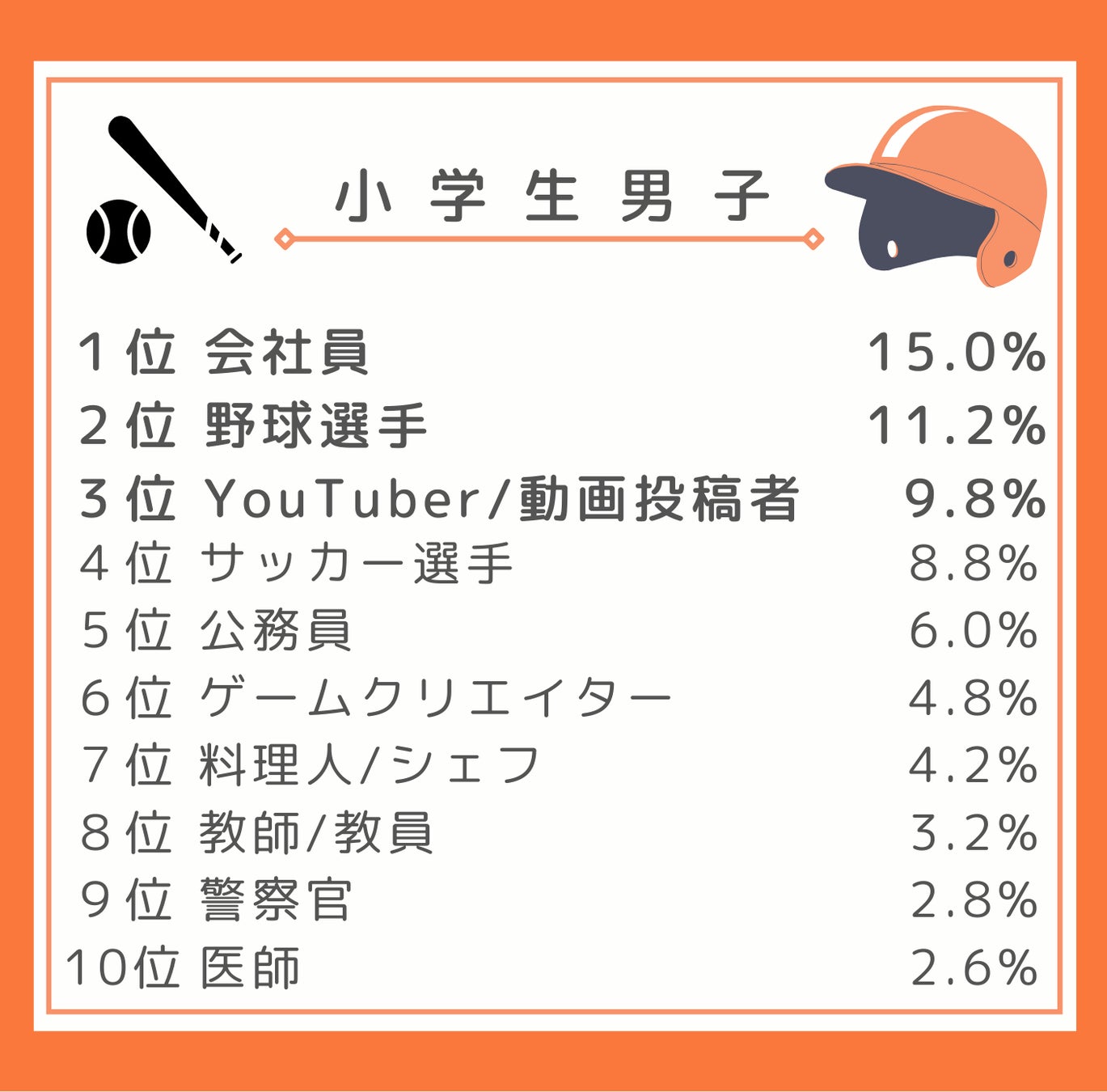
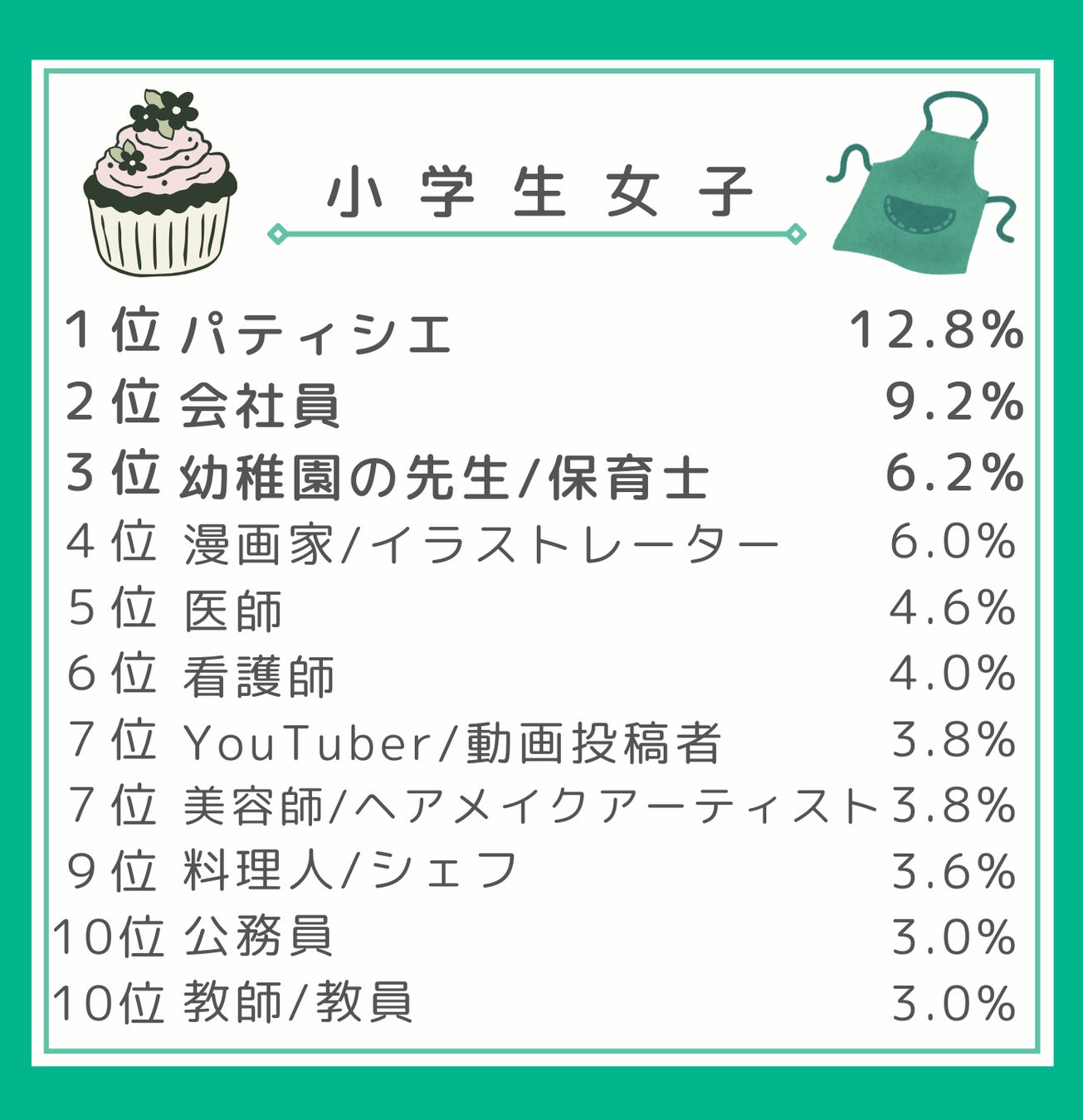
◆"Baseball Player" ranks 2nd for boys!
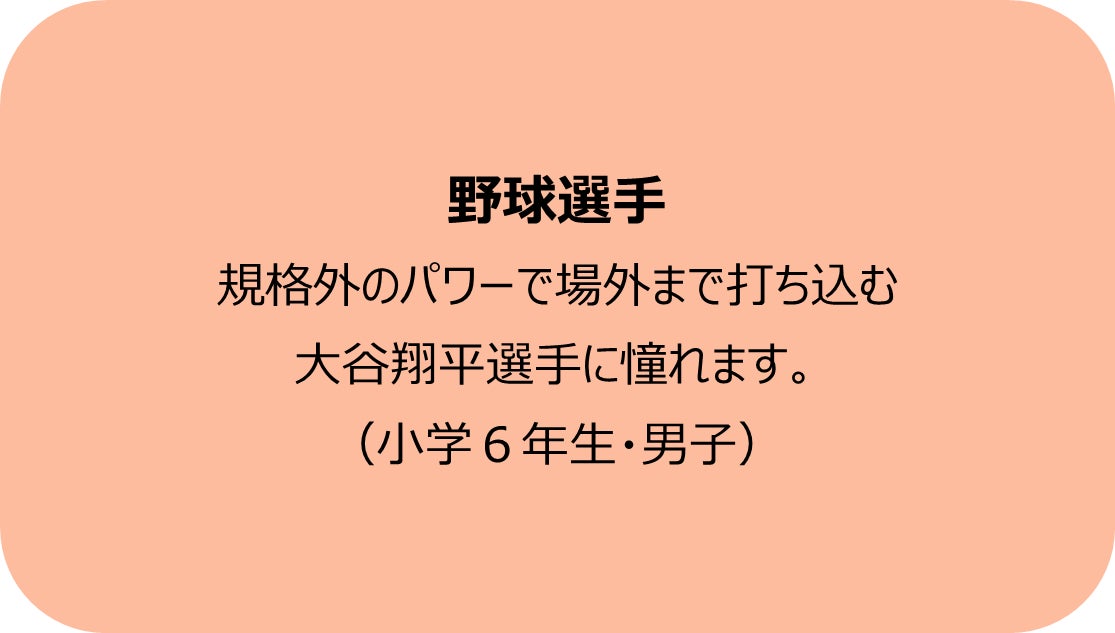
Among elementary school boys, "Baseball Player," which surpassed "Soccer Player" last time, has now overtaken "YouTuber/Video Creator" to rank second! Many cited their admiration for professional baseball players active both in Japan and overseas, including Shohei Ohtani, after watching their favorite team's games or the WBC. It seems the success of star players is strongly boosting children's dreams.
On the other hand, when asked why they chose "Company Employee," which has kept the top spot for six consecutive years, it became clear that growing up watching their parents work has a significant influence. The daily routine of going to work in a suit, the sight of them working on a computer, and seeing them work to support the family's life are familiar. It is thought that rather than an aspiration for the job itself, a sense of trust in "working adults" is fostered, leading to the choice of "Company Employee."
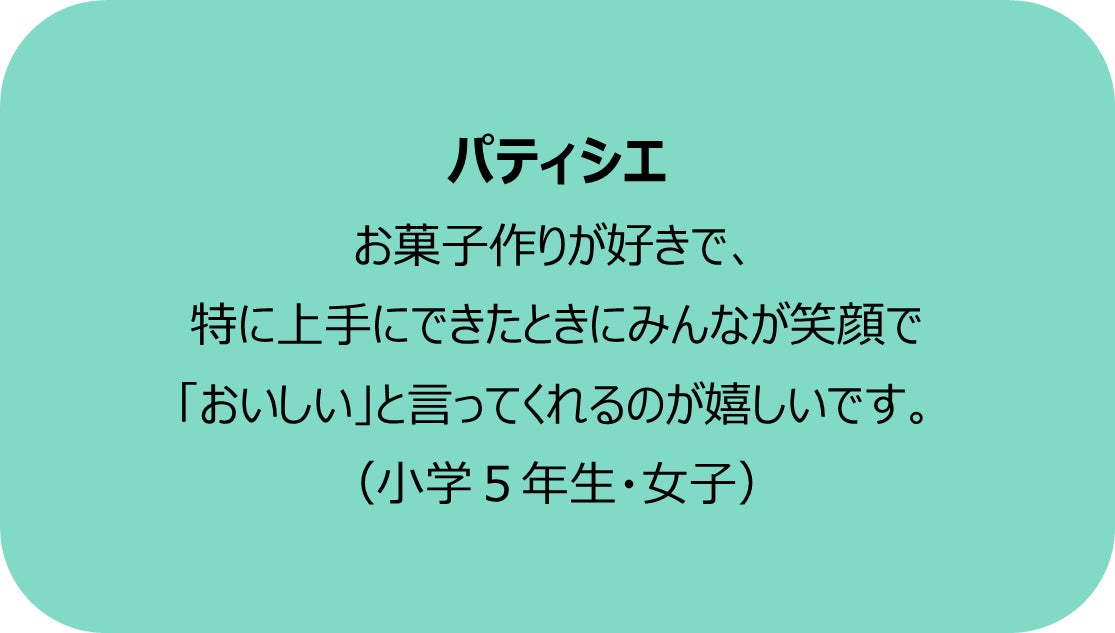
Among elementary school girls, "Pâtissier" achieved its sixth consecutive win, and "Kindergarten Teacher/Nursery Staff" jumped to 3rd place after being outside the top 10 last year. The reasons for wanting these jobs were noticeably rooted in their own experiences. For "Pâtissier," the main reasons were "the fun of making things" and "the sense of accomplishment from making people happy," with comments like, "I'm happy to see my family and friends' joyful faces when they eat what I make." For "Kindergarten Teacher/Nursery Staff," many children cited admiration for the teachers who took care of them in kindergarten or nursery school and their own experiences. A characteristic of both professions is that emotions like "like," "fun," and "cute" naturally connect to their vision of the future.
Junior High School Division
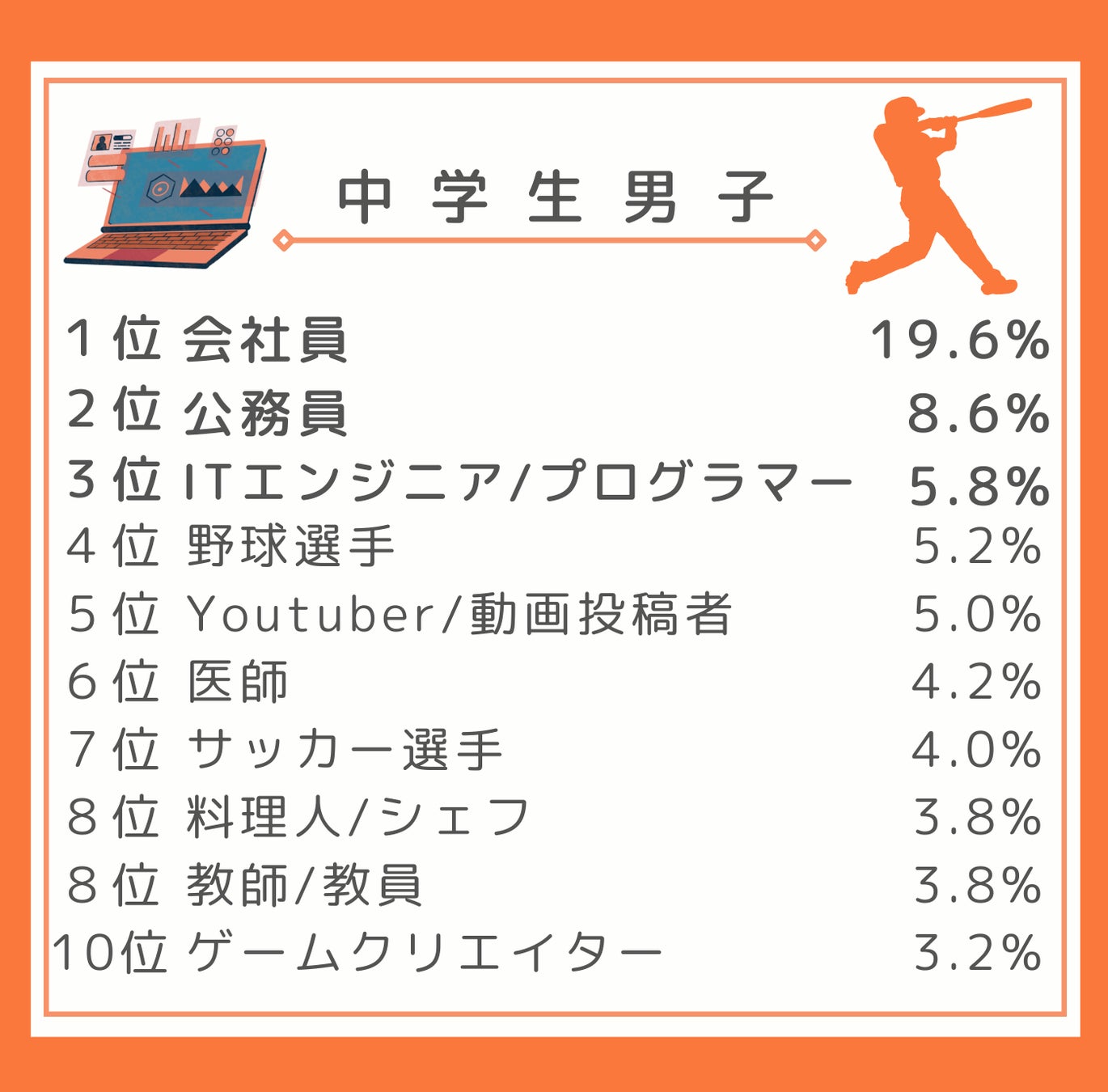
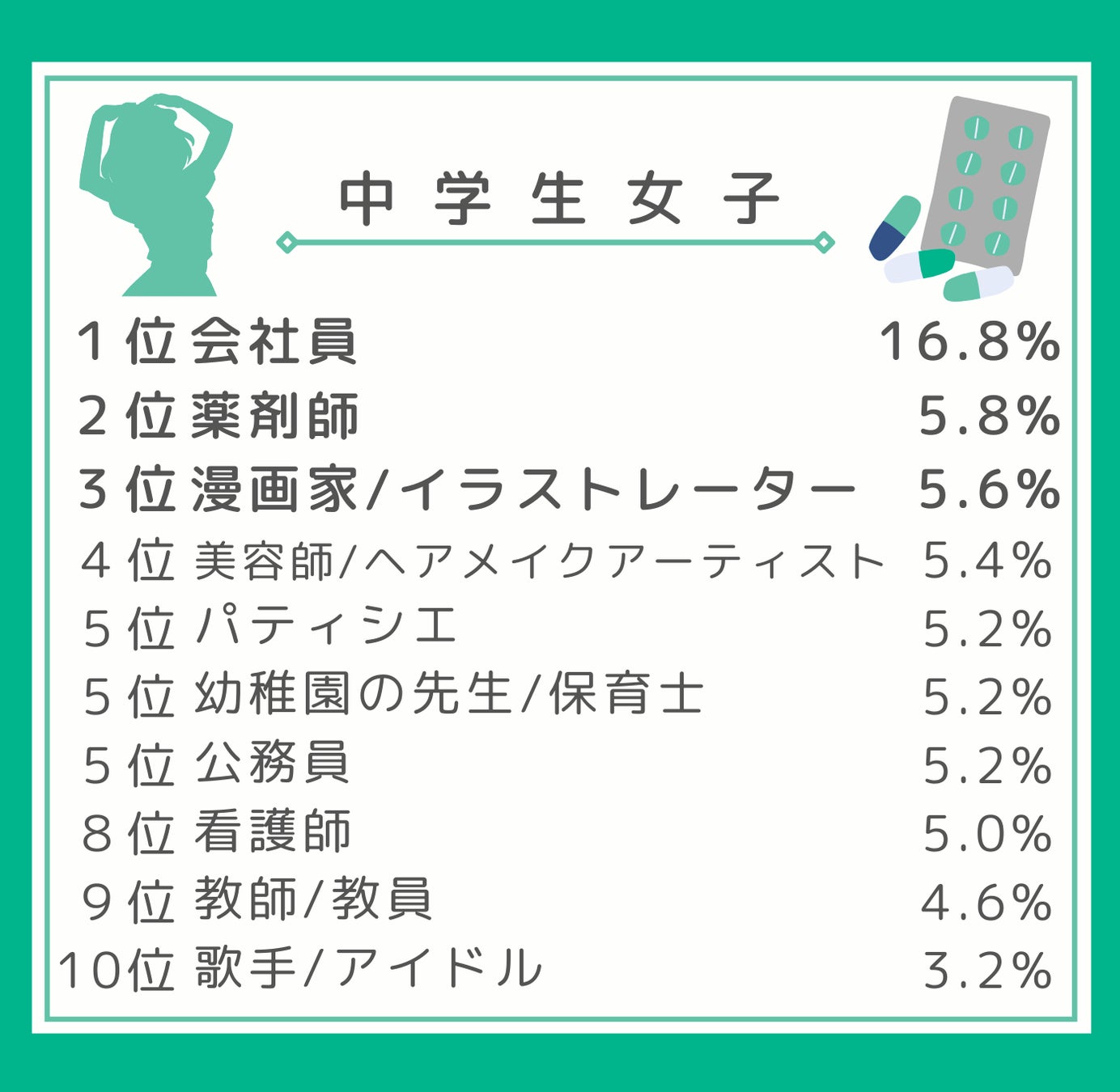
◆Junior high schoolers waver between dreams and reality
The rankings for junior high school students show that while they hold aspirations for sports and creative professions, they also begin to consider realistic options like "Company Employee" and "Civil Servant." Among junior high school girls, "Pharmacist" ranked 2nd for the first time. While motivations included admiration for pharmacists at pharmacies and hospitals they frequent due to family illness, such as, "My mother is sick, and I often accompany her to the pharmacy, which got me interested in medicine" (1st-year junior high), and "My father is a pharmacist and it's amazing how much he knows about medicine, so I started to admire him" (1st-year junior high), many also cited the stability of the profession and its high level of specialization requiring a national license.
In junior high, the concrete and emotional reasons for career choices seen in elementary school fade, with an increase in responses like "no particular reason" or "haven't decided yet." Behind this are:
-
A sudden increase in future options as they start to think about studies and career paths
-
A shift towards realistic perspectives (stability, income)
This suggests that while they are trying to specifically envision their future, they are also in the process of searching for their own path.
High School Division
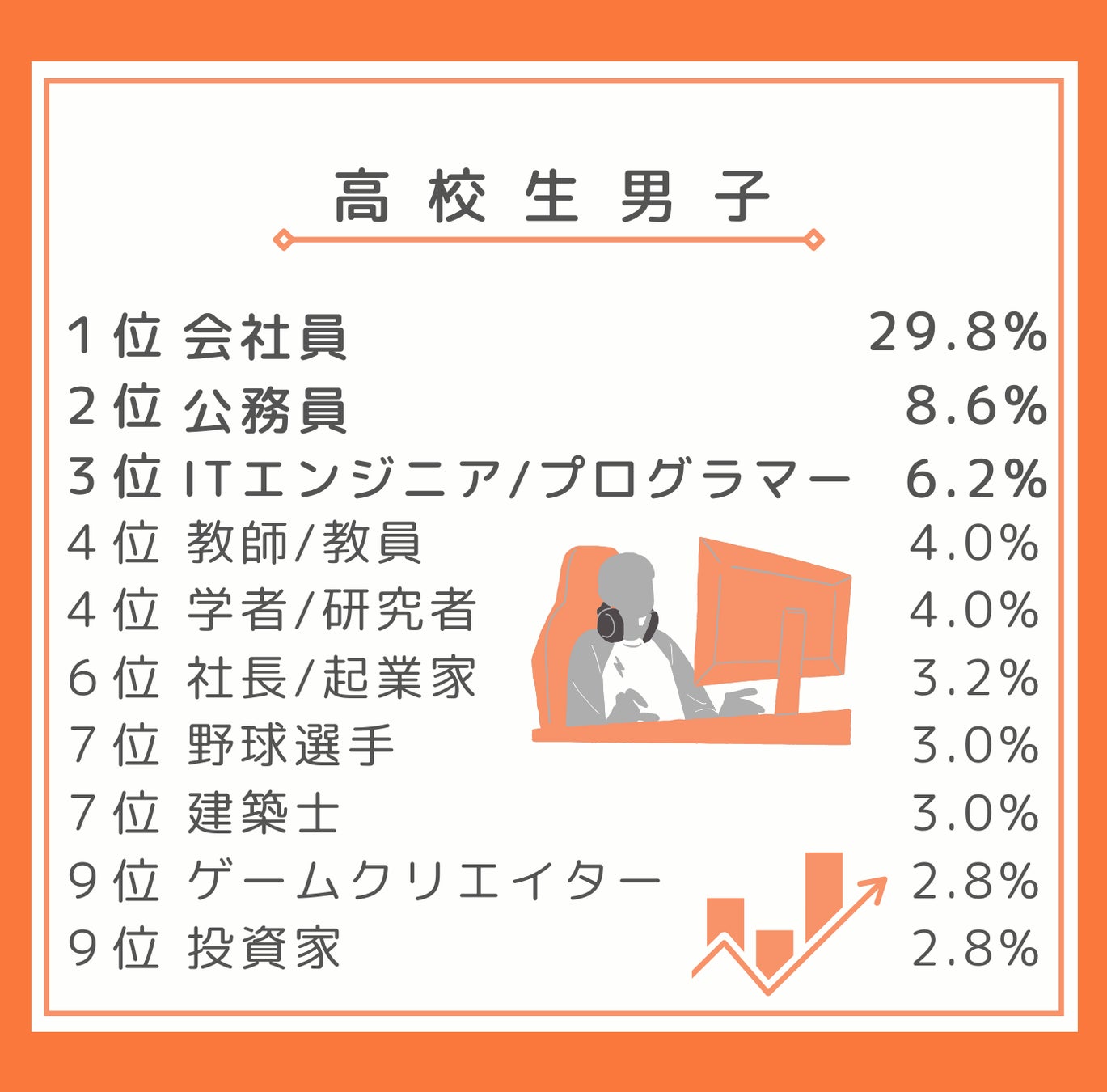
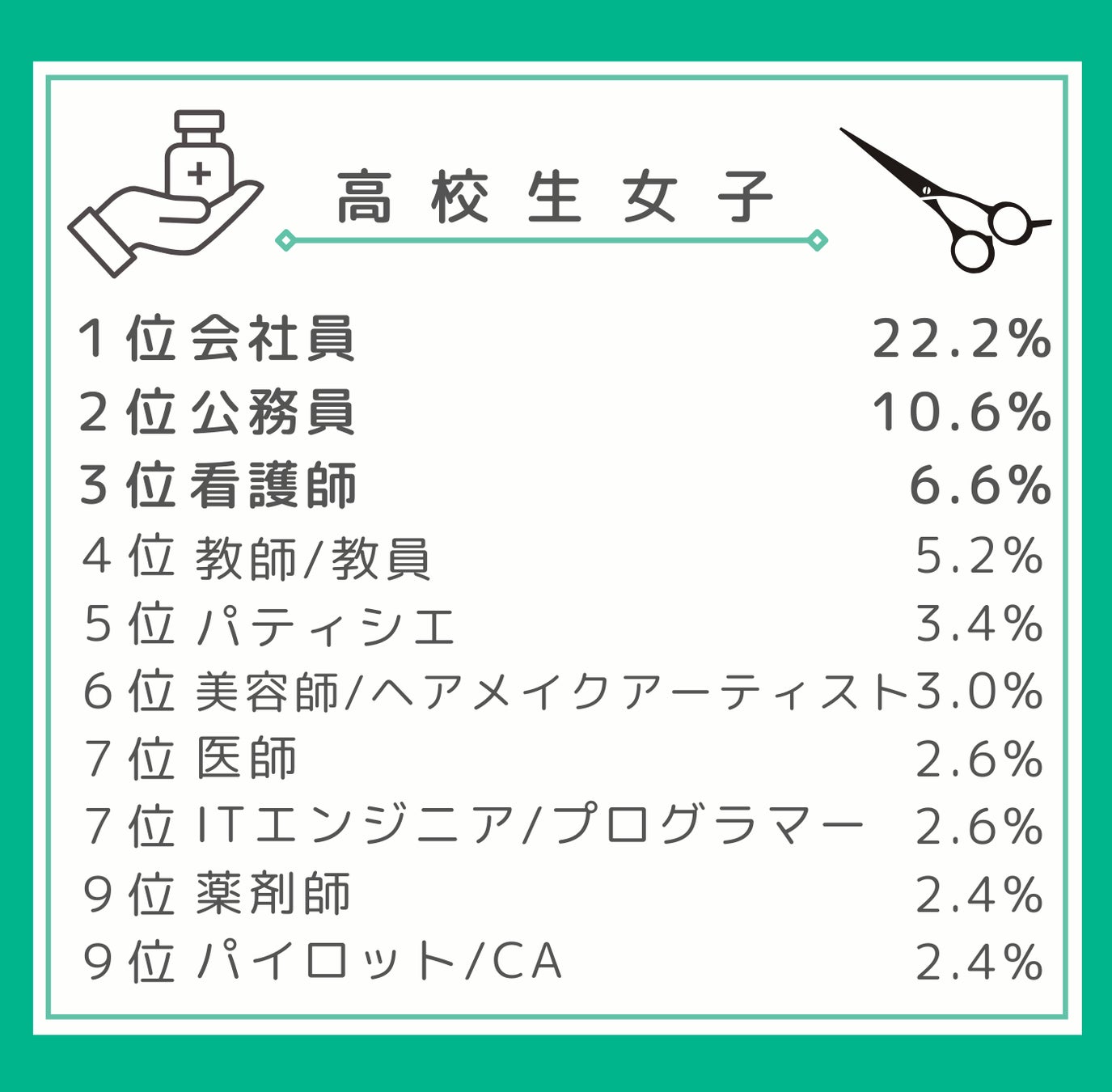
◆Interest in society and the economy is reflected in career aspirations
Among high school boys, "Investor" made the rankings for the first time! "President/Entrepreneur," which first appeared last time, also maintained a high position, ranking 6th. Young entrepreneurs and investors often have an influencer aspect, wielding influence through social media and videos, and many seem to be attracted to their flexible work styles. On the other hand, there are also glimpses of a desire to build their own careers with specific "things they want to do," such as contributing to welfare or the global environment through entrepreneurship, or as one student said, "My grandfather runs a manufacturing company, and he taught me the importance and reward of making things society needs while also making a profit" (1st-year high school).
The ranking of "Investor" suggests that interest in investment is growing due to increased opportunities to encounter information on asset formation, such as through financial education in schools. According to the "Financial Literacy Survey (2022)" conducted by the Central Council for Financial Services Information, the percentage of people who answered they were "confident in their financial knowledge" was 12% in Japan compared to 71% in the U.S., and the percentage who answered they had "received financial education" was also different, at 7% in Japan versus 20% in the U.S. With the Civil Code revised in April 2022, lowering the age of majority from 20 to 18, business organizations are being asked to cooperate in enhancing and promoting the use of consumer education content to prevent young people with little social experience from getting into consumer-related trouble.
Among high school girls, professions requiring specialization and qualifications in fields like medicine, education, and beauty continued to be popular. While high school boys show a trend towards valuing "challenge" and "self-realization" with choices like "Investor" and "Manager/Entrepreneur," high school girls, in contrast, tend to have a high interest in helping people and being able to work for a long time.
Q. [To Parents] Please tell us what profession you would like your child to have when they grow up.
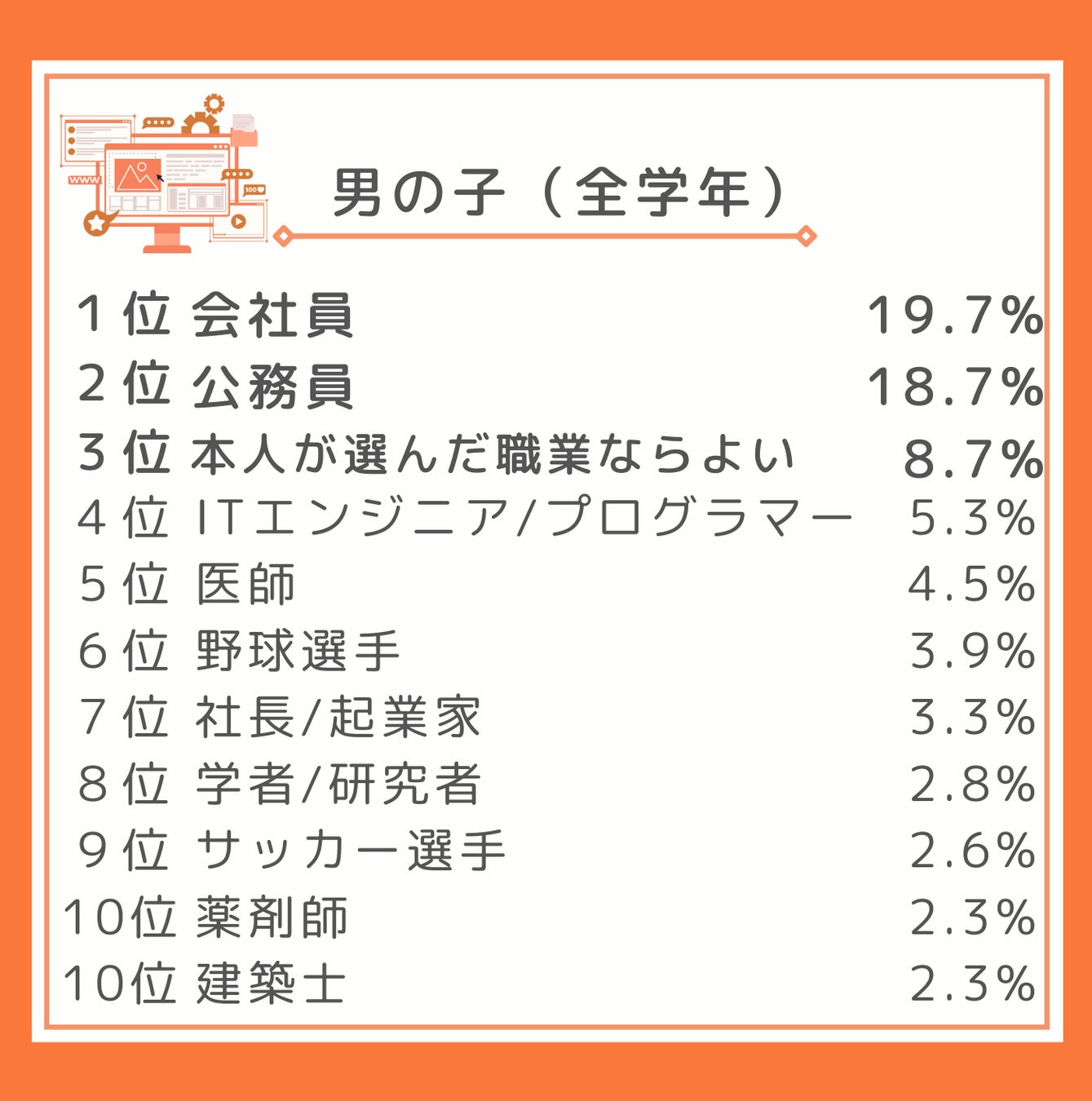
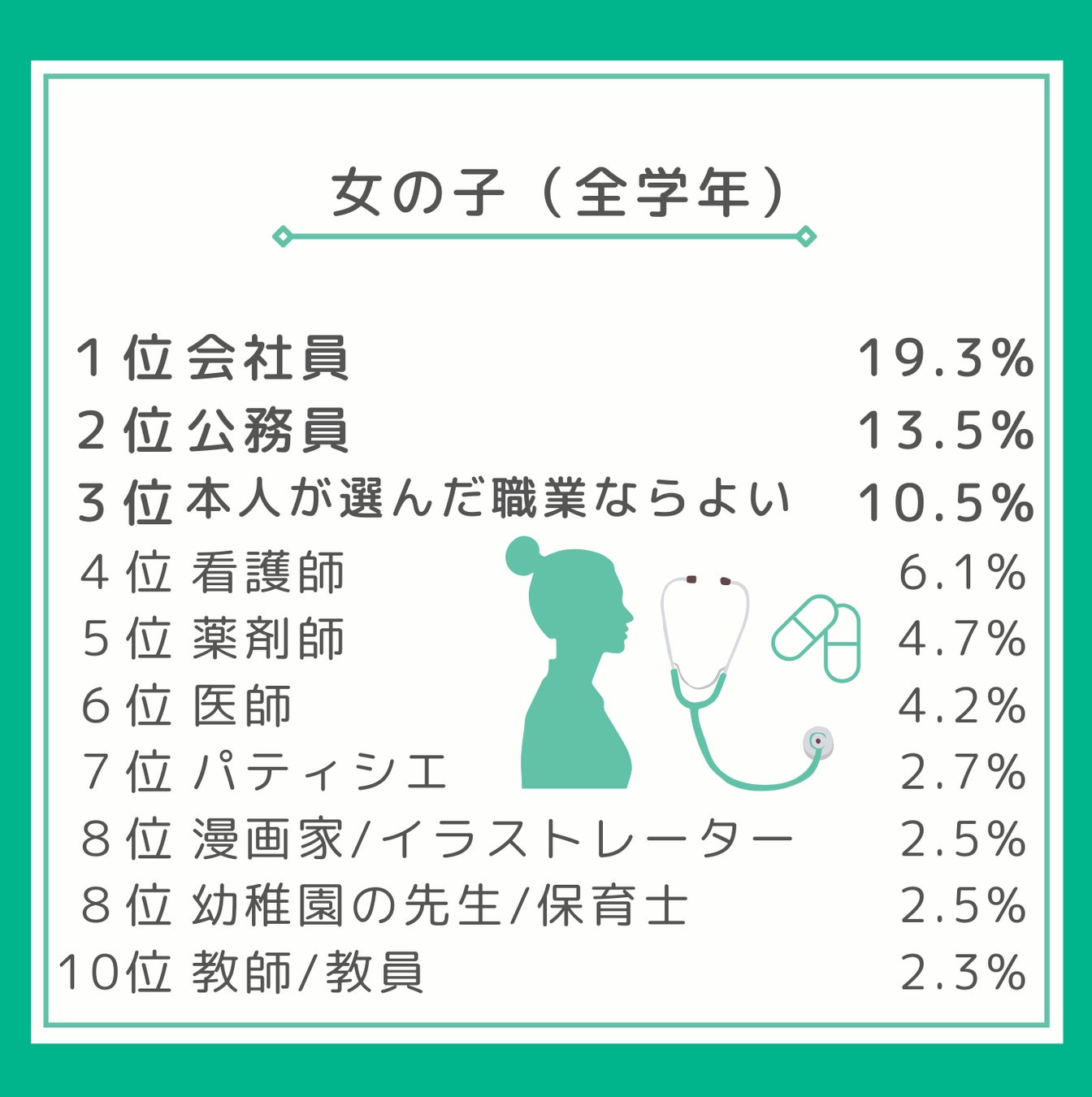
◆Respecting "stability" and "their own individuality"
When we asked the parents who participated in the survey about the professions they want their children to have, while there was a certain number with a preference for stability, such as "Company Employee" and "Civil Servant," many in the open-ended responses said they "want to respect what their child wants to do" and "hope they find something they are suited for."
During job hunting, an increasing number of companies practice "Oyakaku" (the act of a company getting "confirmation" from the "parents" of a student to whom they have given a job offer). The background to this is said to be that the parent-child relationship has become closer, allowing for easy consultation. Perhaps because of this, the overall ranked professions tended to be common with the top rankings for the children, for both boys and girls.
Q. In April 2026, the Dai-ichi Life Group will be reborn as the "Dai-ichi Life Group."
If you could be reborn, "who" or "what" would you want to be reborn as?
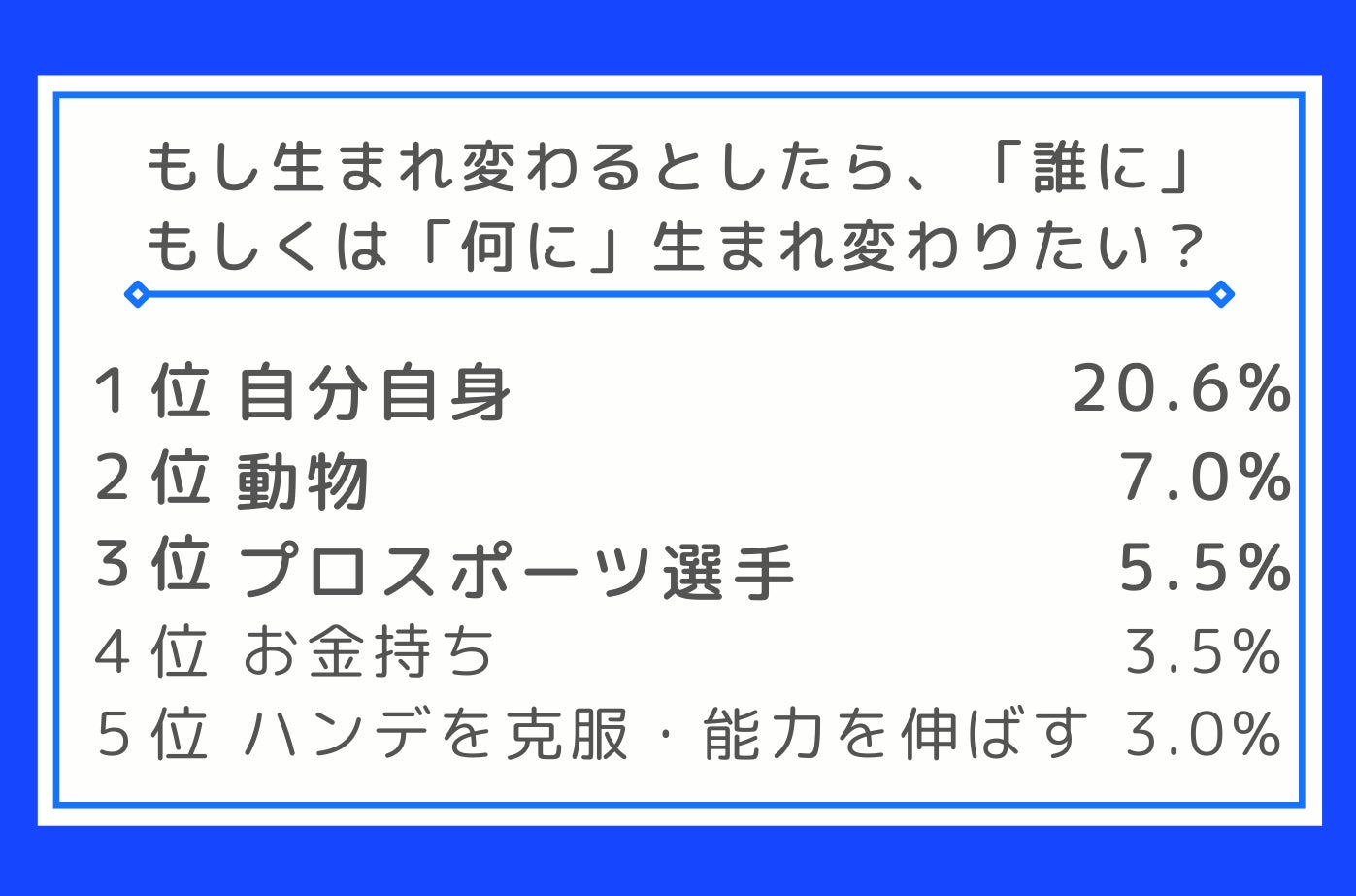
◆"Individuality" and the presence of a symbolic hero
When we asked children what they would want to be reborn as, the top answer was "myself" with responses like "myself" and "I'm fine as I am." It can be considered that a value system of not forcing comparisons with others is spreading, as seen in comments like, "I like my life and want to be born as myself again" (high school girl).
On the other hand, the most common specific person named was Shohei Ohtani. His name was mentioned regardless of gender or grade, and reasons for admiration included his "effort," "versatility," and "success on the world stage." It can be said that he is recognized not only by children who admire sports players but also broadly as a "symbol of a challenging way of life."
【Special Feature】Children's Use of Generative AI and Conversational AI
In this survey, we used an AI chatbot format for the first time for the question asking about the reasons for wanting to be a certain profession. Therefore, as a special feature, we investigated how familiar AI has become to children and how parents feel about their children's use of AI.
Q. Do you use a conversational AI like the one before (e.g., ChatGPT, Gemini, Copilot)?
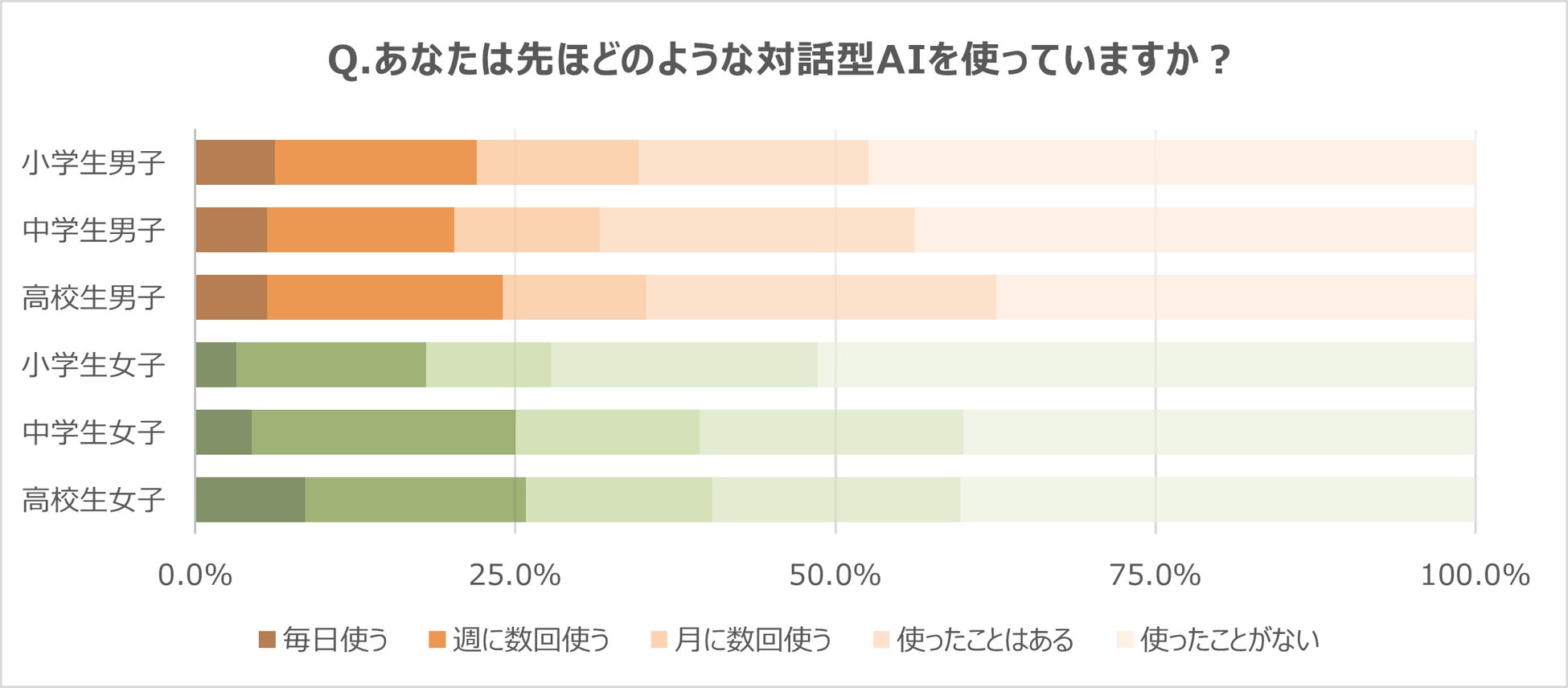
Q. What do you usually use generative/conversational AI for? (Multiple answers allowed)
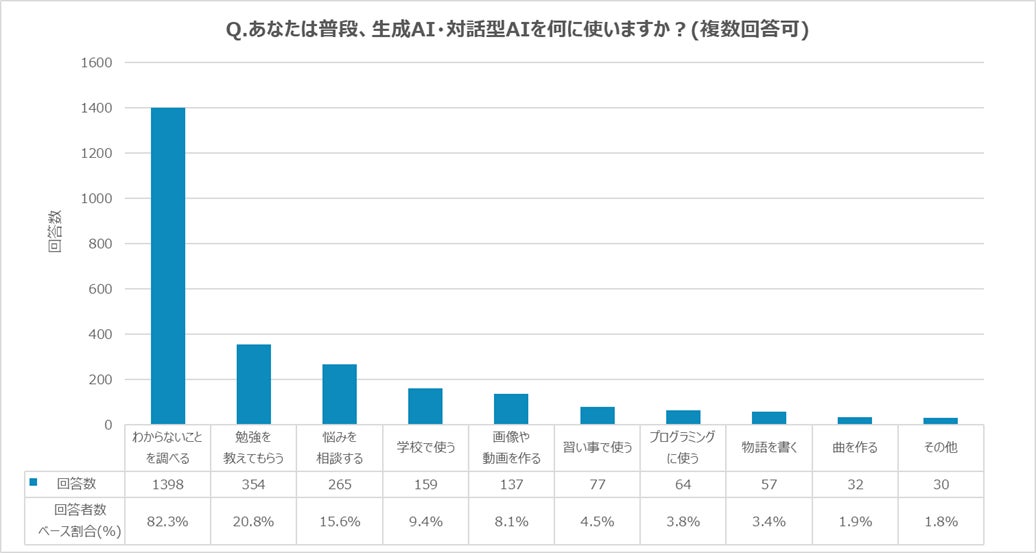
◆Becoming a familiar tool to support "researching" and "learning"
First, regarding the frequency of AI use, while about half of elementary school students answered "never used it," nearly 25% of students in all grades use it almost daily ("use it every day" or "use it a few times a week"), indicating that approximately 1 in 4 people use AI on a daily basis.
When we further asked n=1699 people who did not answer "never used it" in this question about their purposes for using AI, the main use for all grades was for learning support, such as "looking up things I don't understand" and "getting help with my studies." Especially among junior high and high school students, AI is becoming established as a "supplement to teachers and textbooks" because they can deepen their understanding at their own pace and ask questions without fear of failure.
Also, when looking at gender and grade, the response "to consult about my worries" was particularly high among junior and senior high school girls. With AI being easily accessible on smartphones, it seems that for the digital native generation, AI has become a close and casual confidant.
Furthermore, a certain number of students from elementary, junior high, and high school also answered that they "use it at school." While AI is being introduced for administrative work in private companies, a survey by the Ministry of Education, Culture, Sports, Science and Technology shows that its use in school administration is also spreading in the educational field, with the percentage of schools where more than half of the faculty and staff use it increasing from a mere 2.7% in FY2024 to 17.2% in FY2025.

※Quoted from the Ministry of Education, Culture, Sports, Science and Technology, Elementary and Secondary Education Bureau's "Checklist for School Affairs DX under the GIGA School Concept"
Q. [To Parents] Are you for or against your child's use of AI?
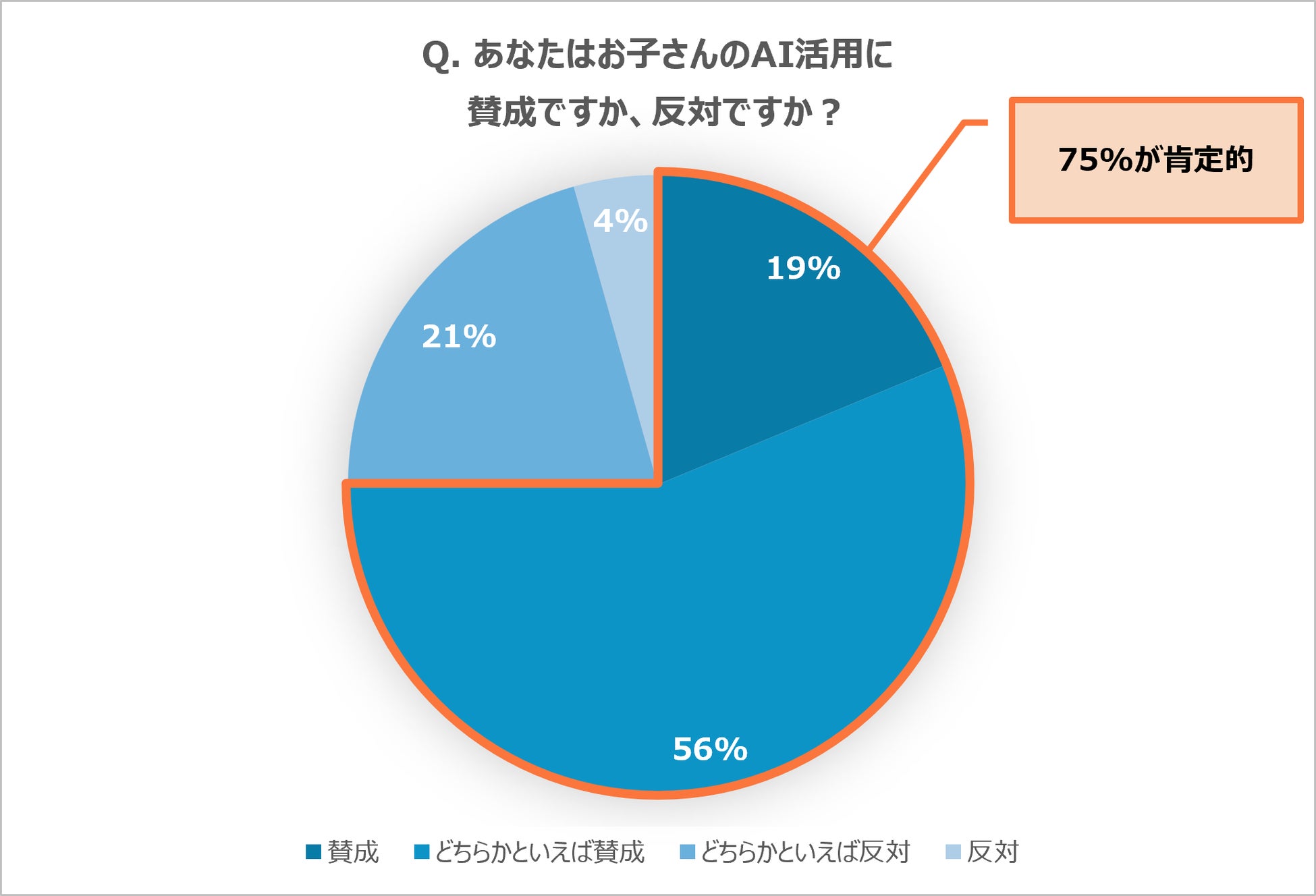
Regarding AI, which is expected to be used even more in educational settings, 75% of parents had a positive opinion, answering "for" or "somewhat for."
Those in favor often expressed opinions on the importance of getting used to a tool that will become commonplace and developing the ability to use it for the future, with comments such as, "It's convenient and efficient for quickly looking up things you don't know" and "It supplements knowledge and perspectives that you can't get on your own in studying and brainstorming."
On the other hand, those opposed raised concerns such as, "Relying too much on AI will weaken their ability to think and judge for themselves, and reduce the habit of researching and thinking," and "I'm uneasy about the accuracy and reliability of the answers." In addition, there were also voices saying, "I want them to value face-to-face interaction and experiences."
To prevent children from making incorrect judgments by over-relying on AI without sufficiently verifying for AI hallucinations, it seems likely that there will be more situations where they will use it for learning while being taught at home and school how to develop the ability to discern the accuracy of information.
(Survey Outline)
-
Survey Target: Elementary school students (grades 3-6), junior high school students, high school students, and their parents (20s-60s) nationwide
-
Sample Size: 3,000 pairs
-
Survey Method: Internet survey by Cross Marketing Inc.
-
Survey Period: December 2025
Q1. What profession do you want to have when you grow up? (Multiple choice + open-ended)
Q2. Please tell us specifically what made you want to be the
Q3. Do you use conversational AI like the one before (e.g., ChatGPT, Gemini, Copilot)? (Multiple choice)
Q4. What do you usually use generative/conversational AI for? (Multiple choice)
Q5. In April 2026, the Dai-ichi Life Group will be reborn as the "Dai-ichi Life Group." If you could be reborn, who or what would you want to be reborn as? (Open-ended)
Q6. [To Parents] What profession would you like your child to have when they grow up? (Multiple choice + open-ended)
Q7. [To Parents] Are you for or against your child's use of AI? (Multiple choice)
Q8. [To Parents] Why are you
※The company has conducted the "What I Want to Be When I Grow Up" survey annually since 1989, targeting infants and children nationwide (nursery, kindergarten, and elementary grades 1-6). In the conventional survey, Dai-ichi Life's Lifelong Design Designers collected questionnaires during visits, but due to the spread of COVID-19, the survey method was changed to an internet-based survey from the 32nd edition (2020).

Dai-ichi Life Insurance Company, Limited
Location: 1-13-1 Yurakucho, Chiyoda-ku, Tokyo, Dai-ichi Life Hibiya First
Established: September 15, 1902
Representative: Shunsuke Sumino
URL: https://www.dai-ichi-life.co.jp/
Brand Message: A lifelong partner: "Customer First"
FAQ
What is the name of the company that conducted the survey?
The survey was conducted by Dai-ichi Life Insurance Company, Limited.
How many pairs of students and parents participated in this survey nationwide?
A total of 3,000 pairs of students and parents participated in the survey nationwide.
Which occupation ranked number one for elementary school girls for the sixth consecutive year?
The occupation of Pâtissier ranked number one for elementary school girls for the sixth consecutive year.
What percentage of parents are positive about their children's use of generative or conversational AI?
75% of parents are positive about their children's use of AI.
How often do regular junior high and high school students use generative or conversational AI?
Regular junior high and high school students use generative or conversational AI a few times a week.