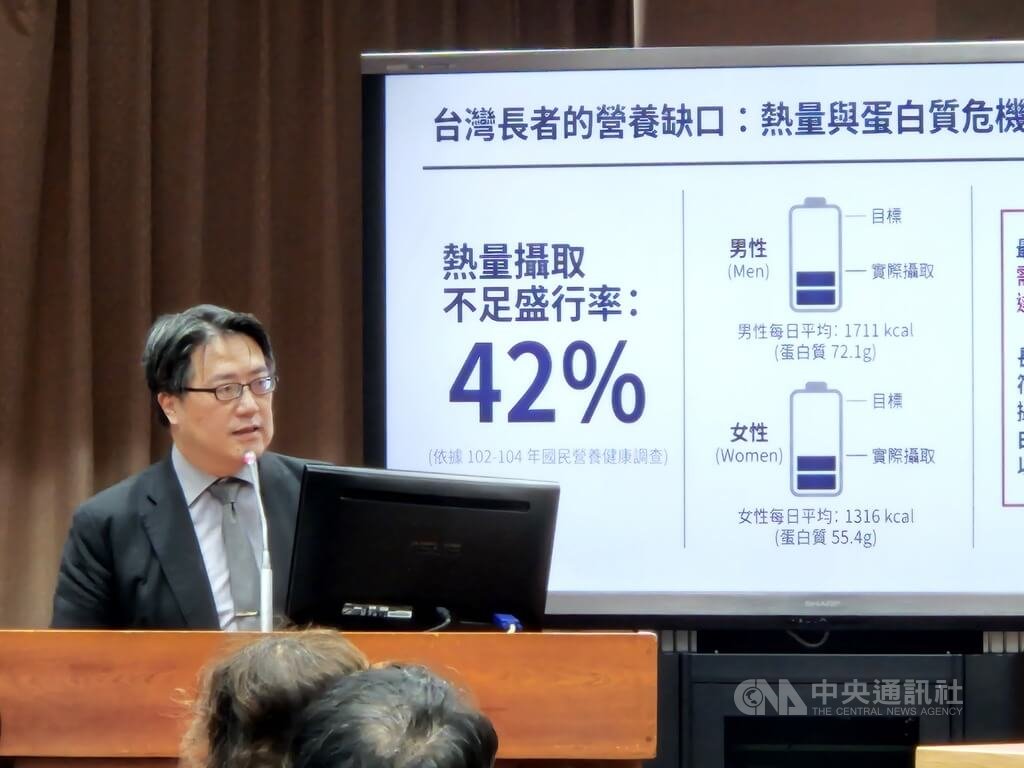
Central News Agency, Taipei, May 26. As Taiwan enters a super-aged society, Dr. Chen Liang-kung, Superintendent of Taipei Municipal Guandu Hospital, stated today that 42% of elderly Taiwanese suffer from calorie deficiency. However, there is a clear gap in nutritional services between hospital discharge and community or long-term care institutions. The Department of Long-Term Care of the Ministry of Health and Welfare (MOHW) explained that it has adjusted discharge preparation plans to strengthen nutritional care integration.
DPP Legislators Lin Chu-yin, Lin Yue-chin, and Wang Cheng-hsu held a public hearing at the Legislative Yuan today titled "Not Just Living Long, But Eating Well! Elderly Nutritional Care Policy." They invited the MOHW and relevant medical care groups to discuss the gaps in elderly nutritional care.
Lin Yue-chin pointed out that nutrition directly affects muscle strength, mobility, cognitive function, and disability risk, but there is currently a disconnect in nutritional care between medical, long-term care, and community systems. She proposed three recommendations: introducing a consistent nutritional assessment mechanism, improving the medical-long-term care nutritional transition system, and ensuring nutritionists are involved in frontline community care.
Dr. Chen Liang-kung emphasized that nutrition is the core foundation for elderly health, yet protein and calcium intake are severely lacking. He noted that factors ranging from age and dental health to psychological issues like depression and loneliness affect eating motivation. Xu Ju-mei, a section chief at the MOHW's Department of Long-Term Care, stated that in 2025, only 4,026 people used nutritional care services, with only 18% coming from discharge preparation. The ministry aims to achieve seamless integration between medical and long-term care through "Long-Term Care 3.0."
FACT BOX
- Source: CNA (Central News Agency)
- Category: health_policy