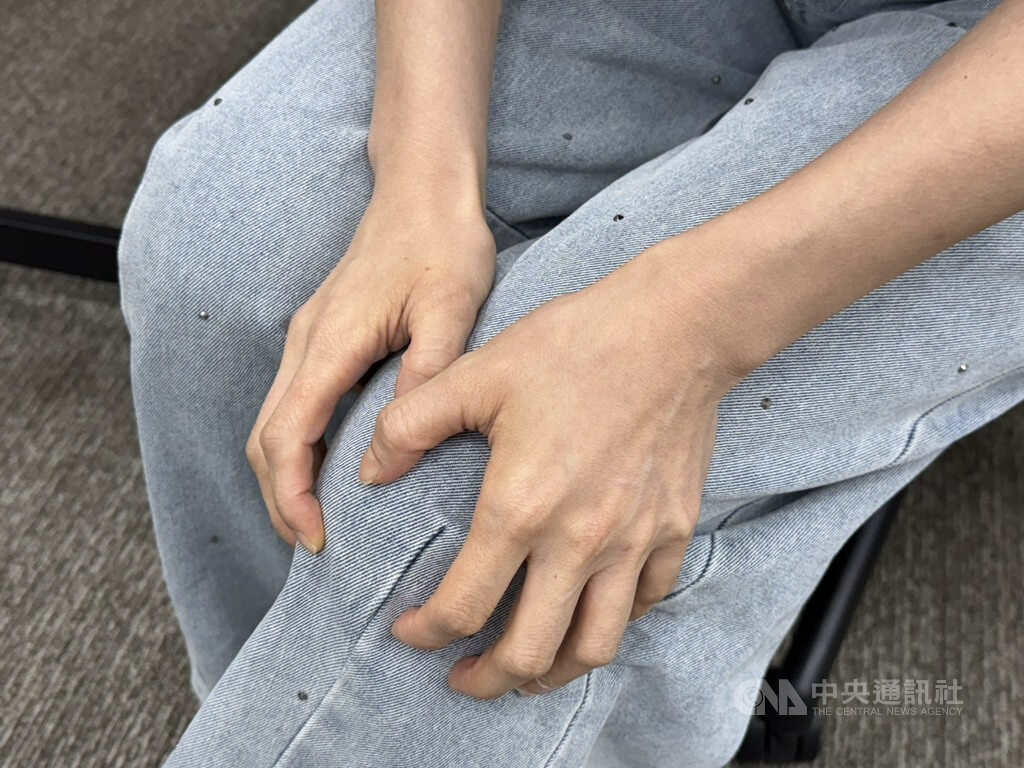
Central News Agency, Taipei, May 23. In Taiwan, one in every 6.5 people suffers from knee degeneration, and one should not assume that creaky knees are exclusive to the elderly. Doctors warn that there are more and more "young people" in their 30s and 40s in clinics, mainly due to the aftereffects of over-exercising, as well as sedentary lifestyles and obesity. According to statistics from the Ministry of Health and Welfare, the prevalence of knee degeneration in Taiwan is about 15%. Jiang Ching-chuan, vice superintendent of Fu Jen Catholic University Hospital, pointed out at a recent health education press conference that this means one in every 6.5 people has joint degeneration problems. Although the prevalence increases with age, due to factors such as obesity, sedentary lifestyles, changes in lifestyle, and sports injuries in recent years, knee degeneration is no longer just a problem for the elderly. Jiang explained in a media interview that clinically, more and more young patients in their 30s and 40s are coming to see doctors because of knee stiffness or even unbearable pain. Symptoms such as being unable to squat, getting a headache when seeing stairs, being unable to walk long distances, or being unable to keep up with others make people feel frustrated and seriously affect their lives. The causes are mostly over-exercising or the aftereffects of injuries that were not fully healed. Jiang pointed out that early cartilage damage is often "hard to see" on ordinary X-rays, but patients feel persistent pain. He described it as "the road surface is sinking but the surface is not yet broken." If patients persist in seeking a diagnosis, he recommends further MRI examinations. Faced with knee pain, many people try injection treatments such as hyaluronic acid, PRP (platelet-rich plasma), or exosomes, but Jiang bluntly stated, "These are not panaceas and may not be effective for everyone." The key is accurate diagnosis. In the past, if drug treatment was ineffective, patients often had to endure the pain and wait until the joint degeneration became severe, eventually leading to the replacement of "artificial joints." Jiang said that artificial joints are made of metal, and there are still risks of sequelae such as infection or fracture after a fall, which makes many people hesitate. Now, there are self-repair technologies that can fill cartilage defects, positioning between "drug treatment is ineffective" and "replacing artificial joints." "Original is still the best," Jiang emphasized. Artificial joints are the last resort for late-stage patients. Once the knees start to feel "stiff" and affect daily life, one should persistently seek accurate diagnosis and not let the knee's "shelf life" expire early.
FACT BOX
- Source: CNA (Central News Agency)
- Category: health