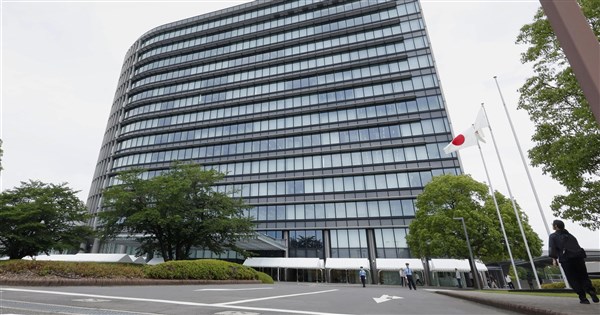
(CNA reporter Tai Ya-chen, Tokyo, 21st) Toyota Motor Corporation will set up a dedicated production line in Taiwan to build key models for reverse supply to the Japanese market, with exports to Japan expected to start this October. This "reverse importation" method highlights that Japanese automakers are accelerating the restructuring of their overseas supply chains amidst domestic labor shortages and an inability to increase production.
The Nikkei reports that "reverse import cars" refer to Japanese-brand vehicles produced overseas and then imported back to Japan for sale. In the past, reverse imports mostly involved supplying the Japanese market with models sold in overseas markets. Setting up a production line overseas specifically for the Japanese market, as in this case, is a rather rare instance. It is understood that this is also the first time Toyota has taken this approach for its core models.
The models to be produced in Taiwan are the sibling minivans, Noah and Voxy. Both vehicles are among Toyota's key models, with annual sales in Japan reaching 70,000 to 80,000 units each. Demand for minivans is strong in the Japanese market, with delivery times once extending over a year, and at one point, orders were even suspended.
Toyota currently produces models like the Corolla and Yaris Cross at its joint venture factory in northern Taiwan, with a production volume of about 120,000 units for the 2025 fiscal year. In the future, part of the production line will be converted for the Japanese market, expected to produce around 100,000 units annually, mainly focusing on entry-level models. Domestic production lines in Japan will continue as before, operating in parallel with Taiwan.
Toyota holds over 50% of the passenger car market share in Japan and has popular models like the Land Cruiser. The company currently produces about 14,000 cars per day in Japan, and its factories are operating under a considerable load. A certification fraud issue that erupted in 2024 has further limited the room for increased production after strengthening the inspection system.
However, "reverse importing" from Taiwan also has its drawbacks. The current exchange rate between the New Taiwan dollar and the Japanese yen is at a level of about 1 NTD to 5 JPY, a 34-year low for the yen since August 1992, leading to relatively higher personnel and equipment costs in Taiwan. Additionally, there are extra transportation costs compared to domestic production in Japan.
Even so, Toyota's choice to increase production of Japanese market models overseas shows a strong sense of crisis regarding supply constraints. Toyota President Kenta Kon stated, "This is an abnormal and critical situation," warning that an inability to deliver cars quickly could lead consumers to turn to other brands.
In the past, automakers generally produced cars for the Japanese market in Japan, but the momentum for increasing reverse imports is growing. According to the Japan Automobile Importers Association
FACT BOX
- Source: CNA (Central News Agency)
- Category: 產業
- Products / services: Noah / Voxy