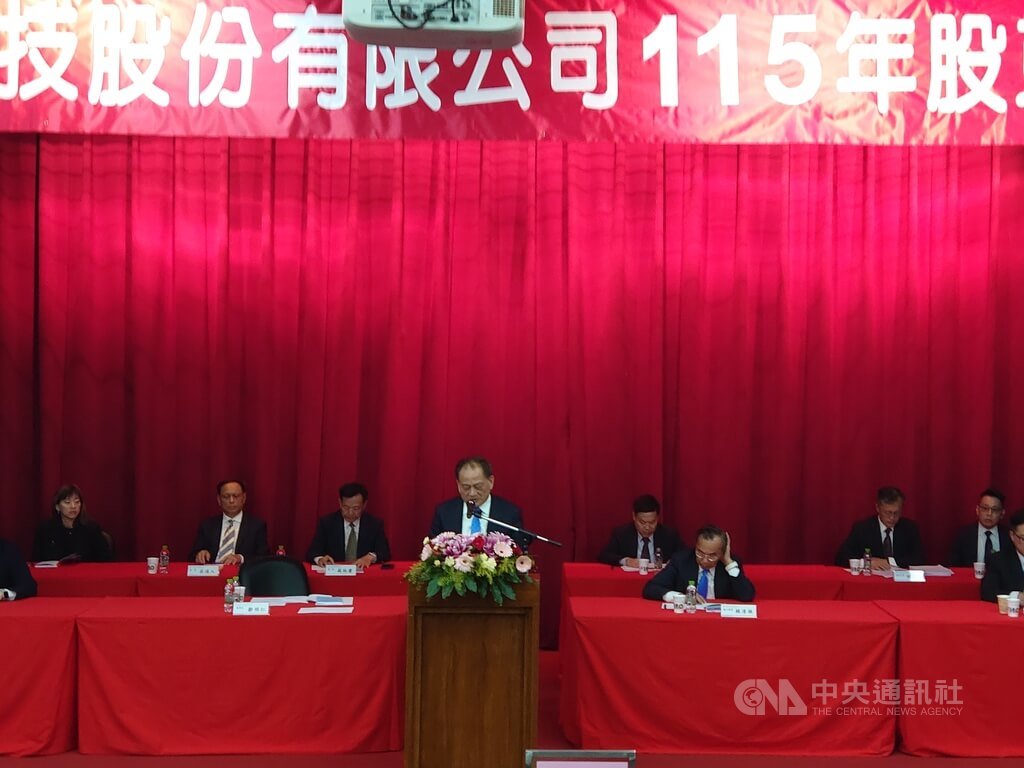
Memory manufacturer Nanya Technology's Chairman, Jou, Ming-Jen, stated today (the 21st) that while the memory industry was previously cyclical, it is now gradually shifting to a structural growth business model due to AI demand. He emphasized that the key to future profitability lies in mastering advanced technology. Nanya Technology's pilot product using 1C process technology is expected to complete validation in the second half of this year.
At Nanya Technology's annual shareholders' meeting today, Jou said that in response to the growing demand for high-end memory driven by artificial intelligence, major memory manufacturers began adjusting their capacity allocation in the second quarter of last year. They announced plans to discontinue the supply of DDR4 and LPDDR4 and upgraded capacity to produce products like High-Bandwidth Memory (HBM) and high-capacity DDR5 modules, leading to a significant rise in the prices of various DRAM types.
Jou stated that Nanya Technology's production and sales improved in the third quarter of last year, allowing the company to return to profitability with a quarterly profit of NT$1.56 billion. In the fourth quarter, profits surged to NT$11.09 billion, demonstrating strong profit growth momentum. For the full year, the net profit after tax was NT$6.61 billion, with earnings per share of NT$2.13.
Jou said that with the development of AI, cloud service providers are continuously investing in AI servers equipped with large amounts of high-end DRAM products such as HBM, LPDDR5, and RDIMMs. Furthermore, edge computing applications in end products like AI PCs, AI smartphones, and AI robots will all boost DRAM content, driving demand growth.
Jou indicated that the demand for DRAM from both AI servers and general servers will expand, with growth expected to continue into 2026. Equipping high-end models with high-capacity DRAM has become a trend, and the rise of AI smartphones is also increasing the demand for high-capacity LPDRAM.
He pointed out that while overall personal computer (PC) shipments may decline slightly, the increase in DRAM content per unit is expected to drive growth in the overall PC market demand. The market for networking products is stable, with strong demand for high-end consumer products, while demand for low-end products is slowing.
Jou reiterated that the memory industry, traditionally cyclical, is now changing into a structural growth model due to AI demand, and the key to future profits is mastering advanced technology. Nanya Technology has long been dedicated to deepening its technology and systematically promoting its various businesses.
Jou stated that Nanya Technology expects to complete product validation for the 16Gb DDR5 shrink version, 16Gb DDR4, and 8Gb/16Gb LPDDR4 this year. Additionally, 8Gb/16Gb LPDDR5 will enter pilot production.
The pilot product using 1C process technology, a 16Gb DDR5, is expected to complete validation in the second half of this year. The pilot product using 1D process technology, also a 16Gb DDR5, will enter pilot production in the second quarter of this year. Furthermore, Nanya Technology is developing customized, high-performance, low-power ultra-high bandwidth memory with partners, which is expected to contribute to revenue in the first half of next year.
Jou noted that the capital expenditure ceiling for this year is set at NT$52 billion. This is to cover final payments for the transition of some capacity to 1B process technology, construction, facilities, and cleanrooms for the new 5A fab, as well as R&D and general capital expenditures.
Jou said that in the short term, Nanya Technology will accelerate the expansion of the 5A new fab and plan for medium- to long-term new fab site selection and capacity. This year, the company will continue to optimize its various DRAM product lines to increase profitability, adhere to technological innovation, and invest more R&D resources to accelerate the development of 10-nanometer class process technology and more new-generation DDR5, LPDDR5, and AI high-bandwidth products.
FACT BOX
- Source: CNA (Central News Agency)
- Category: 產業
- Products / services: DDR4 / LPDDR4